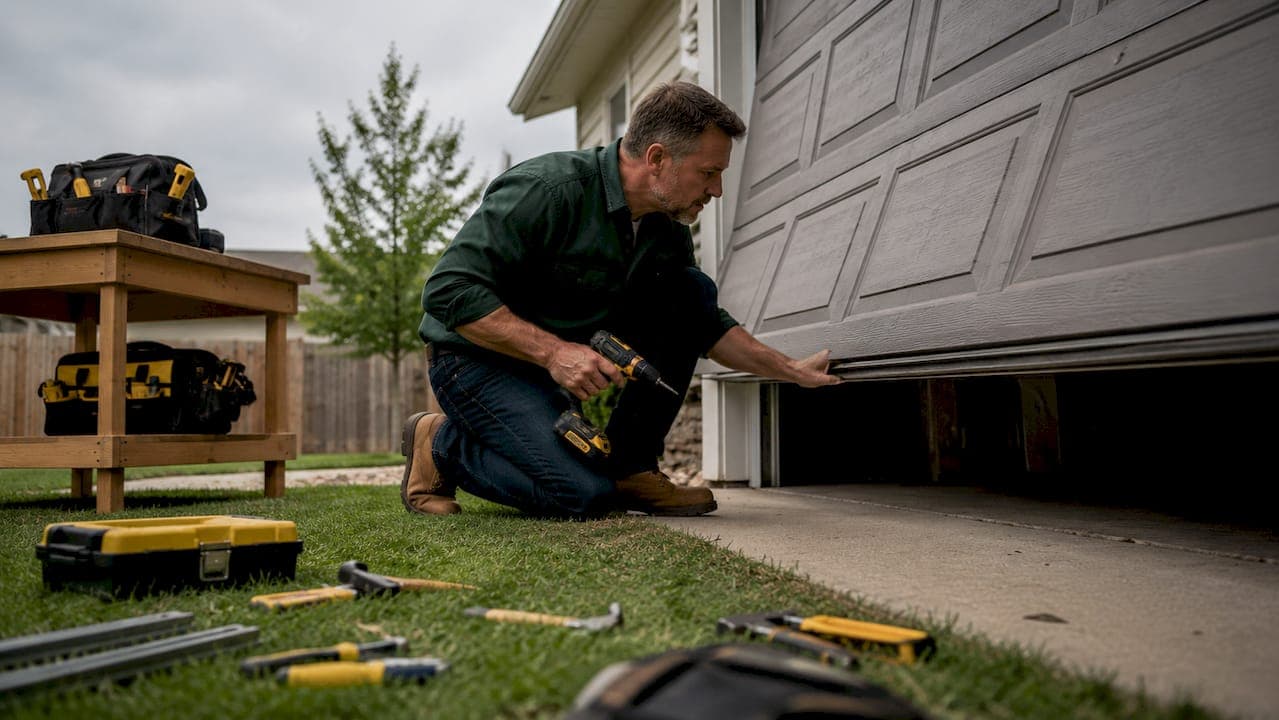
A garage door that grinds, sags, or refuses to close is not just an inconvenience. It is a safety hazard. The signs garage door needs repair are almost always visible or audible before a full breakdown occurs. Catching them early saves you money, protects your family, and keeps a 200-pound door from becoming a liability. Mikes garage doors Loveland sees these warning signs every day across Northern Colorado. Here is exactly what to watch for.
1. What are the noisy signs your garage door needs repair?
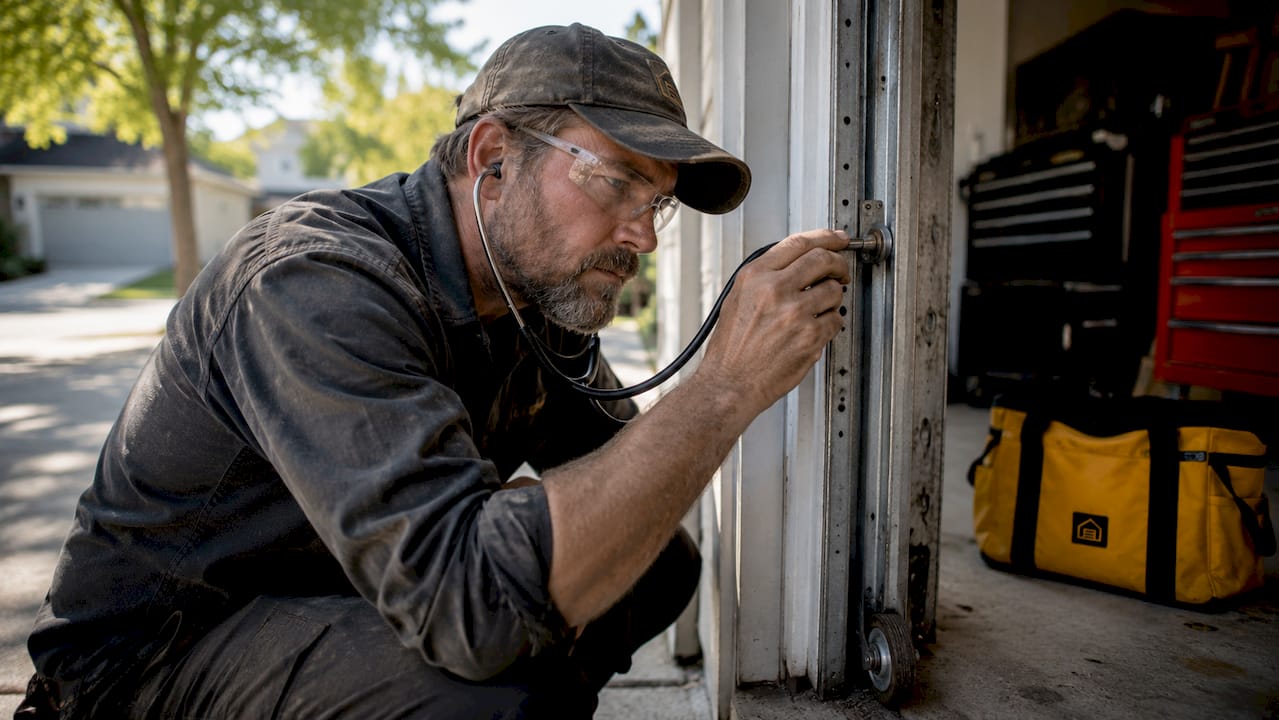
Unusual noise is the most common early warning of a mechanical problem. Grinding, scraping, banging, and creaking each point to a specific failing component. Ignoring the sound does not make the problem smaller. It makes the repair more expensive.
Here is what each noise typically means:
- Grinding or scraping: Worn metal rollers dragging against the track, or a track that has shifted out of alignment.
- Banging: A broken torsion spring or a loose panel that is shifting under movement. A broken spring often sounds like a gunshot.
- Creaking or squeaking: Lack of lubrication on hinges, rollers, or springs. This is the easiest fix on the list.
- Rattling: Loose hardware, including bolts, nuts, or brackets that have vibrated free over time.
- Popping: Binding in the torsion spring or a cable that is slipping off its drum.
Pro Tip: Pay attention to when the noise happens. A grind on the way up points to roller or track wear. A bang on the way down often signals a spring or cable problem. That timing narrows the diagnosis before a technician even arrives.
Not every noise means an emergency. Squeaking from dry hinges is a routine maintenance fix. But grinding, banging, or popping sounds require a professional inspection. Running a door with a broken spring or damaged roller accelerates wear on every other component.
2. How to tell if your garage door is hard to lift or unusually heavy
A properly balanced garage door should feel nearly weightless when you lift it by hand. A door that feels heavy or does not hold position when released at mid-height is a clear sign that the springs are weakening or have failed entirely. Springs carry the load. Without them, the opener motor and your own back take the full weight of the door.
Run this simple balance test:
- Disconnect the opener by pulling the red emergency release cord.
- Lift the door manually to about waist height.
- Let go. A balanced door stays in place. A door that drops or shoots upward has a spring problem.
Pro Tip: If the door drops fast when you release it, do not try to operate it manually until the springs are repaired. That door is essentially dead weight, and a sudden drop can cause serious injury.
Visible spring damage includes gaps in the torsion spring coil, frayed lift cables, or a cable that has jumped off its drum. These are not DIY repairs. Torsion springs sit under extreme tension. Attempting to replace them without proper tools and training causes serious injury. Call a professional the moment you see any of these signs.
3. What garage door sensor problems indicate repair is needed?
Photo-eye sensors project an infrared beam across the bottom of the door opening. When that beam is interrupted, the door stops and reverses. This system is required by UL 325 safety standards on all residential openers manufactured after 1993. When sensors malfunction, the door either reverses before it should or refuses to close at all.
Common sensor failure symptoms:
- The door starts closing, then immediately reverses without any object in the path.
- The door will not close using the wall button but closes fine when you hold the remote.
- The sensor indicator light is blinking or off entirely.
- The door closes only when you hold the wall button continuously.
Photo-eyes and force-reversal systems provide layered protection and each can fail independently. A dirty lens is the most common cause of false reversals. Wipe both sensor lenses with a dry cloth before calling for service.
Pro Tip: Never raise the sensor mount to stop unwanted reversals. Raising the mount is incorrect and creates a dangerous gap at the bottom of the door. The fix is cleaning and realigning the sensors at their proper height.
Run the 2x4 safety reverse test monthly. Lay a 2x4 flat in the door's path and close the door. Per UL 325 standards, the door must reverse within 2 seconds of contact. If it does not, the force-reversal system needs immediate adjustment or replacement.
4. What visible damage and mechanical faults clearly show a need for repair?
Physical damage is the most obvious category of garage door issues, yet many homeowners underestimate how quickly it escalates. A bent panel, a cracked roller, or a cable that looks slightly frayed will not fix itself. Each one puts more stress on the components around it.
Watch for these specific warning signs:
- Bent or cracked panels: Structural damage changes how the door sits in the frame and can cause binding in the track.
- Door traveling crooked: One side moves faster than the other, which signals a broken cable or uneven spring tension.
- Missing or cracked rollers: Rollers keep the door on track. A missing one causes the door to bind or jump the track entirely.
- Frayed or loose lift cables: Cables carry the door's weight alongside the springs. A frayed cable is close to snapping.
- Rust on springs or hardware: Surface rust weakens metal over time and accelerates wear under Colorado's temperature swings.
| Visible sign | Urgency level | Recommended action |
|---|---|---|
| Frayed or loose cable | Immediate | Stop use, call a professional today |
| Broken or missing roller | High | Schedule repair within 24–48 hours |
| Bent panel | Moderate | Inspect for track binding, schedule repair |
| Door traveling crooked | High | Stop use, call for diagnosis |
| Surface rust on hardware | Low | Clean, lubricate, monitor |
A door that has jumped its track is a specific emergency. Do not try to force it back by hand. The cable tension and spring load make that extremely dangerous. The 7-point tune-up checklist from Mikes garage doors Loveland covers how to spot these issues before they reach the emergency stage.
5. How do operational failures reveal that your garage door needs repair?
A door that moves slowly, stops mid-cycle, or does not move at all is telling you something specific. The key is reading the symptom correctly. Symptom patterns narrow the diagnosis: a slow door with grinding noise points to a mechanical issue, while a door that reverses immediately after closing suggests a sensor fault.
Common operational failure causes:
- Opener hums but door does not move: This usually means the trolley has disengaged, or a spring has broken and the opener cannot lift the load. A humming opener with no movement points to mechanical failure, not a sensor problem.
- Door stops mid-cycle: Limit settings may be off, or an obstruction is triggering the safety reversal.
- Door moves slowly: Worn springs, dry rollers, or an opener motor that is straining under excess load.
- Door opens but will not close: Almost always a sensor issue. Check alignment and clean the lenses first.
- Remote works but wall button does not (or vice versa): Points to a wiring or logic board problem in the opener.
Pro Tip: Before calling for service, check whether the opener's emergency release cord has been pulled. A disengaged trolley makes the opener run but leaves the door completely disconnected. Re-engaging it takes 10 seconds and costs nothing.
Continuing to operate a door with any of these symptoms puts extra strain on the opener motor, the springs, and the cables. What starts as a slow door can become a door that drops without warning. The opener diagnostic guide from Mikes garage doors Loveland walks you through the most common faults before you pick up the phone.
6. When should you lubricate vs. call a professional?
Lubrication solves a surprising number of common garage door problems. Squeaking hinges, stiff rollers, and slow movement often disappear after a proper lube job. Use silicone spray or white lithium grease on rollers, hinges, springs, and the opener's drive chain or screw. Never use WD-40. It strips existing lubrication and attracts grit, which accelerates wear.
Routine maintenance includes lubrication twice a year, a visual inspection of all hardware, and an annual professional tune-up. Skipping this schedule is the fastest way to turn a $20 lube job into a $300 spring replacement. The DIY service guide from Mikes garage doors Loveland covers exactly what to lubricate, what to tighten, and what to leave for a technician.
Call a professional when lubrication does not resolve the noise, when hardware is visibly damaged, or when any spring or cable component is involved. Those repairs require tools and training that go beyond routine homeowner maintenance.
Key takeaways
Catching garage door repair signs early prevents accidents and keeps repair costs low. The most reliable indicators are unusual noise, a heavy or unbalanced door, sensor malfunctions, visible physical damage, and operational failures like a door that stops mid-cycle or refuses to close.
| Point | Details |
|---|---|
| Noise signals specific faults | Grinding points to rollers or tracks; banging usually means a broken spring. |
| Balance test reveals spring health | A door that drops when released at mid-height has failing springs. |
| Sensor issues cause false reversals | Clean lenses and check alignment before calling for a replacement. |
| Visible damage escalates fast | Frayed cables and crooked travel require same-day professional attention. |
| Lubrication prevents many repairs | Use silicone or white lithium grease twice a year on all moving parts. |
What I've learned from years of garage door calls
After seeing hundreds of service calls across Loveland and Northern Colorado, one pattern stands out. Homeowners wait too long. They hear a grinding noise for three weeks, assume it is normal, and call us after the door has jumped the track and bent a panel. That grinding was a worn roller. A $75 fix became a $400 repair.
The signs are almost never subtle. A loud bang is a broken spring. A door that feels like you are lifting a car is a spring that has failed. A door that reverses every time it tries to close has a sensor problem. These are not mysteries. They are clear signals that the door is telling you something is wrong.
My honest advice: run the 2x4 reverse test every month. It takes 30 seconds. If the door does not reverse, stop using it and call someone that day. That one test catches force-reversal failures before they hurt someone. And never, under any circumstances, attempt to replace a torsion spring yourself. The tension in those springs is enough to cause a serious injury. That is a job for a trained technician, full stop.
Preventive maintenance is the best investment you can make in a garage door. Two lubrications a year and one professional tune-up will extend the life of your springs, rollers, and opener by years. The cost is minimal. The alternative is a door that fails on a cold February morning when you need to get to work.
— Eddie
Garage door repair services in Loveland, CO
When the signs point to a repair you should not handle alone, Mikes garage doors Loveland is ready to help.

Mikes garage doors Loveland handles broken springs, faulty openers, sensor replacements, damaged panels, and cable repairs across Northern Colorado. Ninety percent of repairs are completed the same day. Every job comes with a transparent, upfront estimate over the phone so you know the cost before a technician arrives. Veterans receive a 10% discount on all services. Whether you are dealing with a door that will not close or a spring that snapped overnight, the team at Mikes garage doors Loveland has the parts and experience to fix it fast. Schedule your repair today and get your door working safely again.
FAQ
How do I know if my garage door needs repair or replacement?
Repair is the right call when the damage is limited to specific components like springs, rollers, or sensors. Replacement makes more sense when panels are severely damaged, the door is structurally compromised, or repair costs approach the price of a new door.
What does a broken garage door spring sound like?
A broken torsion spring typically makes a loud bang, similar to a gunshot, when it snaps. After the break, the door will feel extremely heavy or will not open at all.
Can I fix garage door sensor problems myself?
Cleaning the sensor lenses with a dry cloth and checking that both sensors are properly aligned at the same height resolves most false-reversal issues. If the problem continues after cleaning and alignment, the sensors or wiring need professional inspection.
How often should I test my garage door's auto-reverse function?
Run the 2x4 reverse test monthly. Place a 2x4 flat in the door's path and close the door. Per UL 325 standards, the door must reverse within 2 seconds of contact. Failure means the safety system needs immediate service.
Is it safe to use a garage door that is making grinding noises?
No. Grinding indicates worn rollers, track misalignment, or a component under stress. Continuing to operate the door accelerates damage and increases the risk of the door jumping its track or dropping unexpectedly.
Recommended
- 5 Warning Signs Your Garage Door Spring Is About to Snap | Mike's Garage Door Repair Loveland
- Garage Door Services in Loveland, CO — Spring, Opener, Commercial & Custom
- Garage Door Repair vs. Replacement: When It's Time to Stop Patching | Mike's Garage Door Repair Loveland
- Garage Door Opener Not Working? Walk Through This 4-Minute Diagnostic Before You Call | Mike's Garage Door Repair Loveland