
Commercial garage door customization is the process of selecting materials, insulation, hardware, security systems, and design elements to match a specific facility's operational demands. When you customize commercial garage door features correctly, you get a door that works as hard as your business does. The wrong door is just a wall that opens slowly. Clopay's commercial lineup offers over 1,500 custom colors, insulation with thermal break technology, and springs rated up to 100,000 cycles. That range shows how far commercial door customization has come beyond picking a color and calling it done.
What features can you customize on a commercial garage door?
Commercial garage doors offer far more customization than most property managers realize. The industry term for this process is commercial door specification, and it covers every component from the panel material to the opener logic board.
Materials and construction
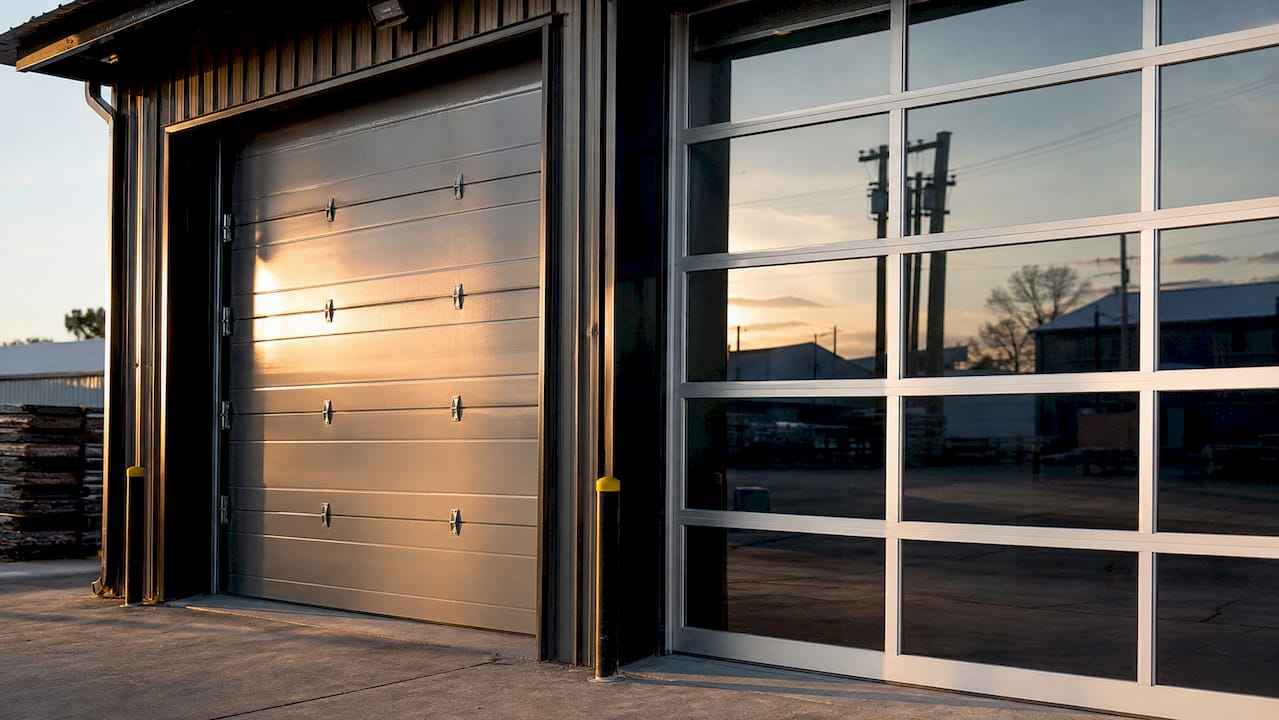
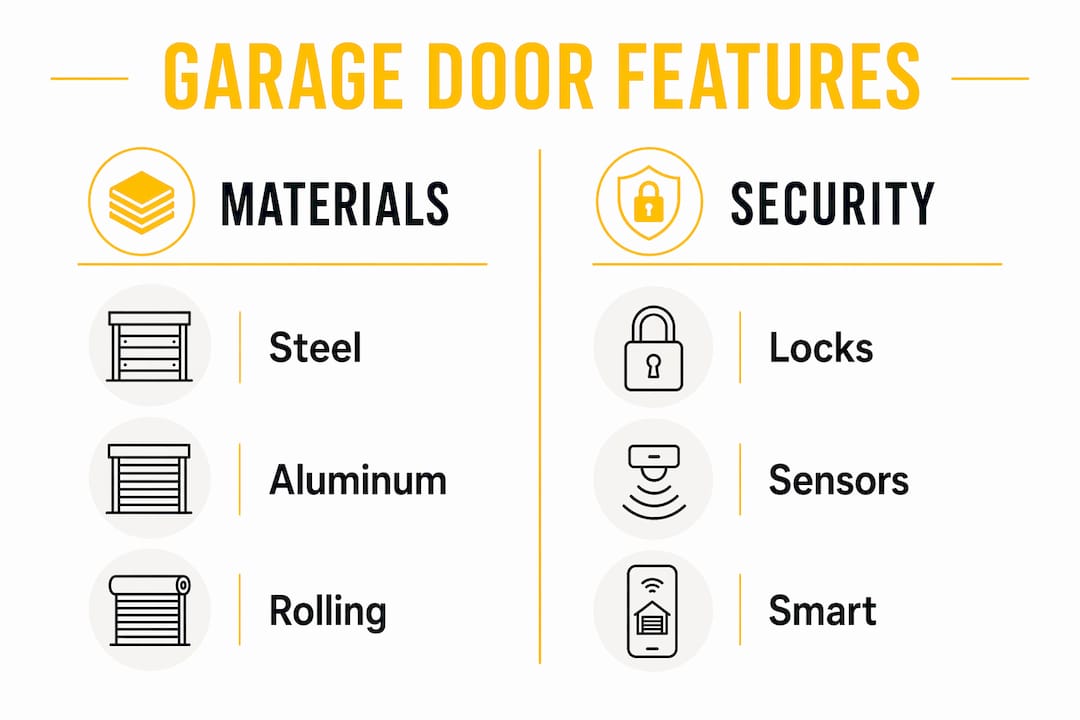
Steel sectional doors are the most common choice for warehouses and distribution centers. Aluminum full-view doors work well for showrooms and auto dealerships where visibility matters. Rolling steel doors are the go-to for tight overhead clearance situations. Each material carries different weight ratings, corrosion resistance levels, and insulation compatibility.
Insulation and thermal performance
Insulation is one of the most overlooked commercial garage door options. A door with a thermal break and polyurethane foam core can cut heating and cooling costs significantly in a Northern Colorado climate. If your facility runs climate-controlled storage or a paint booth, insulation is not optional. It is a core operational requirement.
Hardware: the part that actually wears out
High-reliability hardware like 14-gauge hinges, steel rollers, and properly rated track configurations directly determines how long your door runs without downtime. Standard residential hardware fails fast under commercial use. A door cycling 20 times a day needs commercial-grade rollers and hinges rated for that load.
Pro Tip: Match your spring duty cycle to your actual daily cycle count. Springs rated for 10,000 cycles fail in under two years on a busy loading dock. High-cycle springs rated at 25,000, 50,000, or 100,000 cycles cost more upfront but cost far less over time.
Windows, glazing, and light control
Aluminum full-view doors accept glazing options including clear, frosted, tinted, and insulated glass panels. Smart opacity control panels are also available for facilities that need privacy on demand. Natural light reduces interior lighting costs and improves working conditions. The glazing choice also affects thermal performance, so factor that into your insulation plan.
Security features
Integrating security features during the initial build is the most cost-effective approach. Smart sensors, advanced locking systems, and impact-resistant materials all add protection. These components can sync with building management systems for centralized control. Retrofitting security after installation often doubles the cost due to compatibility issues.
Here is a quick reference for the core customizable features:
| Feature Category | Options Available | Primary Benefit |
|---|---|---|
| Material | Steel, aluminum, rolling steel | Strength, weight, visibility |
| Insulation | Foam core, thermal break, uninsulated | Energy efficiency, climate control |
| Springs | 10K, 25K, 50K, 100K cycle ratings | Longevity, reduced maintenance |
| Security | Smart locks, sensors, impact panels | Access control, safety |
| Glazing | Clear, frosted, tinted, insulated glass | Light control, privacy |
| Color and Finish | 1,500+ custom colors, powder coat | Brand alignment, curb appeal |
How do you assess your facility's needs before customizing?
Choosing the wrong features for your site is the most expensive mistake in commercial door customization. The assessment phase protects your budget and your timeline.
Step-by-step site evaluation
-
Measure headroom and side room. Site constraints like headroom and side room dictate which door type physically fits. Rolling steel doors work where overhead clearance is limited. Sectional doors need adequate side room for the track system. Get these numbers before you look at a single product catalog.
-
Count your daily cycles. How many times does the door open and close per day? A fire station door cycles far more than a retail loading dock. That number drives your spring duty cycle selection and your hardware grade.
-
Define your workflow requirements. A retail dock needs fast open speeds and reliable sensors. A cold storage facility needs airtight sealing and insulated panels. A vehicle maintenance bay needs wide clearance and impact resistance. The door should fit the workflow, not the other way around.
-
Check your building management system. If your facility uses a BMS for HVAC, lighting, or access control, your door's smart sensors and openers need to be compatible from day one. Confirm this before you finalize specs.
-
Review local building codes. Northern Colorado has specific wind load and fire rating requirements for commercial doors. Your dealer should verify compliance before the order is placed.
-
Use an interactive design tool. Interactive design visualizers let you preview color, track layout, and thermal performance before committing. They also help you communicate your vision clearly to your installer.
Pro Tip: Take photos of your site from multiple angles before your dealer consultation. Most dealers, including the team at Garagedoorrepairsloveland, can review site photos and provide accurate phone estimates without an in-person visit for straightforward projects.
How to order a custom commercial garage door: step by step
The customization process follows a clear sequence: measure, select, verify, install, and test. Skipping any step creates problems that show up after the door is already hanging.
-
Collect site measurements. Record opening width, height, headroom, side room, and back room. Note any obstructions like pipes, beams, or lighting fixtures.
-
Select your core specifications. Choose your material, insulation level, spring duty cycle, hardware grade, glazing type, and color. Use a design tool or dealer catalog to compare options side by side.
-
Submit for dealer review. A qualified dealer checks your specs against your site data. They catch conflicts before production, such as a sectional door spec on a site with insufficient headroom.
-
Confirm compliance. Your dealer verifies that the door meets local fire, wind load, and safety codes. This step is non-negotiable for commercial properties.
-
Schedule professional installation. Commercial doors are heavy and mechanically complex. A door installed incorrectly is a liability. Professional installation also activates most manufacturer warranties.
-
Test every function. Run the door through full open and close cycles. Test all sensors, locks, and BMS integrations. Confirm the opener speed and force settings match your operational needs.
Key considerations to confirm before your order ships:
- Spring duty cycle matches daily usage
- Hardware grade matches door weight and cycle frequency
- Glazing type matches privacy and thermal requirements
- Security features are compatible with existing BMS
- Color and finish match brand or facility standards
- Lead time aligns with your project schedule
What mistakes should you avoid when customizing commercial doors?
Most customization problems are predictable. Here are the ones that cost property managers the most time and money.
-
Ignoring site constraints. Ordering a door without verified headroom and side room measurements causes installation delays and sometimes requires structural modifications. Measure twice, order once.
-
Underestimating spring life cycles. A standard 10,000-cycle spring on a high-traffic dock fails in months. Mismatching spring ratings to usage frequency leads to early failure and unplanned downtime. Always spec springs above your expected daily cycle count.
-
Skipping security integration. Adding smart locks and sensors after installation is expensive. Aftermarket retrofits often double installation costs because of compatibility challenges. Build security in from the start.
-
Choosing features for looks over function. A full-view aluminum door looks great on a showroom. It is a poor choice for a high-impact loading dock. Match the door to the job, not the brochure.
-
Failing to verify BMS compatibility. Smart sensors and openers that cannot talk to your building management system create manual workarounds that defeat the purpose of automation.
Working with a reputable local dealer reduces all of these risks. Garagedoorrepairsloveland provides upfront phone estimates and flags compatibility issues before they become installation problems. That kind of transparency saves commercial clients real money.
Key takeaways
Customizing commercial garage doors correctly means matching every specification to your facility's actual operational demands, not just picking the most durable or most affordable option in isolation.
| Point | Details |
|---|---|
| Match springs to usage | Select duty cycles of 25K, 50K, or 100K based on actual daily cycles to prevent early failure. |
| Integrate security early | Build smart locks and sensors into the initial spec to avoid costly aftermarket retrofits. |
| Assess site constraints first | Measure headroom and side room before selecting door type to avoid installation delays. |
| Use design tools before ordering | Interactive visualizers confirm fit, color, and thermal performance before production begins. |
| Verify BMS compatibility | Confirm opener and sensor compatibility with your building management system during spec review. |
What i've learned about commercial door customization after years in the field
Most property managers come to us focused on price per panel. That is the wrong starting point. The door that costs the least to buy almost always costs the most to own.
The single biggest mistake I see is treating the garage door as a passive building component. It is not. On a busy loading dock, that door is the most-used mechanical system in the building. It takes more abuse than the HVAC, the plumbing, and the lighting combined. When it fails, operations stop. That is a hard cost, not a maintenance line item.
The second thing I have learned is that security integration is always cheaper upfront. I have watched businesses spend three times the original security hardware cost trying to retrofit smart sensors onto doors that were never designed for them. The wiring is wrong, the frames need modification, and the BMS handshake never quite works right. Spec it in from day one.
Finally, I will say this about design tools: use them, but do not rely on them alone. A visualizer shows you what the door looks like. It does not tell you whether the track layout fits your ceiling joists or whether the opener speed is right for your workflow. That is what a professional site assessment is for. The best outcomes I have seen come from clients who used a design tool to get clear on what they wanted, then brought that vision to a dealer who could pressure-test it against reality.
— Adi
Ready to customize your commercial door? Garagedoorrepairsloveland can help
Garagedoorrepairsloveland works with commercial property managers and business owners across Northern Colorado to spec, install, and service commercial garage doors built for real operational demands. The team provides transparent phone estimates before any work begins, so you know exactly what you are getting into.
Whether you need a full custom specification for a new facility or want to upgrade an existing door's security and hardware, the technicians at Garagedoorrepairsloveland handle it all. With same-day service on 90% of repairs and warranties that back the work, you get reliability without surprises. Reach out through the commercial door services page to start your consultation. Veterans receive a 10% discount on all services.
FAQ
What materials are best for commercial garage doors?
Steel sectional doors work best for high-traffic industrial use, while aluminum full-view doors suit showrooms and retail spaces. Rolling steel is the right choice when overhead clearance is limited.
How do i choose the right spring duty cycle for my facility?
Count your average daily open and close cycles, then select a spring rated well above that number. High-cycle springs rated at 25,000 to 100,000 cycles are standard for commercial applications with frequent use.
Can commercial garage doors integrate with building management systems?
Yes. Smart sensors and openers can sync with most building management systems when specified correctly during the initial build. Retrofitting these features after installation significantly increases cost and complexity.
How long does the commercial garage door customization process take?
The timeline depends on product lead times and site complexity, but the process typically runs from two to six weeks from initial measurement to completed installation. Custom colors and specialty glazing can extend lead times.
What is the biggest cost mistake in commercial door customization?
Skipping security integration during the initial build is the most expensive mistake. Aftermarket security retrofits often cost double the original installation price due to compatibility and structural modification requirements.
Recommended
- Garage Door Services in Loveland, CO — Spring, Opener, Commercial & Custom
- How to Winter-Proof Your Garage Door for a Colorado Winter | Mike's Garage Door Repair Loveland
- Garage Door Repair Blog — Maintenance, Tips & Buying Guides | Loveland CO
- The 7-Point Garage Door Tune-Up Checklist Every Loveland Homeowner Should Run Twice a Year | Mike's Garage Door Repair Loveland