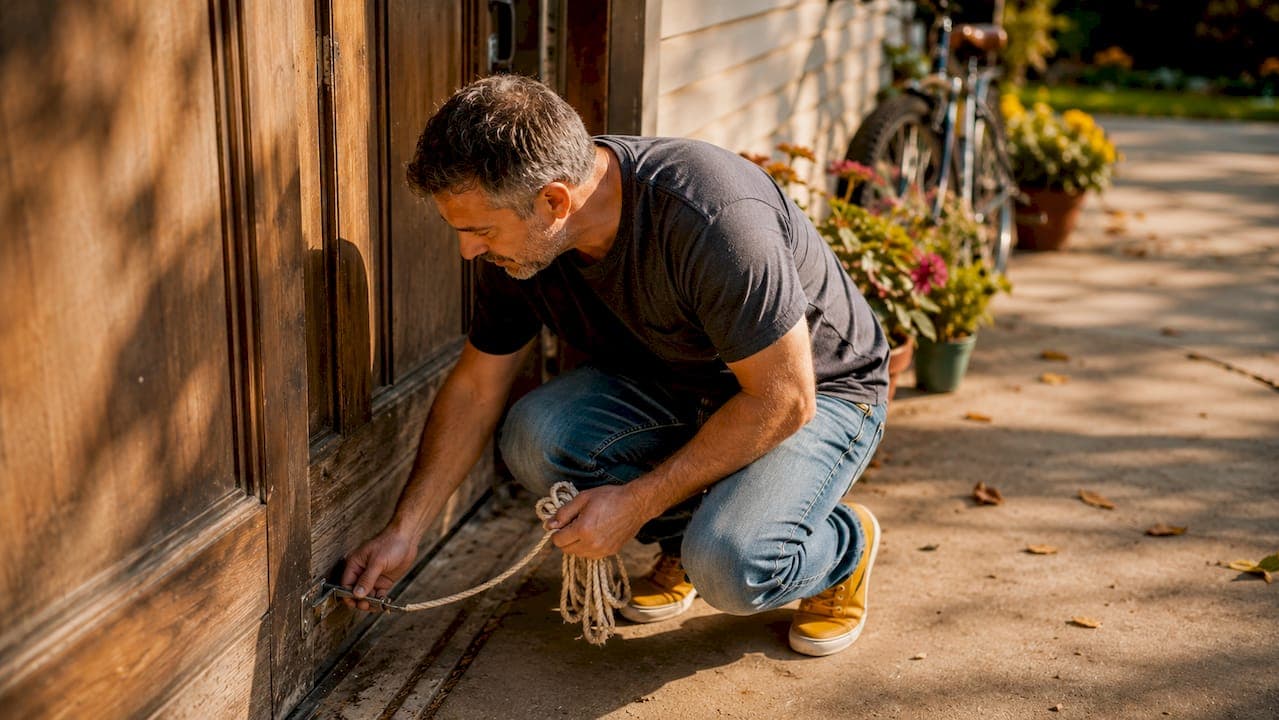
A garage break in is defined as unauthorized entry into a home through the garage door or connected access points, and it is one of the most common yet preventable forms of residential burglary in the United States. Garages are frequently exploited entry points in U.S. home burglaries, with thousands of incidents reported annually. The primary reason is simple: most homeowners treat the garage as a secondary entrance and apply far less security thinking to it than to the front door. That gap is exactly what burglars count on. Closing it requires understanding which vulnerabilities are being exploited and applying targeted fixes before a break-in happens.
How do burglars break into garages?
The most widely documented garage door break in method is called the "6-second break-in." A burglar slides a thin wire or coat hanger through the top gap of the garage door, hooks the emergency release lever, and pulls it. The door disengages from the opener track and lifts freely. The entire process requires no tools, produces no noise, and leaves no physical evidence. A neighbor watching from across the street would see nothing unusual.
"The 6-second break-in is not a rare trick. It is a documented, repeatable technique that works on the vast majority of residential garage doors without any modification."
Burglars also target vehicles parked in driveways or on the street. A stolen garage opener from a vehicle gives an intruder a working key to your home. A December 2025 incident documented exactly this sequence: a car was broken into, the remote was taken, and the homeowner's garage was accessed within hours. That means your car is a security liability if a remote is sitting in the center console.
Here is what makes garages such attractive targets:
- No noise required. The fishing technique and remote theft both allow silent entry, unlike kicking in a front door.
- Low visibility. Garage doors face driveways or alleys, away from street traffic and neighbors' sightlines.
- Weak default hardware. Most residential garage doors ship with minimal locking mechanisms beyond the opener itself.
- Unmonitored interiors. Many homeowners do not have cameras or sensors covering the garage, so entry goes undetected.
- Direct house access. An attached garage gives a burglar a private, enclosed space to work on the interior door without being seen.
The combination of speed, silence, and access to the house interior makes the garage a preferred entry point for experienced burglars.
What security weaknesses do most homeowners overlook?
Most garage security failures come down to five overlooked vulnerabilities. Knowing them is the first step to fixing them.
-
The emergency release lever. Every automatic garage door opener has one. It is required by fire and safety codes. The problem is that the standard red cord hangs within reach of a wire inserted through the top door gap. Most homeowners never think about it until they hear about the 6-second technique.
-
The interior garage-to-house door. This is the single most underestimated weak point in any attached garage. This interior door is often a hollow-core interior door with a basic knob lock. Once a burglar is inside the garage, that door is the only thing standing between them and your living room.
-
Garage door windows and side service doors. Windows let burglars see whether cars are present and whether the garage is occupied. Side service doors are frequently secured with only a basic knob lock, which can be defeated in seconds.
-
Remote openers left in vehicles. A garage door remote sitting in your car is the equivalent of leaving a spare key under the mat. If your car is broken into, your garage is the next stop.
-
Outdated garage door openers. Older opener models use fixed radio frequency codes. A device called a code grabber can capture and replay that signal. Modern smart openers use rolling codes that change with every use, making signal replay attacks ineffective.
Pro Tip: If you have an older opener model without rolling code technology, upgrading it is one of the highest-return security investments you can make. A new opener costs far less than a burglary.
How can you prevent a garage break-in on a budget?

Preventing garage theft does not require a full smart home overhaul. Most of the highest-impact fixes cost under $50 and take less than an hour.
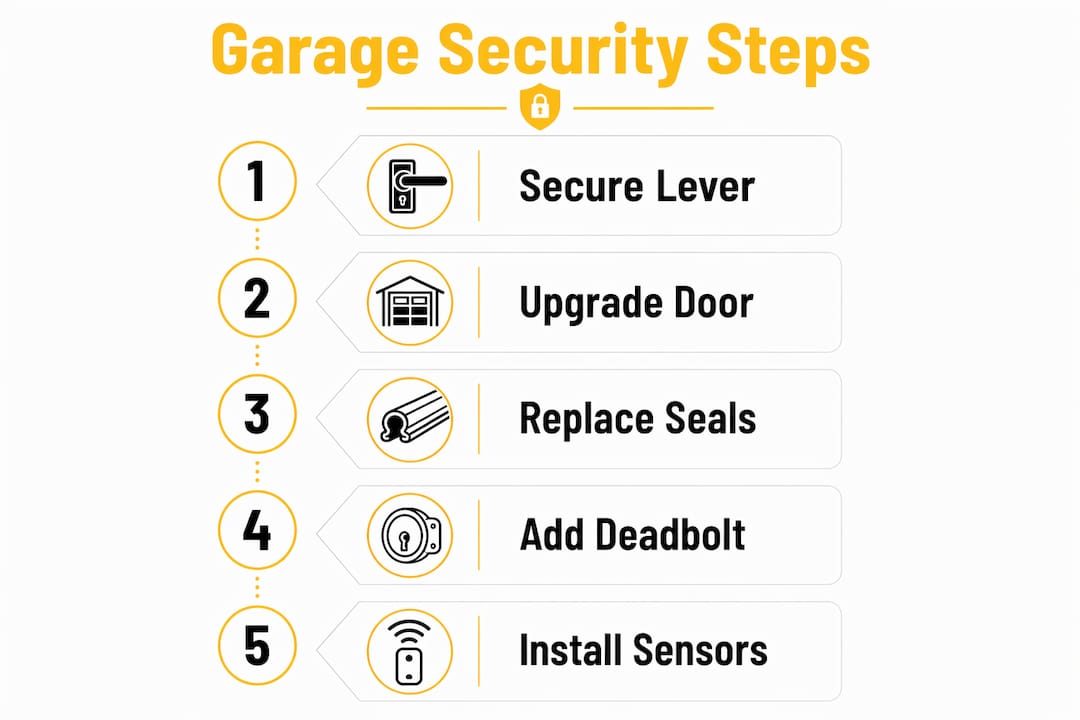
Secure the emergency release lever
A zip-tie threaded through the release lever limits how far it can travel when pulled from outside. Zip-ties can be cut in a real emergency but stop a coat hanger from triggering a full release. A purpose-built product called the Garage Shield installs over the lever and blocks the fishing angle entirely. Neither solution disables the lever. Both comply with UL 325 safety standards.
Upgrade the interior door
Treat the interior garage door exactly like your front door. That means a solid-core or steel door, a Grade 1 deadbolt, and a reinforced strike plate secured with 3-inch screws. A hollow-core door with a knob lock fails a single kick. A steel door with a Grade 1 deadbolt does not.
Replace worn weatherstripping
Worn weatherstripping creates gaps at the top and sides of the door that make the fishing technique easier. Fresh seals close those gaps and force a burglar to work harder and make more noise. Run a tune-up checklist twice a year to catch seal wear before it becomes a vulnerability.
Here is a quick comparison of the most common prevention upgrades:
| Upgrade | Approximate Cost | Difficulty | Impact |
|---|---|---|---|
| Zip-tie on release lever | Under $1 | Very easy | High |
| Garage Shield device | $30–$50 | Easy | High |
| Smart garage door opener | $150–$300 | Moderate | Very high |
| Steel interior door + deadbolt | $200–$400 | Moderate | Very high |
| Motion sensor lights | $25–$60 | Easy | Medium |
| Outdoor security camera | $50–$150 | Easy | Medium |
Pro Tip: Remove the garage door remote from your car and replace it with a keychain-sized remote or a smartphone app. This eliminates one of the most common theft-to-burglary chains.
Additional habits that cost nothing:
- Keep the garage door closed at all times, even when you are home.
- Never leave the interior house door unlocked just because the garage door is down.
- Cover or frost garage door windows to block visibility inside.
- Add a manual slide lock or track lock to the garage door for overnight security.
How do you build a layered garage security system?
A single fix is better than nothing. A layered system is what actually stops a determined burglar. Effective garage security monitors all access points together: the overhead door, any side service doors, and the interior door connecting to the house.
Here is what a complete layered setup looks like:
| Layer | Component | Purpose |
|---|---|---|
| Physical | Steel interior door, Grade 1 deadbolt, reinforced strike plate | Stops forced entry after garage access |
| Physical | Zip-tie or Garage Shield on release lever | Blocks fishing technique |
| Detection | Door and window sensors on all garage entries | Triggers alert on any unauthorized opening |
| Detection | Motion sensor inside garage | Catches movement if door is bypassed |
| Deterrence | Motion-activated exterior lights | Discourages approach at night |
| Monitoring | Smart camera covering driveway and door | Records and alerts in real time |
| Notification | Smart opener with remote monitoring | Sends phone alerts for door activity |
The key principle here is that all entry points must be treated equally. A burglar who cannot get through the overhead door will try the side service door. If that is locked, they will check the interior door. Each layer forces them to spend more time, make more noise, and take more risk.
Attached garages carry higher risk than detached ones because a successful entry gives direct access to the home. Detached garages still need protection since they typically store vehicles, tools, and equipment worth thousands of dollars. For detached structures, a perimeter approach including security fencing around the property adds another layer of deterrence before a burglar even reaches the door.
Regular maintenance matters too. A door with misaligned panels or a broken off-track door creates gaps that make the fishing technique easier. A properly aligned, well-sealed door is harder to exploit and signals to a burglar that this home is maintained and monitored.
Key takeaways
A garage break in is most effectively prevented by combining physical reinforcement of the emergency release lever and interior door with smart technology and consistent security habits.
| Point | Details |
|---|---|
| Emergency release is the primary target | Secure it with a zip-tie or Garage Shield without disabling the safety function. |
| Interior door is the last line of defense | Install a steel door, Grade 1 deadbolt, and reinforced strike plate to stop entry into the home. |
| Remote openers in vehicles are a liability | Move the remote to a keychain device or smartphone app to eliminate a common theft chain. |
| Layered systems outperform single fixes | Combine physical locks, sensors, cameras, and smart openers for full perimeter coverage. |
| Maintenance closes exploitable gaps | Worn weatherstripping and misaligned panels make fishing attacks easier; fix them on a schedule. |
What i've learned after years of garage door work
After working on garage doors across Northern Colorado, the pattern I see most often is not a lack of awareness. It is a gap between knowing something is a risk and actually doing something about it. Homeowners hear about the 6-second break-in, nod, and go back to leaving the remote in the car.
The emergency release lever gets the most attention, and it deserves it. But the interior door is the fix I push hardest. I have walked through attached garages where a $15 hollow-core door with a knob lock was the only thing separating a burglar from the kitchen. That is not a security system. That is a suggestion.
The other thing I want to say clearly: do not disable the emergency release. I have seen homeowners cut the cord entirely after reading about the fishing technique. That violates UL 325 compliance and creates a genuine fire safety risk. A zip-tie costs nothing and solves the problem without creating a new one.
The most secure garages I see are not the ones with the most expensive equipment. They are the ones where the homeowner treats every entry point with the same seriousness as the front door. That mindset costs nothing and changes everything.
— Adi
Protect your garage with help from local experts
If reading this made you realize your garage door has gaps, worn seals, or an opener that is years past its prime, that is a fixable problem. Garagedoorrepairsloveland handles everything from opener upgrades and security assessments to full door replacements, with 90% of jobs completed the same day.
Mike's team serves Loveland and Northern Colorado with upfront phone estimates, no surprise charges, and a 10% discount for veterans. Whether you need a new smart opener, a reinforced interior door assessment, or a full garage door repair and upgrade, the team is ready to walk you through your options and get the work done right.
FAQ
What is the 6-second garage break-in method?
The 6-second break-in uses a wire or coat hanger inserted through the top gap of a garage door to hook and trigger the emergency release lever, disengaging the door from the opener track. It requires no tools, makes no noise, and leaves no evidence.
How do i secure my garage door against the fishing technique?
Thread a zip-tie through the emergency release lever to limit its travel, or install a purpose-built device like the Garage Shield. Both solutions block the fishing technique while keeping the lever functional for real emergencies.
What should i do after a garage break-in?
After a break-in, contact local police to file a report, document all missing or damaged items, and call a garage door professional to assess and repair any damage. Then address the vulnerability that was exploited to prevent a repeat incident.
Are smart garage door openers worth the cost?
Yes. Smart openers use rolling code technology that changes the access signal with every use, blocking signal replay attacks that defeat older fixed-code models. Remote monitoring and real-time alerts also let you catch unauthorized access immediately.
Is a detached garage less risky than an attached one?
A detached garage carries lower risk of home intrusion but still stores high-value property. An attached garage is higher priority because a successful entry gives a burglar direct, private access to the house interior.
Recommended
- Garage Door Off the Track? Don't Force It — Here's What to Do | Mike's Garage Door Repair Loveland
- Garage Door Opener Not Working? Walk Through This 4-Minute Diagnostic Before You Call | Mike's Garage Door Repair Loveland
- How to Winter-Proof Your Garage Door for a Colorado Winter | Mike's Garage Door Repair Loveland
- Garage Door Repair vs. Replacement: When It's Time to Stop Patching | Mike's Garage Door Repair Loveland