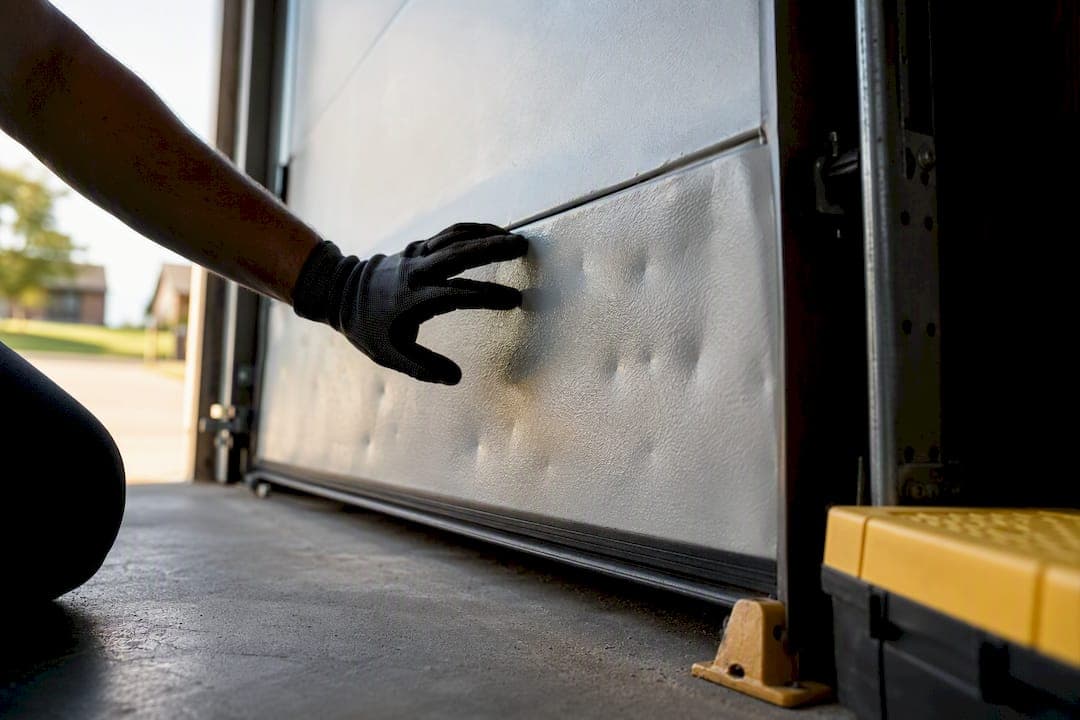
Most hail dents are cosmetic and repairable, and standard homeowners policies usually cover them once the cost clears your deductible. Stop using the door immediately if a panel is warped, the track looks bent, or a spring or cable seems off. Photograph everything, get a written professional assessment, and let that inspection tell you whether you're looking at a repair or a replacement.
TL;DR:
- Most hail dents are cosmetic and can be repaired without replacing the entire garage door unless three or more panels are deeply damaged or tracks and springs are affected.
- Photograph and document all visible damage, including close-ups with scale references, and compare repair estimates to your deductible to determine if filing an insurance claim is worthwhile.
- Small cosmetic dents on one panel often wait for scheduled repairs, while damage affecting tracks, springs, or multiple panels requires professional evaluation before further use.
- Impact-resistant steel doors with higher gauge ratings and annual tune-ups can reduce future damage risks in hail-prone areas like Colorado's Front Range.
- Delaying repairs can lead to rust, structural problems, and increased hardware wear, so inspect behind the garage door and inside the tracks immediately after a storm.
Table of Contents
- How Bad Is the Hail Damage to My Garage Door?
- Is the Damage Cosmetic, Structural, or Critical?
- Repair or Replace: Which Makes Sense for Your Door?
- Will Homeowners Insurance Cover Garage Door Hail Damage?
- When Should You Call a Garage Door Professional?
- What Happens if You Ignore Hail Damage Long Term?
- How Can You Protect a Garage Door From Future Hailstorms?
- Why Homeowners Overcomplicate This Decision
- Get Your Garage Door Storm Damage Assessed Fast
- Sources
- FAQ
How Bad Is the Hail Damage to My Garage Door?
Right after the storm passes, resist the urge to rush outside and start poking at dents. Wait until the hail has fully stopped and it's safe to walk your property, then do a visual sweep from a few feet back before you touch anything.
Here's the order that actually protects both your safety and your insurance claim:
- Scan the door's surface for dents, cracked panels, or anything visibly bent.
- Check the bottom corners and weather seal for gaps or debris that could jam the track.
- Look at the opener rail and springs from a distance. Don't force the door open or closed if anything looks off.
- Photograph and video the damage before you touch it.
For documentation, shoot wide shots that show the whole door and its context on the house, then move in for close-ups. Slide a coin or a ruler next to each dent for scale. Turn on your phone's location and timestamp settings so the files carry a date automatically.
Pro Tip: Save a screenshot of the local radar or a weather service report from that day. Adjusters often ask for it, and having it ready shaves days off claim processing.
If you had to secure an opening temporarily, like bracing a bent panel, photograph that fix too. Documenting the damage thoroughly with both media and written notes gives an adjuster far less to question later.
Is the Damage Cosmetic, Structural, or Critical?
Not every dent means trouble, but the difference between "ugly" and "dangerous" often comes down to what you can't see from the driveway.
Cosmetic damage usually looks like this:
- Shallow, isolated dents on one or two panels
- Paint chipping or surface scuffing with no warping underneath
- The door still opens and closes smoothly
Structural damage looks different:
- Dents on three or more panels, or dents deep enough to change the panel's curve
- Visible warping along a seam or edge
- A track that's pulled away from the wall or bent at a joint
Critical damage means stop immediately:
- A snapped or visibly stretched spring
- Cables that look frayed or loose
- The door binds, grinds, or won't move at all
Go inside the garage and look at the tracks from behind the door. Hidden bends or small dents on the inner rail are easy to miss from outside and often explain binding that shows up weeks later.
Pro Tip: Run your hand lightly along the inside of the track (never near a moving door) and feel for ripples. A track that looks straight from six feet away can still have a dent that catches the rollers.
Small cosmetic dents on one panel can usually wait for a scheduled repair. Anything touching the tracks, springs, or more than a couple of panels needs a professional look before you use the door again.
Repair or Replace: Which Makes Sense for Your Door?
Once you know what kind of damage you're dealing with, the next question is whether to fix it or replace it outright.
Paintless dent removal (PDR) works best on aluminum doors with shallow, isolated dents. A technician massages the metal back into shape from behind, and the finish stays intact. PDR loses effectiveness on steel doors with deep dents, where the metal has already stretched past the point of a clean pull.
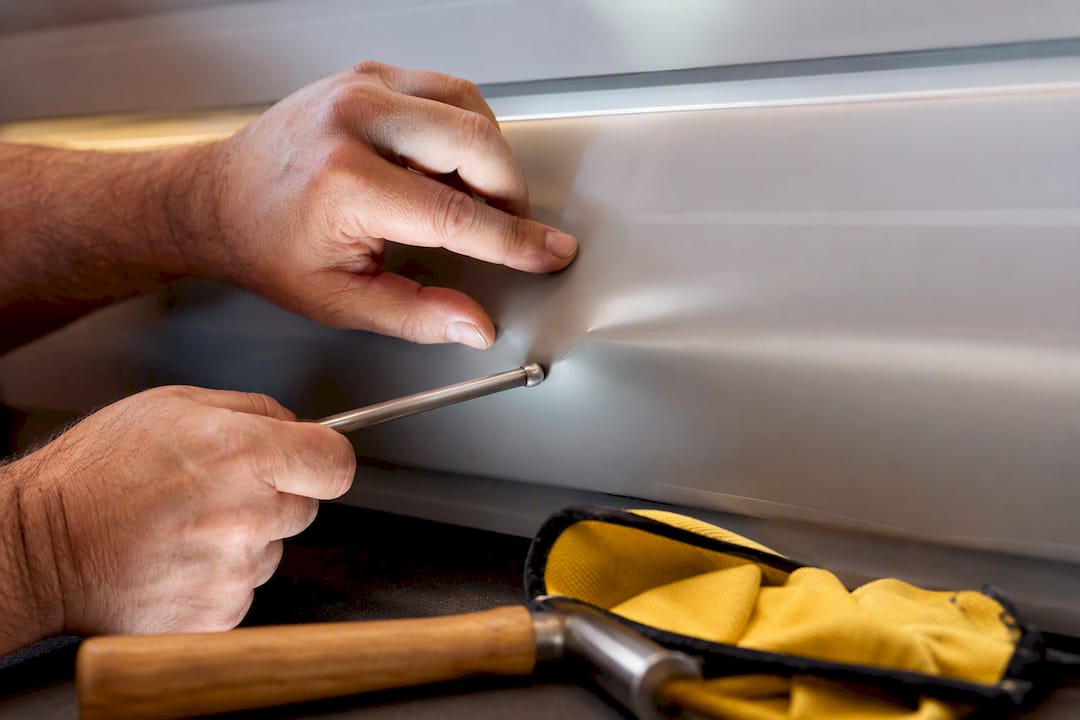
Panel replacement is the next step up. It solves deeper dents and cracked sections, but it comes with a catch: matching an existing panel's color and texture gets harder the older your door is. Some manufacturers discontinue styles within a few years, which turns a simple swap into a supply-chain problem.
A few thresholds help decide which way to go:
- If three or more panels are significantly damaged, full replacement often costs about the same as piecemeal panel repair, and you get a matching finish across the whole door.
- If repair costs are creeping toward half of what a new door would run, replacement is usually the smarter spend.
- Thinner-gauge, non-insulated doors from older builds tend to dent deeper and more often, which shortens the math further in favor of replacing rather than patching a door that will likely take the next hailstorm just as hard.
A full replacement typically runs between $1,150 and $1,870, which is worth knowing before you commit to chasing panel repairs one at a time. For a broader look at when patching stops making sense, see this breakdown of repair vs. replacement decisions.
Will Homeowners Insurance Cover Garage Door Hail Damage?
Most standard HO-3 homeowners policies cover hail damage to a garage door under dwelling coverage, but the deciding factor is almost always your deductible. If the repair estimate lands well below what you'd pay out of pocket anyway, filing may not be worth it.
Before you call your insurer, put together a claim packet an adjuster won't have to chase you for:
- Photos and video from your initial inspection, including wide shots and close-ups with scale references.
- A saved weather report or radar screenshot confirming the hailstorm's date and location.
- A written estimate from a licensed contractor, itemizing parts and labor.
- A police report only if vandalism is suspected alongside storm damage.
Compare that contractor estimate against your deductible before filing anything. Filing a small claim can affect your loss history and future premiums, so it's worth getting an independent estimate first rather than assuming the insurance route is automatically cheaper.
If you do decide to file, timing matters:
- Report the damage as soon as possible after the storm.
- Keep a written log of every call and email with your insurance company.
- Ask your adjuster directly whether they need additional documentation before they'll approve the claim.
Acting within that window tends to produce faster approvals and fewer requests for extra paperwork down the line.
When Should You Call a Garage Door Professional?
Certain signs mean it's time to stop troubleshooting and pick up the phone. Call a pro if the door won't open or close smoothly, if you can see a bent track or a compromised spring, if more than one or two panels show real damage, or if you're simply unsure whether what you're looking at is cosmetic or structural.
A solid inspection appointment should give you:
- A written estimate that breaks out parts, labor, and timeline
- Photos suitable for your insurance claim, taken by someone who knows what an adjuster looks for
- A clear plan for sourcing parts, including whether they're in local stock or on backorder
- Any temporary safety fix needed to secure the door until full repair
Knowing whether parts are locally stocked or waiting on a national backorder changes your timeline expectations, and a contractor who tells you that upfront is doing you a favor.
Pro Tip: Ask every contractor for the estimate in writing before any work starts. A verbal quote that turns into a bigger invoice later is the single biggest complaint homeowners have after storm repairs.
Watch for red flags too: no written scope of work, pressure toward a full replacement without a clear reason, or a quote that seems to change once you mention insurance. If you want a fuller rundown, this checklist of estimate red flags is worth a read before you sign anything.
What Happens if You Ignore Hail Damage Long Term?
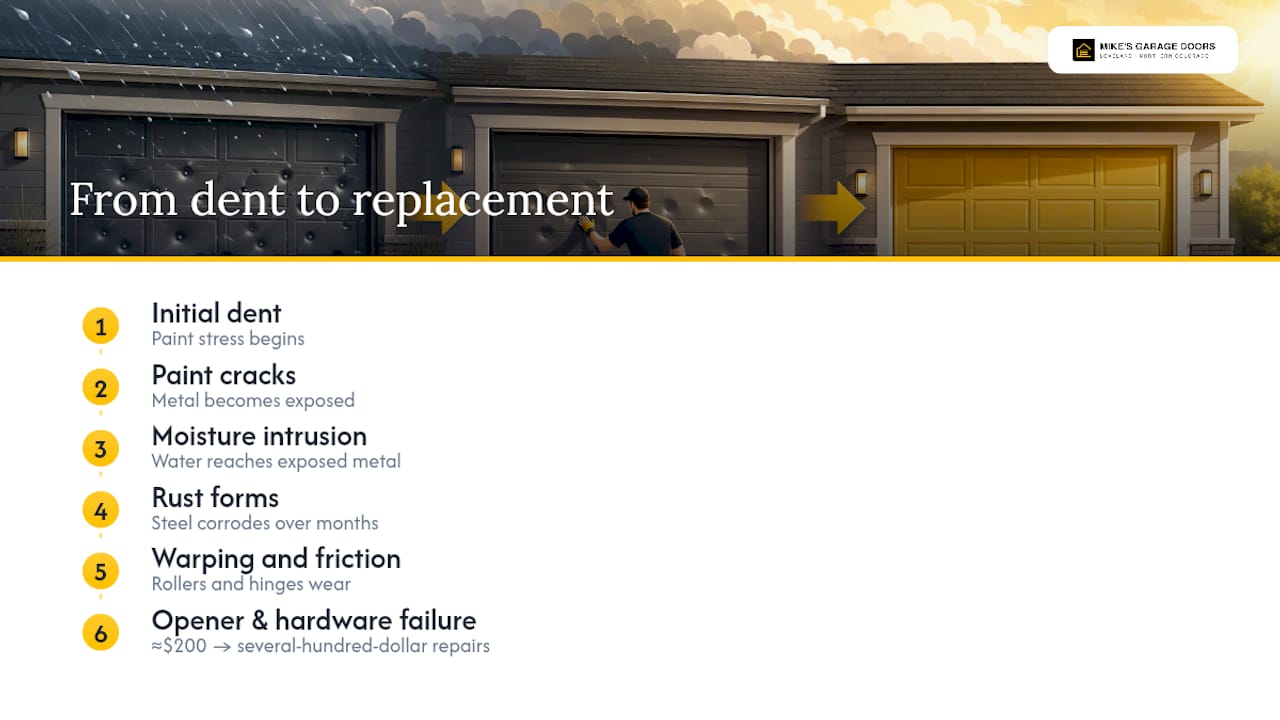
A dented panel that still opens and closes might seem fine to leave alone, but hail damage rarely stays static. Small dents create stress points where paint cracks further, moisture works in, and rust starts eating at the steel underneath. What starts as a cosmetic problem in spring can turn into a corrosion problem by the following winter.
Warped panels also change how weight distributes across the door. A door engineered to move as one flat plane starts binding at the rollers when a panel bends even slightly out of alignment. That extra friction wears down rollers, hinges, and eventually the opener motor, turning a $200 dent into a several-hundred-dollar hardware replacement over a year or two.
There's a security angle too. A door that doesn't seat flush in its track, or that's been forced open with visible warping, is easier to pry and slower to seal tight against wind and rain. For most homes, the garage door is the largest moving part of the building envelope, and a compromised one weakens the whole home's weather barrier, not just the door itself.
Waiting also narrows your insurance options. Policies typically require damage to be reported within a reasonable window of the storm event, and adjusters get skeptical of claims filed months later with no contemporaneous documentation. The dent you photograph today is provable. The same dent, six months from now with new rust around it, invites questions about whether it was really hail or ordinary wear.
How Can You Protect a Garage Door From Future Hailstorms?
Colorado's Front Range sees enough severe hail seasons that prevention is worth planning around, not just reacting to. A few upgrades meaningfully cut your risk before the next storm rolls through.
Material choice matters more than most homeowners realize. Steel doors rated for impact resistance, especially those with a thicker gauge (24 or 25 gauge outperforms thinner options), hold up better than lightweight aluminum or fiberglass under hail. Insulated doors also have an edge, since the foam backing adds rigidity that helps the outer skin resist denting on impact.
A few practical habits help too:
- Check your door's UL 2218 impact rating if you're due for a replacement anyway, since higher-rated doors resist denting better in hail events.
- Keep gutters and downspouts clear so runoff doesn't pool near the track during heavy storms.
- Consider a protective door screen or storm shutter if your garage faces the prevailing storm direction, common on the west and northwest sides of many Loveland homes.
- Schedule an annual tune-up before storm season so tracks, rollers, and springs are already in good shape when hail hits.
None of this guarantees a dent-free door forever. Hail large enough will mark almost any surface. But choosing the right gauge and rating when you replace a door, and keeping the hardware maintained in the meantime, meaningfully reduces both the frequency and severity of damage the next time a storm rolls through Larimer County.
Why Homeowners Overcomplicate This Decision
Most of the anxiety around hail-damaged garage doors comes from treating every dent like an emergency. It isn't. The research backs a simpler read: cosmetic damage is common, coverage is common, and the real risk sits almost entirely with the small share of doors that come away with bent tracks or compromised springs. That's the split worth focusing on, not the size of the dent.
Where conventional advice falls short is the insurance conversation. A lot of guidance treats filing a claim as the automatic next move after any storm. It isn't always the right one. If your repair estimate is a few hundred dollars under your deductible, filing can do more harm to your premium history than good. Get the independent estimate first. Let the math decide, not the impulse to "use the insurance you're paying for."
If I had to tell a Loveland homeowner one thing to prioritize, it's the inside-the-garage track check. Nobody skips the front-of-door photos. Almost everyone skips looking at the track from behind the door, and that's exactly where hidden bends hide until they cause a bigger failure weeks later.
— Eddie
Get Your Garage Door Storm Damage Assessed Fast
A local garage door service in Loveland, Colorado offers an alternative to guessing whether that hail dent needs a quick fix or a full replacement. Instead of waiting days for a callback or getting a vague phone estimate, customers can get an upfront assessment and often same-day repair.

That matters most right after a storm, when you're trying to decide fast whether to file an insurance claim or just pay out of pocket. Technicians handle issues from spring damage to bent tracks to panel replacement, providing written estimates suitable for insurance adjusters. If your door took a hit this season, check out the full range of garage door services in Loveland and Northern Colorado and get a real answer instead of a guess.
Sources
- What does homeowners insurance cover? — MoneyGeek
- Does home insurance cover garage door damage or repairs? — LegalClarity
- Hail damage garage door repair: what to do after a DFW storm — Taylor Overhead
FAQ
Will Homeowners Insurance Pay for a Hail-Damaged Garage Door?
Most standard HO-3 homeowners policies cover garage door hail damage under dwelling coverage, but only if the repair cost exceeds your deductible, so compare your estimate to your deductible before filing.
How Much Does It Cost to Fix Hail Damage on a Garage Door?
Costs vary by damage severity, but a full replacement typically runs $1,150 to $1,870, while single-panel or paintless dent repairs usually cost less than that range.
Which State Has the Worst Hail?
Colorado sits among the states hit the hardest by severe hail, and the Front Range corridor that includes Loveland sees some of the most frequent large hail events in the country during spring and summer storm season.
How Do I Know if My Garage Door Damage Is Serious?
If the door binds, won't move smoothly, or you can see a bent track, warped panel, or damaged spring, stop using it and call a professional for an inspection before operating it again.
How Soon Should I Report Hail Damage to My Insurer?
Report the damage within 48 to 72 hours when possible, since prompt reporting with photo and video documentation tends to produce faster claim approvals.