Technician availability is defined as knowing, in real time, which technicians are ready, qualified, and close enough to respond to a repair call. For homeowners and property managers dealing with a stuck or broken garage door, the role of technician availability determines whether you wait two hours or two days. Platforms like Makula and ServiceTitan have made this visibility practical, tracking live locations, job statuses, and skill sets so dispatchers stop guessing. When availability data is accurate, first-time fix rates climb from the 55–70% range to 80–95%. That gap is the difference between one visit and three.
How does technician availability affect repair response?
The role of technician availability in repair speed is direct and measurable. Real-time dispatch assigns the nearest qualified technician and re-routes dynamically when jobs run long or short. Dispatchers see live GPS locations, current job statuses, and technician skill profiles on a single screen. That visibility removes the guesswork that causes overlapping assignments and idle drive time.
Skill matching matters as much as proximity. Sending a technician who handles openers to a broken torsion spring job wastes everyone's time. Wrong or late dispatches caused by mismatched technicians are the leading driver of repeat visits and extended downtime. A second visit is not just inconvenient. It doubles your total repair window and often means another half-day waiting at home.

The numbers tell the story clearly. Without real-time tracking, first-time fix rates drop to 55–70%. That means nearly one in three jobs requires a return trip. With live availability data, those rates reach 80–95%. That improvement translates directly into fewer days with a non-functional door.
Here is what real-time availability visibility changes on the ground:
- Live GPS tracking shows dispatchers exactly where each technician is, cutting unnecessary drive time
- Job status feeds flag when a technician finishes early, freeing them for the next urgent call
- Skill tagging matches the right technician to the right job type, whether it is a spring replacement, panel repair, or opener reset
- Dynamic re-routing adjusts assignments mid-day when emergencies come in or jobs run over
"Live availability data eliminates dispatcher guesswork, preventing cascades of inefficiencies like overlapping assignments and idle technician time." — Makula
Property managers running multi-unit buildings feel this impact most. One delayed repair on a shared garage can block vehicle access for dozens of residents. When a dispatch system pulls from live data, that repair gets scheduled and completed the same day instead of sitting in a queue.
What tools improve technician scheduling accuracy?
Technology has made the impact of technician presence visible before the technician even leaves the shop. ServiceTitan introduced a start time chip in its scheduling dropdown that shows each technician's earliest possible start time within a given arrival window. Customer service reps can pick the technician who can genuinely arrive first, not just the one who appears available on paper.
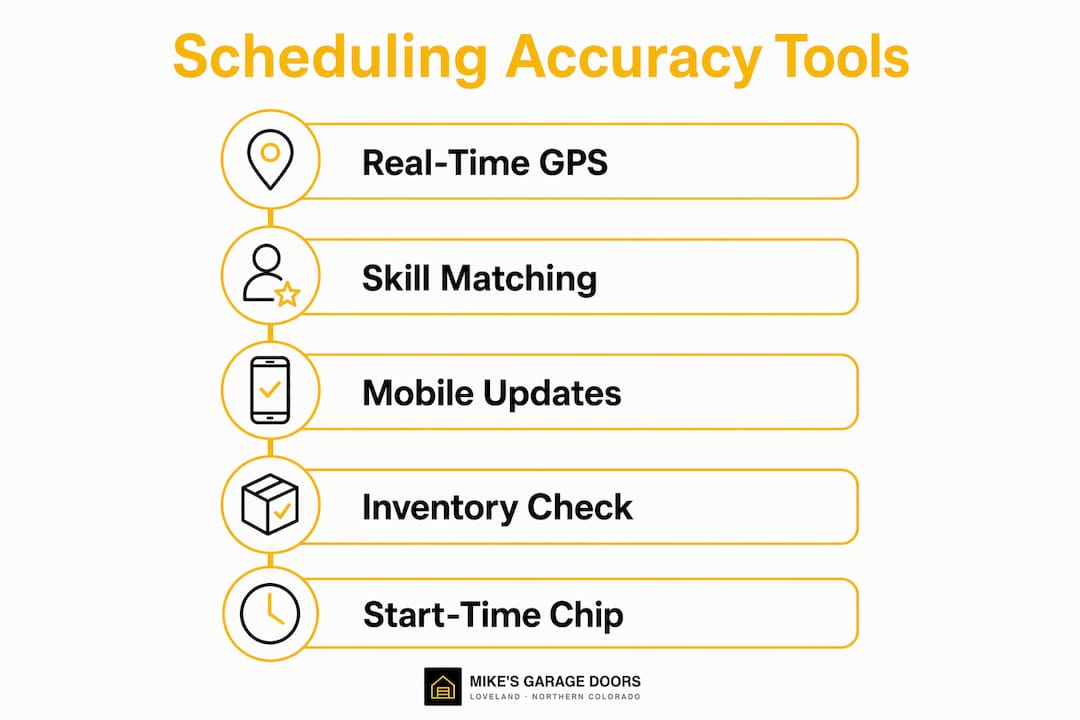
This feature solves a specific problem. Dispatchers often know technicians are "available" but cannot confirm they can start within the customer's requested window. That gap causes unnecessary rescheduling calls and frustrated customers. Showing earliest start times removes that friction entirely.
Mobile apps extend this visibility into the field. Technicians update job statuses from their phones, so the office sees completions in real time rather than waiting for end-of-day check-ins. Automated dispatch tools then pull that updated data to reassign freed technicians without a phone call.
Pro Tip: When calling a repair company, ask specifically: "Can you tell me the earliest your technician can start, not just the arrival window?" A company with real scheduling visibility will answer that question precisely. One without it will give you a vague four-hour window.
Here is how these tools stack up in practice:
| Tool / Feature | Primary Benefit | Impact on Scheduling |
|---|---|---|
| ServiceTitan Start Time Chip | Shows earliest technician start time | Reduces rescheduling calls |
| Makula Live GPS Tracking | Real-time technician location | Cuts travel and idle time |
| Mobile Job Status Updates | Field-to-office instant sync | Frees technicians faster |
| Skill and Inventory Integration | Matches tech to job requirements | Improves first-time fix rates |
Inventory integration is worth calling out separately. A technician who arrives without the right spring size or the correct opener motor has to make a second trip regardless of how fast dispatch was. Systems that tie parts inventory to technician profiles catch that problem before the truck rolls. That is a detail most customers never think to ask about, but it directly affects whether your repair finishes today or tomorrow.
Remote diagnosis vs. on-site visits: what is the trade-off?
Remote diagnosis is a real option in 2026, and it changes how technician time gets allocated. Research from Springer Nature shows that remote diagnosis reduces overall repair cycle time and the total number of visits. The trade-off is that assigning technician time to remote assessment shifts capacity away from field repairs, which can delay the first on-site visit.
Think of it this way. A technician spending 30 minutes on a video call diagnosing your opener issue is not driving to your property during that time. If the diagnosis confirms a part needs replacing, the clock on your repair just got longer, not shorter.
| Approach | Cycle Time | First Visit Speed | Best For |
|---|---|---|---|
| Remote Diagnosis First | Shorter overall | Slower | Complex, multi-part repairs |
| Direct On-Site Dispatch | Longer if wrong tech sent | Faster | Clear, single-issue repairs |
| Hybrid (Quick Call + Dispatch) | Balanced | Moderate | Most residential calls |
The right call depends on the repair type. A garage door repair timeline for a broken spring is predictable. An experienced dispatcher can send the right technician without a remote call. For a complex opener issue with multiple possible causes, a five-minute phone diagnostic can save a wasted trip.
Pro Tip: Before booking, run through a quick self-check using a resource like the opener diagnostic guide from Mikes garage doors Loveland. You may be able to describe the problem precisely enough that dispatch can skip the remote call entirely and send the right technician the first time.
Limited technician deployment creates operating constraints that delay output even when demand exists. This is not just a scheduling problem. It is a capacity problem. A company with three technicians covering a large area will always struggle to meet same-day demand, regardless of how good their software is. Staffing depth matters as much as dispatch technology.
IT support benchmarks make this concrete. Priority-one incidents require human response within 10 minutes, and that target is only achievable with staffed on-call coverage. Garage door repairs are not IT incidents, but the principle holds. Response time targets require actual bodies available to respond.
How should you evaluate technician availability before booking?
Choosing a repair service based on price alone ignores the factor that most affects your actual experience: whether a qualified technician can show up today. Here is how to evaluate availability of technical staff before you commit.
-
Ask about same-day capacity directly. "Do you have a technician available today?" is not enough. Ask: "What is the earliest a technician can start at my address?" A company with real dispatch visibility answers that in under a minute.
-
Ask about first-time fix rates. This number tells you how often they solve the problem in one visit. A rate above 80% signals good technician-to-job matching. Anything below 70% suggests dispatch problems or undertrained staff.
-
Look for GPS tracking and verified site visits. GPS vehicle tracking verifies that technicians actually completed visits, reducing billing disputes and false schedule claims. Ask if the company uses verified check-ins.
-
Check for upfront estimates. A company that gives you a price range over the phone before the technician arrives has already done the diagnostic work. That means they know what parts and skills the job requires, which is a sign of good availability planning. Watch out for hidden repair fees that appear only after the technician arrives.
-
Ask about technician specialization. Not every technician handles every job type. A company that assigns specialists for torsion springs, openers, and commercial doors separately will fix your problem faster than one that sends a generalist to everything.
Property managers should add one more question: "Can you handle multiple units in the same building on the same day?" A company with strong technician scheduling can stack jobs geographically, which cuts your per-unit downtime significantly.
Key takeaways
Technician availability determines repair speed, first-time fix rates, and total downtime, making it the single most important factor to evaluate when choosing a garage door repair service.
| Point | Details |
|---|---|
| Real-time dispatch matters | Live GPS and job status data cut travel time and prevent misassigned technicians. |
| First-time fix rates reveal dispatch quality | Rates of 80–95% signal strong availability matching; below 70% signals repeat visits. |
| Start time visibility reduces frustration | ServiceTitan's start time chip shows when a technician can actually begin, not just arrive. |
| Remote diagnosis involves trade-offs | It shortens overall cycle time but can delay the first on-site visit if overused. |
| Ask the right questions before booking | Request earliest start time, first-time fix rates, and GPS verification before committing. |
Why technician availability is the metric most people ignore
I have seen the same pattern repeat itself more times than I can count. A homeowner calls a repair company, gets told "we can be there between noon and 4," and then waits until 3:45 for a technician who does not have the right spring in the truck. Two days later, the door still does not work. That is not a parts problem. That is a technician availability problem.
The industry talks a lot about response time, but response time without skill matching is just a fast wrong answer. What actually matters is whether the right technician, with the right parts and the right training, can reach you within a window that works for your schedule. That requires real dispatch infrastructure, not just a phone and a map.
Property managers get burned by this more than anyone. When you are managing 50 units and a shared garage goes down, you need a company that can tell you exactly when the repair happens, not a vague window. The companies that can do that have invested in scheduling technology and staffed their teams to match demand. The ones that cannot are winging it.
My honest advice: treat technician availability as a performance metric, not a courtesy. Ask hard questions before you book. A company that cannot answer "what is your first-time fix rate" or "what is the earliest your tech can start" is not ready to serve you well. The technology exists to answer both questions in real time. If a company is not using it, that tells you something important about how they operate.
— Eddie
Get same-day service from mikes garage doors loveland
Mikes garage doors Loveland completes 90% of repairs the same day, with upfront phone estimates so you know the cost before anyone arrives. The team handles everything from broken torsion springs to faulty openers across Northern Colorado, with technicians matched to job type before dispatch.

If you want a provider that takes technician scheduling seriously, Mikes garage doors Loveland is built around exactly that. Check out the full range of garage door services in Loveland and book a same-day appointment. Veterans receive a 10% discount, and every repair comes backed by a warranty that protects your investment.
FAQ
What is the role of technician availability in repairs?
Technician availability determines how quickly the right person reaches your job and whether the repair is completed correctly on the first visit. Without real-time availability data, dispatchers send the wrong technician, which causes repeat visits and longer downtime.
How do first-time fix rates connect to technician availability?
First-time fix rates drop to 55–70% without real-time technician tracking and reach 80–95% with it. The difference comes from matching the right technician and parts to the job before dispatch.
What should i ask a repair company about technician scheduling?
Ask for the earliest possible start time, not just the arrival window, and ask for their first-time fix rate. A company with real dispatch visibility answers both questions immediately.
Does remote diagnosis speed up or slow down my repair?
Remote diagnosis shortens overall repair cycle time but can delay the first on-site visit by pulling technician time away from field work. For straightforward repairs like broken springs, direct dispatch is usually faster.
How does GPS tracking improve technician accountability?
GPS vehicle tracking verifies that technicians completed site visits and prevents false schedule claims or billing disputes. It also gives dispatchers accurate location data for faster re-routing.
Recommended
- Garage Door Services in Loveland, CO — Spring, Opener, Commercial & Custom
- Garage Door Opener Not Working? Walk Through This 4-Minute Diagnostic Before You Call | Mike's Garage Door Repair Loveland
- Garage Door Repair vs. Replacement: When It's Time to Stop Patching | Mike's Garage Door Repair Loveland
- Garage Door Off the Track? Don't Force It — Here's What to Do | Mike's Garage Door Repair Loveland