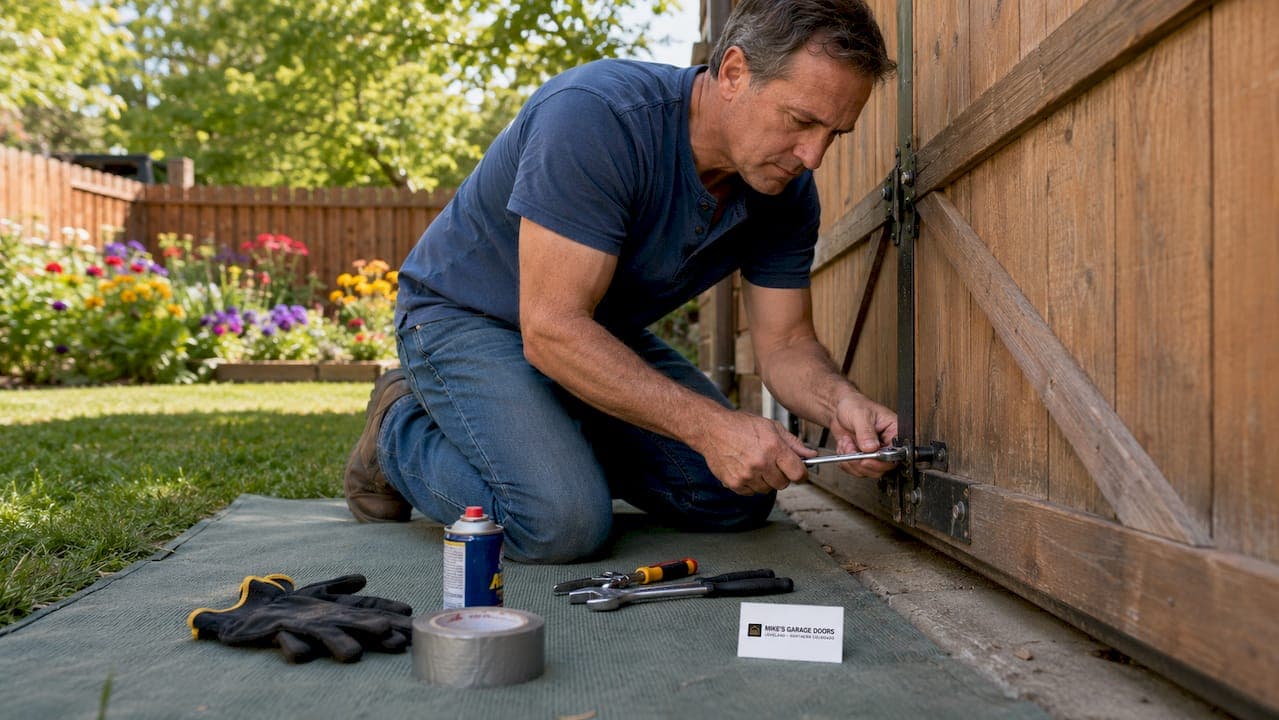
Servicing a garage door is the practice of inspecting, lubricating, and testing all moving components to keep the system safe and running reliably. Your garage door is the largest moving part in your home, cycling over 1,000 times a year. That kind of workload demands real attention. The good news: most of the work costs under $30 in supplies and takes less than an hour. This guide walks you through every step, from monthly safety checks to annual tune-ups, and tells you exactly when to put down the wrench and call a pro.
What tools do you need to service a garage door?
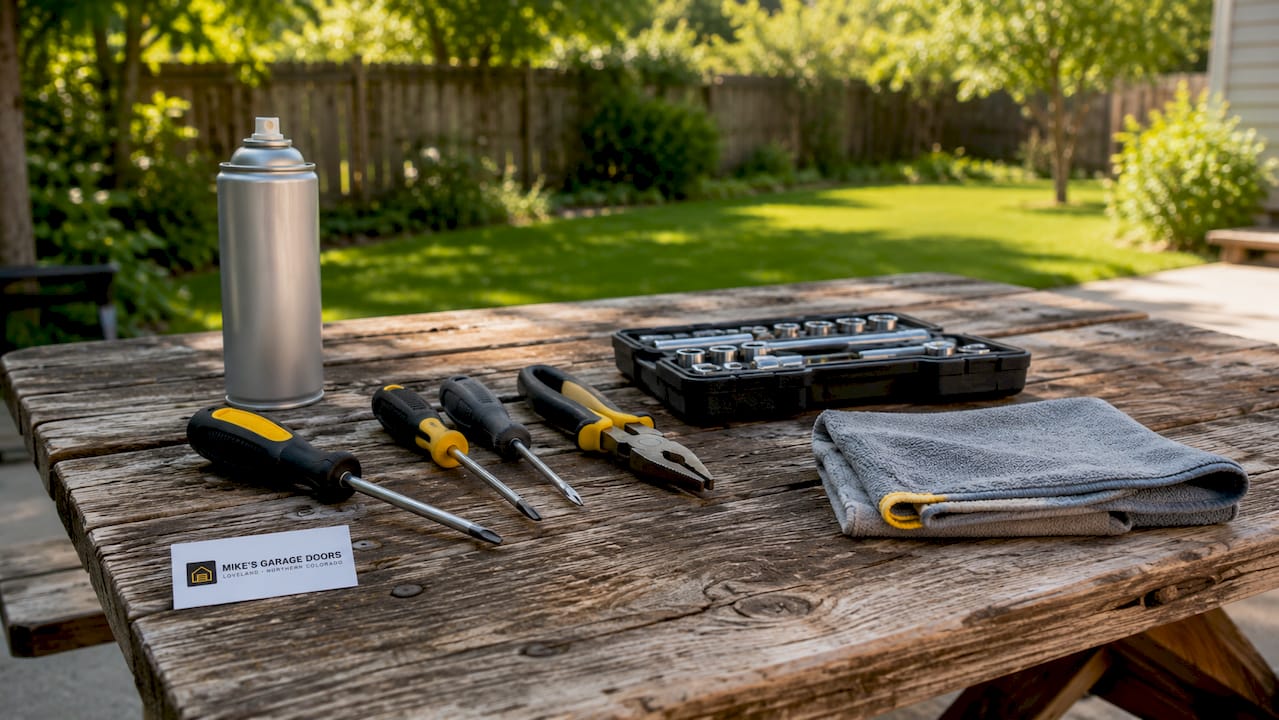
The right supplies make the difference between a smooth job and a wasted afternoon. You do not need a full workshop. A focused kit covers almost every routine maintenance task.
Core tools and materials:
- Silicone or lithium-based lubricant spray (WD-40 Specialist White Lithium Grease or 3-IN-ONE Garage Door Lube work well)
- Socket wrench set and screwdrivers (flathead and Phillips)
- Clean rags or microfiber cloths
- A 1.5-inch thick 2x4 board for safety testing
- Stepladder for reaching the opener and upper tracks
- Mild household cleaner and a sponge for panel cleaning
Lubricant comparison table:
| Lubricant Type | Best Used On | Avoid Using On |
|---|---|---|
| Silicone spray | Nylon rollers, weather stripping, hinges | Tracks (attracts debris) |
| White lithium grease | Metal rollers, torsion spring coils, hinges | Plastic components |
| General WD-40 (original) | Rust removal only | Any moving part long-term |
| Garage-specific lube (3-IN-ONE) | All moving metal parts | Tracks |
The lubricant choice matters more than most homeowners realize. Using standard WD-40 on rollers and hinges leaves a thin, fast-evaporating film that actually draws in dust and grit. Silicone or lithium-based lubricants keep moving parts functioning longer and reduce noise and wear. Stick to products labeled specifically for garage doors when possible.
Pro Tip: Never spray lubricant inside the tracks. Clean tracks with a dry rag instead. Lubricated tracks cause the door to slip and bind, which strains the opener motor.
One household substitute that works in a pinch: petroleum jelly applied with a rag to metal hinges and roller stems. It is not a long-term fix, but it will quiet a squealing door until you get the right product.
How to service a garage door: step-by-step routine
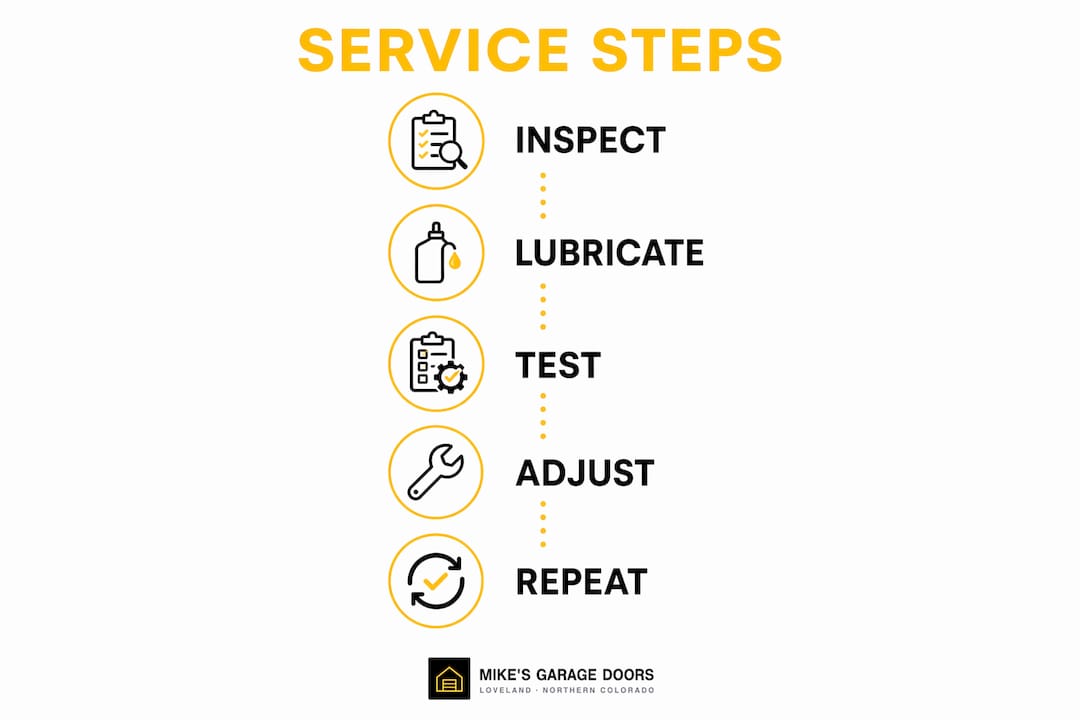
Follow this sequence monthly, twice yearly, and annually. The 1-3-12 maintenance rule gives you a clear framework: monthly visual and safety checks, quarterly lubrication and hardware tests, and one annual professional tune-up.
Monthly safety and visual checks
- Run the auto-reverse test. Place a 1.5-inch 2x4 flat on the ground in the door's path. Press the close button. The door must reverse within 2 seconds of contact. Failure to auto-reverse has been linked to child fatalities since 1982. If the door does not reverse immediately, stop using it and call a technician.
- Test the photo-eye sensors. With the door closing, wave a broom handle through the sensor beam near the floor. The door should stop and reverse instantly. Clean the sensor lenses monthly with a dry cloth. Misaligned or dirty sensors are the number one cause of doors that refuse to close.
- Listen and watch during operation. Open and close the door twice. Listen for grinding, popping, or scraping sounds. Watch for jerky movement or one side moving faster than the other. These are early warning signs you can catch before they become expensive.
Twice-yearly lubrication and hardware check
- Lubricate all hinges. Apply a short burst of white lithium grease or garage door lube to each hinge pivot point. Wipe off any excess with a rag. Excess lubricant collects dirt and makes the problem worse over time.
- Lubricate the rollers. If you have metal rollers, apply lubricant to the roller stems, not the wheels. If you have nylon rollers, use silicone spray only. Industry experts recommend replacing worn rollers and hinges at the first sign of wear to prevent larger system failures.
- Lubricate the torsion spring coils. Apply a thin coat of white lithium grease along the length of the spring. This reduces metal fatigue and noise. Do not adjust the spring tension. That step requires a professional.
- Tighten all visible hardware. Use a socket wrench to snug up the bolts on track brackets, roller brackets, and the opener mounting hardware. Work your way around the door systematically. Skip the bottom brackets. Those connect directly to the cables and springs and are under extreme tension.
Pro Tip: Take a photo of your hardware before you start tightening. If a bolt looks stripped or a bracket looks bent in the photo, you will catch it faster than trying to remember what "normal" looked like.
Annual cleaning and balance test
- Clean the door panels. Use a mild soap and water solution on steel or fiberglass doors. Rinse and dry completely. For wood doors, check for peeling paint or soft spots that signal moisture damage.
- Clean the tracks. Wipe the inside of both vertical and horizontal tracks with a dry rag. Remove any built-up grit or debris. Do not lubricate the tracks.
- Run the balance test. Disconnect the opener by pulling the red emergency release cord. Manually lift the door to waist height and let go. A balanced door stays in place. A door that drops or shoots upward has a spring tension problem. Call a professional to adjust it.
What are the most common DIY garage door mistakes?
Most garage door problems fall into two categories: things you can fix yourself and things that will send you to the emergency room if you try. Knowing the difference is the most important skill in home garage door maintenance.
Signs you can handle it yourself:
- Remote stops working but wall button still works (replace the remote battery)
- Door is noisy but moves smoothly (lubrication needed)
- Sensors are misaligned (realign by loosening the bracket and repositioning)
- Loose bolts on track brackets (tighten with a socket wrench)
Signs you need a professional immediately:
- Door drops suddenly or feels extremely heavy when disconnected from the opener
- A cable has snapped or is visibly frayed
- The torsion spring above the door is broken or has a visible gap
- The door has come off the track
- The door fails the auto-reverse test
Safety Warning: Torsion springs and bottom bracket cables hold over 100 pounds of mechanical force. Attempting to adjust or repair these components yourself is the primary cause of serious DIY injuries in garage door work. Do not touch them. Call a licensed technician.
When troubleshooting an opener that will not respond, test the wall button separately from the remote. If the wall button works but the remote does not, the fix is a new battery or remote reprogramming. If neither works, the issue is the opener logic board or the sensors. That distinction saves you an unnecessary service call or tells you exactly what to describe when you do call.
Pro Tip: If your door reverses before touching the ground, the close-force sensitivity is set too high. Most openers have a small adjustment dial on the motor unit. Check your owner's manual before touching it, and only make one small adjustment at a time.
Forcing a door that has come off its track is one of the most common garage door installation mistakes homeowners repeat. The rollers can crack, the track can bend further, and the cables can tangle. Disconnect the opener, support the door manually, and call for help.
Does regular maintenance actually save you money?
The short answer: yes, significantly. 90% of emergency garage door repair calls result from preventable neglect. A full door replacement can exceed $2,000, and in some cases runs as high as $6,000 when structural damage is involved.
DIY vs. professional maintenance cost comparison:
| Maintenance Type | Estimated Cost | Frequency | What It Covers |
|---|---|---|---|
| DIY monthly checks | $0 (time only) | Monthly | Safety tests, visual inspection |
| DIY lubrication kit | $15–$30 | Twice yearly | Lubricants, rags, basic hardware |
| Professional tune-up | $100–$150 | Annually | Spring tension, cable check, full adjustment |
| Emergency repair | $200–$600+ | Unplanned | Broken springs, opener failure, off-track door |
| Full replacement | $1,500–$6,000 | Unplanned | Complete system failure from neglect |
The math is straightforward. Spending $30 on supplies twice a year and $125 on an annual tune-up costs roughly $185 per year. One emergency spring repair alone averages $200–$400. Skipping maintenance does not save money. It defers a larger bill.
Professional tune-ups complement homeowner maintenance, especially in high-use homes or harsh climates like Northern Colorado, where temperature swings stress springs and seals. A technician catches what you cannot see, including hairline cracks in spring coils and fraying cables. Pair your DIY routine with the garage door tune-up checklist from Mikes garage doors Loveland to make sure nothing gets missed.
Ignoring small warning signs like squeaks or uneven movement leads to complete system failure. Expert Randy Oliver notes that full replacements costing up to $6,000 almost always trace back to symptoms that were present months earlier. Catching a $15 roller problem before it becomes a $400 opener repair is exactly what a maintenance habit delivers.
Key takeaways
Routine garage door servicing prevents the majority of costly repairs and keeps your door safe for daily use.
| Point | Details |
|---|---|
| Follow the 1-3-12 rule | Run monthly safety checks, lubricate quarterly, and book one professional tune-up annually. |
| Use the right lubricant | Apply silicone or white lithium grease to hinges, rollers, and springs. Never lubricate the tracks. |
| Test safety features monthly | The auto-reverse and photo-eye sensor tests take under five minutes and prevent serious hazards. |
| Skip spring and cable repairs | These components hold extreme tension and cause the most serious DIY injuries. Always call a pro. |
| Maintenance saves real money | Spending $185 per year on upkeep prevents emergency repairs that average $200–$600 or more. |
What i've learned after watching hundreds of garage door failures
I have seen the same pattern repeat itself more times than I can count. A homeowner hears a squeak for three months, ignores it, and then one morning the spring snaps. It sounds like a gunshot. The door turns into dead weight. Now they are late for work, the car is stuck inside, and they are looking at a repair bill that could have been avoided entirely.
The DIY maintenance steps in this guide are genuinely within reach for most homeowners. The lubrication, the safety tests, the hardware checks: none of that requires special training. What does require training is knowing where to stop. The torsion spring above your door is not a component to experiment with. I have seen experienced people get hurt trying to adjust spring tension without the right tools and knowledge. That is not a risk worth taking to save a service call.
My honest advice: build the habit first. Set a reminder on your phone for the first Saturday of every month. Run the auto-reverse test. Look at the hardware. Listen to the door move. That five-minute habit will tell you more about your door's health than any single inspection. When something feels off, check the warning signs of spring failure before the problem escalates. And when the balance test shows a problem, or a cable looks frayed, make the call. That is not giving up on DIY. That is being smart about it.
— Eddie
When to call mikes garage doors loveland for professional service
Some garage door jobs are simply not DIY territory, and that is completely fine.

Mikes garage doors Loveland handles torsion spring replacements, cable repairs, opener diagnostics, and full tune-ups across Northern Colorado. The team completes 90% of repairs the same day, and you get a transparent estimate over the phone before anyone shows up at your door. No surprise charges. For veterans, there is a 10% discount on all services. If your balance test revealed a problem, your door failed the auto-reverse check, or you just want a professional set of eyes on the whole system, explore the full range of garage door services or visit garagedoorrepairsloveland.com to book a same-day appointment.
FAQ
How often should you service a garage door?
Run visual and safety checks monthly, lubricate moving parts twice yearly, and schedule one professional tune-up annually. This 1-3-12 schedule keeps most doors running reliably for 15–20 years.
What lubricant should i use on a garage door?
Use silicone spray or white lithium grease on hinges, rollers, and spring coils. Never use standard WD-40 as a long-term lubricant, and never apply any lubricant inside the tracks.
Can i fix a garage door spring myself?
No. Torsion springs hold over 100 pounds of mechanical force and are the leading cause of serious DIY garage door injuries. Spring adjustment and replacement require a licensed technician with specialized tools.
Why does my garage door reverse before hitting the ground?
The close-force sensitivity on the opener is set too high. Check your opener's owner's manual for the adjustment dial location and make one small change at a time. If the problem persists, call a technician to inspect the sensors and logic board.
How do i know if my garage door is out of balance?
Disconnect the opener using the red emergency release cord and manually lift the door to waist height. Release it. A balanced door stays in place. A door that drops or rises on its own has a spring tension issue that requires professional adjustment.
Recommended
- Garage Door Services in Loveland, CO — Spring, Opener, Commercial & Custom
- Why Professional Installation Matters for Garage Doors
- Garage Door Opener Not Working? Walk Through This 4-Minute Diagnostic Before You Call | Mike's Garage Door Repair Loveland
- How to Winter-Proof Your Garage Door for a Colorado Winter | Mike's Garage Door Repair Loveland