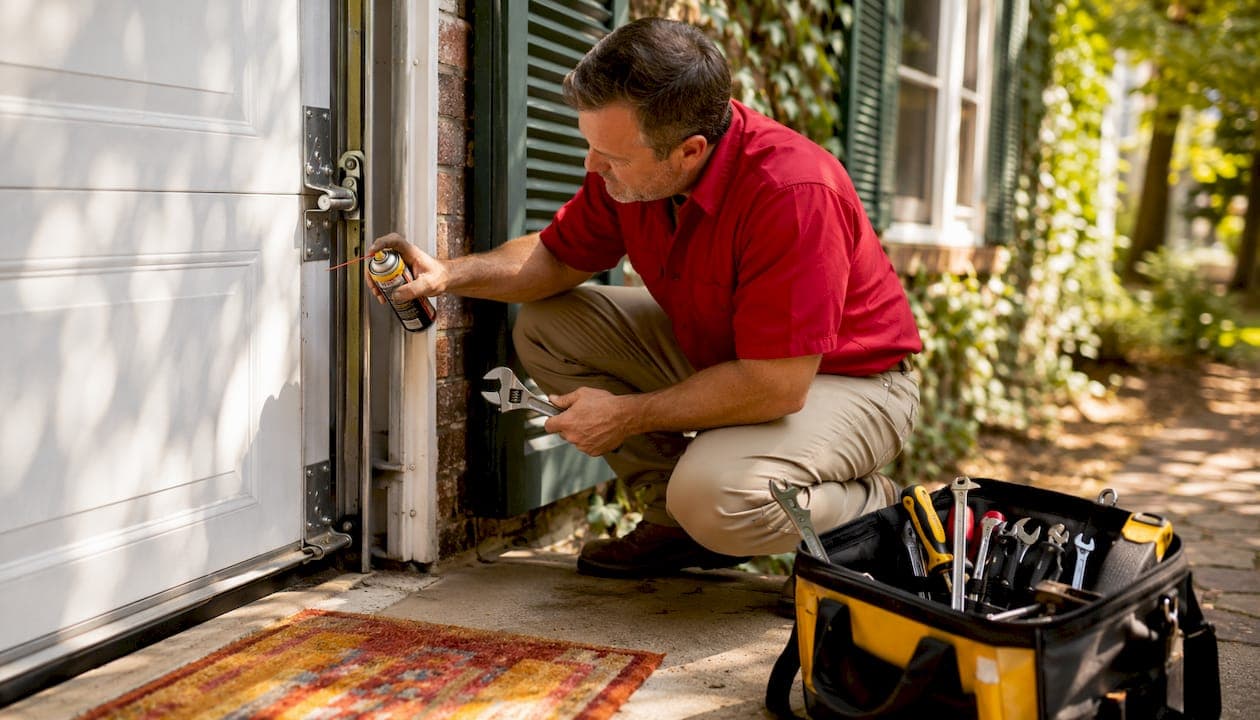
Most noisy garage door problems come down to three things: dry moving parts, loose hardware, and worn rollers. The fix is faster than you think. Tighten every accessible bolt and nut with a socket wrench, clean all moving parts with a dry rag, then apply silicone spray or white lithium grease to your rollers, hinges, and torsion springs. Never put lubricant on the tracks. Run the door through a few full cycles to spread the lubricant evenly, and you'll notice the difference immediately.
Here's the quick-start checklist before you dig into the details:
- Tighten all hardware first: track brackets, hinge screws, roller stem bolts, and the opener mounting bracket.
- Clean before you lubricate. Spraying lubricant over grime just creates an abrasive paste.
- Use silicone spray or white lithium grease on rollers, hinges, and springs.
- Skip WD-40. It's a solvent, not a lubricant, and it attracts dust and grime that accelerates wear.
- Never lubricate the tracks. Clean them dry instead.
- Tools you'll need: socket wrench, silicone spray or lithium grease, clean rags, a ladder, and work gloves.
- Safety first: disconnect the opener by pulling the red emergency release cord before you touch anything.
If a loud bang sent you here, stop. That sound almost certainly means a broken torsion spring, and that repair belongs to a professional.
How do you diagnose a noisy garage door by sound?
Listening closely to your door's noises is the fastest way to find the root cause before spending a dime. Each sound type points to a specific problem, and matching the two saves you from fixing the wrong thing.
- Squeaking or creaking means dry metal-on-metal contact. Rollers, hinges, or springs need lubrication. This is the most common noise and the easiest fix.
- Grinding throughout travel usually signals worn roller bearings or a misaligned track forcing rollers to drag instead of roll. Run your hand along each stationary roller (opener disconnected) and feel for wobble or flat spots.
- Grinding only at startup often points to a worn drive gear inside the opener. Chain and screw drive systems develop this as gear teeth wear down.
- Popping during travel means dry torsion spring coils binding against each other. Lubricate the spring; if popping continues, have the spring tension evaluated.
- Banging at the end of travel can mean the opener's travel limits are set too far, driving the door past its natural stop.
- Rattling throughout operation typically means loose hardware: bolts that have vibrated free, a loose chain slapping the rail, or a mounting bracket pulling away from the wall.
- A single loud bang sounds like a gunshot and almost always means a broken torsion spring. Stop using the door immediately and call a professional.
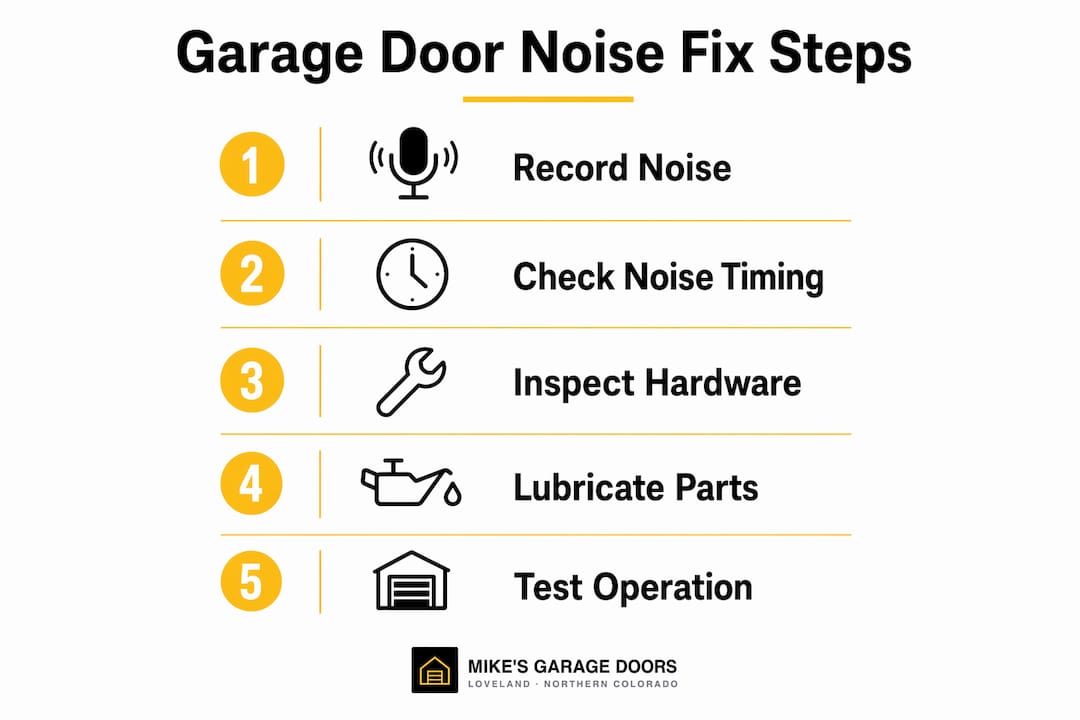
Pro Tip: Record a short video of your door in motion on your phone before you start any repair. The sound and visual pattern help you describe the problem accurately if you end up calling a technician.
When you're diagnosing, note exactly when the noise happens: at startup, throughout travel, or at the end of the cycle. That timing narrows the cause significantly. Also check whether the noise is new or has been building gradually. A gradual increase usually means wear; a sudden noise often means something broke or came loose.
Step-by-step fixes for a noisy garage door
Work through these steps in order. Most squeaky or rattling doors are quiet again after steps one through four.
- Disconnect the opener. Pull the red emergency release cord to prevent accidental activation. Keep the door fully closed while you work.
- Clean the tracks. Wipe the inside of both vertical and horizontal tracks with a damp cloth, then dry them completely. For stubborn buildup, a small amount of brake cleaner on a rag cuts through old grease. Do not spray lubricant into the tracks afterward.
- Tighten all hardware. Work through every visible bolt, nut, and bracket with a socket wrench: track mounting brackets, hinge screws on each door panel, roller stem bolts, the opener mounting bracket, and the header bracket where the track curves. Snug everything down without overtightening, which can strip threads or crack panels.
- Clean moving parts. Wipe down each roller, hinge pivot, and the torsion spring coils with a clean rag. Remove old grease and debris before applying anything fresh.
- Lubricate rollers, hinges, and springs. Use the precision straw nozzle that comes with most spray cans. Apply a small amount directly to the roller bearings at the center of each wheel, the pivot points on each hinge, and along the torsion spring coils. Keep a rag in your other hand and wipe away any drips immediately. For steel rollers, white lithium grease works best on the bearings. For nylon rollers, silicone spray is the right choice since heavy grease can degrade the plastic.
- Replace worn rollers if needed. Run each roller by hand and feel for wobble, flat spots, or rough bearing movement. Worn rollers need replacement, not more lubricant. Nylon rollers with sealed ball bearings run quieter and last longer than steel ones. A full set of rollers for a standard door typically costs $25–$60. Replacing rollers means removing the roller stem from the hinge, which is straightforward on most doors. Avoid replacing bottom rollers on extension spring systems yourself since those brackets connect directly to high-tension lift cables.
- Reconnect the opener and cycle the door. Open and close the door four or five times to distribute the lubricant evenly. Listen for any remaining noise and trace it back to its source.
Pro Tip: A thin, even coat of lubricant is all you need. Over-application creates sticky residue that traps dust and actually makes noise worse over time.
If the opener itself rattles against the ceiling mount, rubber anti-vibration pads installed between the opener bracket and the ceiling significantly cut down on noise transmitted into the house. They're inexpensive and take about ten minutes to install.
What's the best lubricant for a garage door?
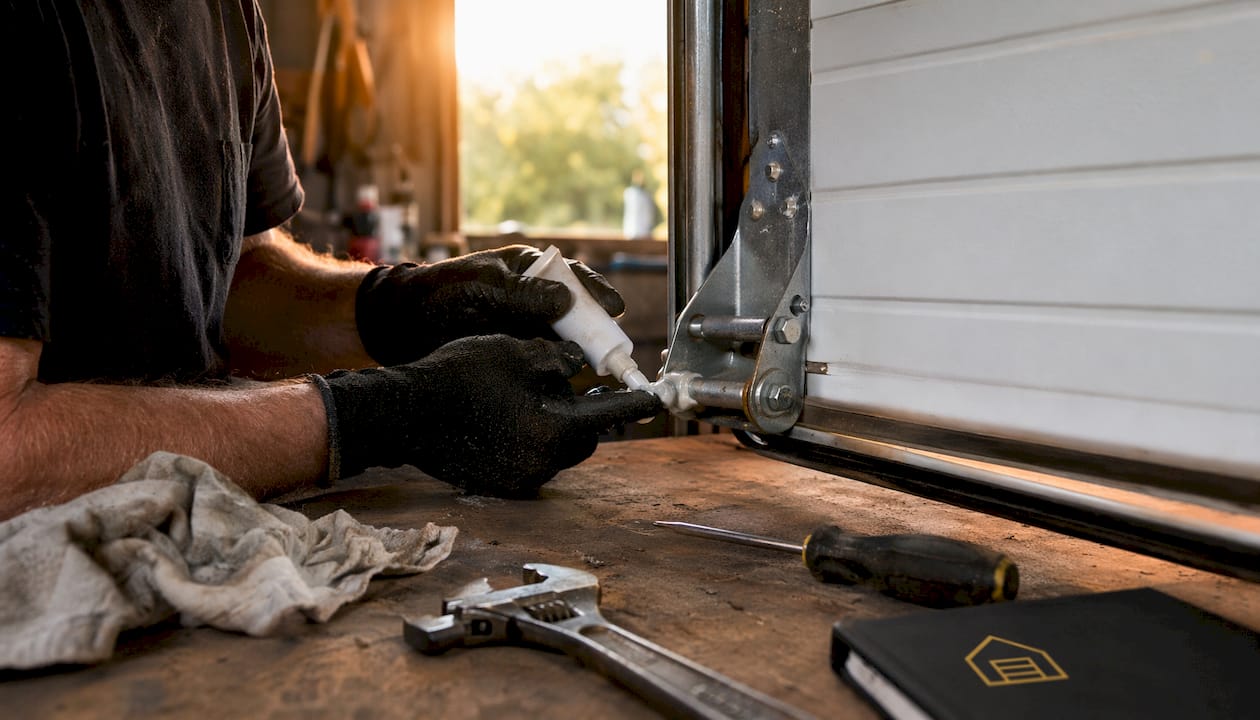
Silicone spray and white lithium grease are the two best options for garage doors, and choosing between them comes down to what material you're lubricating.
- Silicone-based spray resists moisture, dries quickly, and leaves a tack-free film that repels dust rather than trapping it. It handles temperature extremes well, which matters in Colorado winters. Use it on nylon rollers, hinges, and anywhere you want a clean, non-sticky finish.
- White lithium grease is a heavy-duty option that excels at metal-on-metal friction points. It sprays on as a liquid to penetrate tight spaces, then sets as a thick protective coating. Use it on steel roller bearings, torsion spring coils, and screw drive opener rods.
- Nylon rollers need silicone spray on any exposed bearings only. Do not apply grease to the nylon wheel surface itself.
- Steel rollers benefit from white lithium grease applied directly to the ball bearings at the center of the wheel.
- Tracks get neither. Lubricating the tracks causes dirt to accumulate and forces rollers to slide instead of roll, creating flat spots and faster wear. Clean them dry.
What about WD-40? Skip it entirely. WD-40 is a water displacement solvent and degreaser, not a lubricant. It removes existing grease effectively, which is why it temporarily quiets a door, but it leaves no lasting film. Within days, the metal surfaces are drier than before, and the airborne dust WD-40 attracted makes noise return worse than ever. For a lasting garage door fix, stick to silicone spray or lithium grease.
Household oils, motor oil, and thick axle grease are also off the list. They're too viscous, collect debris, and turn into an abrasive paste that grinds down the exact parts you're trying to protect.
Routine maintenance tips to keep your garage door quiet
A few minutes of maintenance every few months prevents most noise problems before they start. Here's what to keep up with:
- Lubricate every 3–6 months. If noises return sooner, lubricate as soon as needed. Squeaking or grinding is your door telling you it's time.
- Clean tracks with a dry cloth every few months. Dirt, leaves, and debris caught between rollers and tracks create noise and accelerate wear.
- Tighten hardware periodically. Vibration works bolts loose over time. A quick pass with a socket wrench every season keeps rattling at bay.
- Inspect rollers, hinges, springs, and cables visually. Look for cracks, rust, fraying, or wobble. Catching wear early is far cheaper than replacing a failed component.
- Check weatherstripping. Cracked or missing weatherstripping lets in moisture and debris, adding strain to the door's operation. Replacing it is a straightforward DIY task.
- Install anti-vibration pads under the opener mounting bracket if noise transmits into the living space above the garage.
- Test door balance. Disconnect the opener and lift the door manually to about waist height. A balanced door stays put. If it drops or shoots up, the springs are carrying the weight wrong. Stop using the door and call a technician.
Pro Tip: Schedule a professional inspection once a year. Frayed cables and fatigued springs fail from the inside first. A trained eye catches those hazards long before they become an emergency, and professional maintenance catches what a homeowner's visual check simply cannot.
Never adjust or attempt to repair torsion springs, lift cables, or bottom brackets yourself. These components store the energy needed to move a door that can weigh several hundred pounds, and they release that energy instantly when mishandled. That's not a risk worth taking to save a service call.
For a full routine care checklist, the DIY garage door service guide from Mikes garage doors Loveland walks you through everything safely.
How much does fixing a noisy garage door cost?
Cost depends on what's causing the noise and whether you handle it yourself or call a pro.
- DIY lubrication: A can of silicone spray or white lithium grease runs $8–$15 at any hardware store. This fixes the majority of squeaky and creaking doors.
- Professional lubrication service: Garage door lubrication services generally cost $80–$150 depending on your region and the scope of the visit. That price typically includes a full inspection and hardware tightening.
- Roller replacement: A full set of replacement rollers for a standard door runs $25–$60 in parts. If a technician does the work, add labor on top.
- Drive gear replacement: A worn opener drive gear requires replacement parts and possibly labor costs, which vary depending on whether you do it yourself or hire a professional.
- Spring or cable repair: These always require a professional. Attempting them without the right tools and training is genuinely dangerous.
The math on ignoring noise is straightforward: a $15 can of lubricant applied today can prevent a $300 roller replacement or a $500 spring repair later. Noise is your door's early warning system, and acting on it early keeps costs low.
Mikes garage doors Loveland provides upfront phone estimates so you know the cost before anyone shows up. Veterans receive a 10% discount, and repairs come backed by warranties that protect your investment long after the technician leaves. Their garage door services cover everything from lubrication and roller swaps to spring replacements and opener repairs across Northern Colorado.
When should you call a professional instead of DIY?
Most noise fixes are genuinely safe for homeowners. The line is tension. Once a repair involves a component under load, the risk profile changes completely.
- Call a pro immediately if you hear a single loud bang. That's almost certainly a broken torsion spring and the door is now unsafe to operate.
- Stop using the door if it travels crookedly, if cables look frayed or have jumped off the drum, or if the door won't stay halfway open when you release it manually.
- Grinding that persists after lubrication and roller replacement points to a deeper mechanical issue, often a worn drive gear or a structural alignment problem.
- Never touch torsion springs, extension springs, lift cables, or bottom brackets. These components carry the full weight of the door. Professionals use winding bars, matched spring specs, and precise torque because care alone isn't enough when the failure mode is an emergency room.
What you can safely handle yourself: lubrication, hardware tightening, roller replacement on most hinges (not bottom rollers on extension spring systems), weatherstripping, photo-eye sensor cleaning and alignment, and opener limit switch adjustments. These tasks cover the vast majority of noise complaints and require nothing more than basic tools.
Pro Tip: Calling a pro early is almost always cheaper than calling one after a small problem becomes a dangerous failure. A technician who catches a frayed cable during a routine visit saves you from a door that drops without warning.
Mikes garage doors Loveland completes 90% of repairs the same day, with honest upfront pricing and no surprise charges. If you're in Northern Colorado and the noise has you stumped, a quick phone call gets you a straight answer on whether it's a DIY fix or a service visit. For emergency situations anywhere, services like 911 Garage Door Repair Pros offer rapid-response repair when you need it fast.
If you're seeing other warning signs beyond noise, the 9 signs your garage door needs repair guide covers what to watch for before a small issue turns into a full breakdown.

Ready to get your garage door quiet again? Mikes garage doors Loveland serves homeowners across Northern Colorado with same-day service, transparent pricing, and repairs backed by solid warranties. Call for a free phone estimate or book online at garagedoorrepairsloveland.com/services.
Key Takeaways
The most effective noisy garage door fix starts with the right diagnosis: match the sound type to the cause, then apply the correct repair in order from simplest to most complex.
| Point | Details |
|---|---|
| Diagnose by sound | Squeaking means dry parts; grinding means worn rollers or gears; a loud bang means a broken spring. |
| Lubricate correctly | Use silicone spray or white lithium grease on rollers, hinges, and springs; never on tracks. |
| Avoid WD-40 | WD-40 is a solvent that attracts dust and leaves parts drier than before within days. |
| Lubrication cost | Professional lubrication services generally cost $80–$150; a DIY can of lubricant runs $8–$15. |
| Know the hard limit | Springs, lift cables, and bottom brackets are professional-only repairs due to serious injury risk. |
FAQ
How do I stop my garage door from making noise?
Tighten all hardware with a socket wrench, clean moving parts, then apply silicone spray or white lithium grease to rollers, hinges, and springs. Most noise problems resolve with lubrication and hardware tightening alone.
What is the best lubricant for a garage door?
Silicone-based spray and white lithium grease are both excellent choices. Use silicone spray on nylon rollers and for a clean, dust-repelling finish; use white lithium grease on steel roller bearings and metal-to-metal friction points like hinges.
Will WD-40 make a garage door quieter?
Only briefly. WD-40 is a solvent, not a lubricant, so it strips existing grease and evaporates quickly, leaving parts drier than before and attracting dust that accelerates wear. Use a dedicated garage door lubricant instead.
How much does it cost to fix a squeaky garage door?
A DIY lubrication fix costs $8–$15 for a can of silicone spray or lithium grease. Professional lubrication services generally run $80–$150 depending on your region and what the visit includes.
When is a noisy garage door dangerous?
A single loud bang almost always signals a broken torsion spring, which makes the door unsafe to operate. Frayed cables, a crooked door, or grinding that persists after lubrication also warrant stopping use and calling a professional immediately.
Recommended
- Garage Door Off the Track? Don't Force It — Here's What to Do | Mike's Garage Door Repair Loveland
- Garage Door Repair vs. Replacement: When It's Time to Stop Patching | Mike's Garage Door Repair Loveland
- 9 Signs Your Garage Door Needs Repair Now
- Garage Door Opener Not Working? Walk Through This 4-Minute Diagnostic Before You Call | Mike's Garage Door Repair Loveland