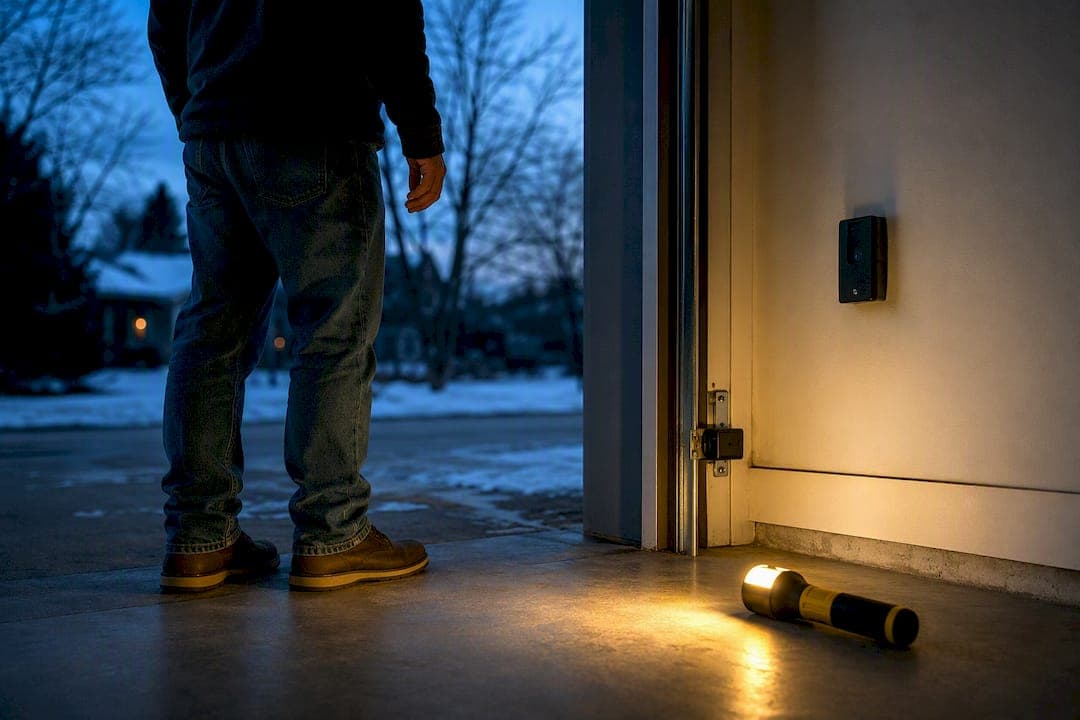
If you need the garage open now: confirm the door is fully closed, pull the emergency-release cord, then lift the door by hand. Once power returns, check the outlet, re-engage the trolley, and run one opener cycle to reconnect it. Stop and call a technician if the door feels unusually heavy, sits off-track, or you smell anything burning.
TL;DR:
- A fully closed garage door is required before disengaging the trolley to prevent it from dropping due to gravity, especially with a weak spring.
- If the door won't move after power returns, check the outlet, reset the trolley by pulling the release cord toward the door, and run a full open-close cycle.
- Heavy, off-track, or broken-spring doors should never be manually operated or forced, and require professional inspection because of high tension risks.
- Battery backup systems, exterior keyed releases, surge protection, and annual spring checks can prevent lockouts and power-related failures.
- Most repairs after a power outage are urgent but fixable on the same day, emphasizing the importance of professional diagnosis over DIY attempts in complex situations.
Table of Contents
- How Do You Safely Open a Garage Door Manually During a Power Outage?
- What to Do When Power Comes Back But the Door Won't Move
- When Should You Stop and Call a Garage Door Technician?
- How Can You Prevent Being Locked Out Next Time?
- Why Homeowners Get This Wrong More Than You'd Think
- Get Same-Day Help When the Power Comes Back On Wrong
- Where to Verify Model-Specific Safety Steps
- Sources
- FAQ
How Do You Safely Open a Garage Door Manually During a Power Outage?
The emergency release is the tool built for exactly this moment, but it only works safely under one condition: the door has to be fully closed first. Pulling that cord while the door is even partway up lets gravity take over, and a heavy door with a bad spring can drop fast. Overhead Door's safety guidance is blunt about this. Never disengage the opener from a door that isn't sitting flush on the ground.
Here's the sequence that works on nearly every residential setup:
- Check the door's position. It needs to be fully down before you touch anything. If it's stuck halfway or crooked, skip to the "call a technician" section below.
- Remove any external locks or slide bolts that would stop the door from lifting once it's disengaged.
- Find the emergency release. On most openers it's a red cord hanging from the trolley on the ceiling track. Jackshaft openers (the kind mounted beside the door, not overhead) use a cord near the wall unit instead.
- Pull straight down, or down and slightly toward the door on some carriage styles, until you feel or hear a click. That click means the trolley has disconnected from the drive mechanism.
- Lift the door using the built-in handle or the bottom panel edge, not the top panel. Heavy doors, or ones with a spring that already sounds weak, need two people. Never muscle a door that won't budge.
- Prop or secure the door if you're leaving it open, and remember: once disengaged, the opener's lock function is offline, so the door can be pushed up from outside too.
Pro Tip: Test your emergency release once, in daylight, before you actually need it. Every opener pulls a little differently, and knowing the exact motion in advance saves you fumbling in the dark during an actual outage.
What to Do When Power Comes Back But the Door Won't Move
Power returning doesn't always mean your opener springs back to life. The single most common culprit, by a wide margin, is that the trolley is still disengaged from that emergency-release pull. SecureOverhead's troubleshooting guide confirms this is the first thing any technician checks, and it's an easy fix.
Work through this order:
- Test the outlet. Plug in a lamp or phone charger to confirm power is actually flowing. Check your breaker panel too, since a tripped breaker or a popped GFCI outlet near the garage is a frequent, overlooked cause.
- Re-engage the trolley. Pull the release cord toward the door this time, not away from it. This resets the lever back into position.
- Run one full open-close cycle. The carriage should slide forward and lock back onto the trolley automatically as it travels.
- Reprogram lost codes. If your remotes or keypad stopped responding, press and release the opener's Learn button (usually near the antenna), then press the remote button within about 30 seconds. Repeat for each remote and the keypad.
- Power-cycle any smart-home bridge. If your opener connects to an app, unplug the Wi-Fi bridge or smart hub for 10 seconds after your router is confirmed back online.
Watch for these warning signs that point to actual surge damage rather than a simple reset issue:
- A motor that hums but the door doesn't move
- No indicator lights anywhere on the unit after you've confirmed the outlet works
- The opener trips again and again on the same breaker
If you see any of those, stop resetting and get it looked at. A damaged logic board that keeps drawing power can be a fire risk, not just an inconvenience.
When Should You Stop and Call a Garage Door Technician?
Some situations aren't DIY territory, and pretending otherwise is how people get hurt. Don't pull the emergency release if the door is partially open, sitting crooked, or if you heard a loud bang before the outage. That bang is usually a torsion spring failing, and a door held up by a broken spring can come down with almost no warning.
Call for professional help if you notice:
- The door feels dramatically heavier than usual when lifting
- It won't stay open on its own once raised
- Visible off-track movement or a door that's rolled out of its guides
- A burning smell or scorch marks near the opener unit
Springs and off-track doors are under enormous tension, and handling them without training is one of the fastest ways to get seriously hurt. When you call, have the opener's model number, a description of the symptoms, whether you already pulled the release, and any visible damage ready to share. A door that's visibly off its track needs a technician, not a crowbar.
How Can You Prevent Being Locked Out Next Time?
A little prep now beats standing in your driveway during a storm later. Battery backup systems keep the opener, keypad, and safety sensors running through an outage, so you never have to touch the manual release at all. Poweroutage if you want to compare capacities before buying.
A few other upgrades worth considering:
- Exterior keyed release: lets you disengage the door from outside without going through the house, though it does mean securing that key carefully.
- Keep a spare release key in your car, since a locked-out garage with no interior access is one of the most common outage complaints homeowners report.
- Surge protection on the opener's outlet reduces the odds of the control board frying when power snaps back on.
- Annual balance and spring checks, plus periodic testing of the emergency release itself, catch small problems before they become outage-day emergencies.
If your opener is aging or has already tripped a breaker more than once, a full maintenance pass or a replacement unit with built-in battery backup is usually the smarter long-term move over patching the same issue repeatedly.
Why Homeowners Get This Wrong More Than You'd Think
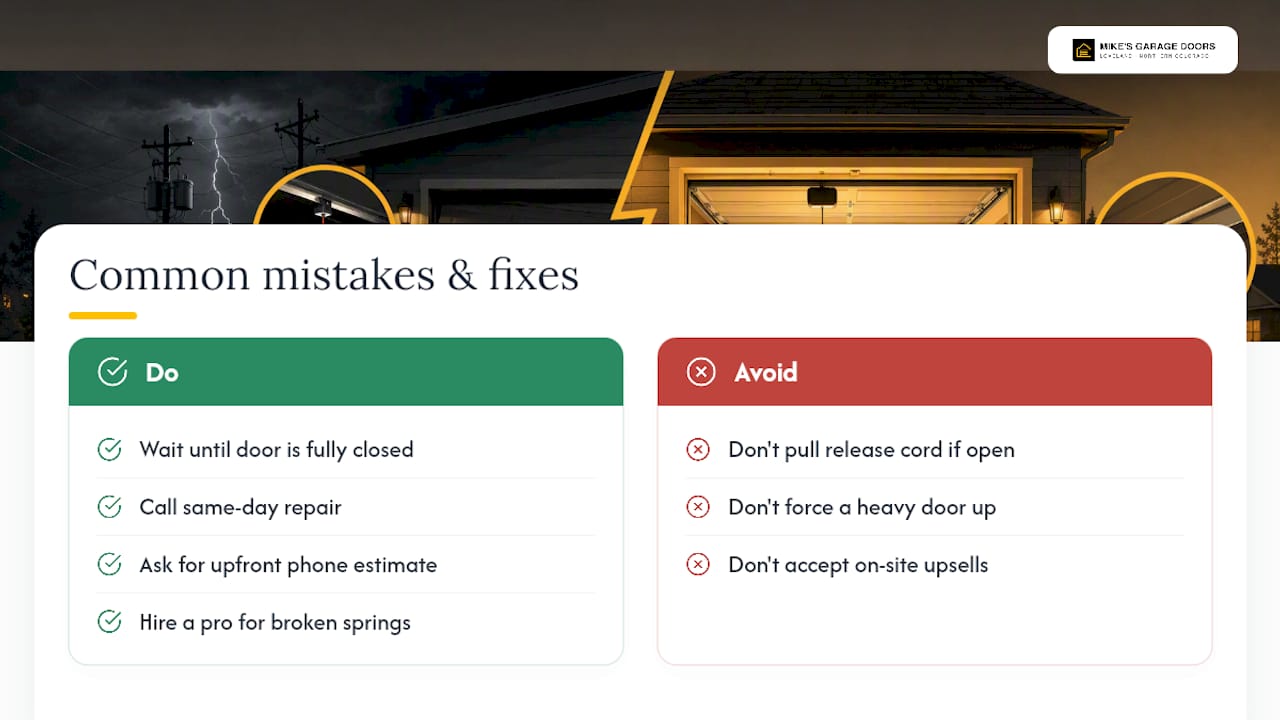
The two mistakes I see repeated most often are pulling the release cord on a door that isn't fully closed, and trying to force a heavy door up when a spring has clearly already failed. Both come from the same instinct: you want the garage open now, and patience feels like the wrong move in the moment. It usually isn't.
Same-day response and upfront phone estimates can make the difference between a stressful outage evening and a fixed problem before dinner. When a spring or opener genuinely needs a professional, expect a technician who diagnoses the issue first and quotes it honestly, not one who shows up and starts upselling.
— Eddie
Get Same-Day Help When the Power Comes Back On Wrong
This garage door service exists for exactly the moment when your DIY reset doesn't work. A high percentage of repairs get finished the same day they're called in, and estimates are often provided over the phone before a technician arrives, so there are no surprise invoices after an outage.

Whether it's a snapped torsion spring, a control board that fried on power restoration, or an opener that just won't reconnect no matter how many times you cycle it, the technicians handle the diagnosis and the fix in one visit. If your door is stuck, heavy, or making noises it shouldn't after an outage, check the full list of garage door services covering springs, openers, and commercial doors across Northern Colorado, and call to get a same-day estimate before the problem gets worse.
Where to Verify Model-Specific Safety Steps
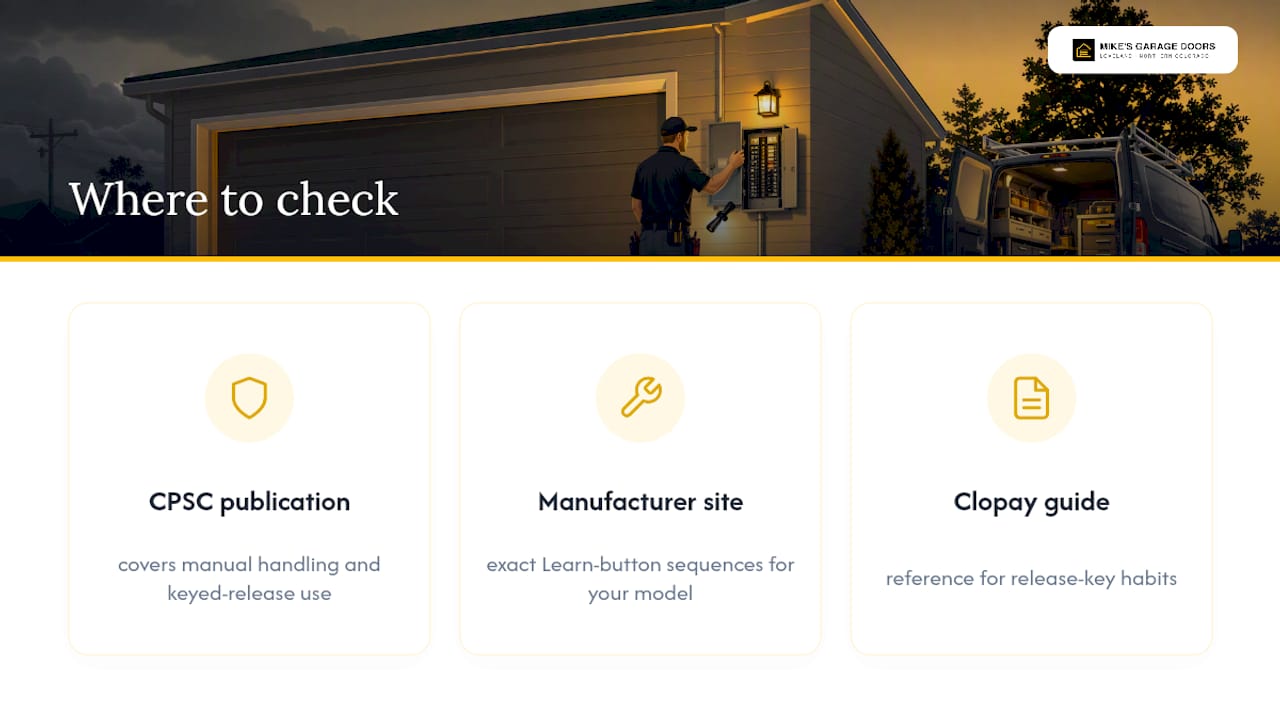
For guidance beyond general troubleshooting, the CPSC's garage door safety publication covers proper manual handling and keyed-release use. Your opener's manufacturer support site will have exact Learn-button sequences for your model, and Clopay's guide to manual operation is a solid reference for release-key habits.
Sources
- CPSC garage door safety guidance
- How to Reset Your Garage Door Opener After a Power Outage
- How to Open a Garage Door Manually After a Power Outage
- How To Keep Garage Doors Working During a Power Outage
FAQ
Will a Garage Door Opener Work During a Power Outage?
No, a standard opener loses power the moment your electricity does, unless it has a battery backup installed. You'll need the manual emergency release to open the door until power returns.
Can a Power Outage Damage a Garage Door Opener?
Yes, a power surge when electricity restores can damage the opener's control board, sometimes causing a humming motor, no indicator lights, or repeated breaker trips. A damaged logic board needs professional repair rather than repeated resets.
Can I Open My Garage Door From Outside Without Power?
Yes, if you have an exterior keyed release installed, a key lets you disengage the trolley from outside without going through the house. Without one, you'll need interior access to reach the release cord.
Why Won't My Garage Door Close After a Power Outage?
Usually because the trolley is still disengaged from when the emergency release was pulled, so the opener has nothing to grab onto. Re-engage the trolley by pulling the cord toward the door, then run one full cycle to reconnect it.