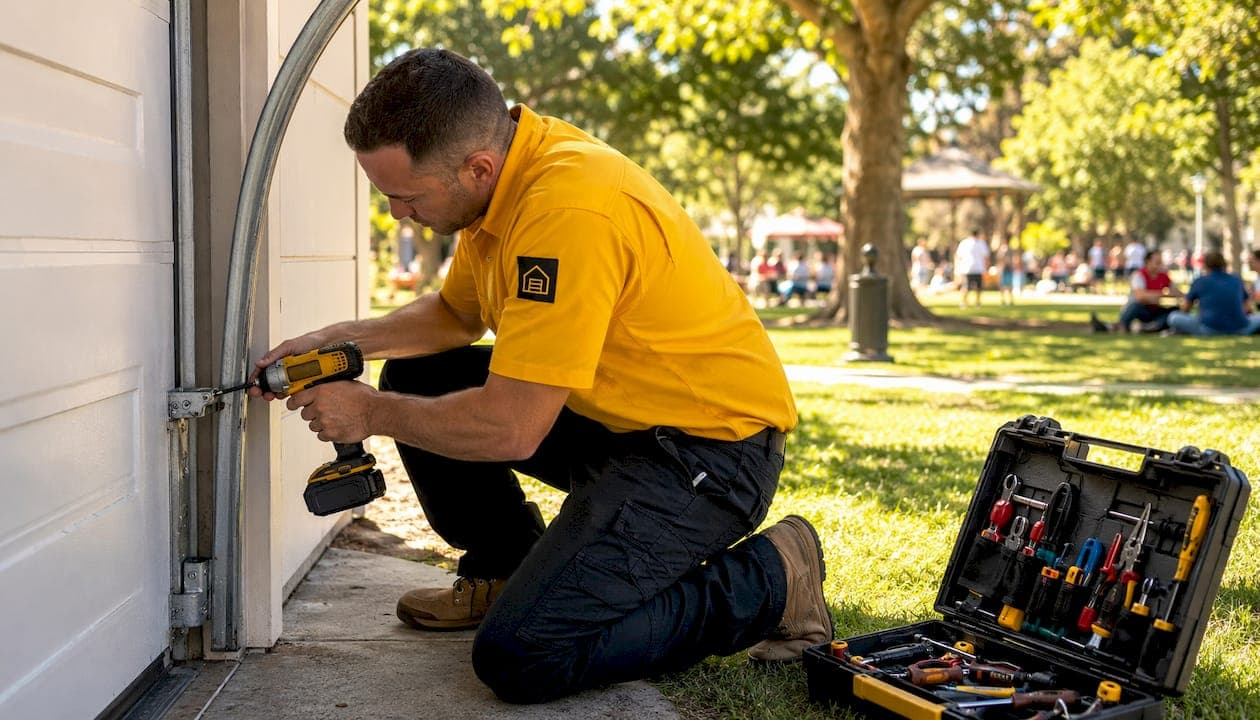
A garage-door emergency is any malfunction that threatens physical safety, allows active property damage to worsen, or disables a core home-security function. If your door is off its tracks with the interior exposed, a spring just snapped, or a vehicle collision left the door inoperable, that is an emergency. Call a 24/7 repair service now. If the door is just noisy or slow, schedule a same-day appointment during business hours.
Three things to do right now:
- Clear everyone, including children and pets, away from the door and garage opening.
- Do not touch the springs, cables, or any tensioned hardware.
- Disconnect power to the opener at the wall switch or breaker if you can do so safely.
Mikes garage doors Loveland handles emergency calls across Northern Colorado and completes 90% of repairs the same day.
Table of Contents
- What counts as an emergency repair service?
- Common garage-door emergencies and the risks they create
- What to do immediately before the technician arrives
- What a reputable emergency garage-door service will do on arrival
- How much does an emergency repair service cost?
- How to choose and prepare for an emergency repair service in Northern Colorado
- Key Takeaways
- A local perspective on garage-door emergencies
- Mikes garage doors Loveland handles Northern Colorado emergencies
- Useful sources
- FAQ
What counts as an emergency repair service?
An emergency repair service responds to situations defined by immediate risk, not by inconvenience. The professional threshold has three triggers: a threat to life or physical safety, active or worsening property damage, and loss of an essential function like home security or egress.
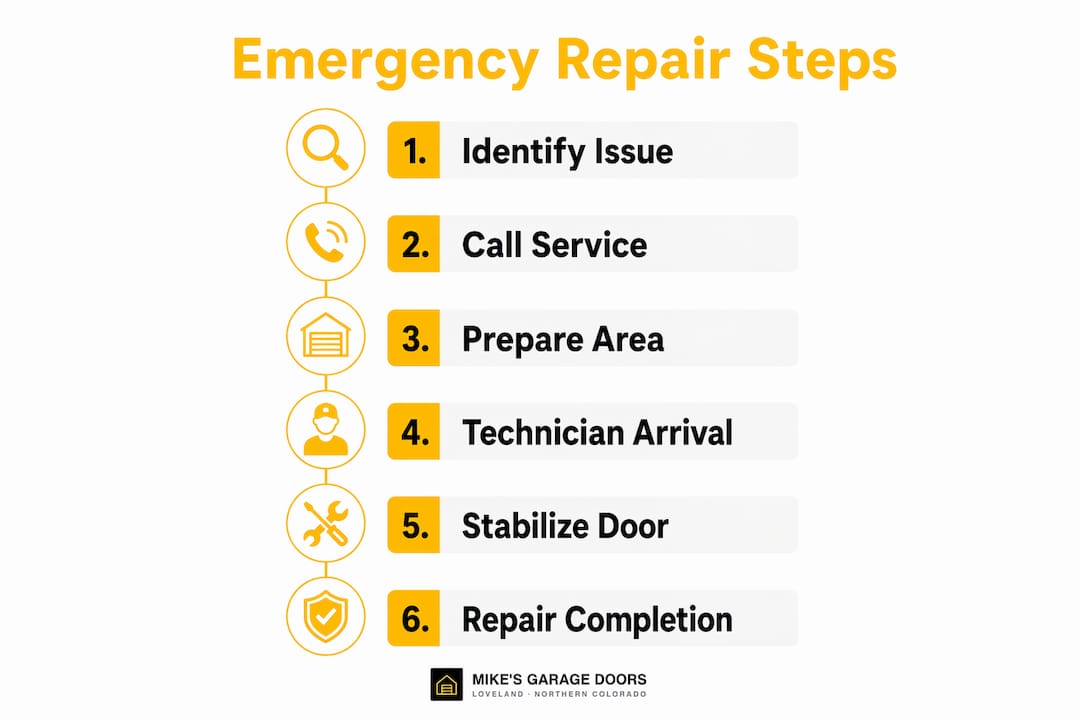
A practical rule from the field: people first, property second, systems third, comfort last. Use that order to judge your situation fast.
Quick yes/no checklist:
- Is anyone at risk of injury from a failing door, exposed spring, or collapsed panel? Yes = emergency.
- Is the door stuck open, leaving your home or business unsecured? Yes = emergency.
- Is the damage getting worse by the minute (door sagging, cables fraying)? Yes = emergency.
- Is the door just slow, noisy, or slightly misaligned with no security gap? No = schedule same-day service.
Even during an emergency, licensing and insurance requirements still apply. A contractor cannot legally skip code compliance because the call came in at midnight. Permits may be expedited or filed retroactively, but they are never waived.
Pro Tip: Snap a photo of the damage before anyone touches anything. That timestamp becomes your insurance documentation.
Common garage-door emergencies and the risks they create
Knowing what you are dealing with helps you describe it accurately on the call, which speeds dispatch and parts matching.
- Broken torsion or extension spring: A snapped spring sounds like a gunshot and turns your 200-pound door into dead weight. The door cannot be safely operated. Spring failure is one of the most physically dangerous garage-door failures a homeowner can face.
- Door off-track: Panels that have jumped the track can collapse without warning. The longer you wait, the more the weight shifts and the greater the collapse risk.
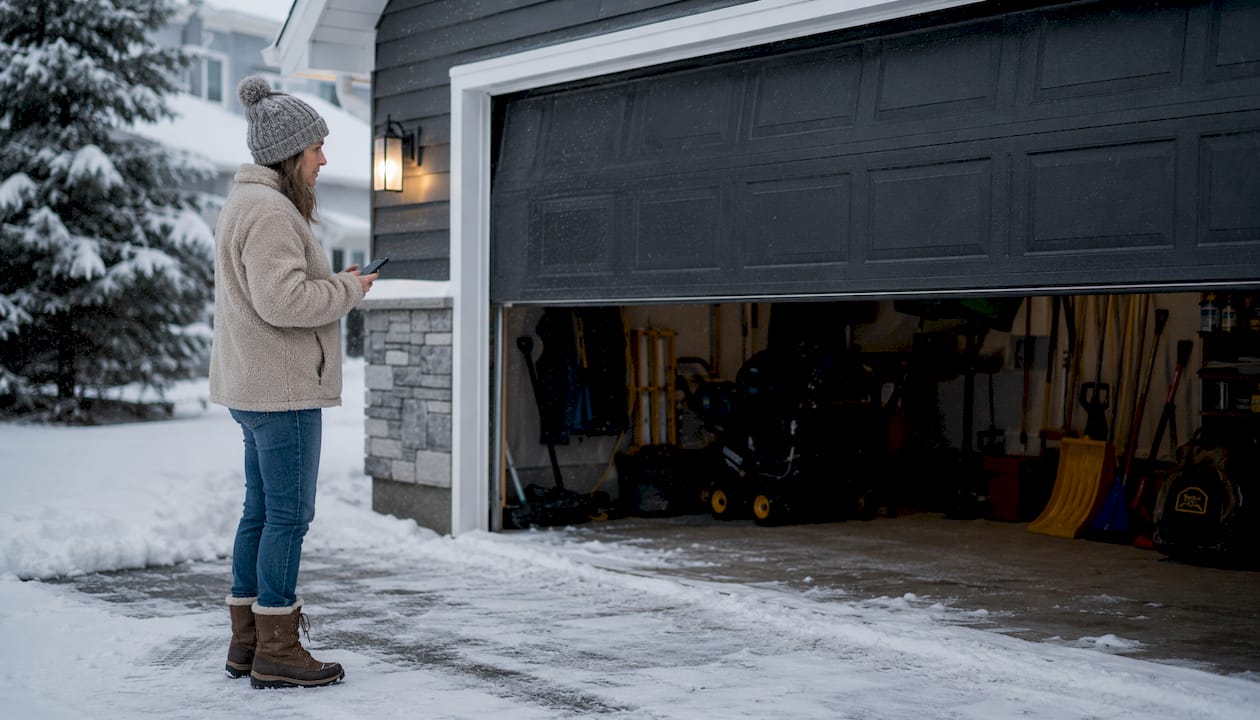
- Stuck-open door: An open door in Northern Colorado winter exposes pipes, vehicles, and belongings to freezing temperatures within hours. It also leaves your home completely unsecured.
- Opener or motor failure during entry/exit: A door that stops mid-travel can trap a vehicle or block an exit route, creating both a safety and a security problem.
- Accident or vehicle impact damage: Collision damage often bends the track, cracks panels, and stresses the spring system simultaneously. What looks like cosmetic damage may be hiding a structural failure.
- Security breach after forced entry: A door that has been forced open or tampered with cannot be trusted to hold. Restoring security is the immediate priority.
- Wind or storm damage: Northern Colorado's Front Range storms can rip panels, bend tracks, and jam openers. Damage that looks minor after a storm can worsen overnight as temperatures drop.
Every hour of delay on a stuck-open door in January is an hour of heat loss, pipe-freeze risk, and open-access exposure.
What to do immediately before the technician arrives
Follow these steps in order. Do not skip ahead.
- Clear the area. Move everyone, including pets, at least 10 feet from the door. A failing door can drop or swing without warning.
- Do not touch the springs or cables. Torsion springs store enormous energy. Spring repair is not a DIY task under any circumstances.
- Disconnect the opener. Pull the red emergency release cord or cut power at the breaker. This prevents the motor from trying to move a door it cannot safely move.
- Secure the door only if it is safe. If the door is partially open and you can lower it by hand without forcing any hardware, do so. If there is any resistance, leave it alone.
- Document everything. Photograph the damage from multiple angles with your phone. Note the time. This record supports your insurance claim.
- Call a licensed emergency repair service. Give the dispatcher your address, the door type (residential or commercial), and a plain-language description of what happened.
Never attempt to force a bent track back into shape or rewind a spring yourself. The risk of serious injury is real and immediate.
What a reputable emergency garage-door service will do on arrival
A professional technician's first job is triage, not repair. They assess whether the door can be stabilized safely or whether a full repair is possible on the spot. Emergency work is often stabilization-first: the tech secures the site, disables the opener if needed, and documents the condition before touching anything.
Vetting checklist — confirm these before work starts:
- Licensed and insured in Colorado (ask for the license number)
- Live dispatcher answered your call, not just a web form or voicemail
- Written or verbal upfront estimate provided before any work begins
- Clear explanation of what the visit covers: stabilization only, or full repair
- Warranties stated on both parts and labor
Pro Tip: Ask specifically: "Is this visit stabilization or a permanent fix?" A good tech will tell you straight. If they hedge, that is a red flag.
Reputable providers adhere to manufacturer specifications and local building codes even on emergency calls. After stabilization, documentation and permit notification to the local authority having jurisdiction (AHJ) typically happens within 24–72 hours where local rules require it.
How much does an emergency repair service cost?
Emergency calls carry a surcharge on top of standard repair pricing. In the U.S., the typical flat after-hours surcharge runs roughly $75–$150. The repair labor and parts themselves are generally charged at normal market rates. The surcharge covers the cost of keeping a technician on call nights, weekends, and holidays.
Watch for these pricing red flags:
- No estimate provided before work begins
- Demand for full cash payment upfront
- A quote that jumps dramatically after the tech arrives
- Vague line items with no breakdown of parts vs. labor
When you call, ask three specific questions: What is the emergency dispatch fee? What is the estimated parts cost for this repair? Does the initial visit fee include labor if the repair is completed today? A trustworthy company answers all three without hesitation. For a deeper look at what shady estimates look like, the estimate red flags guide covers the most common tactics.
How to choose and prepare for an emergency repair service in Northern Colorado
Speed matters, but so does choosing the right company. Confirm these points on the call before you commit:
Call script:
- "Do you service [your city] in Northern Colorado?"
- "Is a live technician available right now, or is this a callback system?"
- "What is your estimated arrival window?"
- "Do you handle residential doors, commercial doors, or both?"
- "What is your emergency dispatch fee?"
Pre-arrival checklist:
- Have your full address and any gate codes ready.
- Know your opener brand and, if possible, the spring type (torsion vs. extension).
- Have photos of the damage ready to describe or text.
- Confirm your payment method (most companies accept card).
Red flags to hang up on:
- Evasive or vague answers about licensing and insurance
- No live person on the line, only automated callbacks
- High-pressure upsells before the tech has even seen the door
- Inability to confirm they actually dispatch for garage doors after hours
In Northern Colorado, response times for a true 24/7 service typically run 30–90 minutes depending on location and weather. During severe Front Range storms, dispatch windows can stretch. Having a trusted local contact already saved in your phone eliminates the scramble of searching at midnight.
Key Takeaways
A garage-door emergency is defined by safety risk, active property damage, or loss of home security — not by the hour of day.
| Point | Details |
|---|---|
| Define the emergency first | Call emergency service for safety threats, stuck-open doors, or worsening structural damage — not for noise or slow operation. |
| Act before help arrives | Clear the area, avoid springs and cables, disconnect the opener, and document damage with photos. |
| Verify the provider | Confirm licensing, insurance, a live dispatcher, and a written upfront estimate before any work starts. |
| Expect stabilization first | Technicians often secure the site temporarily; a permanent fix may require a follow-up visit with parts. |
| Know the cost structure | Emergency calls carry a flat after-hours surcharge of roughly $75–$150 on top of standard repair pricing; labor and parts are additional and charged at standard rates. |
| Mikes garage doors Loveland | Completes 90% of repairs same-day, provides upfront estimates, and backs work with warranties on parts and labor. |
A local perspective on garage-door emergencies
The advice that gets skipped most often is the simplest: write down your garage-door model number and opener brand before anything goes wrong. Store it in your phone's notes. When you are standing in a dark garage at 11 PM with a broken spring, that information cuts your call time in half and helps the dispatcher confirm they have the right parts on the truck.
Northern Colorado winters add a layer of urgency that homeowners in milder climates do not face. A stuck-open door in January is not just an inconvenience. Pipes can freeze, vehicles can be damaged, and a home left unsecured overnight is a real liability. The Front Range also gets wind events that can stress door hardware in ways that are not obvious until the door fails mid-cycle.
The community-focused providers in this region tend to be the ones worth trusting long-term. Mikes garage doors Loveland offers a 10% veteran discount and backs repairs with warranties on parts and labor. That kind of accountability matters when you are making a fast decision under pressure.
Keep a short list of vetted local contacts. Update it once a year. That list is worth more than any search you will do at midnight.
Mikes garage doors Loveland handles Northern Colorado emergencies
When your garage door fails and your home is exposed, you need a local team that picks up the phone and shows up fast. Mikes garage doors Loveland completes 90% of repairs the same day, provides transparent upfront estimates before any work begins, and backs every job with warranties on parts and labor. There are no surprise fees and no automated runaround — a live dispatcher takes your call and routes the right technician to your door.

Veterans receive a 10% discount on all services. Whether you are dealing with a broken spring, a door off-track, or storm damage in the middle of a Colorado winter, the team is equipped for residential and commercial doors across Northern Colorado. Call or visit the services page to get an upfront estimate and confirm same-day availability for your situation.
Useful sources
- National Home Repair Authority — Emergency Home Repair Services: Covers emergency thresholds, contractor vetting, documentation, and permit notification expectations.
- Bluefield Group — How to Choose the Right Contractor: Licensing, insurance, and estimate transparency requirements that apply even during emergencies.
- Repairs.live — Emergency Home Repair Near Me: Call script guidance, live-dispatcher vetting, and screening for selective after-hours dispatch.
- Garage.com — Emergency Garage Door Repair: Stabilization-first approach, temporary measures, and documentation practices.
- Prime Garage Door Repair Tech — Emergency Service: After-hours surcharge ranges and standard vs. emergency pricing structure.
- Valiant Garage Door — Emergency Repair Guide: Practical emergency checklists and how-to guidance for garage-door situations.
- For permit and inspection questions specific to your municipality, contact your local Northern Colorado building department directly.
FAQ
What qualifies as a garage-door emergency?
Any malfunction that threatens physical safety, leaves your home unsecured, or causes active worsening damage qualifies as an emergency. A noisy opener does not; a door stuck open overnight does.
How much does an emergency garage-door call cost?
Expect a flat after-hours surcharge of roughly $75–$150 on top of standard labor and parts pricing. Ask for the dispatch fee and a parts estimate before the technician starts work.
Can I fix a broken spring myself during an emergency?
No. Torsion and extension springs store extreme tension and can cause serious injury if released incorrectly. Spring repair requires a licensed technician with the right tools.
Will the technician complete the repair in one visit?
Often, the first visit is stabilization only. The tech secures the door, documents the damage, and may need to return with specific parts for a permanent fix.
How do I verify an emergency repair company is legitimate?
Ask for their Colorado license number, confirm they carry liability insurance, and request a written estimate before any work begins. A reputable company answers all three without hesitation.