
Garage door spring repair is defined by one unavoidable fact: torsion springs store between 200 and 400 pounds of force that can release in under 0.5 seconds if mishandled. That is not a task for a YouTube tutorial and a hardware store trip. The industry term for this work is torsion spring replacement, and it requires specialized tools, controlled technique, and a full system audit that no homeowner can replicate safely without training. Understanding why spring repair needs professional handling is the difference between a working garage door and a trip to the emergency room.
Why spring repair needs professional handling: the core case
Garage door springs are the most dangerous component in your entire home's mechanical system. A standard residential torsion spring sits coiled above the door, wound tight enough to lift a door weighing 150–250 pounds. When that spring breaks, it does not gently unwind. It releases its stored energy instantly, and the sound has been described as a gunshot going off inside your garage. The door itself becomes dead weight, dropping in roughly 0.5 seconds with enough force to crush anything underneath it.
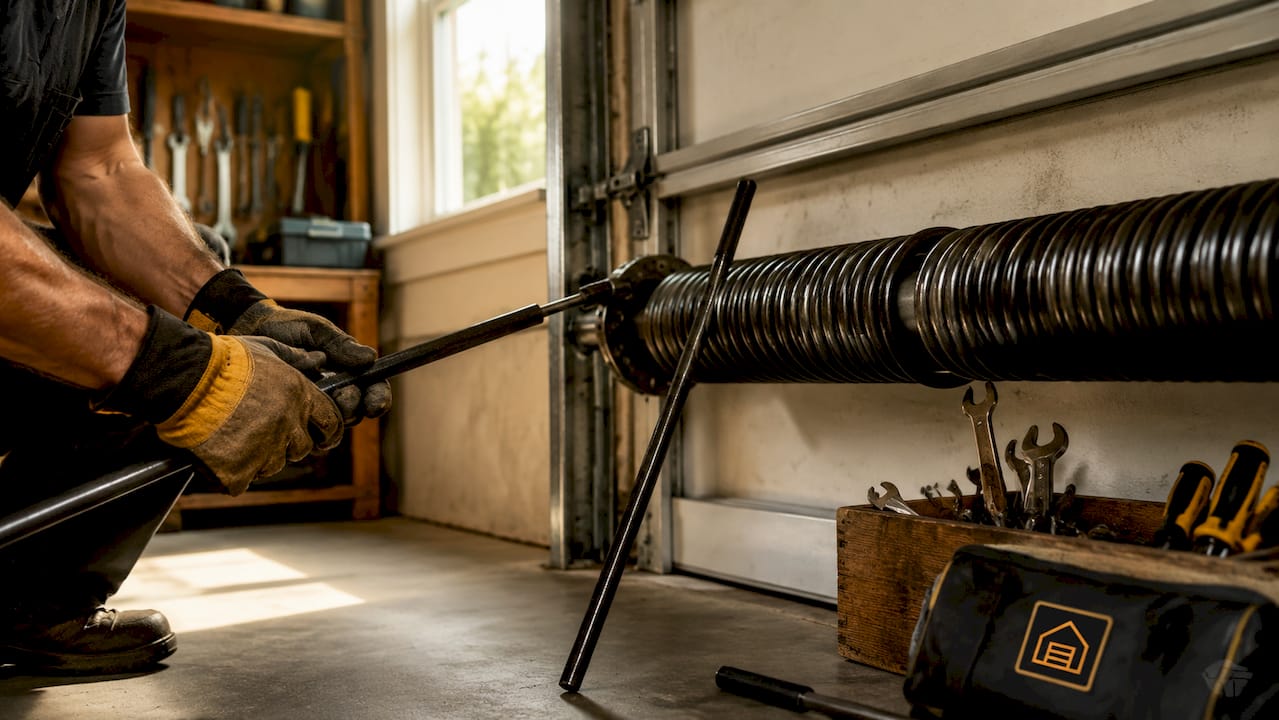
The importance of professional spring repair comes down to physics and training. A certified technician knows how to de-tension a spring using controlled quarter-turn releases, a method that bleeds off energy in small, manageable increments. DIY attempts that loosen set screws before de-tensioning cause dangerous instant energy release, sending metal components flying at high speed. This is not a matter of being careful enough. It is a matter of having the right process.
Pro Tip: If your garage door suddenly feels extremely heavy or only opens a few inches before stopping, stop using it immediately. These are early signs of spring failure that require a professional call, not a closer look.
What are the dangers of DIY garage door spring repair?
The risks of DIY spring repair fall into three categories: tool failure, energy release, and door freefall. Each one can cause serious harm on its own. Together, they make this one of the most dangerous home repair tasks a homeowner can attempt.
- Tool failure. Most homeowners reach for a screwdriver or a standard wrench when they see a broken spring. Professionals use hardened winding bars specifically designed to handle spring tension. Improvised tools slip under load, turning a repair attempt into a situation where a metal bar rips free and becomes a projectile. Injuries from this include broken fingers, fractured wrists, and facial lacerations.
- Energy release. The unwinding phase is the highest-risk moment in any spring repair. Without controlled de-tensioning, the spring releases its full load at once. That force travels through the winding bar and into whatever is holding it, which is usually a person's hands and face.
- Door freefall. A door supported only by a broken or partially tensioned spring can drop without warning. A 200-pound door falling 0.5 seconds covers enough distance to cause fatalities. This is not a theoretical risk. It happens to homeowners who prop doors open while working on springs.
- Secondary damage. Failed DIY repairs often leave springs improperly tensioned. An overtensioned spring puts excessive strain on the door opener motor, burning it out within weeks. An undertensioned spring causes the door to slam shut, bending tracks and cracking panels.
Garage door springs should not be treated as a DIY learning project because of inherent risks and regulatory compliance issues. The learning curve here has real physical consequences.
How do professionals ensure safe and effective garage door spring repair?
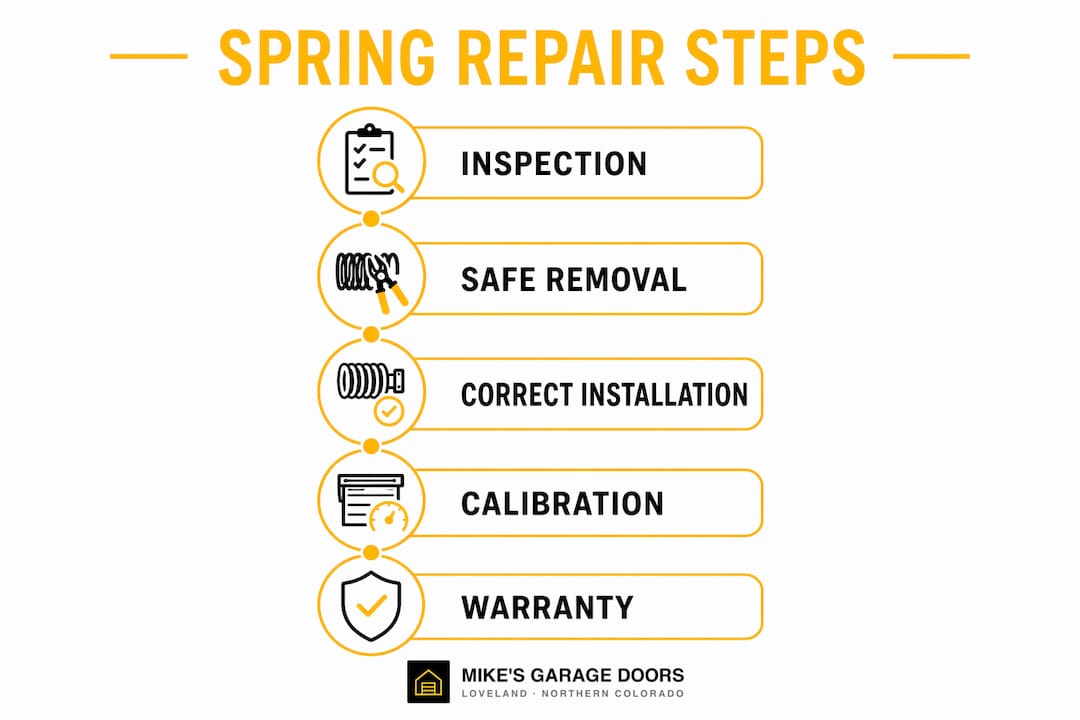
A trained technician brings three things to a spring repair that a homeowner cannot replicate: the right tools, a proven process, and a system-wide perspective. Here is exactly what that looks like in practice.
- Spring assessment. The technician measures door weight and track radius before touching the spring. Mismatching spring specifications by even 0.5mm in track radius can warp tracks and degrade the door opener within weeks. Getting this measurement right is the foundation of a durable repair.
- Controlled de-tensioning. Using hardened winding bars, the technician releases spring tension in quarter-turn increments. This controlled process prevents sudden energy release and keeps the technician safe throughout the procedure.
- Spring replacement. The new spring is installed and wound to the correct tension for the door's specific weight. Safety cables are threaded through the spring as a containment measure, so that if the spring breaks again, it cannot fly across the garage.
- Full system audit. Professionals check cables, drums, rollers, hinges, and tracks during every repair visit. A broken spring often signals wider systemic wear including frayed cables and misaligned tracks. Catching these during the same visit prevents repeated failures.
- Balance test. After installation, the technician manually lifts the door to the halfway point and releases it. A properly balanced door stays in place. One that drops or rises indicates incorrect spring tension and requires adjustment before the job is complete.
- UL 325 compliance check. Professional repairs maintain compliance with federal safety standards like UL 325, which governs entrapment protection and auto-reverse function. DIY work frequently bypasses these requirements without the homeowner realizing it.
Professional spring replacement takes 1–2 hours and comes with at least a 3-year warranty on parts and labor. A DIY attempt typically takes 4–6 hours and carries no guarantee of success.
Pro Tip: Ask your technician to replace both springs during the same visit. Most springs wear at the same rate, and the second spring often fails shortly after the first. One service call covers both.
What are the financial and legal reasons to hire a professional?
Cost is the most common reason homeowners consider DIY spring repair. The math does not support it. Professional spring replacement costs $150–$350 including parts and labor. A single emergency room visit for a spring-related injury costs several times that amount, and that does not include follow-up care, lost work time, or property damage from a dropped door.
- Insurance rejection. Unauthorized DIY repair can void home insurance coverage for accidents or property damage related to garage door failures. Insurers reject claims where non-certified modifications are detected. If a DIY spring repair leads to a door falling on a car or a person, the homeowner absorbs the full financial loss.
- Legal liability. DIY repairs that bypass UL 325 standards create legal exposure. If a visitor is injured by a garage door that failed due to non-compliant repair work, the homeowner can face liability claims. Professional repairs create a documented record of compliant, certified work.
- Repeated service calls. A DIY repair that leaves springs mismatched or improperly tensioned leads to a second failure within weeks. That means paying for a professional repair anyway, plus the cost of any additional damage caused in the interim.
The benefits of expert spring repair are clearest when you look at total cost, not just the upfront price. Paying $150–$350 once for a professional repair beats paying that amount twice plus an insurance deductible.
What are the long-term benefits of professional spring repair?
Professional repair does more than fix the immediate problem. It protects the entire door system and extends its working life by years.
A properly matched spring preserves door opener motor life. When spring tension is calibrated correctly for the door's weight, the opener runs at normal load. An overtensioned or undertensioned spring forces the motor to compensate, burning it out faster. Replacing an opener costs $200–$500. Proper spring calibration prevents that expense entirely.
Comprehensive inspections catch problems that homeowners miss. Frayed cables look fine from a distance but can snap without warning. Worn rollers cause the door to bind and put lateral stress on the tracks. A technician spots these during the system audit and addresses them before they cause a failure. This whole-system approach avoids repeated failures and improves overall door longevity.
Correct spring tension also preserves balanced door operation. An unbalanced door wears unevenly, putting more stress on one side of the track and causing panels to crack over time. Proper tension keeps the door moving straight and smooth, protecting every component connected to it.
Finally, professionals provide maintenance recommendations specific to your door's age, weight, and usage pattern. That guidance, combined with proper spring tension adjustment, gives you a clear picture of what your door needs to stay reliable for years.
Key Takeaways
Garage door spring repair requires professional handling because the physical risks, legal exposure, and long-term system damage from DIY attempts far outweigh any short-term cost savings.
| Point | Details |
|---|---|
| Springs store lethal force | Torsion springs hold 200–400 lbs of force that releases in under 0.5 seconds if mishandled. |
| Professionals use the right tools | Hardened winding bars and controlled quarter-turn de-tensioning prevent injury and energy release. |
| DIY voids insurance | Unauthorized repairs can cause insurers to reject claims for accidents or property damage. |
| Professional cost is economical | At $150–$350, professional repair costs far less than ER bills or secondary damage from DIY failure. |
| System audits prevent future failures | Pros inspect cables, rollers, and tracks during every visit, catching problems before they escalate. |
What I've seen after years of watching homeowners try this
I have been around garage door repair long enough to know exactly how a DIY spring job goes wrong. It usually starts with confidence. The homeowner watches a few videos, buys a spring from a hardware store, and grabs whatever long metal tool is in the garage. The first sign of trouble is the winding bar slipping. The second sign is usually a trip to urgent care.
The part that concerns me most is not the initial injury risk. It is what happens after a "successful" DIY repair. The spring is wound, the door moves, and the homeowner thinks the job is done. Three weeks later, the opener motor burns out because the spring tension was off by enough to overload it. Or the cable frays because nobody checked it during the repair. Or the second spring breaks because it was just as worn as the first one.
The reasons for hiring spring repair services go beyond the moment of repair. A professional visit is a system check. You are not just paying for a spring. You are paying for someone who has done this hundreds of times to look at everything connected to that spring and tell you what else needs attention. That knowledge is worth more than the parts.
My honest advice: if you see signs your door needs repair, call a certified technician the same day. Do not wait, and do not experiment. The door is used multiple times a day and supports real weight. Treat it accordingly.
— Eddie
Mikes garage doors Loveland: same-day spring repair you can count on
Mikes garage doors Loveland handles garage door spring repair with the tools, training, and warranties that protect your home and your family. Technicians complete 90% of repairs the same day, and every job starts with a transparent phone estimate so you know the cost before anyone shows up.

Every spring repair includes a full system audit covering cables, rollers, tracks, and door balance. Parts and labor come backed by warranty coverage, so you are not left guessing about quality. Veterans receive a 10% discount as a thank-you for their service. Check the full list of spring repair services or call Mikes garage doors Loveland today for a fast, honest assessment of your garage door's condition.
FAQ
Is spring repair a DIY job for homeowners?
Garage door spring repair is not a safe DIY job. Torsion springs store 200–400 pounds of force that can release in under 0.5 seconds, causing severe injuries or fatalities without proper tools and training.
How much does professional spring repair cost?
Professional spring replacement typically costs $150–$350 including parts and labor. That price is significantly lower than emergency room costs or secondary repair bills from a failed DIY attempt.
What happens if I skip professional repair and my insurance has a claim?
Unauthorized DIY repairs can void home insurance coverage for related accidents or property damage. Insurers reject claims when non-certified modifications are detected on the garage door system.
Why should I replace both springs at the same time?
Most springs wear at the same rate, so the second spring typically fails shortly after the first. Replacing both during one service call saves money and prevents a repeat breakdown within weeks.
What does a professional spring repair include beyond the spring itself?
Professional repair includes a full system audit of cables, drums, rollers, hinges, and tracks, plus a door balance test and compliance check against federal safety standards like UL 325.