Garage door safety codes are the combination of federal product standards, building separation requirements, and inspection mandates that govern how your door is built, installed, and maintained. The most cited examples of garage door safety codes include UL 325 entrapment protection rules, IRC R302.5.1 fire door assembly requirements, and NFPA 80 annual inspection mandates. Before UL 325 became mandatory, garage door injuries numbered around 30,000 annually in the United States. That number dropped by roughly 85% once photo-eye sensors became required. If you own or manage a property with an attached garage, understanding these codes is the fastest way to protect your household and stay on the right side of your local building authority.
1. Examples of garage door safety codes for automatic operators
UL 325 is the primary federal safety standard for residential garage door operators. Every opener sold in the United States must meet its entrapment protection requirements. The standard requires two independent safety systems, because either device alone can fail without warning.
The two systems UL 325 mandates are:
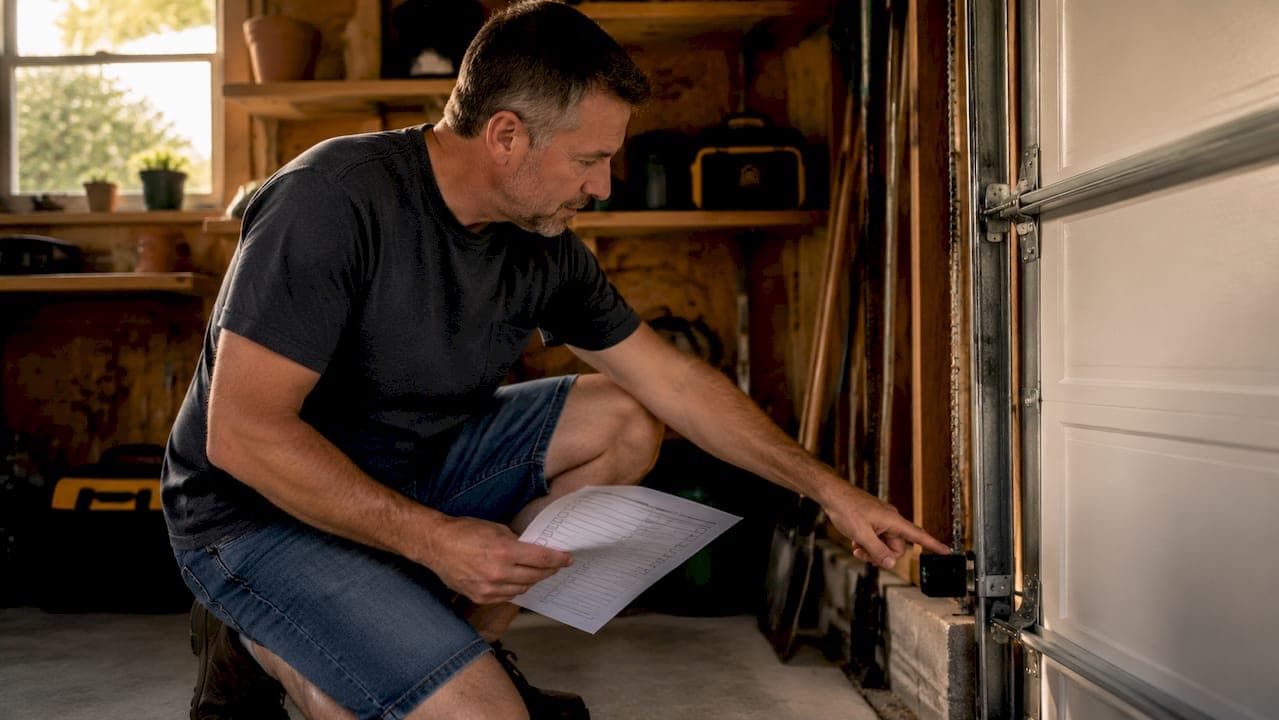
- Photo-eye sensors. These infrared beams must be mounted no higher than 6 inches above the floor. That height is not arbitrary. It targets the size of a small child crawling under a descending door.
- Contact-based auto-reverse. The door must reverse within 2 seconds of encountering an obstruction during closing. The force threshold that triggers reversal is 15 pounds of resistance. That limit was set specifically to prevent serious injury to children on contact.
- Manual emergency release. Every opener must include a red cord that disconnects the door from the drive mechanism. This is the garage door emergency release, and it lets you open the door by hand during a power outage or mechanical failure.
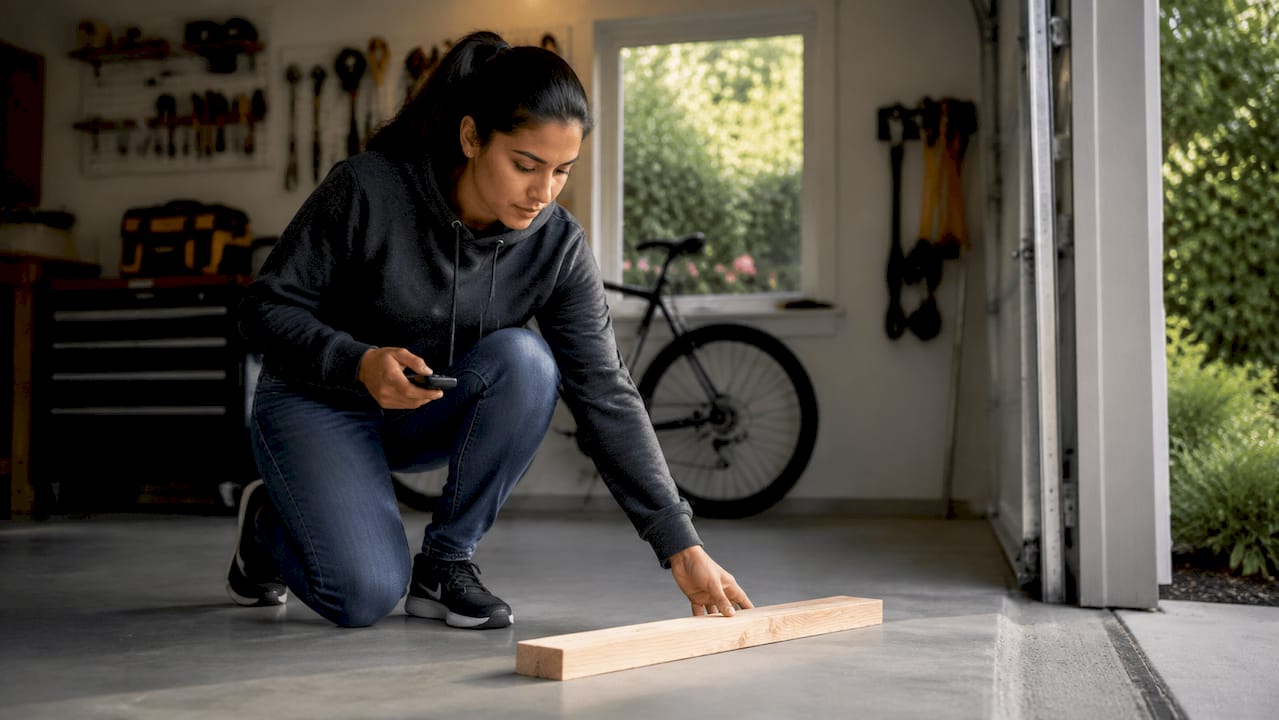
Pro Tip: Place a 2x4 flat on the ground in the door's path and close it. The door should reverse on contact. If it does not, your auto-reverse needs immediate adjustment.
Technicians performing field compliance checks verify both sensor alignment and that the auto-reverse triggers within the required timing. Passing a visual inspection is not enough. The function has to work.
2. Garage door fire safety requirements under IRC R302.5.1
The International Residential Code (IRC) governs the door between your attached garage and your home's living space. This is one of the most overlooked garage door fire safety requirements in residential construction. Carbon monoxide and fire gases move fast through an open or improperly rated doorway.
IRC R302.5.1 gives you three compliant door options:
- A solid wood door at least 1-3/8 inches thick
- A solid or honeycomb steel door at least 1-3/8 inches thick
- A 20-minute fire-rated door assembly
All three options require self-closing and self-latching hardware. The door must close and latch on its own every single time. A door that swings shut but does not latch is not compliant. The frame and hardware must also be compatible with the door's fire rating. A fire-rated door slab installed in a standard wood frame defeats the purpose of the rating.
Jurisdictions across the country adopt the IRC on their own schedule, and some add local amendments. Check with your local building department to confirm which version applies to your property.
3. Self-closing and self-latching hardware requirements
Hardware compliance is as important as door construction under IRC R302.5.1. Propping a garage-to-house door open violates fire safety codes and creates a direct path for fire and carbon monoxide to reach living areas. This is one of the most common violations found during home inspections.
Self-closing hardware includes door closers rated for the door's weight and swing. Self-latching hardware means the latch bolt engages the strike plate automatically when the door closes. Both components must work together. A door closer without a functioning latch is a code violation waiting to be discovered.
Property managers overseeing rental units should check this hardware during every tenant turnover. Tenants sometimes disable closers because they find them inconvenient. That convenience creates a genuine fire hazard.
4. NFPA 80 inspection mandates for fire door assemblies
NFPA 80 requires annual inspection of fire door assemblies with written records kept available for the authority having jurisdiction. This applies to any fire-rated door, including the garage-to-house door in residential properties and all fire doors in commercial buildings.
The annual inspection process covers these steps:
- Confirm the door label is present and legible.
- Test the self-closing function under real conditions.
- Verify the latch engages fully without manual assistance.
- Check clearances around the door frame for gaps that would allow smoke or fire to pass.
- Inspect hinges, closers, and hardware for damage or wear.
- Document all findings in a written report.
Written inspection records must be available if a building official or fire marshal requests them. Verbal confirmation is not sufficient. For commercial properties, failing to maintain these records can result in fines or a failed occupancy inspection.
5. Common garage door safety hazards and the codes that address them
A garage door safety hazards list typically includes broken torsion springs, misaligned photo-eye sensors, worn auto-reverse mechanisms, and improperly rated fire doors. Each hazard has a corresponding code provision designed to prevent injury or property loss.
Key hazards and their code connections:
- Broken springs. A failed torsion spring turns a 200-pound door into dead weight. UL 325 requires the manual release cord so you can still open the door safely. Spring tension work carries serious injury risk and should be handled by a professional. Learn more about spring tension safety before attempting any adjustment.
- Sensor failure. Dirty, misaligned, or damaged photo-eyes disable the first layer of entrapment protection. UL 325's dual safety system exists precisely because sensors can fail. The auto-reverse acts as the backup.
- Improper fire door installation. A non-rated door or missing self-closing hardware between the garage and home violates IRC R302.5.1 and creates a direct fire path.
- Blocked or bypassed safety devices. Tying back the emergency release cord or blocking sensors to force the door closed bypasses both layers of UL 325 protection.
Pro Tip: Run a monthly sensor test by waving your hand through the beam while the door is closing. The door should immediately reverse. If it hesitates or continues, call a technician the same day.
6. Residential vs. commercial garage door safety compliance
Residential and commercial garage door safety compliance follow different code paths. UL 325 applies specifically to residential automatic operators. Commercial properties fall under the International Building Code (IBC) and NFPA 80, which carry stricter fire resistance requirements.
| Feature | Residential | Commercial |
|---|---|---|
| Operator standard | UL 325 | Varies by jurisdiction |
| Fire door rating | 20-minute (IRC R302.5.1) | 1–3 hour (IBC, NFPA 80) |
| Inspection frequency | Annual recommended | Annual required (NFPA 80) |
| Written records | Recommended | Mandatory |
| Self-closing hardware | Required (IRC) | Required (IBC, NFPA 80) |
Commercial properties with loading docks, warehouses, or mixed-use spaces often require fire doors rated for 1 to 3 hours of fire resistance. The commercial garage door features that meet these ratings involve heavier construction and specialized hardware. Property managers overseeing commercial spaces should consult a licensed contractor familiar with IBC requirements before any door replacement or modification.
7. How to verify your garage door meets current safety standards
Verification goes beyond looking at the door. A door can appear compliant and still fail on function. The garage door tune-up checklist from Mikes garage doors Loveland covers the practical steps homeowners should run at least twice a year.
Start with the operator. Confirm the photo-eye sensors are mounted at or below 6 inches from the floor. Check that the lenses are clean and the indicator lights are solid, not blinking. Then test the auto-reverse by placing a 2x4 flat under the door and closing it. The door must reverse on contact.
Move to the fire door between the garage and home. Open it fully and release it. It should swing shut and latch without you touching it. If it stops short or the latch does not catch, the closer or strike plate needs adjustment. This check takes 30 seconds and could save your household in a fire.
Key takeaways
Garage door safety codes combine UL 325 entrapment protection, IRC R302.5.1 fire separation requirements, and NFPA 80 inspection mandates, and all three must be verified by function, not just by appearance.
| Point | Details |
|---|---|
| UL 325 requires two systems | Photo-eye sensors and a contact auto-reverse must both work independently. |
| IRC R302.5.1 sets fire door specs | The garage-to-house door must be rated, self-closing, and self-latching. |
| NFPA 80 mandates annual records | Written inspection logs must be available for fire marshals and building officials. |
| Hardware matters as much as the door | A compliant door slab with a broken closer or latch is still a code violation. |
| Commercial codes are stricter | IBC and NFPA 80 require higher fire ratings and mandatory written documentation. |
What I've learned about codes that most homeowners miss
Most people think garage door safety is about the opener. They test the sensors once after installation and assume they are done. After years of working on doors across Northern Colorado, I can tell you the most common compliance failures have nothing to do with the opener at all.
The garage-to-house fire door is where I see the most problems. Homeowners prop it open with a doorstop, or the self-closer wears out and nobody replaces it. That door is your last line of defense between a garage fire and your living space. A functional opener with a broken fire door is like a smoke detector with a dead battery. The device is there, but it does not protect you.
The second thing I see constantly is sensors that pass a visual check but fail a functional test. The lights are on, the alignment looks fine, but the auto-reverse does not trigger within 2 seconds. That gap between appearance and function is exactly why UL 325 requires technicians to verify auto-reverse timing during field inspections, not just confirm the sensors are present.
My honest advice: do not wait for an inspection to find these problems. Run the 2x4 test on your opener and the swing test on your fire door every six months. Both take under a minute. If either one fails, call a professional before the next time you use that door.
— Eddie
Garage door safety services in Loveland, CO
Knowing the codes is the first step. Getting your door to actually meet them is where Mikes garage doors Loveland comes in.
Mikes garage doors Loveland handles sensor alignment checks, auto-reverse calibration, fire door hardware replacement, and full safety inspections for both residential and commercial properties. The team completes 90% of repairs the same day, and every job starts with a free, upfront estimate over the phone so you know the cost before anyone shows up. Veterans receive a 10% discount on all services. If your door has not been professionally inspected this year, schedule a garage door safety inspection with Mikes garage doors Loveland and get it done right.
FAQ
What is UL 325 and does it apply to my garage door?
UL 325 is the federal safety standard for residential automatic garage door operators sold in the United States. If your opener was manufactured after 1993, it is required to meet UL 325 entrapment protection requirements, including photo-eye sensors and a contact-based auto-reverse.
How often should a fire door assembly be inspected?
NFPA 80 requires annual inspection of fire door assemblies with written records kept on file. For residential properties, this means the door between your attached garage and home should be tested for self-closing and self-latching function at least once a year.
What counts as a compliant garage-to-house fire door?
IRC R302.5.1 requires the door to be a solid wood or steel door at least 1-3/8 inches thick, or a 20-minute fire-rated assembly. The door must also have self-closing and self-latching hardware that functions without manual assistance.
What is the garage door emergency release and when should I use it?
The garage door emergency release is the red cord hanging from the opener carriage. Pulling it disconnects the door from the drive mechanism so you can open it by hand. Use it during a power outage or if the opener fails and you need to exit the garage immediately.
Do commercial garage doors have different safety requirements than residential ones?
Commercial garage doors fall under the IBC and NFPA 80, which require higher fire resistance ratings (typically 1–3 hours) and mandatory written inspection records. Residential doors follow UL 325 for operators and IRC R302.5.1 for fire separation, with lower but still enforceable standards.