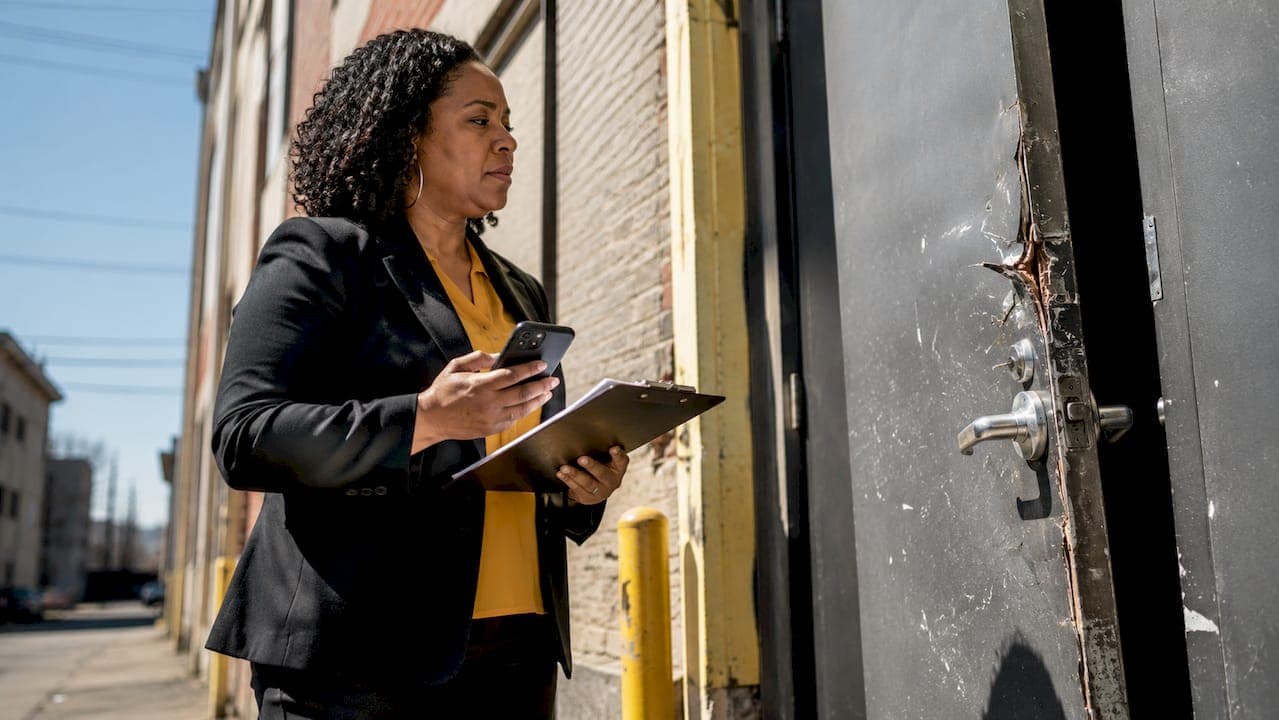
Commercial door repair urgency is defined by the immediate threat a door failure poses to safety, security, or business operations. When a fire-rated door fails to latch, an exit becomes blocked, or a loading dock door jams mid-shift, every minute of delay increases liability and operational loss. Property managers and business owners need a clear framework for deciding what qualifies as an emergency, what to do in the first hour, and how to stop the cycle of reactive repairs. Mikes garage doors Loveland handles these exact situations daily across Northern Colorado, completing 90% of repairs the same day they are called.
What does commercial door repair urgency actually mean?
Commercial door repair urgency is the industry term for prioritizing door failures that create immediate life safety, security, or operational continuity risks. Not every malfunction qualifies as an emergency. A door that squeaks or closes slowly is a scheduled maintenance item. A door that will not latch on a fire exit is an emergency that triggers code compliance obligations the moment it fails.
The distinction matters because emergency service costs more and demands faster decisions. Property managers who treat every door problem as urgent burn through maintenance budgets and exhaust technician relationships. Those who underreact to genuine emergencies expose their businesses to injury claims, fire code violations, and theft. The goal is accurate triage, not panic.
Three categories define true urgency: life safety (blocked egress, fire door failure), security (broken locks, shattered glass), and operational continuity (loading dock doors, high-traffic entry failures). If a door failure falls into any of these three categories, it demands same-day response.
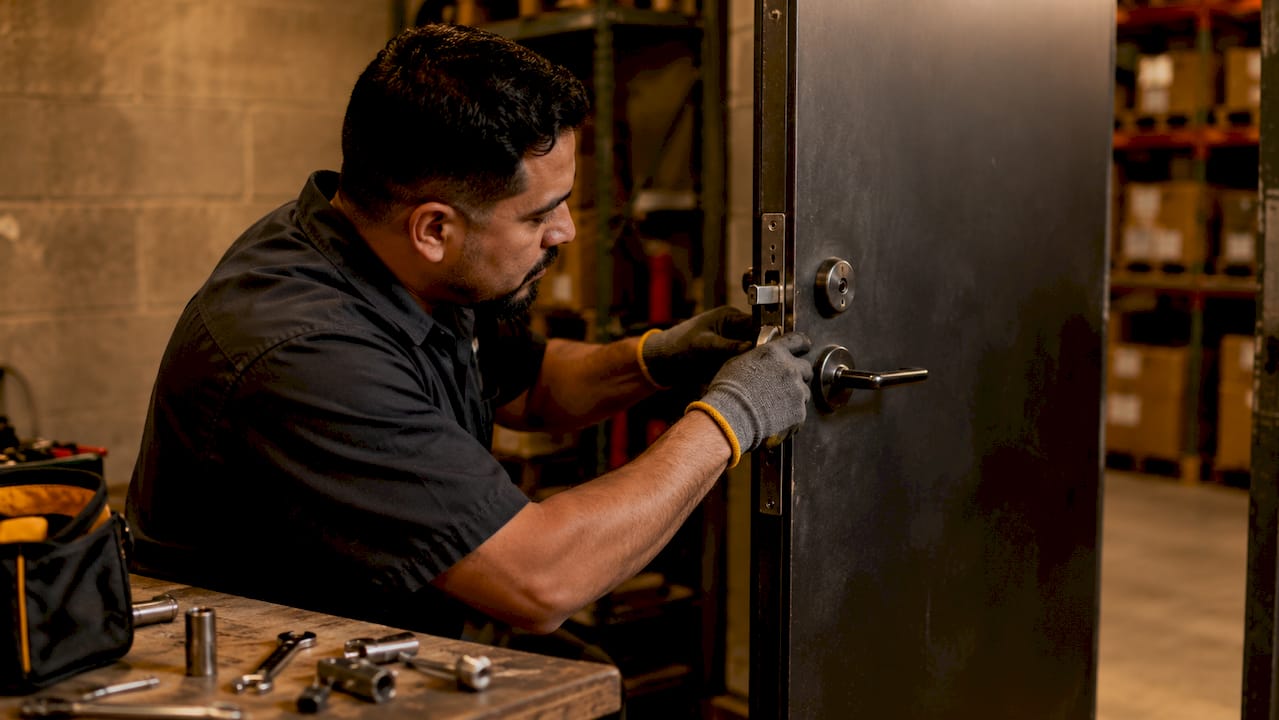
Which scenarios qualify as emergency commercial door repairs?
Knowing the difference between a real emergency and a nuisance repair saves money and prevents overreaction. These situations require urgent door repair services:
- Fire door fails to latch or self-close. Fire-rated doors must close and latch automatically under NFPA 80 standards. A door propped open or unable to latch defeats the entire fire compartmentalization system and creates immediate code liability.
- Exit door blocked or inoperable. Any door on a required egress path that cannot open freely is a life safety violation under IBC egress requirements. This is a same-hour problem, not a same-week problem.
- Broken glass in a high-traffic entry. Shattered glass in a storefront or lobby door creates injury risk for every person who walks through. It also removes the weather seal and security barrier simultaneously.
- Broken or compromised locks. A commercial door that cannot lock leaves your property, inventory, and occupants exposed. Broken locks and misaligned doors addressed early prevent full replacements and security incidents.
- Loading dock door failure. A stuck or broken dock door can halt receiving operations entirely. For distribution or manufacturing facilities, that translates directly into missed shipments and labor costs.
- Door frame damage from impact. A forklift strike or vehicle impact that bends a frame changes the structural integrity of the opening. The door may appear functional but fail under pressure.
Pro Tip: Take a 30-second video of the door failure before calling for service. Technicians who see the problem before arrival can bring the right parts, cutting repair time significantly.
Not all door malfunctions are emergencies. A door closer that slows down in cold weather, a worn threshold seal, or a minor alignment issue after seasonal settling are all real problems. They belong on a scheduled maintenance list, not an emergency dispatch call.
Should you repair or replace a commercial door urgently?
The repair versus replacement decision under time pressure is where property managers most often make costly mistakes. The industry standard rule is straightforward: if repair cost exceeds 40–50% of replacement cost, replacement is the better investment. That threshold prevents the "repair to failure" cycle where you spend more over two years than a single replacement would have cost.
Factors that push toward urgent repair
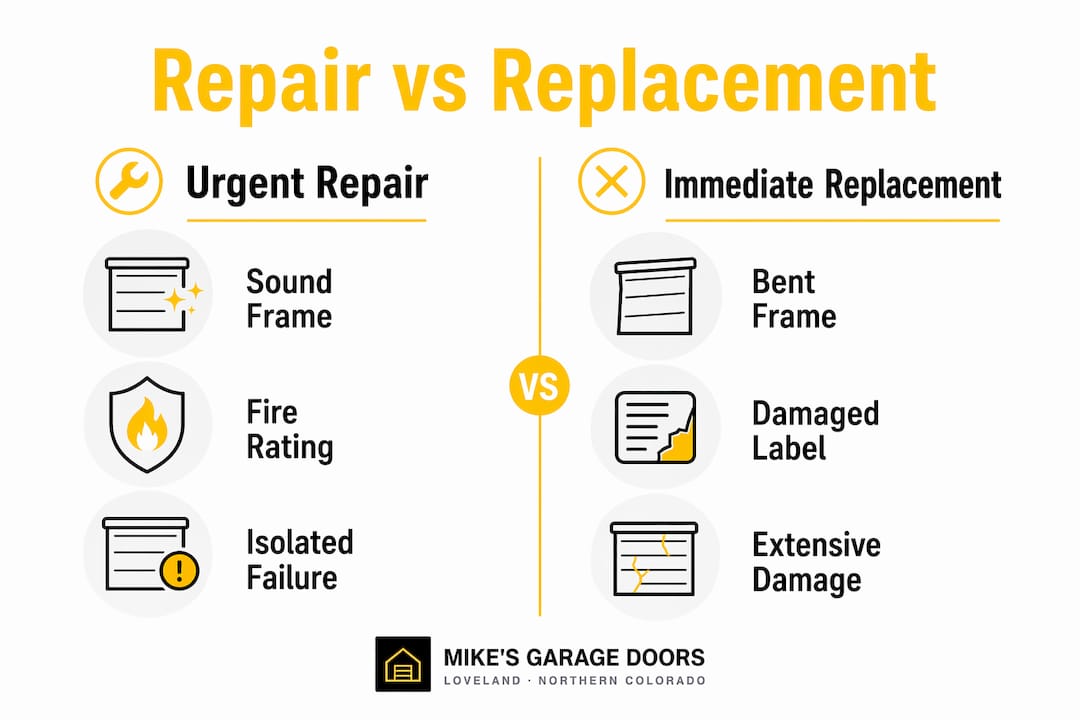
Repair makes sense when the door frame is structurally sound, the fire rating is intact, and the failure is isolated to hardware. A broken closer, a failed lock cylinder, or a damaged panel on an otherwise solid door are all strong repair candidates. Minor commercial door repairs typically complete in 1–2 hours, meaning a repair decision gets you back to normal faster than ordering a replacement unit.
Factors that push toward immediate replacement
Replacement is the right call when the frame is bent, the fire rating label is missing or damaged, or the door has been patched repeatedly. A door that has failed three times in 18 months is telling you something. Chasing it with another repair is false economy.
| Situation | Recommended action |
|---|---|
| Isolated hardware failure, sound frame | Urgent repair |
| Repair cost below 40% of replacement | Urgent repair |
| Bent or cracked frame | Immediate replacement |
| Fire rating label missing or damaged | Immediate replacement |
| Repeated failures within 12 months | Replacement evaluation |
| Repair cost above 50% of replacement | Replacement |
Pro Tip: Ask your technician for a written estimate that separates labor from parts. Labor costs are fixed regardless of the repair scope, so a high parts cost on an aging door is the clearest signal that replacement wins.
For a deeper look at this decision, the repair vs. replacement guide from Mikes garage doors Loveland walks through the cost math with real examples.
What should you expect from professional emergency door repair services?
A well-run emergency response follows a specific sequence. Understanding it helps you communicate better during dispatch and set accurate expectations for your team.
- Initial call and dispatch. Accurate dispatch information including door type, fire rating, damage nature, and egress status reduces downtime by helping technicians carry the right parts. Tell the dispatcher whether the door is a fire door, whether it is blocking an exit, and what the door is made of.
- On-site safety assessment. The first 15 minutes after arrival are critical. The technician secures the opening, confirms no one is at risk, and stabilizes the situation without blocking safe exit routes. This is not the time for permanent repairs.
- Temporary securing. Temporary emergency repairs secure the hazard and maintain code compliance but require follow-up for permanent restoration. A technician may board up broken glass, install a temporary lock, or prop a door in a safe position while parts are ordered.
- Diagnostic inspection before permanent repair. Inspection must precede cosmetic fixes because failure to latch often signals deeper structural problems. A shifted frame or worn pivot requires full diagnostics, not just a hardware swap.
- Permanent repair or scheduled return. Custom glass, fire-rated hardware, and specialty frames may require a return visit. The technician confirms a timeline before leaving the site.
- Documentation. Get a written record of what was done, what parts were used, and what follow-up is needed. This protects you in any code inspection or insurance claim.
Mikes garage doors Loveland technicians follow this exact sequence. Their commercial repair services include same-day response across Northern Colorado, with upfront phone estimates so you know the cost before anyone arrives.
How does preventive maintenance reduce emergency door repairs?
The most effective way to manage commercial door repair urgency is to prevent emergencies from happening. Doors used 3–5 times daily may require major parts within 5–10 years without maintenance. A monthly inspection routine catches wear before it becomes failure.
A practical monthly checklist covers:
- Hinges. Check for loose screws, rust, and visible wear. Tighten any loose fasteners with the correct torque.
- Door closers. Test closing speed and latching. Adjust closer valves a quarter-turn at a time to avoid over-adjustment. Clockwise slows the door; counterclockwise speeds it up.
- Seals and weatherstripping. Inspect for gaps, tears, or compression failure. A broken seal lets in weather, pests, and drafts that accelerate interior hardware corrosion.
- Locks and latches. Test every lock under load. A latch that catches 9 out of 10 times will fail at the worst moment.
- Frame alignment. Look for gaps between the door and frame at the top and sides. Seasonal shifting is normal; progressive gaps are not.
Pro Tip: Schedule your monthly door inspection on the same day you test your fire alarm system. Both tasks protect life safety, and pairing them makes it harder to skip either one.
Reactive fatigue from constant emergency calls is a real operational problem. Property managers who run monthly preventive checklists targeting lubrication, seal checks, and hinge tightness break the emergency repair cycle and reduce downtime. The 7-point tune-up checklist from Mikes garage doors Loveland is a practical starting point for building your own routine.
Key Takeaways
Commercial door repair urgency is determined by whether a failure threatens safety, security, or operations. Accurate triage, fast professional response, and consistent preventive maintenance are the three tools that keep costs and downtime under control.
| Point | Details |
|---|---|
| Define the emergency correctly | Only failures threatening safety, security, or operations qualify as true emergencies. |
| Use the 40–50% rule | Replace when repair cost exceeds 40–50% of replacement cost to avoid repeat failures. |
| Communicate clearly at dispatch | Sharing door type, fire rating, and damage details helps technicians arrive prepared. |
| Temporary repairs need follow-up | Securing a hazard is not the same as a permanent, code-compliant fix. |
| Monthly maintenance prevents emergencies | Routine inspection of hinges, closers, and seals catches wear before it becomes failure. |
What I have learned managing commercial door emergencies
The biggest mistake I see property managers make is treating urgency as a feeling rather than a checklist. When a door fails, adrenaline kicks in and people want it fixed immediately, even if the fix is wrong. I have watched rushed permanent repairs violate fire codes because someone skipped the diagnostic step. That creates a second emergency on top of the first.
The second mistake is poor dispatch communication. A technician who shows up without the right parts for a fire-rated door is not going to solve your problem in one visit. Thirty seconds of clear information on the phone saves hours on site. Tell the dispatcher the door type, the fire rating if you know it, and whether egress is compromised. That single habit changes the outcome of most emergency calls.
Prevention is where the real money is. I have seen facilities that run monthly door inspections go years without a single emergency call. The ones that skip maintenance call us in a panic twice a year and spend three times as much over the long run. The math is not complicated. A $150 maintenance visit beats a $900 emergency call every time.
My honest advice: build a relationship with a local provider before you need them. Know who you are calling before the door fails. That is not just good operations. That is how you protect your people and your property.
— Eddie
Mikes garage doors Loveland: fast commercial door repair when it counts
When a commercial door fails and every hour of downtime costs you money, you need a team that shows up prepared and gets it right the first time.
Mikes garage doors Loveland serves commercial properties across Northern Colorado with same-day response on most repairs. Their technicians arrive with the parts and knowledge to handle broken locks, damaged closers, misaligned frames, and loading dock failures without a second trip. Upfront phone estimates mean no surprise invoices. Veterans receive a 10% discount. For a full look at what they cover, visit their commercial repair services page and see why local property managers call them first.
FAQ
What qualifies as a commercial door emergency?
A commercial door emergency involves any failure that threatens life safety, security, or operational continuity. Fire doors that will not latch, blocked egress paths, broken glass in high-traffic areas, and inoperable loading dock doors all qualify.
How long does an urgent commercial door repair take?
Minor repairs like hinge adjustment or alignment complete in 1–3 hours. Glass replacements and full door swaps typically take 2–4 hours, with many providers offering same-day service.
When should I replace instead of repair a commercial door?
Replace when the repair cost exceeds 40–50% of replacement cost, when the frame is structurally compromised, or when the fire rating label is missing or damaged.
What information should I give when calling for emergency door repair?
Tell the dispatcher the door type, material, fire rating if known, and whether the door is blocking an egress path. Accurate dispatch details help technicians bring the right parts and reduce total repair time.
How often should commercial doors be inspected to prevent emergencies?
Monthly inspections covering hinges, closers, seals, locks, and frame alignment are the standard for high-use commercial doors. Doors used 3–5 times daily need more frequent attention than low-traffic entries.