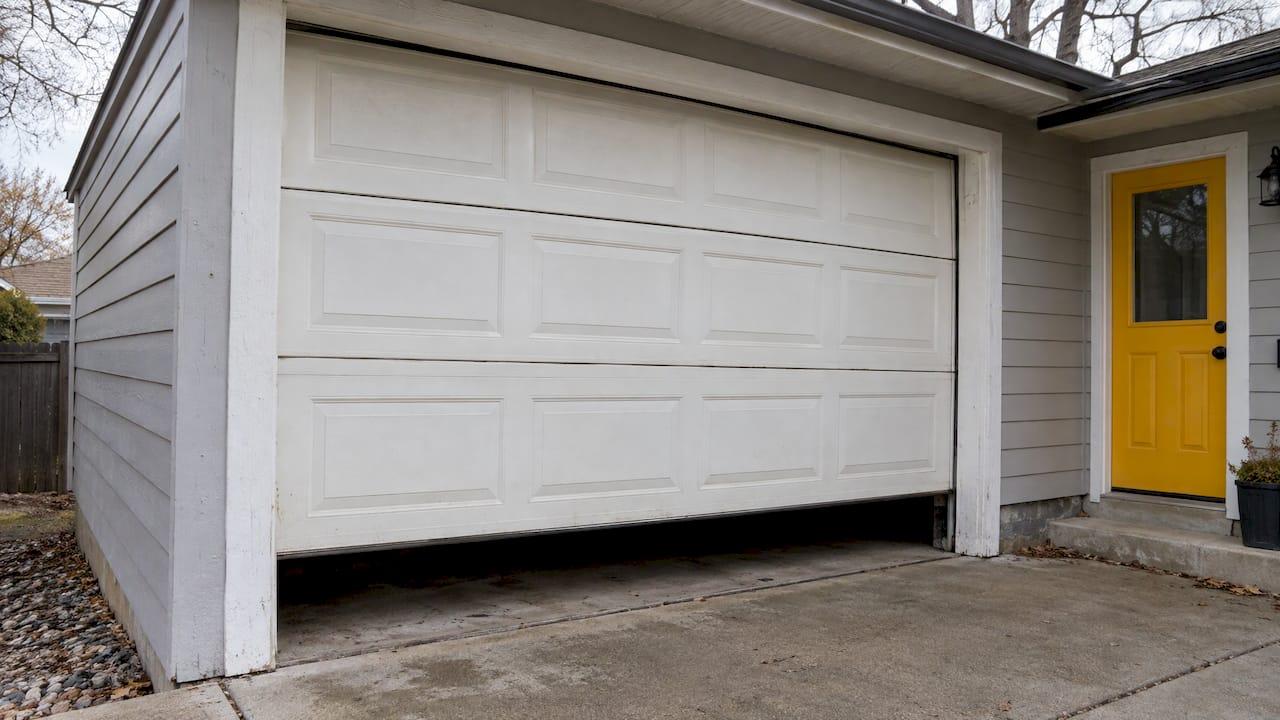
A garage door that looks crooked, rubs one side of the opening or leaves a gap at the top is telling you something is out of line. The panels rarely cause the problem alone. The cause is usually a track, roller, cable or spring, and several of those sit under heavy tension. The safe move is to look, take notes and photos, stop using the door if anything is off, and let a trained technician do the adjusting. In Loveland, that is the work we do at Mike's Garage Door Repair, and 90% of our repairs are finished the same day.
TL;DR
- A "misaligned panel" is usually a symptom. Tracks, rollers, cables and springs are the usual causes.
- You can safely do a flashlight inspection from the floor with the door closed. Do not loosen, adjust or repair anything.
- Stop using the door right away if it is crooked, jammed, partly off the track or has a roller outside its channel.
- Photos, measurements and a note of where it scrapes help a technician diagnose faster.
- We give upfront estimates over the phone and offer 24-hour emergency repair.
Table of Contents
- What panel misalignment looks like
- Why panels end up out of line
- A safe visual check you can do today
- When to stop using the door
- Alignment problems by property type
- Diagnosis: what a technician checks
- Perspective
- Get it fixed in Loveland
- FAQ
- Sources
What panel misalignment looks like
Your door is built from stacked sections, called panels, joined by hinges. Rollers on each side ride in steel tracks, and springs do the lifting. When one part shifts, the panels shift with it. The most common signs:
- One side of the door sits higher than the other, or the top panel leans away from the wall.
- Visible gaps between panels or along the weatherstripping.
- Scraping, grinding or popping as the door moves.
- The door binds, stalls or reverses partway.
- A panel that looks bent, dented or buckled.
Our own 9 signs your garage door needs repair covers the wider list of warning signs.
Why panels end up out of line
The cause matters because the fix is different each time. Common causes include:
- Track movement. Track fasteners work loose over years of vibration, or a bump from a car bends the track.
- Worn or displaced rollers. A roller that has slipped or worn out lets a panel ride unevenly.
- Uneven lift. If a cable has slipped or a spring has weakened, one side rises ahead of the other. GarageReference notes that grinding and uneven movement can point to tracks, but also to spring failure, displaced cables or worn rollers.
- Panel damage. A dent or crack weakens the section and throws off how it sits in the stack.
- Opener or sensor trouble. If the door reverses on the way down without visible damage, the problem is often the opener or safety sensors, not the track.
That last point saves people money. Sensor alignment, the small eyes near the floor on each side, is a different job from panel alignment. If your door reverses, our guide on passing the UL 325 two-second test explains what that reversal check involves.
A safe visual check you can do today
The Door and Access Systems Manufacturers' Association (DASMA) publishes a guide for building occupants on checking a garage door for damage. Its approach is inspection only. With the door closed and a flashlight in hand, look at:
- The overall alignment of the door and its components.
- How the opening frame is attached to the wall.
- Track fasteners and track alignment.
- Whether every roller sits in the track without tension.
- Roller brackets and hinges.
- The spring system, looking for loose cables. Look only. Do not touch it.
- Each section from both sides, for cracks, dents or buckling.
Write down what you see. Take photos. Measure any gap. Note exactly where the scraping happens. Also have the door model number handy. That information lets us give you a more accurate phone estimate and arrive with the right parts.
What not to do
DASMA is blunt here: occupants should not remove, adjust or repair doors, springs or fastened components. Doors are heavy and moved by springs under extreme tension, which can cause serious injury or death. Loosening a bracket, moving an overhead track or forcing a roller back into its channel can release that tension at the worst moment. A door that weighs a couple hundred pounds becomes dead weight the second its support lets go.

When to stop using the door
If your inspection turns up a problem, DASMA says to stop right away, skip any operating test and contact a trained door systems technician. If something goes wrong during operation, lower the door carefully to closed and call. Stop using the door if any of these apply:
- The door is crooked, jammed or partly off the track.
- A roller sits outside its channel.
- A track is bent or a support has pulled away from the wall.
- A panel, track or hardware is visibly deformed.
- A spring is broken, or a lift cable is frayed or displaced.
GarageReference lists the same stop conditions and treats loosening brackets, moving overhead tracks and re-seating escaped rollers as technician work. One side rising ahead of the other is a cable or counterbalance warning, so stop operating it.
If you are unsure how loose cables fit into this, read how loose garage door cables are handled safely. For spring questions, see our spring tension guide. Both explain why these parts belong with a professional.
Alignment problems by property type
Homes. A crooked door in a garage attached to your house is a security and safety issue. Cars, kids and bikes pass beneath it daily. Park outside and keep the door closed until it is looked at.
Commercial doors. For a property manager, downtime is the cost. A door stuck half open leaves a dock, shop or storage unit exposed. Photos and measurements sent ahead save a site visit's worth of guessing, and we service commercial garage doors across Northern Colorado.

Diagnosis: what a technician checks
A proper alignment repair starts with finding the cause, not nudging panels. The technician looks at track plumb and spacing, fasteners, roller condition, cable routing, spring balance and the panels themselves. Fixing the visible gap without fixing the cause means it comes back. That is why we ask what you saw and heard when you call.
Perspective
Most calls about "crooked panels" turn out to be something else underneath: a slipped cable, a tired roller, a track that has crept loose. The panel is where you notice it, not where it starts.
We would rather you take a flashlight, a phone and a notepad than a wrench. Our job is to turn your photos and description into an honest price over the phone, with no surprise add-ons when we arrive. Because we are family-owned and local, we also stand behind the work with written warranties on parts and labor.
If the door is off the track, jammed or crooked, stop using it and call. Veterans get an automatic 10% discount, and emergencies get a 24-hour response.
Eddie
Get it fixed in Loveland
We handle track and roller repair, spring replacement, opener repair and installation, tune-ups, custom doors and parts, and commercial service. Call with your photos and measurements, and we will give you an upfront estimate by phone. See our garage door services for the full list.

If you want to prevent the next problem, a tune-up catches loose hardware and worn rollers before they push a panel out of line. If you are weighing a new look after a repair, how to paint a garage door is a good starting point for the finish.
FAQ
Can I keep using a door with a misaligned panel?
Not if it is crooked, jammed, off the track or scraping badly. DASMA's guidance is to stop and contact a trained technician when a problem shows up. Keeping it closed until it is checked is the safe choice.
Can I adjust the track myself?
The safe homeowner job is looking, not adjusting. DASMA advises occupants not to adjust or repair doors, springs or fastened parts, because the springs hold extreme tension. Our technicians handle track and bracket adjustments.
Is sensor alignment the same as panel alignment?
No. Sensors are the small eyes near the floor that stop the door from closing on something. If the door reverses on the way down with no visible damage, the opener or sensors are the likelier cause than the panels.
What should I tell the repair company?
Give the door model, photos, measurements and where the scraping or gap occurs. That detail helps us diagnose by phone and quote the job upfront.
Sources
- DASMA: Building Occupant, Checking a Garage Door for Damage (TDS174)
- GarageReference: Garage Door Track Alignment, Safe Checks Before Adjustment