Yes. A garage door replacement consistently ranks as one of the highest-return exterior projects tracked in national remodeling data, with recovered-cost figures reported between roughly 194% and 268% depending on the year and source. Those numbers are benchmarks, not guarantees. Your real payoff depends on your installed scope and local market, so get two itemized installed quotes plus an agent's resale estimate before you commit.
TL;DR:
- The total installed cost typically ranges from $4,500 to $4,700, influenced by material, size, insulation, structural repairs, and finishing details.
- Homeowners should request itemized quotes covering all installation aspects and compare them against local resale data to estimate true value impact.
- Repairing minor issues can sometimes provide most resale benefits if the door’s structure and style are still sound, but full replacement is advisable for safety or significant damage.
- Choosing durable, conventional styles with energy-efficient features and high curb appeal can maximize the resale value of your garage door investment.
Table of Contents
- What the Cost vs. Value and Remodeling Impact Reports Say About Garage Door ROI
- How ROI Is Calculated (and the Mistake That Wrecks the Math)
- What Does a New Garage Door Cost to Install?
- Repair vs. Replacement: Which One Actually Helps You Sell?
- A Simple Way to Estimate Your Own Local ROI
- Design Choices That Actually Move the Needle on Resale
- What Local Service Quality Tells You About Your Quote
- Ready for an Itemized Installed Quote?
- Primary Sources Used in This Article
- Sources
- FAQ
What the Cost vs. Value and Remodeling Impact Reports Say About Garage Door ROI
The garage door replacement ROI numbers you see quoted everywhere trace back to two industry sources: the Cost vs. Value (CVV) project tables published by the Journal of Light Construction, and Zonda's annual Cost vs. Value report. Both track the same idea. They compare what a project costs installed against what it's estimated to add to a home's resale value, then convert that into a recovered-cost percentage.
The numbers move year to year, and the swing is bigger than most homeowners expect.
- 2025 CVV data: job cost of $4,672, estimated resale value of $12,507, for a 268% cost recovered.
- 2024 CVV data: median job cost of $4,513, estimated resale value of $8,751, for a 194% cost recovered.
- Zonda's 2025 report: ranks garage door replacement first among all measured projects, reporting a 267.7% recovered-cost figure and noting that exterior projects tend to deliver outsized resale value compared to interior remodels.
Here's the number that matters: installed cost barely moved between those two years, but estimated resale value jumped from $8,751 to over $12,500. That swing shows how sensitive the percentage is to buyer demand and appraisal assumptions in any given year, not just to what the door costs to install.
How ROI Is Calculated (and the Mistake That Wrecks the Math)
The formula behind every headline percentage is simple: recovered-cost percentage equals estimated resale value divided by installed project cost. The catch is in that second word. "Installed" means everything, not just the door panel.
A fair comparison has to include:
- Removal and disposal of the old door
- New springs, tracks, and cables
- Opener compatibility or replacement
- Permits, where required
- Framing repairs around the opening
- Painting, staining, or trim work to finish the job
The most common mistake homeowners make is pricing a door panel off a big-box website, then comparing that number to the national resale figure. That's not an apples-to-apples comparison, and it inflates your expected ROI before you've signed a contract.
Pro Tip: Ask every contractor for a line-item installed quote, not a single lump sum. If a quote doesn't separate materials, labor, springs, and disposal, ask them to break it out before you compare bids.
What Does a New Garage Door Cost to Install?
National medians from the CVV tables put installed garage door replacement in the $4,500 to $4,700 range, but your actual quote can land well outside that band depending on your home and your market. Treat the national figure as a reference point, not a prediction.
Several factors push a quote up or down:
- Material: steel, wood, aluminum, and composite doors carry different price floors and lifespans.
- Insulation: insulated panels with better R-values cost more upfront.
- Size and style: double-wide doors and custom carriage styles cost more than a standard single door.
- Opener compatibility: older openers sometimes need upgrading to match a new door's weight or track type.
- Structural repairs: rotted framing or damaged tracks add to the invoice.
- Trim and finish: windows, hardware finish, and paint or stain affect both cost and curb appeal.
- Labor and disposal: removal of the old door and haul-away fees vary by contractor and region.
Ordering and installation timelines run anywhere from a few days for in-stock steel doors to several weeks for custom orders, so factor lead time into any sale timeline you're planning around.
Repair vs. Replacement: Which One Actually Helps You Sell?
Not every door needs to be replaced to improve your ROI. Sometimes a repair gets you most of the resale benefit for a fraction of the cost.
- Repair usually wins when the problem is isolated, like a broken spring, worn rollers, frayed cables, or a failing opener, and the panels themselves are structurally sound and free of dents or rust.
- Replacement usually wins when multiple components are failing at once, the door shows visible damage or warping, the style clashes with an updated façade, or there are safety concerns like a door that won't reverse properly.
- Either way, get an inspection first. A professional walkthrough with an itemized written scope tells you which category you're in before you spend a dollar, and it protects you from replacing a door that only needed a spring.
A Simple Way to Estimate Your Own Local ROI
National percentages are a starting point, not your number. Here's a practical way to get closer to reality:
- Request two detailed installed quotes. Each should itemize materials, opener work, labor, disposal, permits, and any framing repairs.
- Talk to a local agent or pull recent comparable sales. Ask specifically how much curb-appeal upgrades like a new garage door tend to move buyer interest in your neighborhood.
- Apply a conservative recovered-cost assumption, not the highest headline number you've seen, and write down the assumptions behind it so you can revisit them if your quote changes.
Before you request quotes, make sure the scope checklist covers:
- Door panel, hardware, and weatherseal
- Springs, tracks, and cables
- Opener compatibility or upgrade
- Permit fees where applicable
- Framing repairs and finish work
Design Choices That Actually Move the Needle on Resale
Buyers notice a garage door before they notice almost anything else on the front of a house, which makes your material and style choices as important as the ROI math itself.
Stick with durable, mainstream styles and finishes that match your home's existing architecture. Overly custom designs can look great to you but narrow your buyer pool, which tends to shrink the recovered-cost percentage even when the door itself is high quality. If your climate makes energy efficiency a selling point, insulated panels with proper weatherseals are worth the added cost, and material choice matters here too, the way it does for interior doors where durability and finish drive perceived value.
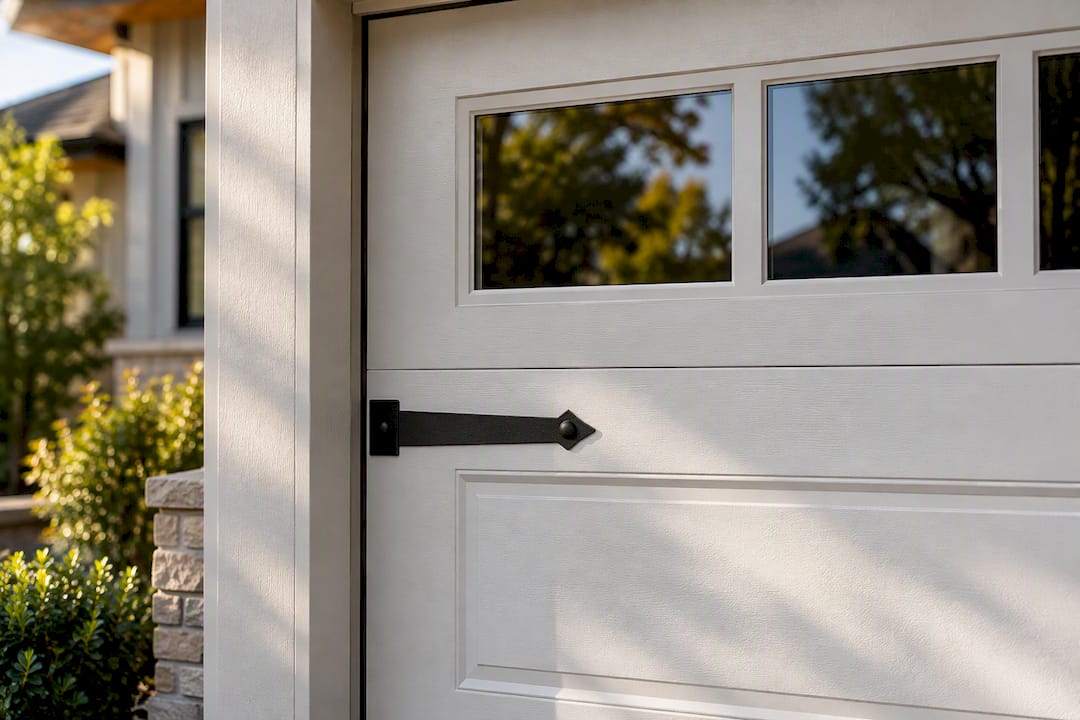
Small details carry outsized weight: hardware finish, window placement, paint color, and exterior lighting.
Pro Tip: Photograph the finished door in natural daylight and include at least one wide curb shot in your listing. Buyers scroll fast, and the garage door is often the first thing they register in a thumbnail image.
What Local Service Quality Tells You About Your Quote

Report numbers only tell half the story. The other half is whether the contractor you hire delivers what the quote promises. Mike's Garage Door Repair completes roughly 90% of repairs same-day, a signal of how experienced its technicians are with springs, openers, and hardware issues that show up mid-project. The company is family-owned, gives upfront phone estimates before any work starts, backs jobs with written warranties, and offers a 10% discount for veterans.
When you're comparing contractors, look for the same signals: a written guarantee, a documented scope before work begins, and technicians who can speak specifically to spring tension, opener compatibility, and structural repair, not just panel installation.
— Eddie
Ready for an Itemized Installed Quote?
Mike's Garage Door Repair gives you the one thing the national percentages can't: a real, local number for your specific door. Instead of guessing where your home falls in that 194% to 268% range, you get an upfront phone estimate and a written scope before any work starts, so you're comparing apples to apples when you shop a second quote.

The team handles the full range this article just walked through, inspections, itemized installed quotes, opener compatibility checks, spring and hardware repair, and full replacement installs, backed by written warranties and a 10% veteran discount. If a repair might solve your problem instead of a full replacement, ask about that too; sometimes a fixed spring or realigned track gets you most of the resale benefit for a fraction of the cost. Start by requesting a written, itemized quote through the garage door services page, then compare it against a second bid before you decide.
Primary Sources Used in This Article
- 2025 CVV Projects – Journal of Light Construction
- 2024 CVV Projects – Journal of Light Construction
- 2025 Cost vs. Value Report – Zonda
- 2025 Remodeling Impact Report – NAR
Sources
- CVV Projects – Journal of Light Construction
- CVV Projects – Journal of Light Construction
- 2025 Cost vs. Value Report - Zonda
- 2025 Remodeling Impact Report
FAQ
What is the typical cost to replace a garage door?
Installed garage door replacement typically falls in the $4,500 to $4,700 range nationally, based on CVV project data, though your actual quote depends on material, insulation, size, and any structural repairs needed. Get an itemized installed quote rather than pricing just the door panel to know your real number.
Does replacing a garage door increase home value?
Yes. National Cost vs. Value data shows garage door replacement recovering between 194% and 268% of its installed cost at resale, consistently ranking among the top exterior projects tracked. The exact uplift depends on your local market and how the new door compares to neighboring homes.
Is a new garage door a good investment?
For most homes, yes, especially when the current door is outdated, damaged, or mismatched with the home's style. The Remodeling Impact Report also notes that homeowners report high satisfaction from garage door projects beyond just the dollar recovery.
How can I increase my home's value the most?
Exterior projects with strong curb-appeal impact, like garage door replacement, tend to deliver outsized returns relative to their cost, according to Zonda's 2025 report. There's no single project that adds a guaranteed dollar amount to every home, so pair a report-backed project like a garage door with a local agent's estimate before budgeting for a specific value increase.