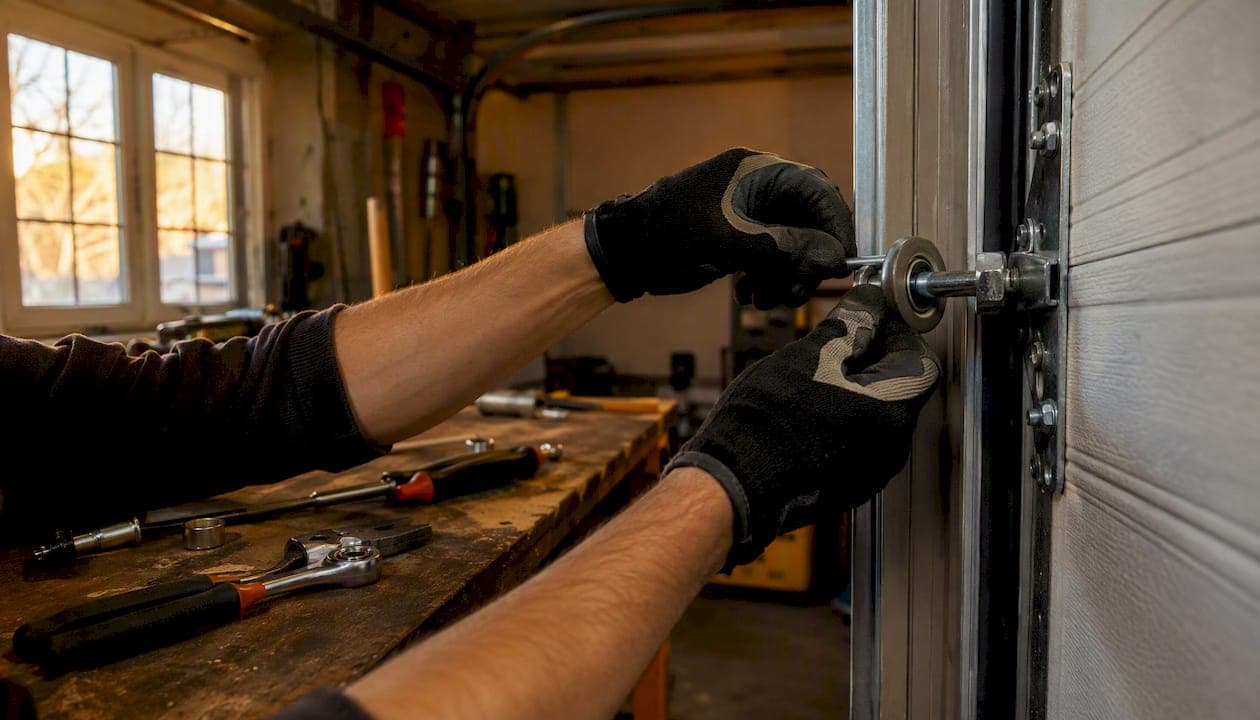
Replacing a full set of residential garage door rollers typically costs a moderate amount for parts and labor combined, with most homeowners paying an amount near the middle of the typical range according to Angi's national cost data. If you're handy and willing to do it yourself, parts alone can cost as little as $30–$60 for a standard nylon set. Hire a pro, and you're paying for speed, safety, and a warranty on the work.
Quick comparison: DIY parts only: $30–$60 | Professional (parts + labor): $150–$300
Key Takeaways
Most homeowners pay $150–$300 for a professional garage door roller replacement, with parts-only DIY costs running $30–$60 for a standard nylon set.
| Point | Details |
|---|---|
| Total professional cost | Expect $150–$300 for parts and labor; the national average lands around $200. |
| DIY parts-only cost | A full set of standard nylon rollers costs $30–$60; sealed-bearing upgrades run $60–$150. |
| Best roller upgrade | Sealed ball-bearing nylon rollers last 12–20 years and reduce opener strain for $3–$15 per piece. |
| Plan for add-ons | Track repair, spring work, and hinge replacement each add $20–$375 depending on damage. |
| Mikes Garage Doors Loveland Colorado | Provides same-day service, upfront phone estimates, and warranty coverage for roller jobs in Northern Colorado. |
Table of Contents
- How does garage door roller cost break down between parts and labor?
- What factors move the price up or down?
- Should you replace garage door rollers yourself or hire a pro?
- How long does a roller replacement appointment take?
- What add-ons commonly raise the final bill?
- How long do garage door rollers last, and what does maintenance cost?
- How Mikes garage doors Loveland colorado handles roller replacement
- What most homeowners get wrong about roller upgrades
- Ready to stop guessing and get a real quote?
- Sources
- FAQ
How does garage door roller cost break down between parts and labor?
The headline number of $150–$300 isn't one lump sum. It's two distinct buckets, and knowing which is which helps you spot a fair quote.
What makes up the total:
- Rollers (parts): Individual rollers retail for roughly $3–$15 each depending on material. A 10-pack of standard nylon rollers from a major retailer can keep your parts-only total under a hundred dollars for a full residential set.
- Labor / service call: This is where most of the bill lives. Technicians typically charge by the job or by the hour, and labor is usually the main price driver on any roller replacement.
- Diagnostic or trip charge: Many companies include a service-call fee that is commonly in the moderate price range that may be rolled into the final price if you proceed with the repair.
- Lubricant and misc supplies: A can of garage door lubricant runs a modest amount and is often applied as part of the service.
Two quick examples:
Full-set replacement on a single-car door (10 rollers): Parts at roughly $5 each = $50 in rollers. Add labor and a service call, and you're looking at $175–$250 total.
Single-panel or 1–3 roller swap: Parts cost drops to $10–$30, but the service-call fee stays the same, so the total often runs $100–$175.
Regional pricing shifts the math. Urban markets commonly run noticeably above the national average, so a job priced at $200 in Loveland, Colorado might cost $230–$260 in Denver or a coastal metro.
What factors move the price up or down?
Not every roller job is the same. Four variables account for most of the spread between a $100 repair and a $300 one.
Material and bearing type
Since labor time is nearly identical regardless of which roller you install, the upgrade cost is almost entirely in the parts.
Diameter, stem length, and door size
Most residential doors use 2-inch diameter rollers with a standard stem length. Oversized or custom doors may require 3-inch rollers or non-standard stems, which are less common at big-box retailers and can push parts cost up noticeably. Matching the right SKU matters; specialty suppliers like American Door Supply carry detailed roller specs when a standard pack won't fit.
Number of rollers
A standard single-car residential door runs on 10–12 rollers. A two-car door can have 14–16. Every additional roller adds parts cost, and if the job takes longer due to door size or weight, labor climbs too.
Door weight and access difficulty
Heavy carriage-style doors or high-lift doors take more time to work on safely. A tight garage with limited clearance can add 20–30 minutes to a job, which shows up in the final bill.
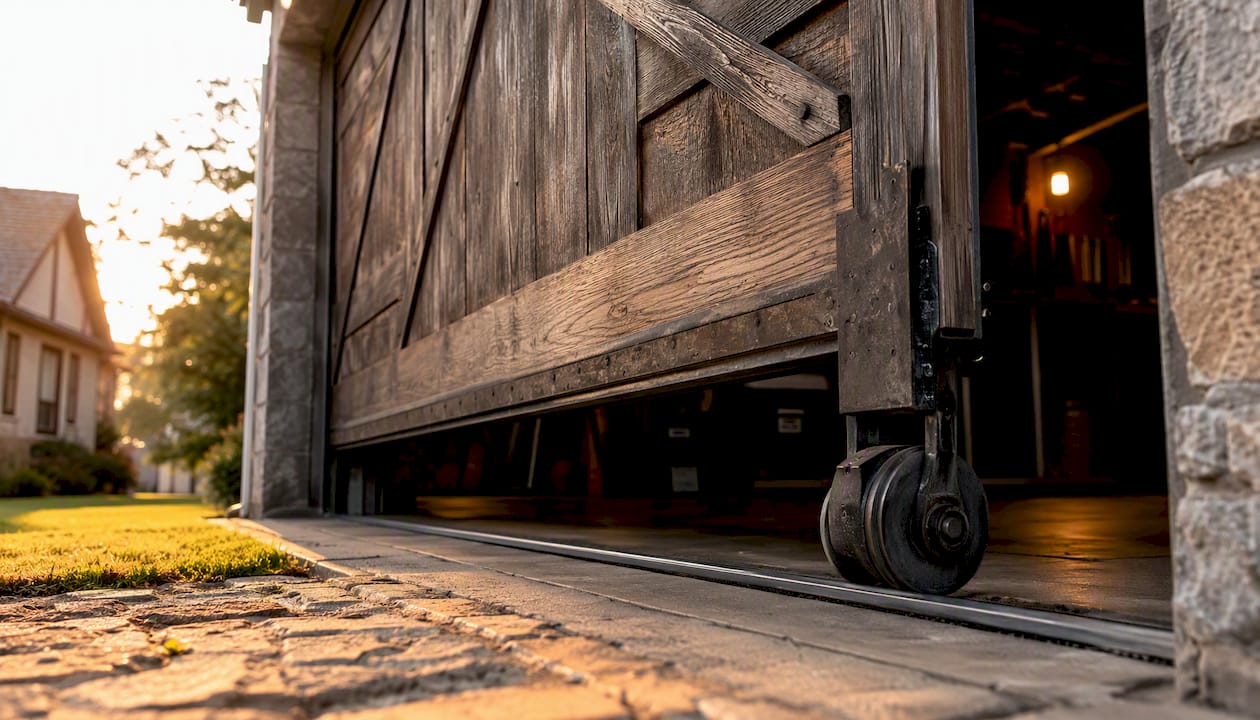
Pro Tip: When you're already paying for a service call, upgrading from standard nylon to sealed ball-bearing rollers usually adds only $30–$50 to the parts cost. That small difference can buy you an extra 5–10 years of quiet, smooth operation.
Should you replace garage door rollers yourself or hire a pro?
This is the real decision most homeowners face. The honest answer: it depends on what else is going on with the door.
DIY roller replacement
Parts-only cost runs $30–$60 for a standard nylon set, or up to $100–$150 if you upgrade to sealed-bearing rollers for the whole door. Budget 1–3 hours for shopping, removal, and installation if you haven't done it before. Amazon's best-seller rollers give you a quick way to compare pack pricing and features before you buy.
When DIY makes sense:
- You're replacing 1–3 rollers on a door that opens and closes smoothly
- The tracks are straight and the springs are intact
- You're comfortable working with basic hand tools and can safely prop the door
When to call a pro instead:
- The door is off-balance or won't stay open on its own
- You see a broken or visibly wound torsion spring (this is a serious safety risk)
- Multiple rollers are failing at once, suggesting a systemic issue
- The track is bent or a section has pulled away from the wall
- The door is unusually heavy (solid wood, oversized panels)
A professional job runs $150–$300 all-in and typically comes with a warranty on parts and labor. That warranty matters: if a roller fails within the coverage window, the tech comes back at no charge. For a full-set replacement where multiple rollers are already worn, pros often recommend doing all of them at once to avoid a repeat service call in three months. That logic holds up financially, since the service-call fee is the same whether you replace two rollers or twelve.
For a deeper look at when repair crosses into full replacement territory, the repair vs. replace guide from Mikes Garage Doors Loveland Colorado walks through the decision clearly.
How long does a roller replacement appointment take?
A standard residential roller replacement takes 30–90 minutes from the time the technician arrives. A single-panel or 1–3 roller swap lands at the low end. A full-set replacement on a two-car door with some track cleaning and lubrication takes closer to 60–90 minutes.
What pushes a job past 90 minutes: bent track sections that need straightening, a spring that needs adjustment after the rollers are swapped, or an opener that needs realignment once the door moves more freely.
Same-day service is common for roller replacements because the parts are standard stock. Most reputable local companies can schedule you within the same business day for non-emergency calls. Emergency or after-hours service typically adds a premium of $50–$100 to the base job price, so if the door is functional (just noisy or slow), waiting for a regular appointment saves money.
Service windows are usually 2–4 hours. A diagnostic or trip charge of $50–$75 is standard and often applied toward the repair total if you proceed.
What add-ons commonly raise the final bill?
Rollers don't always fail in isolation. Here's what technicians frequently find alongside worn rollers, and what each repair typically adds to the total.
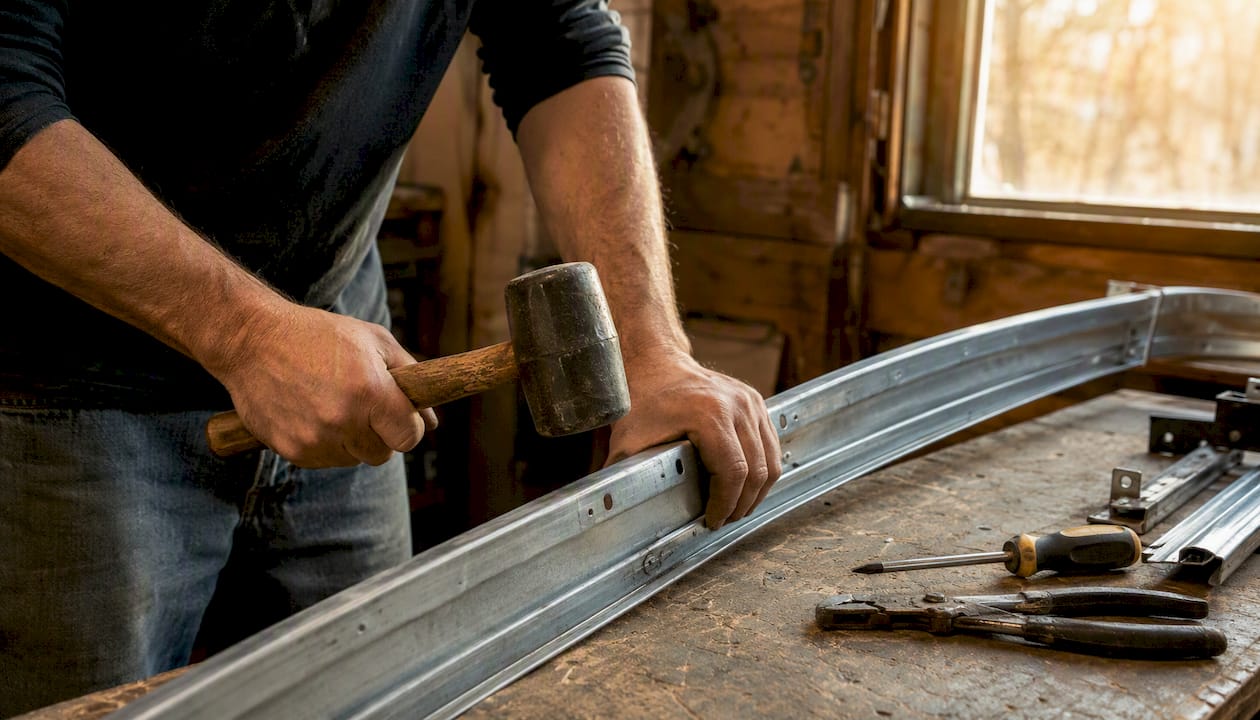
| Add-On Repair | Approximate Added Cost | Often Paired With |
|---|---|---|
| Bent track section (straightening) | $50–$150 | Roller replacement |
| Track replacement (full section) | $150–$300 | Severe track damage |
| Broken hinge replacement | $20–$60 per hinge | Roller wear near hinges |
| Cable repair or replacement | $75–$200 | Off-track door |
| Opener realignment / adjustment | $50–$100 | Full-set roller swap |
| Torsion spring replacement | $150–$300 | Unbalanced door |
Track repair is the most common companion to roller work. When rollers wear down, they can score or dent the track over time, and a bent track will chew through new rollers faster than normal. Addressing both in one visit is almost always cheaper than two separate service calls.
Watch for this: A quote that jumps from $200 to $600 mid-job without a clear explanation of what broke and why deserves a second opinion. Legitimate add-ons come with a visible part and a reason. Ask the technician to show you the damaged component before authorizing additional work.
How long do garage door rollers last, and what does maintenance cost?
Lifespan varies significantly by material and how often the door cycles. Here's a realistic breakdown:
- Standard steel rollers: 5–7 years under normal residential use
- Standard nylon rollers: 7–10 years
- Sealed ball-bearing nylon: 12–20 years
- Premium Teflon-coated or heavy-duty: 15–20+ years
Annual maintenance is simple and cheap. A can of garage door lubricant costs $7–$10 and takes about 10 minutes to apply to the rollers, hinges, and tracks. That one step reduces friction, cuts noise, and takes strain off the opener motor, which can delay larger repairs by years.
Annual maintenance checklist:
- Lubricate rollers, hinges, and tracks every 6–12 months
- Visually inspect rollers for chips, cracks, or flat spots
- Listen for grinding or squealing during operation
- Check that the door moves smoothly without jerking or hesitating
- Test the door balance: disconnect the opener and lift manually to waist height; it should stay put
Pro Tip: Don't use WD-40 on garage door rollers. It's a solvent, not a lubricant, and it strips the grease from sealed bearings. Use a dedicated garage door lubricant or white lithium grease instead.
Proper lubrication also protects the track and opener. A door that runs smoothly puts less load on the motor, which can add years to an opener's life.
How Mikes garage doors Loveland colorado handles roller replacement
Understanding national price ranges is useful. Knowing what a local service call actually looks like is more useful.
At Mikes Garage Doors Loveland Colorado, a typical roller replacement service call follows a straightforward process: the technician inspects the full door system on arrival, identifies which rollers need replacement and whether any track or hardware issues are present, then provides an upfront quote before touching anything. No surprise charges after the job is done.
What to expect on a standard service call: Inspection and diagnosis, clear phone or on-site estimate, parts selection (with upgrade options explained), installation, full door test cycle, and lubrication of the new rollers and adjacent hardware. The job is covered by warranty, and 90% of repairs are completed the same day.
For a typical 7-foot single-car door with 10 rollers, a full-set replacement using quality nylon rollers generally falls within the $150–$250 range, consistent with national averages. A single-panel swap or 1–3 roller repair often comes in at $100–$175. Actual quotes depend on the specific door, roller type selected, and whether any track or hardware work is needed.
Pro Tip: Call before you book. Mikes garage doors Loveland colorado provides upfront phone estimates, so you can get a realistic number before a technician ever pulls into your driveway. That call takes two minutes and eliminates the most common source of sticker shock.
What most homeowners get wrong about roller upgrades
The biggest mistake we see is buying the cheapest rollers available and treating it as a win. A $3 steel roller looks identical to a $10 sealed-bearing nylon roller in the package. On the door, the difference shows up within two years: the cheap one gets noisy, starts to wobble, and accelerates wear on the track and opener.
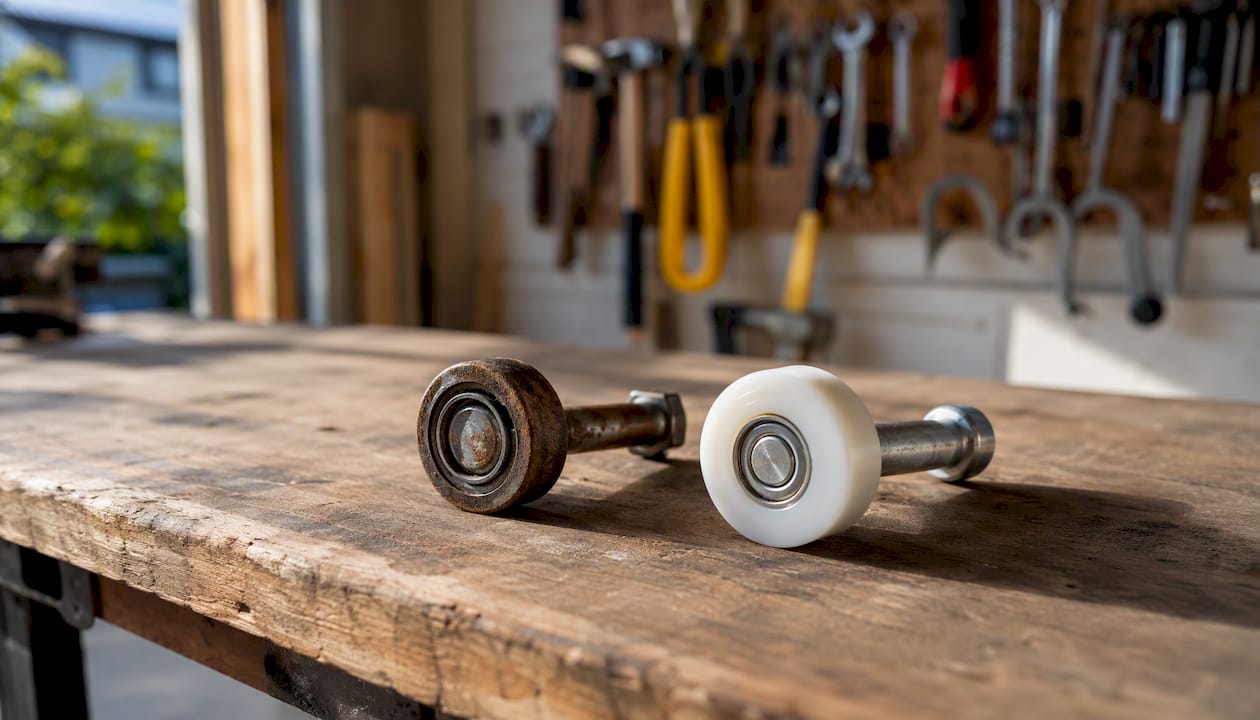
Since labor costs the same either way, the real cost of the cheap roller isn't $3. It's $3 plus another service call in 24 months. The sealed-bearing nylon roller costs $10 upfront and runs quietly for 12–15 years. That math isn't complicated, but most people don't think through it at the parts store.
The one upgrade most customers tell us they wish they'd made from the start: sealed ball-bearing nylon rollers. They're quieter than steel, gentler on the track, and the sealed bearing means they don't need frequent re-lubrication. For a door that opens 4–6 times a day, the difference in noise alone is worth the extra $40–$60 on a full set.
Ready to stop guessing and get a real quote?
When the door starts grinding, squealing, or moving unevenly, the roller replacement cost is almost always lower than homeowners expect.
The garage door services team covers roller replacement, spring repair, opener work, and full tune-ups across Loveland and Northern Colorado. Every job comes with upfront pricing, no hidden fees, and warranty coverage on parts and labor. Call or book online today to get your estimate and get the door running right.
Sources
- How Much Does a Garage Door Roller Replacement Cost?
- How Much Does Garage Door Roller Replacement Cost? 2026 US …
- Cost of Garage Door Services - Last Updated July 2026 - Yelp
- Garage Door Rollers
- Best Garage Door Rollers
FAQ
How much do garage door rollers cost to replace professionally?
Most homeowners pay $150–$300 for a professional roller replacement, with a national average around $200 for parts and labor combined. A single-roller repair often runs $100–$175 once the service-call fee is included.
What type of garage door rollers are best?
Sealed ball-bearing nylon rollers are the best fit for most residential doors. They run quietly, last 12–20 years, and reduce wear on the opener and track compared to standard steel or basic nylon options.
Can I replace garage door rollers myself to save money?
Yes, if the door is balanced, the springs are intact, and you're replacing only a few rollers. DIY parts cost $30–$60 for a standard set. If the door is off-balance, the springs look worn, or multiple rollers are failing, hire a pro.
How many rollers does a standard garage door have?
A standard single-car residential door uses 10–12 rollers. A two-car door typically has 14–16. Replacing all of them at once during a service call is usually more cost-effective than scheduling multiple visits.
Does location affect garage door roller replacement cost?
Yes. Getting two or three local quotes is the most reliable way to confirm fair pricing for your specific market.