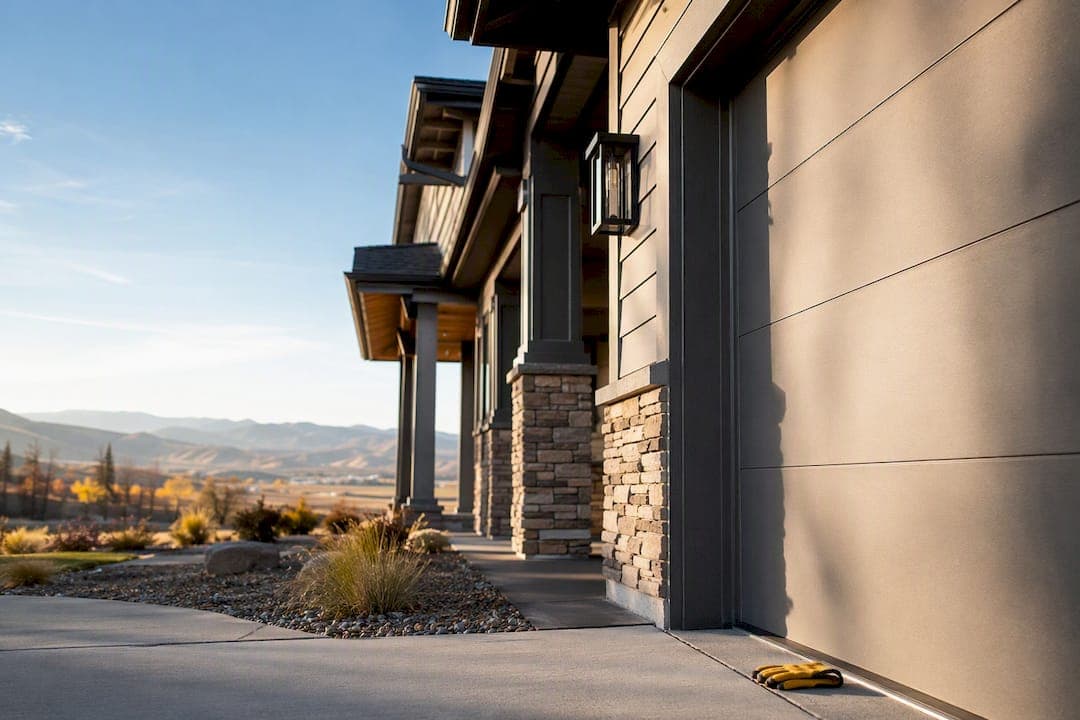
Every garage door on the market falls into one of three families: Traditional/Classic, Carriage-house, or Modern/Contemporary. The panel shape only gets you partway there. Material, window placement, and color change a door's personality far more than the basic silhouette. Start by matching the door to your home's architecture and scale, then choose material and insulation last.
TL;DR:
- Insulated steel doors with higher R-values are recommended for garages used as living spaces or with conditioned rooms above to reduce energy costs.
- Carriage-house doors made of real wood or composite overlays command a higher price and offer customized barn-style aesthetics.
- Modern doors with full-glass panels or textured overlays are trending, but privacy and thermal performance should be considered when selecting glazing options.
- Homeowners should match garage door style to their home's architecture and climate while prioritizing proportion, color contrast, and hardware for best curb appeal.
- Repair offers a quick, cost-effective option for many issues, but a new door provides a significant ROI and can enhance home value if chosen thoughtfully.
Table of Contents
- Garage Door Styles That Fit Traditional and Classic Homes
- Carriage-House Garage Doors for a Barn-Style Look
- Modern and Contemporary Garage Doors With Glass
- Farmhouse, Colonial, Coastal, and Other Specialty Styles
- Materials, Windows, and Hardware: The Details That Change Everything
- Insulation and R-Value: Why It Affects More Than Comfort
- How to Choose a Garage Door Style: A Homeowner's Checklist
- What's Trending in Garage Door Design Right Now
- A Local Pro's Take on Choosing the Right Door
- Sources
- FAQ
- The Bottom Line on Choosing a Garage Door Style
Garage Door Styles That Fit Traditional and Classic Homes
Traditional doors are the ones you already picture when you hear "garage door." Raised or recessed panel rows, symmetrical layouts, and windows set in a straight line across the top give this style its timeless read. Some feature arched-top windows for a softer look; others keep everything square for a crisper line.
Manufacturers build these in a range of materials, and manufacturer buying guides commonly present Traditional alongside Modern and Carriage-house as the three anchor categories homeowners shop from first.
- Painted steel, the most common and budget-friendly option
- Steel with faux-wood overlays for warmth without the upkeep
- Composite panels that resist dents and fading
This style works best on colonial, Tudor, and traditional ranch exteriors. The trade-off is straightforward: broad availability and dependable resale appeal but fewer opportunities to make a house stand out on the block.
Carriage-House Garage Doors for a Barn-Style Look
Carriage-house doors borrow their look from old swing-open barn doors, even though nearly all of them operate as standard sectional doors today. Crossbeams, faux strap hinges, and overlay panels create the illusion of hinged doors without sacrificing the convenience of an opener.
- Composite or faux-wood overlays mounted on steel for a low-maintenance version
- Real wood for custom builds where budget allows and upkeep isn't a concern
- Arched top sections that echo barn architecture
This is the style that gets noticed. It suits Craftsman, Cottage, and Farmhouse exteriors especially well, and it tends to command a higher price tag than a plain Traditional door. Real wood versions need periodic refinishing to hold their color. Oil-rubbed bronze or matte black hardware, paired with a two-tone color scheme, tends to sharpen the barn-door illusion considerably.
Modern and Contemporary Garage Doors With Glass
Flush panels, long horizontal or vertical reveal lines, and generous glass sections define the modern category. At the far end sit full-view aluminum-and-glass systems, doors built almost entirely from glass panes set in slim aluminum frames. Trade shows have highlighted these systems as a fast-growing segment, with manufacturers showcasing full-glass designs alongside coordinated entry-door lines.
- Aluminum and glass for maximum daylight and a sleek, minimal profile
- Flush steel panels for a modern look with better insulation than glass
- Composite panels with hidden seams for a similar effect at a lower price
The trade-off is real: glass brings in light and makes a strong style statement, but it also raises privacy questions and, depending on the glazing, can lower the door's overall R-value compared to a fully insulated steel panel.
Pro Tip: If you love the glass look but not the idea of neighbors seeing your storage bins, ask about frosted, tinted, or opaque glass inserts. You get the daylight and the clean lines without turning your garage into a display case.
Farmhouse, Colonial, Coastal, and Other Specialty Styles
A handful of niche styles show up constantly in homeowner searches because they solve for a specific architectural match or climate need.
- Farmhouse/Craftsman: crossbeams, warm wood tones, and faux-wood finishes deliver the look with steel-level durability.
- Colonial: symmetrical panels, decorative windows, and simple moldings suit brick and clapboard exteriors built for balance.
- Coastal/louvered: ventilated panel designs and salt-resistant finishes hold up against humid, salt-heavy air near the water.
- Arched-top variations: work across several of the styles above and soften an otherwise boxy garage facade.
Deciding among these comes down to three questions: does it match your home's architecture, does it hold up in your climate, and how much maintenance are you willing to take on?
Materials, Windows, and Hardware: The Details That Change Everything
Two doors with an identical panel design can look completely different once you factor in material and finish.
- Steel: durable, low-maintenance, and available in nearly every style; dents are the main weakness.
- Wood: unmatched natural warmth for Carriage-house and Craftsman styles, but it demands regular refinishing.
- Faux wood/composite: mimics real wood's grain and color without the upkeep, a popular middle ground.
- Aluminum: lightweight and corrosion-resistant, the standard choice for full-glass modern doors.
- Fiberglass: holds up well in coastal or high-moisture climates and resists denting better than steel in some builds.
Window placement matters more than most homeowners expect. A single row across the top preserves privacy while still adding visual interest, while stacked vertical panels let in more light but expose more of the garage's interior. Trade coverage on 2025 design trends notes that window choice directly affects both curb appeal and the door's thermal performance.
Hardware finish and two-tone paint are the cheapest way to change a door's entire character. Matte black or oil-rubbed bronze hinges and handles read as premium on almost any base color.

Insulation and R-Value: Why It Affects More Than Comfort
R-value measures how well a door resists heat transfer, and it matters most when your garage sits under living space or shares a wall with the house. A poorly insulated door lets summer heat and winter cold move straight through, which shows up as higher energy bills and an uncomfortable room above the garage.
Industry trend reporting shows homeowner demand shifting toward higher R-values and insulated doors, driven partly by tighter energy codes and partly by rising utility costs, according to 2025 garage door trend coverage.
Polyurethane-filled doors deliver the highest R-values; polystyrene sits in the middle; uninsulated steel or wood offers the least resistance. Attached garages and any space with conditioned rooms above deserve the higher-R option. A detached garage used only for storage can usually get by with less.
How to Choose a Garage Door Style: A Homeowner's Checklist
Turning a Pinterest board into an actual order takes four steps.
- Match style to architecture. Look at your home's roofline, trim, and bay proportions before you fall in love with a photo online.
- Choose material by maintenance tolerance. Real wood looks stunning; steel and composite ask far less of your weekends.
- Set insulation and window placement by garage use. A workshop or living space above the garage needs a higher R-value than a storage-only bay.
- Confirm lead times, warranty terms, and installer credentials. Ask three specific questions before you sign anything: what's the total installed cost, what's the realistic timeline, and what does the warranty actually cover.
Pro Tip: An insulated door only performs as well as the space around it. Check the attic and ceiling insulation above your garage before you commit to a high-R door. Our energy-efficient garage door guide walks through common gaps homeowners overlook.
What's Trending in Garage Door Design Right Now
Dark colors and two-tone combinations continue to dominate new installs, replacing the all-white doors that were standard for decades. Faux-natural wood finishes and textured overlays are climbing fast too, giving steel doors the warmth of real wood at a fraction of the upkeep.
- Deep charcoal, black, and forest-green finishes on both steel and composite doors
- Textured overlays that mimic wood grain under a durable finish
- Glass panels and full-view aluminum systems for homes that prioritize daylight
- Smart opener integrations as a refinement, not the main style decision
Glass and full-view systems deliver striking daylight, but they require the privacy and thermal planning covered earlier. Trade show coverage points to growing interest in coordinating garage door design with front entry doors, so the two don't compete visually.
A Local Pro's Take on Choosing the Right Door
Every homeowner asks the same question eventually: should I fix what I have or replace it? At Mikes garage doors Loveland colorado, we complete 90% of repairs the same day, and every estimate is honest and upfront over the phone, no surprise costs once a technician shows up. If your existing door is dented, drafty, or running on a worn opener, a tune-up might solve it for far less than a full replacement.
If replacement is the right call, our technicians can walk you through material and insulation trade-offs specific to your home, backed by extensive warranties on parts and labor. We also offer a 10% discount for veterans as a small thank-you to the community we work in. Either way, start with an inspection before you commit to a new door.
Sources
- 2025 Cost vs. Value report
- Garage door trends for 2025 — Build & Reno
- Garage door revolution — Window + Door
- Clopay garage door styles buying guide
FAQ
What Are the Main Garage Door Styles?
The three primary families are Traditional/Classic, Carriage-house, and Modern/Contemporary. Within those, homeowners also choose from Farmhouse, Colonial, Coastal/louvered, and full-glass aluminum variations depending on architecture and climate.
What Are the Different Types of Garage Door Materials?
The main materials are steel, wood, faux wood/composite, aluminum, and fiberglass. Steel and composite dominate for durability and low maintenance, while wood and aluminum-and-glass systems serve homeowners chasing a specific custom look.
What Is the New Trend in Garage Doors?
Dark colors, two-tone schemes, and faux-natural wood textures are leading current demand, alongside a rise in full-view aluminum-and-glass systems. Higher R-value insulated doors are trending too, as homeowners weigh energy costs more heavily.
What Garage Doors Are In Style Right Now?
Carriage-house doors with dark, textured finishes and modern glass-panel doors are the two styles generating the most interest right now, according to 2025 trend coverage. Traditional raised-panel doors remain the steady, high-resale-value default for most homes.
Does a New Garage Door Actually Increase Home Value?
Yes. Garage door replacement topped the 2025 Cost vs. Value report with roughly a 268% return on investment, making it one of the highest-ROI exterior upgrades a homeowner can make.
The Bottom Line on Choosing a Garage Door Style
The best garage door style is the one that matches your home's bones first and your personal taste second. A stunning carriage-house door on a house it doesn't fit will always look slightly off, no matter how well it's built.

I'd push back on one piece of conventional advice that gets repeated everywhere: chasing the trendiest option on the shelf. Dark two-tone finishes and full-glass systems look fantastic in photos, but they're also the choices most likely to feel dated in a decade. A well-proportioned Traditional or Carriage-house door in a material that fits your climate will outlast most trends, and it will still show up as a strong return when you sell.
What actually moves the needle on curb appeal isn't the rarest style. It's proportion, color contrast with your trim, and hardware finish, the cheap, easy levers most homeowners skip while agonizing over panel design. Get those right on a mid-range Traditional door, and it will out-perform a poorly matched premium glass door every time.
— Eddie