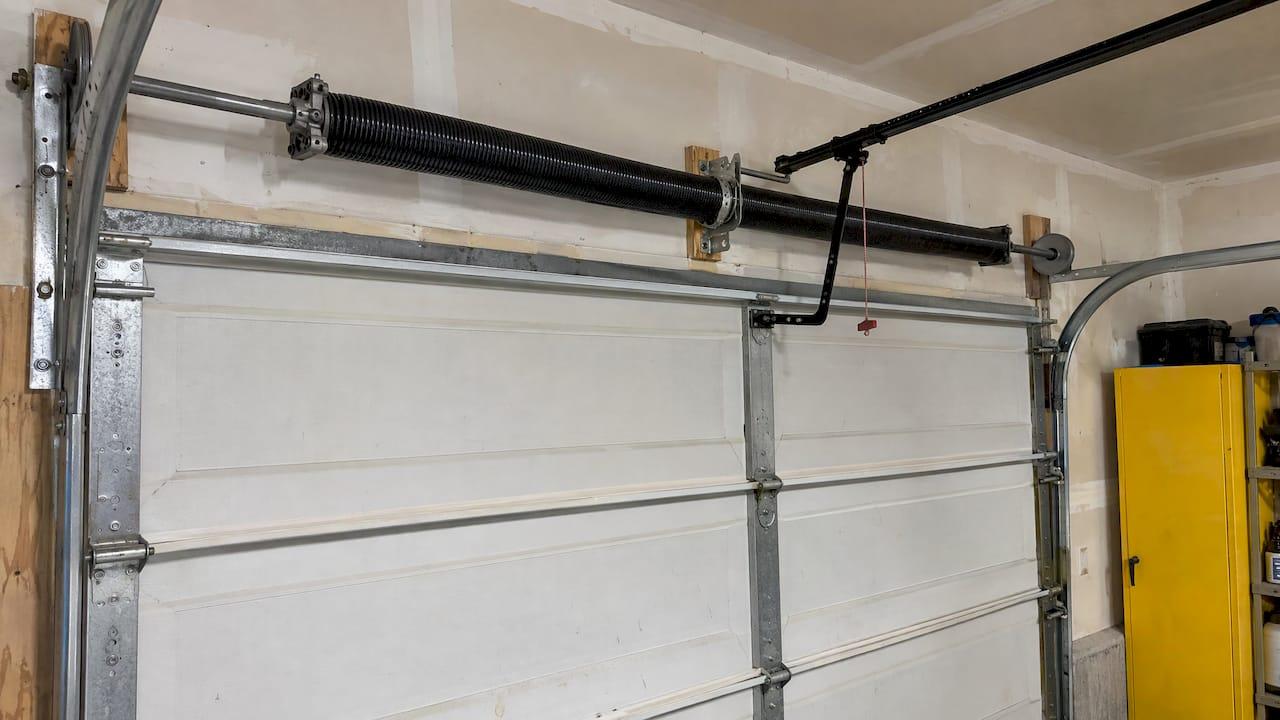
A high-cycle garage door spring pair typically adds about $27 to $100 to the parts bill compared with a standard 10,000-cycle pair. Installed, published 2026 estimates run from roughly $170 to $575 for a high-cycle pair, against $145 to $520 for a standard one. The upgrade usually pays for itself when it saves you one more replacement visit. If you want a firm number for your own door, we give upfront estimates over the phone, so you know the total before a technician pulls into your driveway.
TL;DR
- A high-cycle pair costs about $27 to $56 more in parts in one 2026 estimate, and $50 to $100 more in another.
- Installed, expect roughly $250 to $450 for a high-cycle pair on a typical door. Heavy doors, extra cable and hardware work push it higher.
- A standard spring is rated for 10,000 cycles. High-cycle springs are rated for 25,000 cycles or more. One cycle is one open and one close.
- At four cycles a day, a standard pair is used up in under seven years. The high-cycle pair lasts more than twice as long.
- Springs are under extreme tension. Replacement belongs with a trained technician, and springs are normally replaced in pairs.
Table of Contents
- What a high-cycle spring actually is
- High-cycle spring cost: parts and installed price
- What moves the price up or down
- Is the upgrade worth it? The break-even math
- What a rating really promises
- Why spring replacement stays with a trained technician
- What to ask for on an estimate
- Our point of view
- Get a firm number for your door
- FAQ
- Sources
What a high-cycle spring actually is
Your garage door is heavy. A typical two-car door can weigh a couple hundred pounds, and the springs do the lifting. The opener only guides the door along. When a torsion spring breaks, the door turns into dead weight and the opener usually can't move it.
Every time the door goes up and down, the spring winds and unwinds once. That is one cycle. Metal fatigues with each cycle, and eventually the spring snaps, often with a bang loud enough to bring you running from another room.
Standard builder-grade springs are rated for 10,000 cycles. High-cycle springs use a thicker wire or a longer coil, or are built to a tougher specification, so they take more winding before they wear out. One manufacturer's warranty policy lists 10,000 cycles for standard oil-tempered springs, 25,000 for high-cycle oil-tempered springs and 40,000 for its premium powder-coated line. Ratings differ by brand, so ask for the number on the spring your technician installs.

We wrote about this in more detail in our guide to garage door spring lifespan.
High-cycle spring cost: parts and installed price
There is no single national price, and anyone who quotes one without seeing your door is guessing. The published 2026 figures do line up on a range, though.
| What you're pricing | Typical range | Source |
|---|---|---|
| Standard spring replacement, single door | $150 to $350 | 2026 national guide |
| Standard pair, installed | $145 to $520 | 2026 cost breakdown |
| High-cycle pair, installed | $170 to $575 | 2026 cost breakdown |
| Standard pair, professional replacement | $200 to $350 | 2026 repair guide |
| High-cycle pair (25,000 cycles), professional replacement | $250 to $450 | 2026 repair guide |
The wide spread comes from the door, not from the spring alone. The same national guide notes that heavy double doors, premium high-cycle springs and jobs that need extra cable and hardware work can reach $500 to $600.
The useful takeaway is the gap between the two rows. The upgrade is a small share of the total. Most of what you pay is the technician's trip, the labor and the safe handling of the old springs. You pay that part whether the new spring is rated for 10,000 cycles or 25,000.
What moves the price up or down
When you call for an estimate, these are the details that change the number.
Door weight and size
A heavy insulated steel door or a wood door needs stronger springs than a light single-layer door. A double-wide door often needs a bigger spring or a longer set. Weight decides the wire size and length, and a heavier spring costs more.
Cycle rating
This is the upgrade itself. The step from 10,000 to 25,000 cycles is usually a modest add-on. Jumping to the longest-life lines costs more. Whether the higher rating is worth it depends on how often you use the door, which we cover below.
One spring or two
Many doors run on two torsion springs. When one breaks, the other has seen the same number of cycles and is usually close to the end of its life. Replacing the pair is the common practice. It avoids a second call a few months later and keeps the door balanced, which is easier on the opener and the cables.
Cables, drums and other hardware
A snapped spring can whip around and damage the lift cables, the drums that hold them, or the bearing plates. If those are worn or damaged, they get replaced in the same visit. That is where a $250 job becomes a $500 job.
Emergency and after-hours calls
A door that fails at 9 p.m. with your car inside is not a scheduled job. We offer 24-hour emergency repair, and we'll go over the cost of an after-hours visit when you call.
Residential versus commercial
Commercial doors cycle far more often. A door that opens 40 times a day burns through a 10,000-cycle spring in well under a year. One 2026 estimate puts a commercial torsion pair at $490 to $965 installed. Our guide on why commercial springs wear faster explains the math for property managers.
Is the upgrade worth it? The break-even math

A cycle is one open plus one close. Count how many times your family uses the door in a normal day. A commuter couple who leave in the morning and come home at night is at about four cycles a day. A household with kids, a dog and a workshop can easily reach eight to ten.
Here is the arithmetic for a standard 10,000-cycle spring:
- At 4 cycles a day: 10,000 ÷ (4 × 365) is about 6.8 years.
- At 8 cycles a day: about 3.4 years.
- At 2 cycles a day: about 13.7 years.
Now the same math for a 25,000-cycle spring:
- At 4 cycles a day: about 17 years.
- At 8 cycles a day: about 8.6 years.
One published 2026 analysis reaches the same conclusion. At four cycles a day, it finds that over a 10-year stay a 27,000-cycle pair comes out $119 to $489 cheaper than standard, because it avoids a second service call. Another guide puts the upgrade at about $75 for 25,000-cycle springs and says that for a four-cycle-a-day household it buys 10 or more extra years.
Here is a worked example for a Loveland family. They use the garage as the main entrance, six cycles a day. The standard spring lasts about 4.6 years, so over 14 years they'd replace it three times. At $300 a visit, that is about $900. With a 25,000-cycle pair, the first replacement lasts about 11 years. They'd replace it once or twice. The numbers are illustrative, so use your own quote, but the pattern is clear: the busier the door, the faster the upgrade pays back.
The upgrade is the better choice if any of these apply:
- You use the garage as your main entrance.
- You plan to stay in the home more than five or six years.
- You run a business or home shop where the door cycles often.
- You don't want to schedule another repair visit any time soon.
What a rating really promises
Cycle ratings are engineered figures, and real doors vary. The same manufacturer's warranty policy says the ratings are estimates based on ideal laboratory conditions. Field performance depends on door weight, balance, track alignment and environment. It also says proper operation calls for lubricating moving parts twice a year.
That tells you where to put your attention after the spring is in. A door that's out of balance or has bent tracks makes the spring work harder. Dry coils wear faster. In Colorado, the temperature swings from a January cold snap to an August afternoon are hard on metal and lubricant alike. Our short guide on track alignment checks shows what to look for, and a tune-up covers the rest.
The same warranty policy covers residential hardware for 3 years or the rated cycle life, whichever comes first. Warranty terms differ by brand, so ask about the exact terms for the spring going on your door.
Why spring replacement stays with a trained technician
A wound torsion spring holds a huge amount of stored energy. If a tool slips or a bolt lets go, the spring unwinds in a fraction of a second. The result can be a serious injury. Springs also have to be matched to your door's weight, height and track setup, and a spring that is the wrong size will leave the door heavy or make it slam shut.
That is why the safest and most economical path is a technician who does this work every week, with the right winding bars, the right springs and a method of checking the door's balance when the job is done. Our overview of how torsion springs get replaced safely walks through what the job involves from the technician's side.
What to ask for on an estimate
When you get a quote for a high-cycle spring, make sure it covers the following:
- The cycle rating. Is it 10,000, 25,000, or higher?
- One spring or a pair. Pairs are the common approach.
- Cables, drums and bearings. Are they included, or priced separately if they need replacing?
- Labor. Is it in the total price?
- Balance and safety checks. Does the visit include testing the door's balance and the safety reversal after the work?
- Warranty. Is it written, and does it cover both parts and labor?
- Arrival window. How quickly can the technician get there?
A price that comes without these answers is only half a quote. Our own estimates are given upfront over the phone, so there are no surprises when the work is done.
Our point of view
Most spring calls start the same way. The door won't lift, there's a bang from the garage, and the homeowner wants the problem solved today. About 90% of our repairs are completed on the same day, and that's the standard we hold ourselves to.
When we talk through a spring job, we start with how often the door gets used, because that's what decides the right spring. A family that opens the door six or eight times a day is well served by a high-cycle spring. The extra cost is small next to the cost of a second repair visit, and the door runs smoothly for years.
We're a family-owned shop, and we'd rather give you a plain number over the phone than a vague range that grows on site. Our work comes with written warranties on parts and labor. Veterans get an automatic 10% discount.
If you manage a commercial property, the same reasoning applies with more force. A door that cycles dozens of times a day needs a spring built for that, and a repair visit costs you downtime as well as money.
Eddie
Get a firm number for your door
If your spring just broke, or the door is getting noisy and slow, call us and describe the door. We'll go over the options, including a high-cycle spring sized for your door and how you use it, and give you an upfront estimate over the phone. Spring repair, opener repair and installation, tune-ups, commercial service and 24-hour emergency repair are all on our services page. We serve Loveland and homes and businesses across Northern Colorado.
Veterans get a 10% discount. Property managers can ask about service plans that keep downtime short. A tune-up when the new springs go in keeps the door balanced and lubricated, which is what lets a rated spring reach its full cycle life.
FAQ
How much more does a high-cycle spring cost than a standard one?
Published 2026 estimates put the extra parts cost at about $27 to $56 per pair in one case and $50 to $100 in another. On an installed job, that is a small share of the bill. Call us with your door's size and weight for an upfront estimate.
How long do high-cycle springs last?
Measured in cycles, a high-cycle spring is rated for 25,000 cycles or more, against 10,000 for standard. At four cycles a day, that works out to about 17 years of rated life. Door balance, track alignment and lubrication all affect the real number.
Should I replace one spring or both?
If your door has two springs, replace them as a pair. Both have gone through the same number of cycles, so the second one is likely close behind. A pair also keeps the door balanced. We'll confirm what your door needs when you call.
Is a high-cycle spring worth it for a rental or a house I'm about to sell?
If you're selling within a year or two, a standard spring does the job. For a rental where tenants use the door daily, or any home you'll keep for years, the longer life usually saves you a repeat visit. Count your daily cycles and use the break-even math above.
Can I swap the spring myself to save money?
We don't recommend it. A torsion spring under tension can cause serious injury if it slips. The labor is a small part of the total, and the safest result comes from a trained technician who can size the spring correctly and check the door afterward.
Sources
- Garage Door Spring Replacement Cost USA 2026
- High-Cycle Garage Door Spring Cost: $27 to $56 More
- Garage Door Spring Replacement: Cost, Signs, and What to Know
- Warranty Policy, Dura-Lift Door Hardware