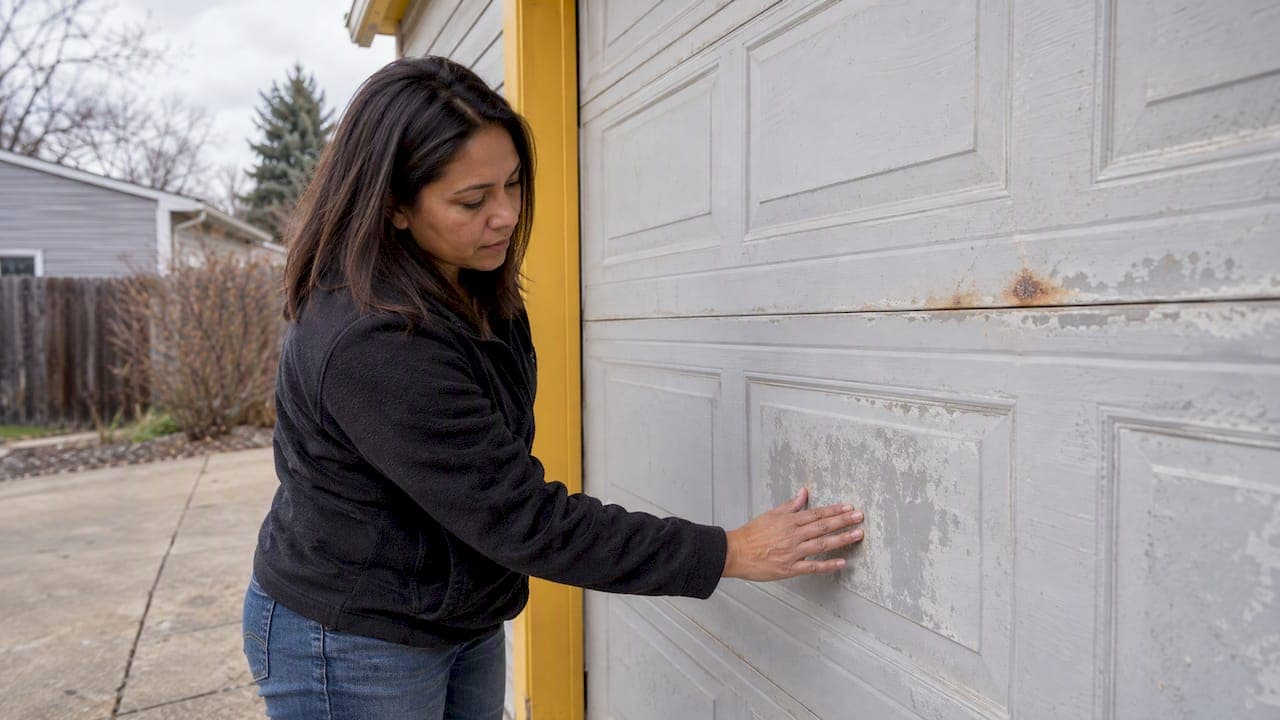
Paint your garage door if the panels are structurally sound, the door still opens and closes smoothly, and the finish is the only thing that looks tired. Replace it if you see rot, rust-through, sagging or cracked panels, or if you keep paying for repairs on an aging door. Paint costs a fraction of a new door. It can't fix a door that is failing underneath.
We repair and install garage doors across Loveland and Northern Colorado, so we see both sides of this call every week. Below is how we walk homeowners through it.
TL;DR
- Paint when the door is sound and only the color or finish is worn. Replace when panels are rotted, rusted through, warped, cracked or sagging.
- Professional painting typically runs about $200 to $500, while the national average for a replacement job is $4,672.
- Prep decides how long paint lasts, not the color or brand. Skipping cleaning, sanding and primer is the usual reason it peels.
- Check your warranty before you paint. Some manufacturers void coverage if you use the wrong paint.
- Not sure which way to go? Call us. We give honest estimates over the phone and tell you when paint is enough.
Table of Contents
- Can you paint a garage door?
- The quick decision rule
- Signs you should replace the door instead of painting
- When painting is the smarter move
- What it costs: paint versus a new door
- How long does paint last on a garage door?
- The warranty trap
- If you decide to paint: the steps that matter
- Our perspective
- Get a straight answer from Mike's Garage Door Repair
- Frequently asked questions
- Sources
Can you paint a garage door?
Yes, in most cases. Wood, metal, aluminum and vinyl doors can all take a coat of exterior acrylic paint, and wood can also be stained, according to Benjamin Moore's garage door painting guide. Sherwin-Williams likewise points to a reliable primer plus a durable exterior acrylic latex paint.
The real question is whether you should. Paint changes how a door looks. It does nothing for how it works, how it's built or how safe it is. That is the line between "paint it" and "replace it."
The quick decision rule
Ask yourself three things, in this order.
- Is the door structurally sound? Press on the panels. Look at the bottom edge and the seams. Check for sagging, cracks, rust holes and soft or crumbling wood.
- Does it work well? A door that binds, shakes, scrapes or needs frequent repairs has a mechanical problem that paint won't touch.
- Is the finish the only problem? Fading, chalking, small chips and a dated color are all good reasons to paint.
Three yeses mean paint. A single no on the first two means you should at least get the door looked at before spending a weekend with a roller.
Signs you should replace the door instead of painting
Paint hides a lot. It shouldn't hide these.
Rot, rust-through or delamination
Soft wood at the bottom panel, rust that has eaten through steel, or a skin peeling off an insulated core means the panel is losing its strength. New paint will flake off a surface that is still moving and crumbling. If only one or two panels are damaged, a section swap may be the better route. We cover that in our guide to garage door panel replacement.

Warped, bowed or sagging sections
A door that no longer sits flush in its tracks makes the opener work harder and wears out hardware faster. Painting won't straighten it. Reinforcing strips can help on some doors, but a badly bowed door is usually a replacement candidate.
Dents and cracks
A single dent on a steel door can often be fixed. Several dents, creased panels or cracks across multiple sections are a different story. Our breakdown of when DIY dent repair makes sense will help you sort a cosmetic fix from structural damage.
A pile of repairs on an old door
Repair bills tell you something. When a technician quotes a major fix on a door that is already old and showing wear in several places, spending that money plus paint money on the same door is often a poor trade. We lay out that math in our repair versus replacement guide.
Safety and function problems
A door that won't reverse when it hits an obstruction, or one that is badly out of balance, is a safety problem first and a style problem second. Our list of signs your garage door needs repair now covers what to watch for. A broken torsion spring sounds like a gunshot and turns your door into a heavy, dangerous load. Don't try that repair yourself.
You want better insulation or a different style
Paint can't add insulation, quieter operation or a new panel design. If your garage is a workshop, a gym, or sits under a bedroom, the performance of a new insulated door may matter more than the look. Painting a drafty, noisy door gives you a prettier drafty, noisy door.
When painting is the smarter move
Paint makes sense when:
- The door is under roughly 10 to 15 years old and runs smoothly.
- Panels are straight, dry and free of rot or rust-through.
- The finish is faded, chalky, scuffed or just not the color you want anymore.
- You're repainting the house and want the door to match.
- You're selling soon and want curb appeal on a budget.
The right color helps too. Family Handyman's paint guidance from experts recommends lighter colors for better durability in strong sun, and satin or semi-gloss exterior paint for wood. Dark colors absorb more heat, which is worth thinking about on a west or south-facing door.
What it costs: paint versus a new door
Here is the national picture.
| Option | Typical cost | What you get |
|---|---|---|
| Professional painting | About $200 to $500 (around $350 nationally) | New finish on the existing door |
| Full replacement | $4,672 national average job cost in 2025 | New door, installed |
The painting range comes from Barco's Painting, which cites HomeAdvisor cost data and notes that local labor rates, door size and prep needs move the number. The replacement figure is from the 2025 Cost vs. Value report, which also shows a resale value of $12,507 and 268% of cost recouped for garage door replacement. Those return numbers describe replacement, not painting.
Your own cost will differ. Doing the work yourself brings the price down to paint, primer, cleaner and supplies. But your time counts as well. Plan on a full weekend, and plan on doing prep properly.
If return on investment is driving your decision, read our garage door replacement ROI breakdown.
A worked example
Say you have a 14-year-old steel door with a chalky finish and one small rust spot near the bottom. Paint with rust treatment and primer is a sensible choice. Now take a 22-year-old door with a sagging middle panel, two dents and a spring that has already been replaced once. Paint would run a few hundred dollars and fix none of the real problems. Putting that money toward a new door makes more sense.

How long does paint last on a garage door?
It depends mostly on preparation, product and technique, according to the Family Handyman experts. They stress high-quality exterior-grade paint, and UV protection where sun exposure is strong. Sun, rain, snow, heat and big temperature swings all work against a finish.
That matters in Northern Colorado. Our doors take intense sun, cold snaps and quick temperature changes. A south or west-facing door usually ages its paint faster than a shaded north-facing one. Painting is not a one-time fix. Expect to touch up or repaint on a regular cycle.
The warranty trap
Check your paperwork before you open a can. Some door manufacturers allow painting only with specific products. One steel carriage-house door manufacturer's installation supplement calls for 100% acrylic latex exterior paint and states that oil-based or alkyd-modified paints void the door's warranty. Other brands have their own rules, so look up yours.
If your door is still under warranty, call the manufacturer or ask us before painting. If it's out of warranty, that restriction no longer applies, but the paint type still affects results.
If you decide to paint: the steps that matter
Prep takes most of the time, and it is the part that decides whether the paint holds up. Both Benjamin Moore and Sherwin-Williams walk through the full process on their sites. Here is the short version.
- Unplug the opener. Disconnect it so the door can't move on its own while you work. Mounting the door in a closed or open position, per the paint guides, helps too.
- Clean the door thoroughly. Remove dirt, oil, wax and mildew. Paint won't bond to a dirty surface.
- Sand and fix problems. Scuff glossy areas, scrape loose paint, and treat any rust on bare metal.
- Prime bare spots. Use a rust-inhibiting primer on bare metal, or a good exterior primer on wood.
- Tape and protect. Mask windows, weatherstripping, hardware and trim.
- Paint in thin coats. Use exterior acrylic latex and follow the can for temperature and drying times. Two thin coats beat one thick coat.
- Let it cure before closing the door tight. A door closed on tacky paint can stick to the weatherstripping and seal, and pull the finish off.
Temperature matters. Cold fall and winter days in Loveland are a poor time to paint. Wait for a mild stretch and read the label's temperature range.
Our perspective
We get this question from homeowners all the time, and our answer is almost always the same: look at how the door works before you look at how it looks.
If a door has good bones, we'll tell you to paint it, and we mean it. Spending thousands to replace a door that just needs a fresh finish helps nobody. Honest advice builds trust, and that is how a family-owned shop earns repeat customers.
When a door is failing, though, paint is a bandage. We see it often: a nicely painted door with a worn-out spring, tired rollers, a bent track or a bottom panel quietly rotting. The homeowner spent a weekend and a few hundred dollars, and a few months later they are calling us anyway.
Here's what we suggest:
- Get a quick opinion first. Describe your door over the phone and we'll give you an upfront estimate with no surprises.
- Fix the mechanics before you paint. Springs, rollers, cables and openers should be sorted out first. Fresh paint on a door that still needs hardware work gets scuffed up or touched again.
- Think about the whole door. If you're already repairing multiple parts and the door is old, compare the total to a replacement.
The goal is simple: you shouldn't pay for work your door doesn't need.
— Eddie
Get a straight answer from Mike's Garage Door Repair
Not sure if your door is a paint job or a replacement? We handle spring repair, opener repair and installation, tune-ups, custom door installs, 24-hour emergency repair and commercial garage door service across Loveland and Northern Colorado. About 90% of our repairs are completed the same day, and we give upfront estimates over the phone. Veterans get a 10% discount.
See everything we do on our garage door services page, or contact us to talk through your door.
Frequently asked questions
Should I paint my garage door or replace it?
Paint it if the door is structurally sound, operates smoothly and only looks dated or faded. Replace it if you see rot, rust-through, sagging, cracks, or a growing list of repairs. When in doubt, have a technician look at it before you spend on paint.
Are new garage doors worth it?
Often, yes. The 2025 Cost vs. Value report lists a national replacement cost of $4,672 and 268% of cost recouped at resale, according to Cost vs. Value. Your return depends on your market and your current door. A new door also brings better insulation, quieter operation and modern safety features.
How long will a painted garage door last?
It depends on preparation, paint quality and sun exposure. Experts quoted by Family Handyman say prep and product choice matter more than the color you pick. In strong Colorado sun, expect to refresh the finish sooner on south and west-facing doors.
Will painting my garage door void the warranty?
It can. Some manufacturers only allow certain paint types, and using the wrong one voids coverage, as one steel door maker's installation instructions show. Read your warranty or call the manufacturer first.
What kind of paint should I use on a garage door?
Use a quality exterior acrylic latex paint over a primer suited to the door material. Sherwin-Williams recommends exactly that pairing. On bare metal, use a rust-inhibiting primer first.
Sources
- How To Paint A Garage Door, Benjamin Moore
- How to Paint a Garage Door, Sherwin-Williams
- Choosing the Right Paint For Your Garage Door, Family Handyman
- Garage Door Painting: Is It Worth It?, Barco's Painting
- Cost vs. Value report
- Ideal Carriage House steel door installation supplement