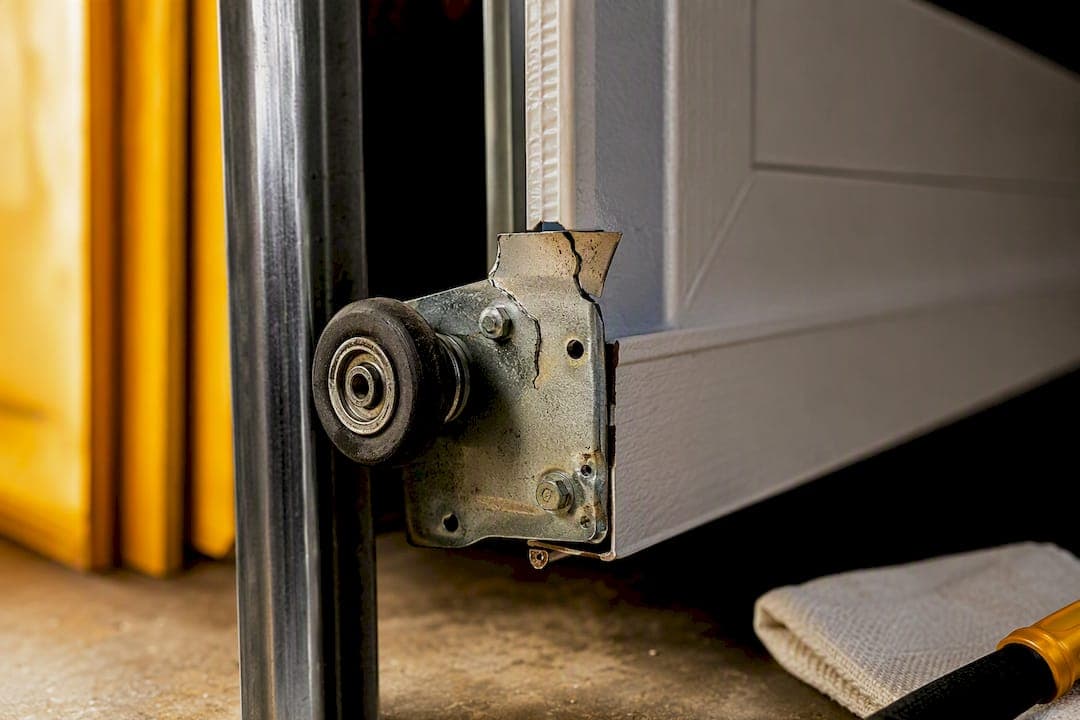
Most center hinge failures on a garage door are DIY-fixable with basic tools and a replacement part that matches your door. A cracked end hinge, the one carrying a roller, is different: stop using the door immediately, disconnect the opener, and call a professional if the roller has popped out or the door looks off-track. Mike's Garage Door Repair sees this exact split every week across Northern Colorado, and it's the line that separates a $50 weekend fix from a safety call.
TL;DR:
- Most hinge failures are DIY repairable if they are center hinges without a roller, but cracked end hinges require professional intervention due to safety risks.
- Metal fatigue and corrosion from environmental factors are the main causes of hinge failure, especially on doors near moisture or experiencing impact damage.
- Visible signs like panel separation, uneven movement, or a loose roller indicate a hinge problem, but safety issues demand immediate professional assistance and door disconnection.
- Replacing a center hinge involves removing only a few fasteners, matching the new hinge to the old, and can often be completed in under an hour with proper precautions.
- Regular lubrication and tightening of hinges every six to twelve months help prevent failure, while unbalanced doors and worn hardware accelerate hinge damage.
Table of Contents
- What a Broken Garage Door Hinge Looks Like
- Why Hinges Break in the First Place
- When to Stop and Call a Professional
- How to Replace a Center Hinge Yourself
- Tools and Parts to Buy Before You Start
- What Garage Door Hinge Repair Actually Costs
- Keeping Hinges From Failing Again
- How We Decide Repair vs. Replace on Every Service Call
- Get a Same-Day Fix From Mike's Garage Door Repair
- Sources
- FAQ
What a Broken Garage Door Hinge Looks Like
Before you touch a wrench, confirm the hinge is actually the problem. Garage doors send warning signs long before a full failure, and catching them early keeps a simple fix simple.
Watch for these symptoms:
- A squeak or grinding noise that gets louder as the door moves through the hinge's position
- Screws that have worked loose or backed out of the panel
- A visibly bent hinge plate or a hairline crack in the metal
- Panels that separate slightly at the seam when the door opens
- Jerky, uneven movement instead of a smooth glide
- A roller that has popped partway or fully out of its track
Inspect with the door closed and the opener unplugged. Shine a flashlight along each hinge and gently test screws and the plate itself, but don't force anything that feels stuck.
There are two hinge types, and the distinction matters more than most homeowners realize. Center hinges connect panels in the middle of the door and carry no roller, so a failure there is mostly cosmetic and low-risk. End hinges (also called roller-carrying hinges) sit at the edges and hold the roller that rides the track. A cracked end hinge is a serious safety hazard because the roller can detach entirely, letting that section of the door drop or tilt without warning.
Why Hinges Break in the First Place
Metal fatigue is the quiet culprit behind most hinge failures. A garage door hinge flexes every single time the door opens or closes, and after thousands of cycles, that repeated stress works microscopic cracks into the metal until one day it just gives.
Corrosion accelerates that timeline. Rust typically starts in small crevices around fasteners, weakening the plate from the inside before you ever see a crack on the surface. Homes near sprinklers, in humid basements, or along the Front Range's freeze-thaw cycle see this faster than drier interior spaces.
Physical impact plays a role too. A bumped bumper, a dropped tool, or a stray basketball can bend a hinge plate instantly. So can stripped screws that were driven into the thin edge of a panel and never held properly in the first place.
If hinges keep failing on the same side of the door, that's rarely a coincidence. It usually points to a misaligned track, an unbalanced door, or a spring that's lost tension and is dumping extra weight onto one set of hinges.
When to Stop and Call a Professional
Never operate the door if an end hinge is cracked or a roller has come loose. That single rule prevents more injuries and secondary damage than any other piece of garage door advice out there. Disconnect the opener at the wall unit and leave the door closed until a technician looks at it.
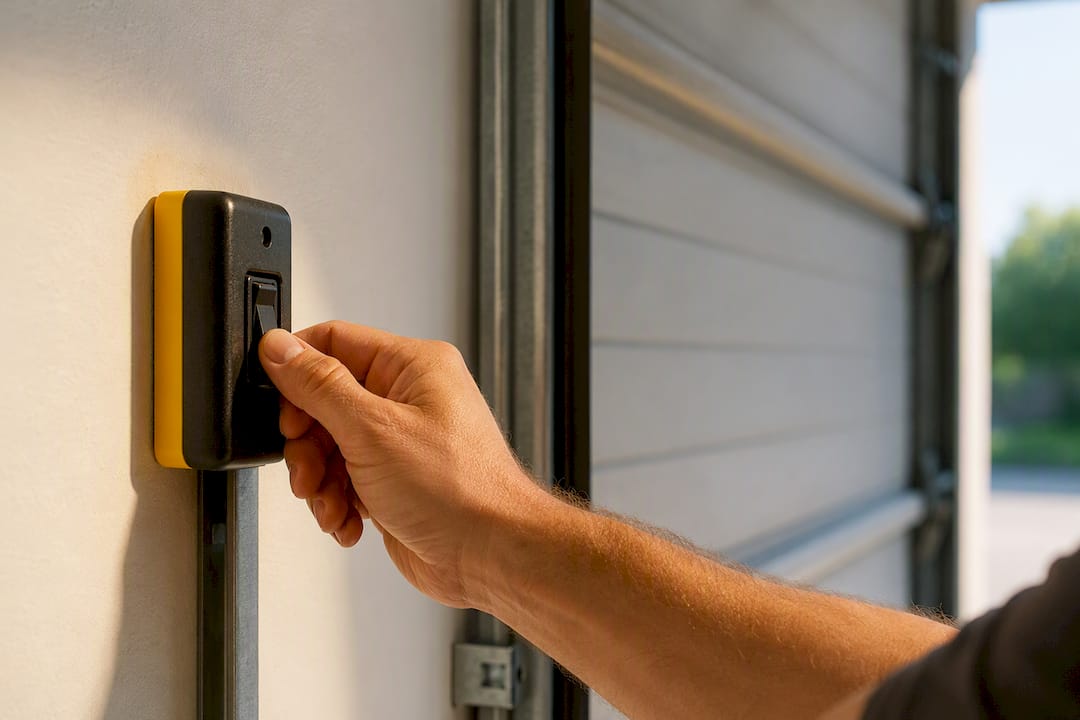
A few signs mean you need help now, not this weekend: the door sits visibly off its track, a roller has detached from the rail, panels have separated at a seam, or you notice a broken spring or frayed cable anywhere nearby. None of those are safe DIY territory, and combining a hinge failure with a spring problem turns a simple repair into a dangerous one.
One quick note on money: homeowners insurance often covers sudden, accidental damage like a car backing into the door or a storm-driven branch, but it generally excludes ordinary wear-and-tear. A hinge that failed from years of flex cycles almost never qualifies, so check your deductible before assuming a claim makes sense.
How to Replace a Center Hinge Yourself
Center hinge swaps are the most beginner-friendly repair on a garage door, and you can usually finish one in under an hour.
Before you start: disconnect the opener, gather your tools, and prop the door in the closed position so it can't shift while you're working. Take a photo of the hinge orientation before removing anything. It's a small step that saves real confusion later.
- Support the panel lightly if needed, then remove the fasteners holding the old hinge (unscrew them, or drill out rivets if the original hinge was riveted).
- Pull the damaged hinge free and set it next to the new one to confirm the plate size and screw spacing match exactly.
- Position the replacement hinge, aligning it with the existing screw holes whenever possible.
- Drive the new fasteners in evenly, snugging each one without overtightening and stripping the panel.
- Recheck that the panel sits flush and the hinge pivots freely with no binding.
- Test the door manually, opening and closing it by hand a few times, before reconnecting the opener.
End hinges are a different job entirely. Because they carry a roller and sit under the door's actual weight and spring tension, a mistake here can drop a panel or send a roller flying out of the track. If you don't have experience supporting door weight safely or handling spring tension, call a professional for end hinge work rather than improvising.
Once any hinge is replaced, run a balance check and reconnect the opener slowly, listening for any grinding or resistance as the door travels.
Pro Tip: Photograph every hinge position before you remove a single screw. Garage doors often use slightly different hinge sizes at different positions, and a mismatched swap will bind the door within weeks.
For a deeper walkthrough with photos, our step-by-step panel hinge guide covers tool setup in more detail.
Tools and Parts to Buy Before You Start
Measure twice before you order a replacement hinge. You need the exact plate size, the screw hole spacing, and whether you're replacing a roller-carrying end hinge or a plain center hinge.
Shop for these items:
- A replacement hinge in galvanized or stainless steel, which resists corrosion far better than plain zinc-coated hardware
- Matching fasteners: self-tapping screws for thin panel edges, machine screws if the original used threaded holes, or a rivet gun if the door was factory-riveted
- A garage-door-specific lubricant, never household spray oil like WD-40, which attracts grit and washes out fast
- Safety glasses and work gloves, since you're working with spring-loaded panels and sharp sheet metal edges
What Garage Door Hinge Repair Actually Costs
A single hinge swap typically falls on the lower end of the $150 to $600 range that covers most common garage door repairs. Replacing several hinges at once costs more in parts but often saves on labor since a technician is already on-site. If a hinge failure let the door jump its track, expect the bill to climb, since off-track repairs require realigning rollers and checking the track for bends.
A few factors push the number higher: damaged panels that need straightening or replacing, a spring or cable that has to be serviced at the same time, and after-hours or same-day emergency calls.
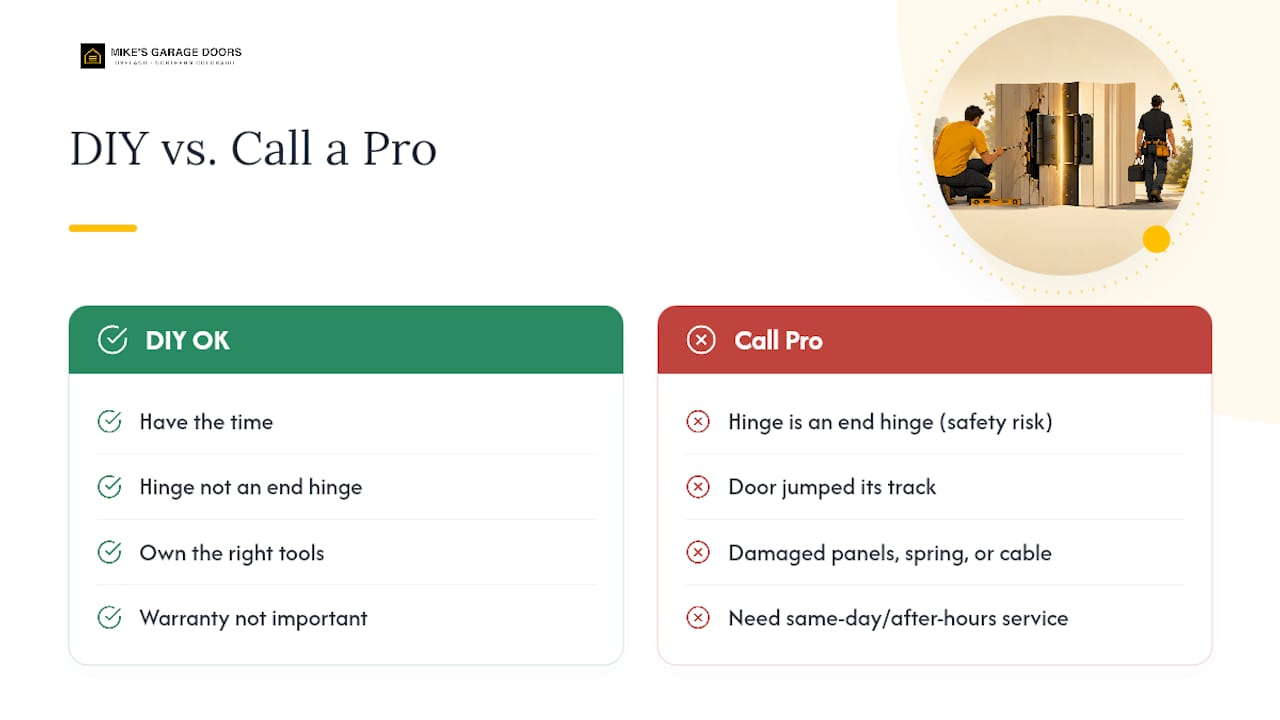
Before deciding, weigh four things: how much time you actually have, whether the hinge in question is an end hinge (a real safety risk), whether you own the right tools, and whether a warranty on parts and labor matters to you. For more on common mistakes and challenges, see Avoiding Common Pitfalls: The Challenges of DIY Door Replacement. If any of those tips toward "no," a same-day repair from a licensed technician is worth the call vs. patching it yourself.
Keeping Hinges From Failing Again
Lubricate hinges and rollers every 6 to 12 months with a garage-door-rated lubricant, and tighten every hinge screw once a year since vibration works fasteners loose over time. Swap out worn rollers or mismatched hardware the moment you spot them rather than waiting for a full failure. If you're in a wet or coastal climate, spend the extra dollar on corrosion-resistant hardware from the start.
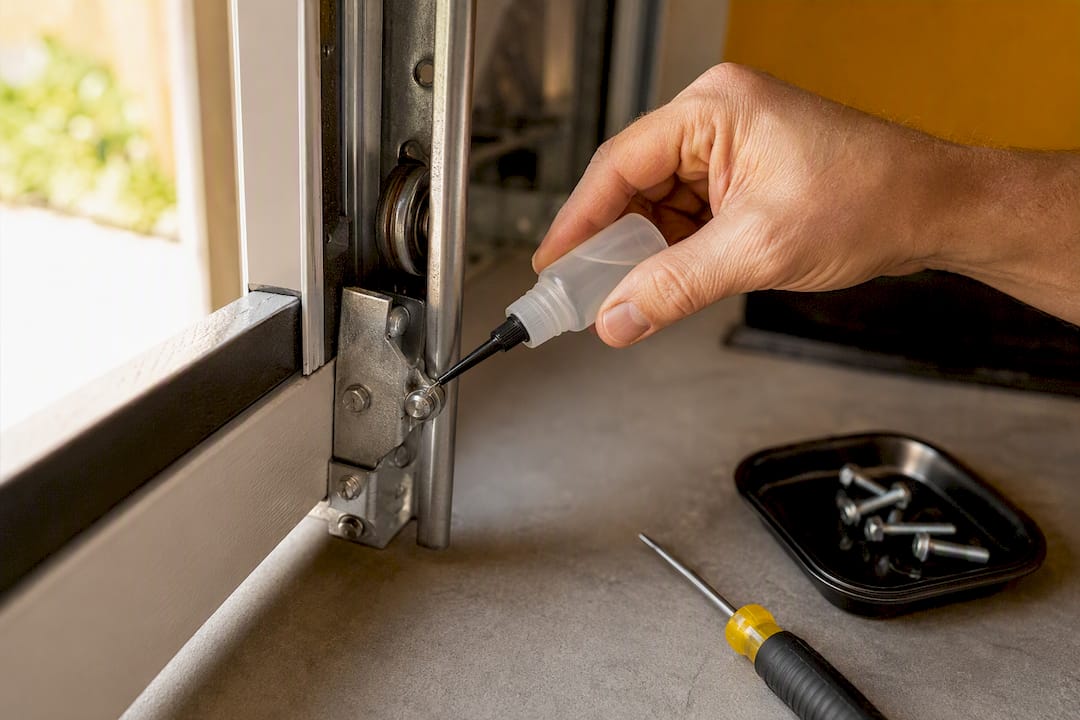
Regular balance checks catch the root problem before it reaches your hinges: an unbalanced door puts uneven strain on whichever hinge happens to be nearest the imbalance, wearing it out fast no matter how new it is.
Pro Tip: Ask your technician to run a balance and spring check any time you're having hinges replaced. New hinges on an unbalanced door tend to fail again within a year, which defeats the point of fixing them.
How We Decide Repair vs. Replace on Every Service Call
Mike's technicians look at three things before recommending a fix: how many hinges have failed, whether the damage stayed local or spread to the track and rollers, and how the rest of the door's hardware is holding up. Most hinge jobs don't need a second visit or a special-order part sitting on a shelf somewhere.
Every estimate is quoted upfront over the phone, with no surprise line items added once we're on-site.
— Eddie
Get a Same-Day Fix From Mike's Garage Door Repair
If the hinge on your door is an end hinge, cracked, or paired with a roller that's already popped loose, this isn't a project to figure out over a weekend. Mikes garage doors Loveland colorado gets a technician to most Northern Colorado homes the same day the call comes in, with a transparent quote given over the phone before anyone shows up.

That upfront pricing model means you know the cost before a truck ever leaves the lot, whether it's a single hinge swap or a hinge failure that's dragged your door off its track. Technicians carry stock for common hinge sizes and roller assemblies, so most jobs wrap up in one visit instead of a return trip for a special-order part. Browse garage door services in Loveland to see the full range, from hinge and roller replacement to spring and opener work, and get a phone estimate before you decide whether to tackle the fix yourself.
Sources
- Garage Door Hinge Replacement Cost in 2026 (Prices + Fees)
- Garage Door Hinge Replacement Guide | Utah (2026)
- Garage Door Repair Cost in 2026: What Every Common Fix Actually Costs · Garage Door Science
- Understanding Home Insurance Coverage for Garage Door Repairs - 01 Insurance
FAQ
How Much Does It Cost to Replace a Garage Door Hinge?
A single hinge replacement typically falls on the lower end of the $150 to $600 range that covers most common garage door repairs, with multiple hinges or off-track damage pushing the bill toward the middle or higher end.
Can You Replace Garage Door Hinges Yourself?
Yes, for center hinges that don't carry a roller. End hinges are a different story, since they hold door weight and sit near spring tension, so most trade guides recommend hiring a professional for those.
Will Homeowners Insurance Cover a Broken Garage Door Hinge?
Usually not if the hinge failed from normal wear-and-tear. Insurance more commonly covers sudden accidental damage like storm impact or a vehicle collision, not gradual metal fatigue.
How Do I Know if My Hinge Problem Is an Emergency?
If the door is off-track, a roller has detached, or panels have separated at a seam, stop using the door and disconnect the opener right away rather than waiting to see if it gets worse.
Does Mike's Garage Door Repair Handle Hinge Replacements?
Yes.