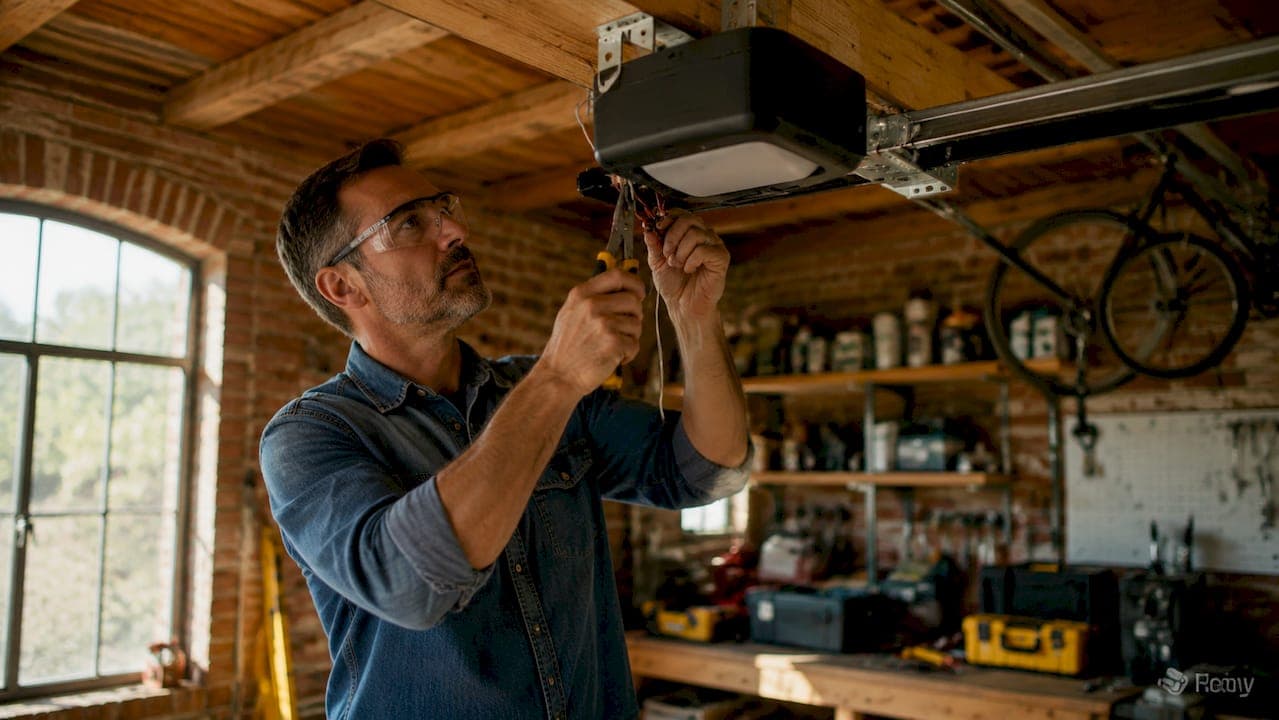
Door opener horsepower is the measure of motor power that determines how effectively your garage door opener can lift and lower your door with smoothness and durability. Get it wrong and you are either burning out a motor that is working too hard or overpaying for power you never use. The role of door opener horsepower goes beyond a spec sheet number. It directly affects how long your opener lasts, how quietly it runs, and whether it can handle your door's actual weight day after day. This guide gives you the practical framework to match motor power to your door, your usage, and your budget.
How is horsepower related to garage door weight and spring balance?
Horsepower rating measures motor lifting power and must be matched to door weight and spring balance for the opener to perform well. An underpowered opener strains on every cycle. That strain builds heat, accelerates wear on gears and drive components, and shortens the opener's life significantly.
The industry uses a standard weight-to-horsepower mapping that gives you a reliable starting point:
- 1/3 HP: doors up to 150 lbs, typically lightweight single-car doors
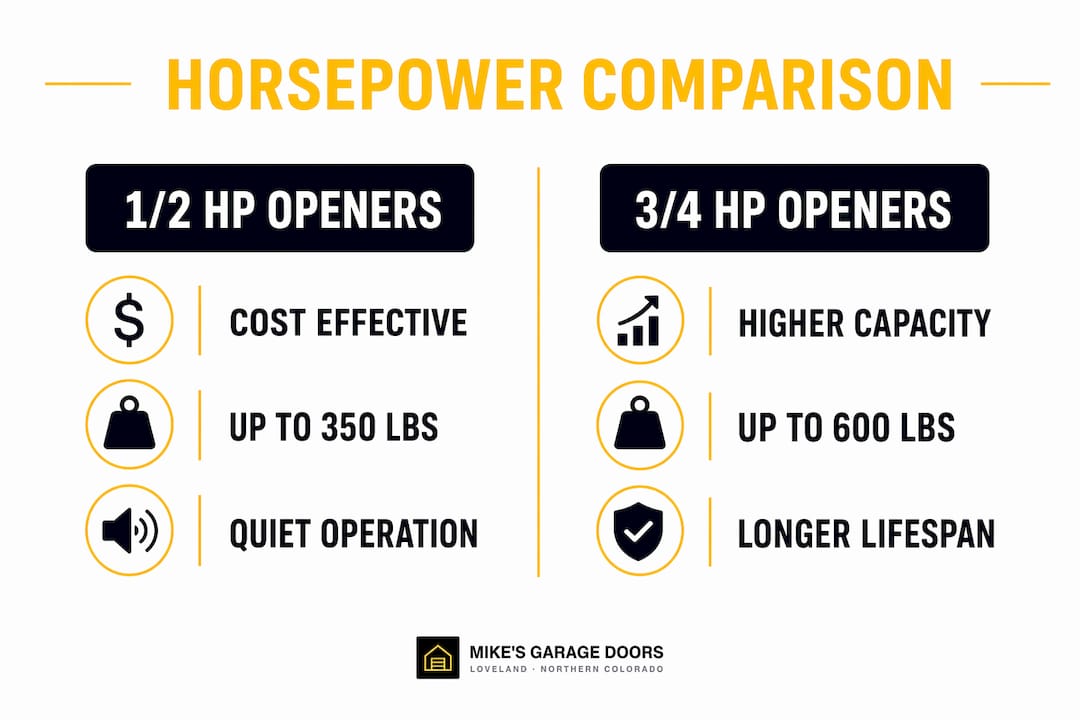
- 1/2 HP: doors up to 350 lbs, standard single or light double doors
- 3/4 HP: doors up to 650 lbs, heavier double doors or insulated doors
- 1 HP: doors up to 750 lbs, solid wood or oversized residential doors
- 1.5 HP: doors over 750 lbs, commercial-grade or extra-heavy residential doors
These weight-based horsepower tiers are the practical rule for selection in 2026. But the tiers are a starting point, not the whole story.
Your torsion spring system does most of the real lifting. Springs counterbalance the door's weight so the opener only needs to overcome friction and inertia. A properly tensioned spring system means your opener is never fighting the full weight of the door. A 30 lb spring imbalance adds significant motor load, increasing heat and wear on every single cycle. That is why testing door balance matters as much as knowing door weight.
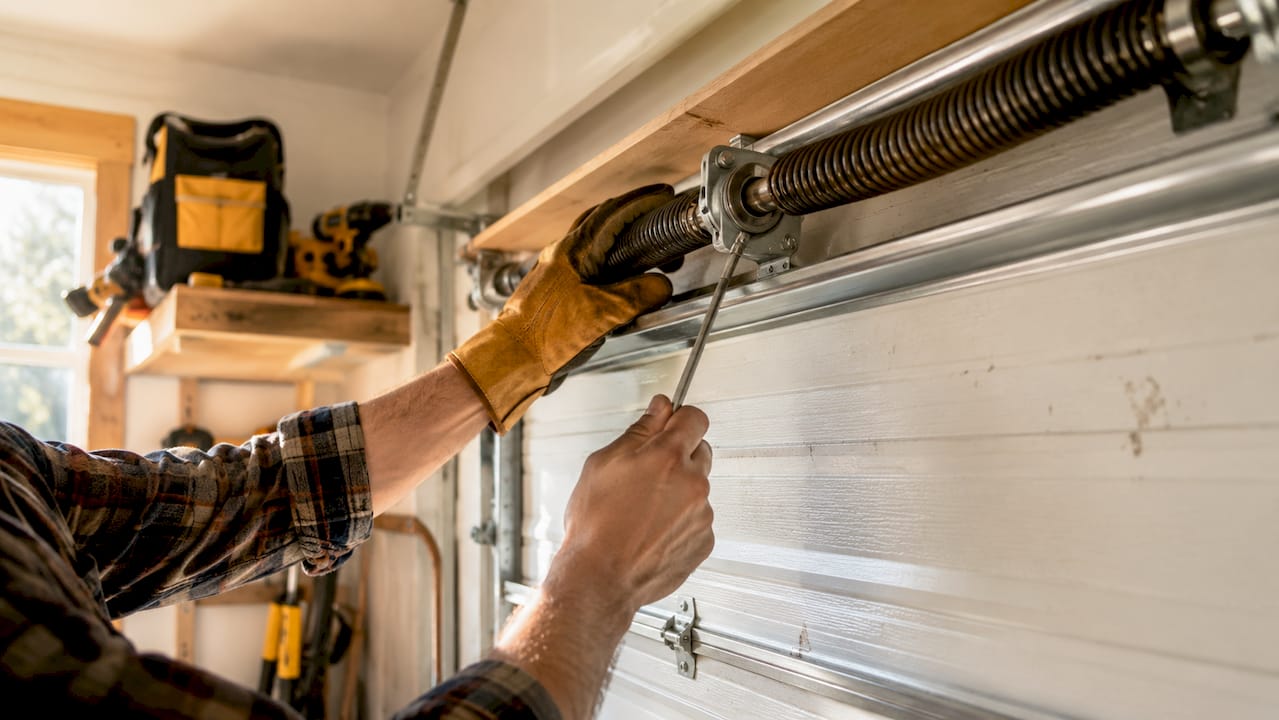
Pro Tip: Disconnect your opener and try lifting the door by hand. A well-balanced door should rise smoothly and stay put at the halfway point. If it drops or shoots up, the springs need adjustment before you size a new opener.
Proper spring balance reduces motor strain and extends opener life. Skipping this step and just buying more horsepower is like putting a bigger engine in a car with flat tires.
What nuances affect horsepower ratings and AC vs DC motor openers?
Not all horsepower ratings mean the same thing. This is where a lot of homeowners get tripped up when shopping for a new opener.
Traditional AC motor openers use straightforward HP ratings. DC motor openers use a different label called horsepower-equivalent, or HPe. DC motor HPe ratings are not directly comparable across brands. A 3/4 HPe from one manufacturer may deliver noticeably different lifting force than a 3/4 HPe from another.
Here is what that means in practice:
- HPe is a marketing label, not a standardized engineering measurement
- Rated lifting force in pounds is the number that actually tells you what the opener can handle
- Cross-brand comparisons based on HPe alone will mislead you
- DC motors with soft start and soft stop reduce mechanical stress on the door and drive system, which is a real performance benefit beyond the HP number
Pro Tip: When comparing DC motor openers, ask for the rated lifting force in pounds rather than relying on the HPe label. That single number cuts through the marketing and tells you exactly what the motor can move.
For DC smart operators, compare rated lifting force and compatibility notes instead of relying solely on HPe labels. The soft start and soft stop feature found in most DC motors also reduces the jolt on your door hardware, which matters if you have an older door or worn rollers.
How does usage frequency affect the horsepower you need?
How often you open and close your garage door is a factor most homeowners overlook completely. A door that cycles twice a day has very different demands than one that opens and closes a dozen times daily.
- Count your daily cycles. A household with two cars and active schedules may run 10 or more cycles per day. A rental property with a single tenant may average 2 to 4.
- Match frequency to motor capacity. Frequent daily use benefits from 3/4 HP or above to prevent overheating and premature wear on the motor.
- Check for mechanical problems first. A door that feels heavy or binds on the track will punish any motor, regardless of horsepower.
- Fix the root cause, not the symptom. Increasing horsepower to compensate for broken springs or binding tracks is a common mistake. A bigger motor does not fix a mechanical problem. It just burns out faster.
- Document your door specs. Write down the door weight, dimensions, spring type, and opener model. Property managers especially benefit from keeping this on file for every unit, since it prevents mis-sized replacements and repeat service calls.
Property managers often oversize motors as a quick fix when a door feels sluggish. That approach costs more upfront and still fails because the underlying issue, whether a worn torsion spring or a track out of alignment, remains unresolved. Fixing mechanical issues is always the correct solution before selecting a new opener.
What are the cost and performance differences between 1/2 HP and 3/4 HP openers?
For most residential doors, the decision comes down to 1/2 HP versus 3/4 HP. Here is how they compare on price, performance, and best use cases.
| Feature | 1/2 HP Opener | 3/4 HP Opener |
|---|---|---|
| Installed cost range | $350–$700 | $450–$850 |
| Best door weight | Up to 350 lbs | Up to 650 lbs |
| Best door type | Light single-car, uninsulated | Heavy double, insulated, wood |
| Daily cycle tolerance | Low to moderate | Moderate to high |
| Lifespan under heavy use | Shorter | Longer |
Residential replacement costs show a 1/2 HP opener runs approximately $350–$700 installed, while a 3/4 HP runs $450–$850. That price gap is modest. For a heavier door or a household with frequent use, the extra investment in 3/4 HP pays back in fewer repairs and a longer service life.
A standard 9-foot by 7-foot single-car door made of steel typically weighs 130–150 lbs. A 1/2 HP opener handles that easily. A 16-foot by 7-foot double door with insulation can weigh 300–400 lbs or more. That door needs 3/4 HP to run without strain. Putting a 1/2 HP opener on a heavy double door is like asking someone to sprint a marathon. The motor will run near capacity on every cycle, and it will fail early.
The right horsepower prevents the motor from running at near capacity. That headroom is what keeps operation smooth, quiet, and durable over years of use.
Key Takeaways
Matching door opener horsepower to your door's actual weight, spring balance, and daily usage is the single most effective way to extend opener life and avoid premature failure.
| Point | Details |
|---|---|
| Match HP to door weight | Use the standard weight tiers: 1/2 HP for up to 350 lbs, 3/4 HP for up to 650 lbs. |
| Test spring balance first | A balanced door reduces motor strain more than upgrading horsepower alone. |
| Don't trust HPe labels alone | For DC motors, compare rated lifting force in pounds across brands for accuracy. |
| Fix mechanical faults before sizing | Broken springs or binding tracks must be repaired before selecting a new opener. |
| Document your door specs | Recording door weight, dimensions, and opener model prevents mis-sized replacements. |
What I've learned after years of matching openers to doors
Here is something I see constantly: a homeowner buys a 1 HP opener because their door feels heavy, and six months later they are calling us because it is grinding and struggling. The door still feels heavy. The opener is not the problem. The spring tension is off, or the track has a bind, and no amount of horsepower fixes that.
The most common error I see from property managers is treating horsepower as a buffer against deferred maintenance. It is not. A 3/4 HP opener on a poorly balanced door will wear out faster than a 1/2 HP opener on a properly tuned door. The physics do not care about the spec sheet.
What actually matters is doing the work before you buy. Measure the door. Test the balance. Check the spring tension adjustment and make sure the springs are doing their job. Look at the track for friction points. Then, and only then, does the horsepower selection become straightforward.
The other thing I tell every homeowner: write down your door specs and keep them somewhere accessible. Door weight, dimensions, spring type, opener model, and installation date. When something goes wrong at 7 PM on a Friday, that information saves you time and money. It also helps any technician who shows up to service the door give you an accurate assessment fast.
The right opener is not the most powerful one you can afford. It is the one sized correctly for a door that is in good mechanical shape.
— Eddie
Mikes garage doors Loveland can match your opener to your door
Getting the horsepower selection right starts with knowing your door's actual weight, spring condition, and how often it runs. Mikes garage doors Loveland handles all of that for you, from the initial assessment through to installation.
The team at Mikes garage doors Loveland specializes in opener installation and repair across Northern Colorado, including spring adjustments, track inspections, and matching the right motor to your specific door. Ninety percent of repairs are completed the same day, and you get a transparent phone estimate before any work begins. Veterans receive a 10% discount. Whether you have a lightweight single-car door or a heavy insulated double, Mikes garage doors Loveland gives you an honest recommendation backed by real experience, not a upsell.
FAQ
What horsepower do I need for a standard double garage door?
A standard double garage door typically weighs 200–400 lbs and requires a 3/4 HP opener for reliable, long-term performance. A 1/2 HP opener may work initially but will strain under the load and wear out faster.
Does a higher HP opener make my door open faster?
Not necessarily. Speed is controlled by the opener's drive mechanism and settings, not horsepower alone. Higher HP primarily improves lifting capacity and reduces motor strain, not cycle speed.
Why does my new opener struggle even though it has enough horsepower?
The most likely cause is a spring balance problem or a mechanical issue like a binding track. Underpowered or strained openers often signal that the door itself needs service, not a more powerful motor.
Is a DC motor opener better than an AC motor opener?
DC motors offer soft start and soft stop, which reduces wear on door hardware and runs quieter than AC motors. For most residential applications, a DC motor opener is the better long-term choice if the budget allows.
How often should I check my door's spring balance?
Check spring balance at least once a year, or any time the door feels heavier than usual or the opener sounds like it is working harder. A properly balanced door dramatically reduces horsepower requirements and extends opener life.