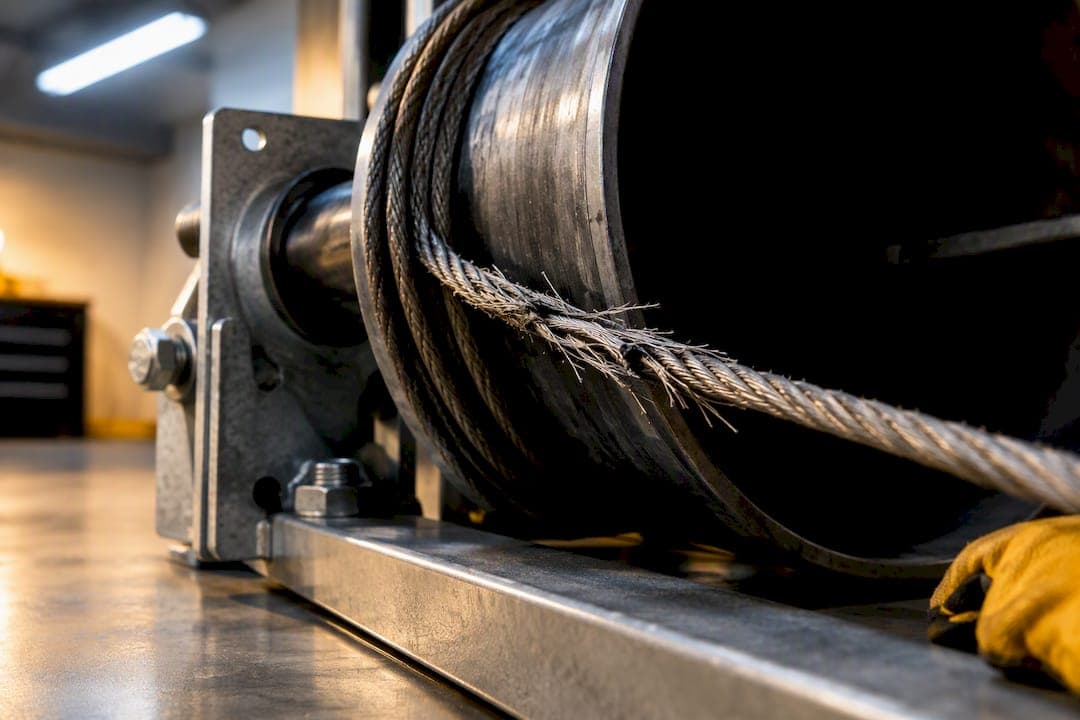
If your garage door cable is frayed, stop using the door and call a trained garage door technician. Do not try to rewind, splice, or operate the door yourself. Photograph the damage from a safe distance, note any tilt or lopsided movement, and keep everyone clear until a professional inspects it.
TL;DR:
- Most garage door cables last between 7 and 15 years, but visible fraying or rust demands immediate professional replacement to prevent sudden failure.
- Replacing both cables simultaneously is standard practice since worn cables on one side often indicate similar issues on the opposite side.
- Repair costs typically range from $90 to $400, depending on door size, number of cables, and whether springs also require work, with many jobs around $150 to $225.
- Homeowners should perform monthly visual checks and document any early signs of wear, but should never attempt repairs or adjustments themselves.
- The most critical step is to call a licensed technician for inspection and replacement rather than trying to fix frayed cables independently, due to spring and tension dangers.
Table of Contents
- What Does a Frayed Garage Door Cable Mean for Your Door?
- What Do Frayed Cable Symptoms Actually Look Like?
- What Should You Do Right Now if You See Frayed Strands?
- Why Won't a Pro Just Let You Fix This Yourself?
- What Happens During a Professional Cable Repair, and What Does It Cost?
- How Do You Keep Cables From Fraying in the First Place?
- What Do Local Technicians See Most Often With Frayed Cables?
- What Most Garage Door Advice Gets Backwards
- Get Your Frayed Cable Replaced the Same Day
- Sources
- FAQ
What Does a Frayed Garage Door Cable Mean for Your Door?
Garage door cables are stranded steel wires, and they don't work alone. They partner with springs and drums to lift and lower a door that can weigh 150 to 400 pounds. The springs generate the lifting force, the drums wind the cable in a controlled path, and the cable itself carries that load down to the bottom brackets on each side of the door.
When strands fray, the cable loses tensile strength unevenly. It's not a gradual, predictable decline. A cable can look "mostly fine" and still be one hard cycle away from letting go, because the remaining strands now carry a heavier share of the load than they were built for. Corrosion and rubbing against a misaligned drum or track speed this up considerably.
That's why manufacturer guidance treats a frayed cable as a failed or unsafe component, not a cosmetic flaw. Small visible damage, like a few sticking-out strands, can translate into big failure modes: a door that hangs crooked, jams mid-cycle, or drops without warning.
What Do Frayed Cable Symptoms Actually Look Like?
Frayed cable symptoms usually show up in two categories: what you see, and what you hear or feel when the door moves.
Visual signs include:
- Shaggy or sticking-out wire strands along the cable's length
- Split or unraveling sections, especially near the bottom bracket or drum
- Rust or discoloration on the cable
- Individual broken wires poking out even if the cable still looks "intact"
Operational signs include a door that tilts or hangs lopsided, a loud snap or grinding noise during movement, or a cable that has slipped off its drum entirely.
Cable lifespan varies, but most garage door cables last somewhere between 7 and 15 years under normal use, depending on climate, cycle count, and maintenance. Once you spot any of the visual signs above, treat the wear as urgent rather than something to monitor for a few more months.
What Should You Do Right Now if You See Frayed Strands?
Your job here is to observe and document, not to fix anything. Here's the safe sequence:
- Stay clear of the door's path and disconnect or turn off the automatic opener.
- Photograph the frayed cable and any visible door misalignment from outside the danger zone.
- Note when the fraying started or when you first heard unusual noises.
- Do not attempt to lift, rewind, tape, or splice the cable yourself.
- Avoid pulling the manual emergency release cord unless a technician tells you to.
- Call a licensed garage door technician and send the photos ahead of the visit.
That last step matters more than people expect. Homeowner-safe response is limited to observation: photograph, note the misalignment, keep the opener off, and leave springs, drums, brackets, and tracks alone entirely.
Pro Tip: Send your technician close-up photos of the cable and a wide shot of the whole door before they arrive. It often lets them bring the right replacement cable and drum hardware on the first trip, which can shave 20 to 30 minutes off the appointment.
Why Won't a Pro Just Let You Fix This Yourself?
A garage door spring stores enough mechanical energy to seriously hurt someone the moment it's mishandled. OSHA accident reports document hospitalizations and even amputations from spring and tension work that went wrong, and cables sit directly in that same force chain.
A cable under tension, connected to a wound torsion or extension spring, is not a "quick fix" component. It's a stored-energy system, and releasing that energy uncontrolled is what sends people to the emergency room.
Because a frayed cable isn't a normal DIY repair, the practical fix is professional inspection followed by replacement, drum resetting, a spring check, and a full balance test. A technician doesn't just look at the damaged wire. They check:
- The cable's path along the drum and bottom bracket
- Spring tension and wear
- Track alignment and roller condition
- Whether the opposite-side cable shows early wear too
That full inspection is what separates a repair that lasts from one that fails again in eight months.
What Happens During a Professional Cable Repair, and What Does It Cost?
A typical service call follows a predictable order: inspection, diagnosis, cable replacement (often both sides, not just the frayed one), drum reset, spring tension check, then a balance and safety test before the technician leaves. Technicians usually replace both cables together rather than just the visibly frayed one, because an aging opposite cable tends to fail soon after under the same wear pattern.

Most cable repair appointments take a few hours on-site, depending on door size and whether springs also need attention.
On cost, national ranges typically run about $90 to $400, with many jobs landing around $150 to $225. What pushes a job toward the higher end:
- Door size and weight (double-wide doors need more cable and labor)
- Number of cables replaced
- Whether springs also need replacement
- Local labor rates and how urgent the call is (same-day or after-hours service)
When you call around, ask what the quote covers, whether there's a warranty on parts and labor, how fast they can respond, and whether they'll show you the door's balance test results before calling the job done.
How Do You Keep Cables From Fraying in the First Place?
Cable maintenance is mostly about catching wear early, not preventing it entirely; for more tips on keeping your garage functional and stylish, see these custom garage ideas for a functional, stylish space. Steel cables degrade with cycles and exposure no matter how well you treat the door.
- Do a visual check once a month from outside the door's swing path. Look at the cable near the bottom bracket and drum for shagginess or rust.
- Photograph anything that looks off and note the date, so you can track how fast it's changing.
- Book a professional tune-up on a regular schedule, since combining monthly visual checks with yearly professional service catches most wear before it becomes an emergency.
- Keep tracks and drums free of dirt and debris, which reduces rubbing and corrosion.
- Never force or slam the door closed if it feels like it's catching. That extra strain lands directly on the cable and spring.
Small habits here beat any patch job. Once a cable shows real wear, replace it. Don't try to stretch its life with tape or a temporary fix.
Pro Tip: Keep a simple log on your phone. Date, photo, and one line about what you noticed. Six months of these notes turns a vague "it's been making noise" call into specific, useful information for whoever inspects your door.

What Do Local Technicians See Most Often With Frayed Cables?
In practice, most frayed cables trace back to one of three root causes: worn drums, tracks that have drifted out of alignment, or springs that lost tension and shifted more load onto the cable than it was designed to carry. When one cable shows heavy fraying, the opposite side is often close behind, which is why replacing both at once is standard practice rather than an upsell.
Mikes garage doors Loveland Colorado completes 90% of repairs the same day they're called in, gives upfront phone estimates before a technician ever shows up, and backs its work with extensive warranties on parts and labor. Veterans receive an automatic discount as a standing policy, not a promotional gimmick.
For readers who want deeper mechanical context before calling anyone, a few resources go further into specific components:
- The role of the cable drum in how tension gets distributed
- How bottom brackets anchor the cable to the door panel
- Safe tension checks you can perform without touching springs
What Most Garage Door Advice Gets Backwards
Most articles on this topic lead with mechanics, drift into DIY steps, and mention safety as a footnote. That order is backwards. The single most important thing a homeowner can do with a frayed cable is nothing mechanical at all: stop, observe, document, call.
The conventional advice online tends to overestimate what a confident homeowner can safely handle. Videos showing someone "just" replacing a cable rarely show the spring behind it, wound with enough force to snap a broom handle. That's the gap between what looks like a simple wire swap and what's actually a stored-energy system.
If there's one priority worth repeating, it's this: a technician's real value isn't installing new cable. It's diagnosing why the old one failed. Skip that step, patch the symptom, and you're likely paying for the same repair again within a year. The homeowners who get the best outcomes are the ones who treat the phone call as step one, not the last resort after trying everything else first.
— Eddie
Get Your Frayed Cable Replaced the Same Day
Waiting on a frayed cable rarely ends well, and guessing at the fix yourself risks a lot more than a longer repair bill. Mikes garage doors Loveland colorado completes 90% of repairs the same day you call, with honest, upfront phone estimates so you know the cost before a technician ever knocks on your door.

Before you call, take a few photos of the frayed strands and the general door area, note whether it's tilting or making noise, and have your address and a good callback window ready. That's usually enough for the team to diagnose the issue over the phone and bring the right cable and drum hardware on the first visit. Veterans receive an automatic discount, and every repair is backed by an extensive warranty on parts and labor. Check current availability and see the full range of repair, spring, and emergency services on the garage door services page and get a same-day estimate.
Sources
- Garage Door Safety Checklist | Clopay Buying Guide
- Accident Report Detail | OSHA
- Garage door cable repair cost | Localomy
- Garage door cable guide | Today's Homeowner
FAQ
How Much Does It Cost to Replace a Garage Door Cable?
Cable replacement typically runs $90 to $400, with many jobs falling around $150 to $225 depending on door size, number of cables, and whether springs also need work. Some garage door companies provide upfront phone estimates so you know the price range before a technician arrives.
What Is the Lifespan of a Garage Door Cable?
Most garage door cables last several years under normal use, though climate, cycle frequency, and maintenance all affect that range. Cables exposed to moisture or heavy daily use tend to wear out on the shorter end of that window.
My Garage Door Cable Is Unraveled. How Do I Fix It?
You don't fix an unraveled cable yourself. Manufacturer safety guidance treats visible fraying or unraveling as an immediate-service condition, meaning you stop using the door, photograph the damage, and call a licensed technician for inspection and replacement.
Can I Open a Garage Door With a Broken Cable?
No. A broken or badly frayed cable means the door can tilt, jam, or drop unexpectedly, and the opener isn't a substitute for a working cable-and-spring system. Keep the door closed, disconnect the opener, and wait for a professional inspection before attempting to open it by hand or motor.