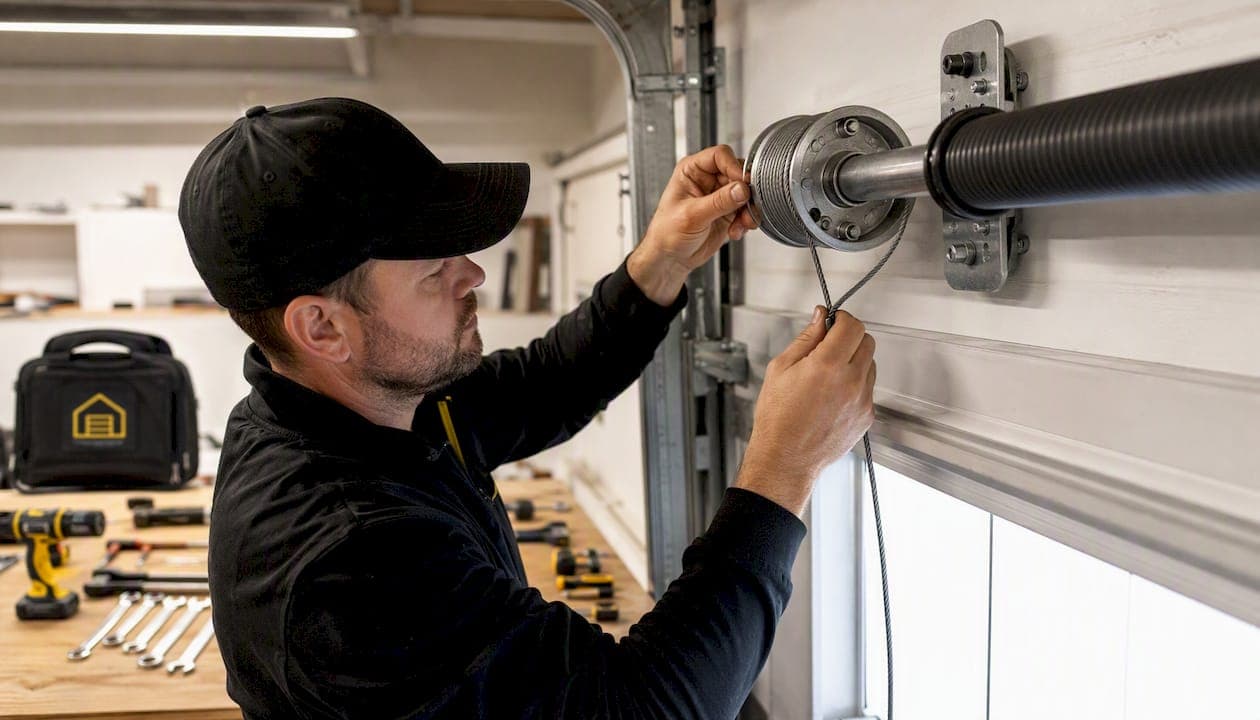
The cable drum is the mechanical translator at the heart of your garage door system. It converts torsion-spring torque into even, controlled cable winding so your door rises and lowers level every single time. If you're seeing a crooked door, hearing grinding near the top of the tracks, or spotting frayed cables, stop using the door right now and call a professional. Those are signs of a safety-critical failure, not a quirk to ignore.
Mikes garage doors Loveland colorado handles these repairs daily across Northern Colorado, offering quick turnaround times for most jobs. The faster you act, the less damage spreads to rollers, tracks, and springs.
Table of Contents
- How does a cable drum actually work?
- What are the warning signs your drum or cable is failing?
- What does a professional technician inspect and fix?
- How can you reduce the risk of drum and cable failure?
- Key Takeaways
- Why rapid response to drum failures matters in Northern Colorado
- Mikes garage doors Loveland colorado is ready when your door isn't
- Useful sources
- FAQ
How does a cable drum actually work?
The drum itself is a grooved aluminum or steel spool mounted on the torsion shaft above your door. What makes it special is the spiral groove. That groove has a variable radius, meaning the effective winding diameter changes as the door travels from closed to open.
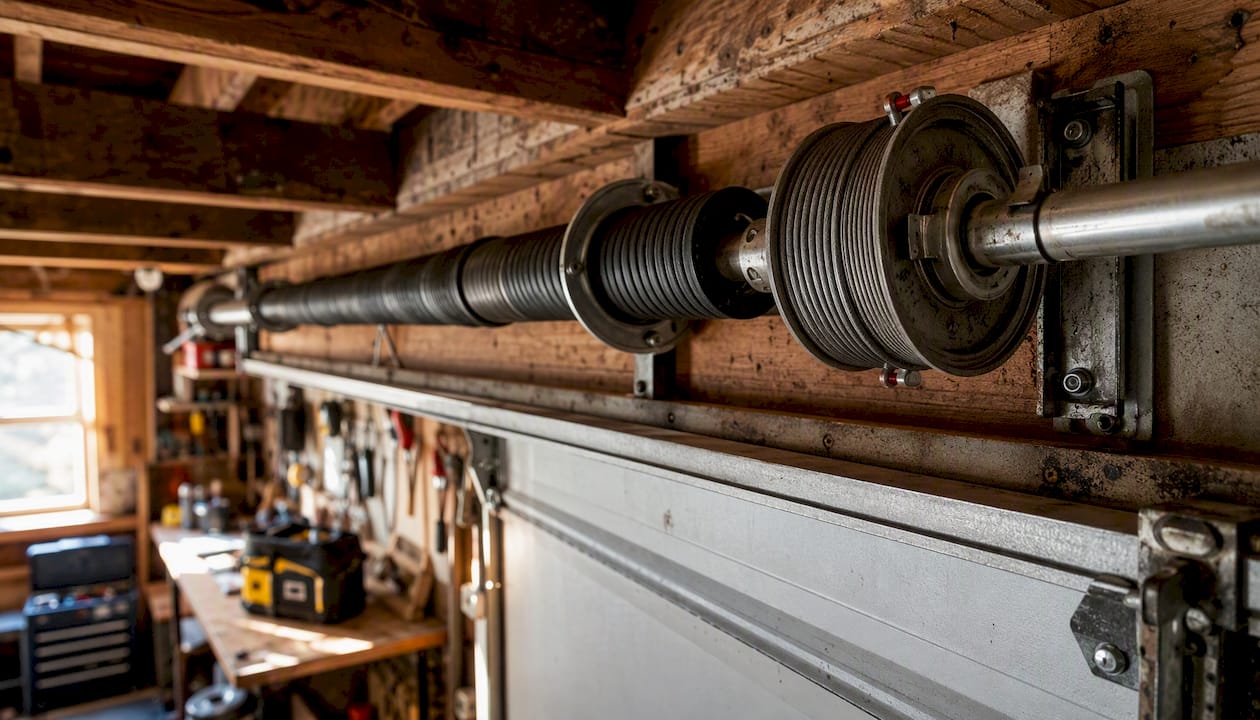
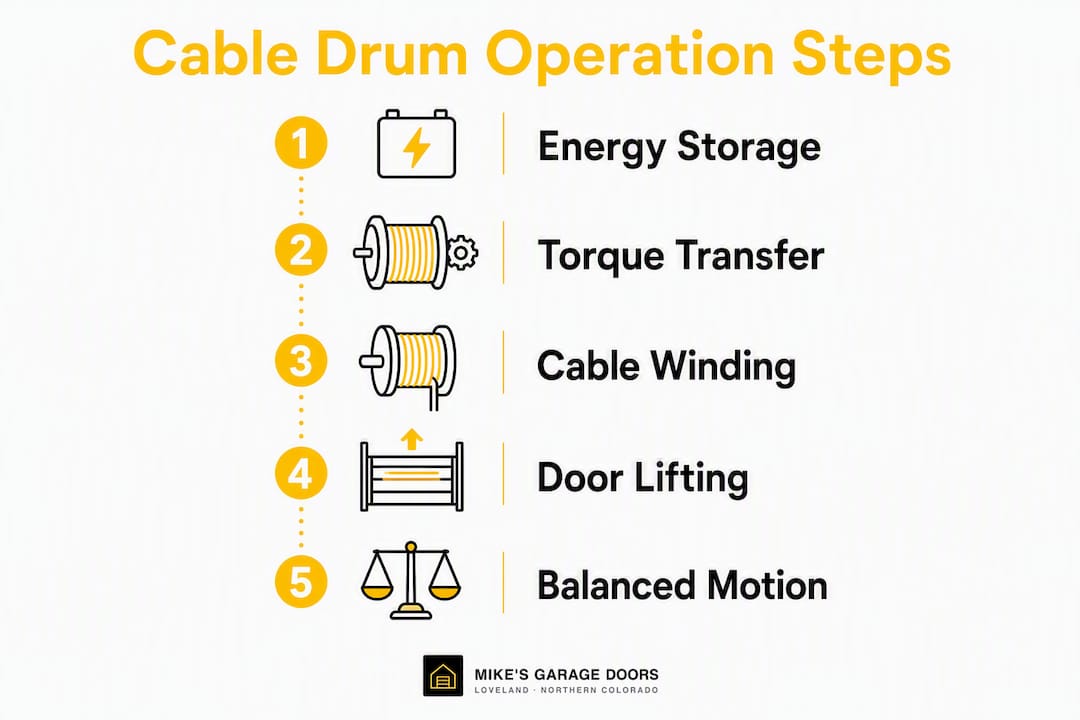
Here is why that geometry matters. A torsion spring stores maximum energy when the door is closed and gradually releases torque as the door rises. At the same time, the door's weight distribution shifts as sections move from vertical to horizontal on the overhead track. The drum's changing radius matches those two curves so the cable tension stays consistent throughout the lift. Without that match, the door would jerk, bind, or tip.
One thing homeowners get wrong: the opener is not the primary lifter. The spring and drum assembly carry the door's weight. The opener controls direction, speed limits, and safety reversals. When the drum or spring fails, the opener hums, strains, or reverses because it was never designed to lift a door on its own.
Torsion systems use drums mounted directly on the torsion shaft. Extension-spring systems use pulleys and safety cables instead. The hardware, procedures, and drum specifications differ between the two, so knowing your system type matters before any service call.
A simple balance check you can observe (not adjust): Disengage the opener and manually lift the door to waist height, then let go. A properly balanced door holds its position. One that crashes down is undersprung; one that snaps upward is oversprung. Both conditions stress the drums and cables and signal that a technician needs to look at the counterbalance assembly.
| System element | Its job |
|---|---|
| Torsion spring | Stores and releases energy to counterbalance door weight |
| Cable drum | Translates spring torque into even cable winding via variable-radius spiral groove |
| Lifting cable | Connects drum to bottom bracket; transfers force to the door panel |
| Opener | Controls motion, direction, and safety limits only |
What are the warning signs your drum or cable is failing?
Catching these early saves you money and keeps your door from becoming a hazard. The most common signs of drum or cable failure include:
- A door that travels crooked or "racks" to one side
- Grinding or popping sounds at the top of the travel
- Visible fraying where the cable exits the drum
- A cable that has slipped or jumped out of the groove
- A door that feels unusually heavy when lifted manually
- An opener that hums, slows noticeably, or reverses without obstruction
Each symptom points to a specific mechanical breakdown. A racked door usually means one drum has slipped on the shaft or the indexing is off, creating an asymmetric load. Worn grooves let the cable wander, which accelerates wear on rollers and hinges. A cable off the drum is almost never a standalone problem — it is a symptom of a deeper imbalance such as a broken spring, loose bearing, or damaged track. Rewinding the cable without diagnosing the root cause will fail again quickly.
Stop operating the door the moment you see any of these signs. The torsion spring is under extreme stored tension when the door is closed, and a drum that spins free of the shaft can release that energy uncontrollably. Spring and drum adjustments are not safe DIY tasks — the risk of serious injury is real and immediate.
What does a professional technician inspect and fix?
A thorough drum and cable service follows a clear sequence. Technicians at Mikes garage doors Loveland colorado check every component in the counterbalance assembly, not just the drum itself, because a cable off the drum almost always has a root cause elsewhere.
Inspection checklist:
- Groove wear and cable tracking inside the drum
- Cable condition at the drum exit point (fraying, kinking, corrosion)
- Set-screw seating against the shaft flat and torque to specification
- Bearing condition on both ends of the torsion shaft
- Identical indexing and rotational speed on both drums
- Cable anchor and clamp integrity at the bottom bracket
- Spring integrity and winding cone condition
If set screws are not torqued to spec and seated against the shaft flat, the drum can rotate independently of the shaft and allow the cable to unwind or jump the groove. That is one of the most common causes of a cable-off-drum call.
Typical repair sequence:
- Safely unwind the torsion spring to release stored tension before touching the drum.
- Remove the drum and inspect the spiral groove for wear, cracking, or deformation.
- Select the correct replacement drum matched to door weight, lift type, and shaft diameter.
- Index the drum to the shaft flat and torque set screws to manufacturer specification.
- Wind the cable into the groove from the bottom bracket anchor, maintaining even tension.
- Rewind the spring to the correct turn count for the door's weight.
- Run three to five full test cycles, checking for level travel and symmetric cable tension.
- Calibrate the opener's force and travel limits to the restored balance.
Most straightforward drum and cable jobs are same-day repairs. If a spring also needs replacement or a custom drum must be ordered, the technician will give you a clear timeline and parts lead-time estimate upfront. Expect a line-itemized estimate covering parts, labor for safe spring unwind and rewind, and balance testing. Professional installation of the correct drum geometry is what makes the repair last.
How can you reduce the risk of drum and cable failure?
Prevention is straightforward when you know what to look for and what to leave alone.
Monthly visual check (homeowner-safe): Walk the door through one full cycle and watch both sides. The cables should travel symmetrically, stay seated in the drum grooves, and show no visible fraying. If one side looks looser or the door hesitates, call a technician before the next use.
Professional service every 6–12 months: Cycle count drives the schedule. A commercial property with a high-traffic door needs service closer to every six months. A residential door used a few times daily can go twelve months between visits. A proper service visit covers set-screw torque verification, groove inspection, cable-end condition, bearing lubrication or replacement, and a balance test. Ask the technician for the drum part number, evidence of groove wear, balance test results, and the warranty on parts and labor.
What to avoid: Never loosen set screws on the drum, and never attempt to unwind or adjust the torsion spring. The stored energy in a torsion spring on a closed door is enough to cause severe injury if released without the correct tools and training.
Pro Tip: Northern Colorado winters concentrate stress in torsion springs. Cold mornings are when springs snap most often, and a broken spring immediately transfers that load to the drums and cables. Schedule a pre-winter inspection in October or November to catch worn hardware before the first hard freeze.
Key Takeaways
The cable drum's variable-radius spiral groove is what keeps your garage door lifting level and safely — without it, the spring's torque has no controlled path to the door.
| Point | Details |
|---|---|
| Drum's core function | Translates torsion-spring torque into even cable winding via a variable-radius spiral groove. |
| Top warning signs | Crooked travel, grinding noises, frayed cables, cable off the groove, or an opener that strains or reverses. |
| Immediate safety rule | Stop operating the door at the first sign of failure; stored spring tension makes DIY drum work dangerous. |
| Maintenance schedule | Visual check monthly; professional mechanical inspection every 6–12 months based on cycle count. |
| Mikes garage doors Loveland colorado | Provides same-day drum and cable repair across Northern Colorado, with upfront estimates and parts-and-labor warranties. |
Why rapid response to drum failures matters in Northern Colorado
Drum and cable failures do not stay contained. What starts as a cable slightly off the groove can rack the door within a few cycles, bending a track, cracking a roller bracket, or snapping a spring under the added asymmetric load. We see it regularly on service calls across Loveland and the surrounding Northern Colorado area.
The torsion spring is at maximum tension when the door is closed. Attempting to adjust a drum in that state without the proper winding bars and training is genuinely dangerous. Our technicians follow a strict safe-unwind procedure every time, and we verify set-screw torque and drum indexing before the spring is ever rewound. That sequence is not optional — it is the difference between a repair that holds and one that fails again in a week.
Mikes garage doors Loveland colorado completes the majority of repairs the same day, backs work with warranties on parts and labor, and offers a 10% discount to veterans. For Northern Colorado homeowners and property managers, fast professional response is the right call the moment a drum or cable symptom appears.
Mikes garage doors Loveland colorado is ready when your door isn't
When a cable jumps the drum or a door starts racking, same-day service is what you need. Mikes garage doors Loveland colorado offers emergency response for safety-critical drum and cable failures across Loveland and Northern Colorado, with transparent phone estimates so you know the cost before anyone arrives.

When you call, have three things ready: your door type (torsion or extension system, single or double), the symptoms you observed, and whether the opener is currently engaged or disengaged. That information lets the technician arrive with the right parts.
Our local services cover professional drum and cable inspection, safe spring unwinding and rewinding, indexed drum installation to manufacturer torque specs, balance testing, and a full parts-and-labor warranty. Veterans receive a 10% discount on every job. Call or book online to get a same-day appointment scheduled.
Useful sources
- Garage door cable drum physics: how the spiral does the work — Garage Door Science
- Garage Door Cable Replacement — Clopay buying guide
- Why Spring Repair Needs a Professional: Safety First — Mikes garage doors Loveland colorado blog
- Why Professional Installation Matters for Garage Doors — Mikes garage doors Loveland colorado blog
FAQ
What does a garage door cable drum do?
The cable drum winds and unwinds the lifting cable as the door travels. Its variable-radius spiral groove matches the torsion spring's decreasing torque to the door's changing load, keeping the door level through the full range of motion.
Is it safe to operate the door if a cable has come off the drum?
No. A cable off the drum usually signals a broken spring, loose bearing, or damaged track. Operating the door in that condition can rack the frame, damage the opener, or cause the door to drop suddenly.
How long does a drum and cable repair take?
Most straightforward drum and cable jobs are completed the same day. Mikes garage doors Loveland colorado completes the majority of repairs the same day; if a spring replacement or custom drum is needed, the technician will give you a clear parts and scheduling timeline upfront.
Can I rewind the cable onto the drum myself?
Rewinding a cable requires safely unwinding the torsion spring first, which stores enough energy to cause serious injury if released without proper tools and training. This is a job for a licensed technician, not a DIY fix.
How often should cable drums be professionally inspected?
High-traffic commercial doors benefit from inspection every six months. Residential doors used a few times daily can typically go twelve months between professional service visits, with a quick visual check by the homeowner each month.