
Your garage door has three separate protections, not one: the manufacturer covers defective parts, your installer covers workmanship, and insurance or a home warranty picks up specific events like storms or an opener burnout. Before you call anyone, find your model and serial numbers, your invoice, and the installation date. That paperwork decides who owes you a fix.
TL;DR:
- Most warranty coverage depends on the specific part that fails, with door panels lasting up to 10 years or more, while springs usually have only 1 to 3 years of coverage.
- Warranties are voided if homeowners attempt DIY repairs on springs or cables, hire unlicensed technicians, or fail to perform required maintenance and use non-approved parts.
- The homeowner's insurance covers damage caused by storms or impacts, but does not cover normal wear or manufacturer defects, which fall under different warranty layers.
- Registering the product within the warranty period and documenting failures with photos are crucial steps to avoid claim denials.
- A local repair shop specializing in warranty documentation can accurately determine if a spring failure is covered or if a paid repair is necessary.
Table of Contents
- Understanding Garage Door Warranty Coverage Layers
- How Long Does a Garage Door Warranty Last by Component?
- What Voids a Garage Door Warranty Claim
- How to File a Garage Door Repair Guarantee Claim
- Does Home Warranty or Insurance Cover Your Garage Door?
- Simple Steps to Protect Your Warranty Coverage
- How Mike's Garage Door Repair Helps With Warranty Problems
- What I'd Tell a Neighbor About Their Garage Door Warranty
- Get Warranty-Safe Repairs From a Local Team That Documents Everything
- Where to Check Official Warranty Terms
- Sources
- FAQ
Understanding Garage Door Warranty Coverage Layers
Homeowners usually assume one warranty covers everything on the door. It doesn't work that way, and knowing which layer applies saves you a wasted phone call.
A manufacturer warranty covers defective parts, springs, panels, or opener motors that fail because of a manufacturing flaw. Most manufacturers require product registration to activate full terms, and they typically ship replacement parts free while leaving labor costs to you.
An installer workmanship warranty is different. It covers the labor behind the installation itself, usually for one year, and it's the coverage homeowners actually use most. If your door came in crooked or the opener was wired wrong, that's a workmanship problem, not a manufacturer defect.
A home warranty or homeowners insurance is the third layer, and it only applies in specific situations:
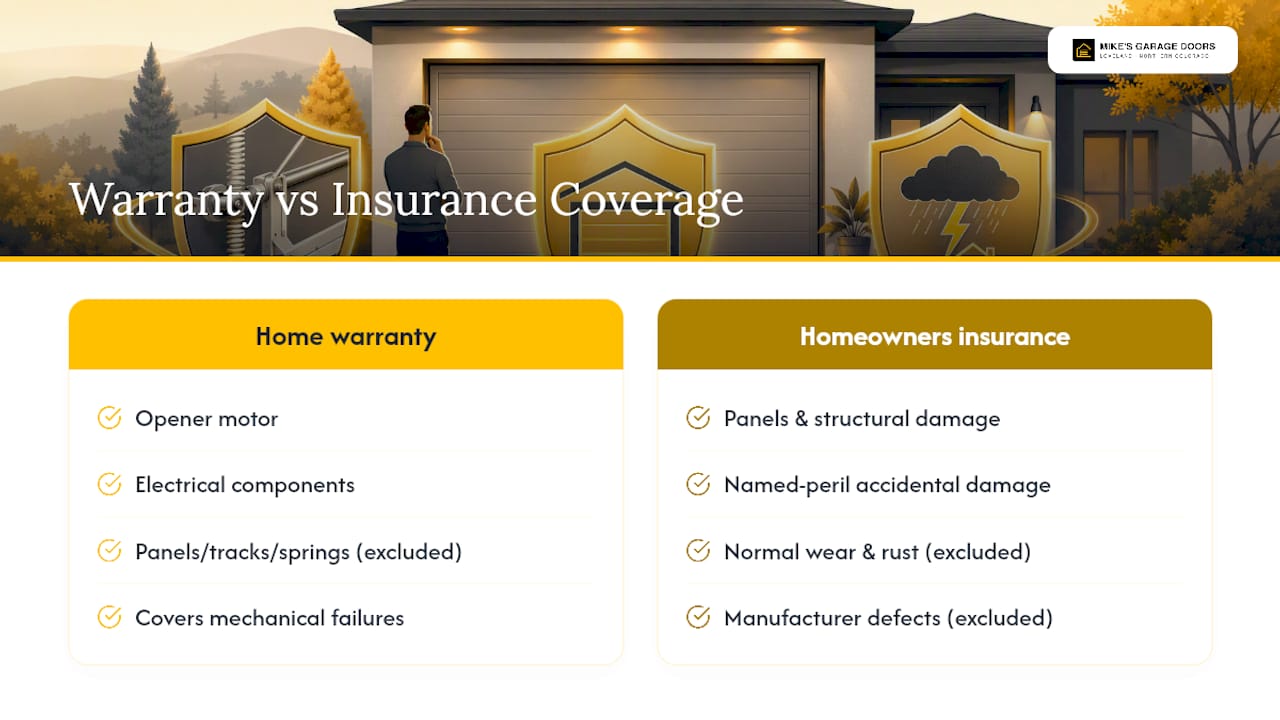
- Home warranty plans often cover opener motors and electrical components.
- Homeowners insurance covers named perils like hail, wind, or a car backing into the door.
- Neither typically covers springs, tracks, or general wear.
How Long Does a Garage Door Warranty Last by Component?
Coverage length depends entirely on which part failed, and the range is wider than most homeowners expect.
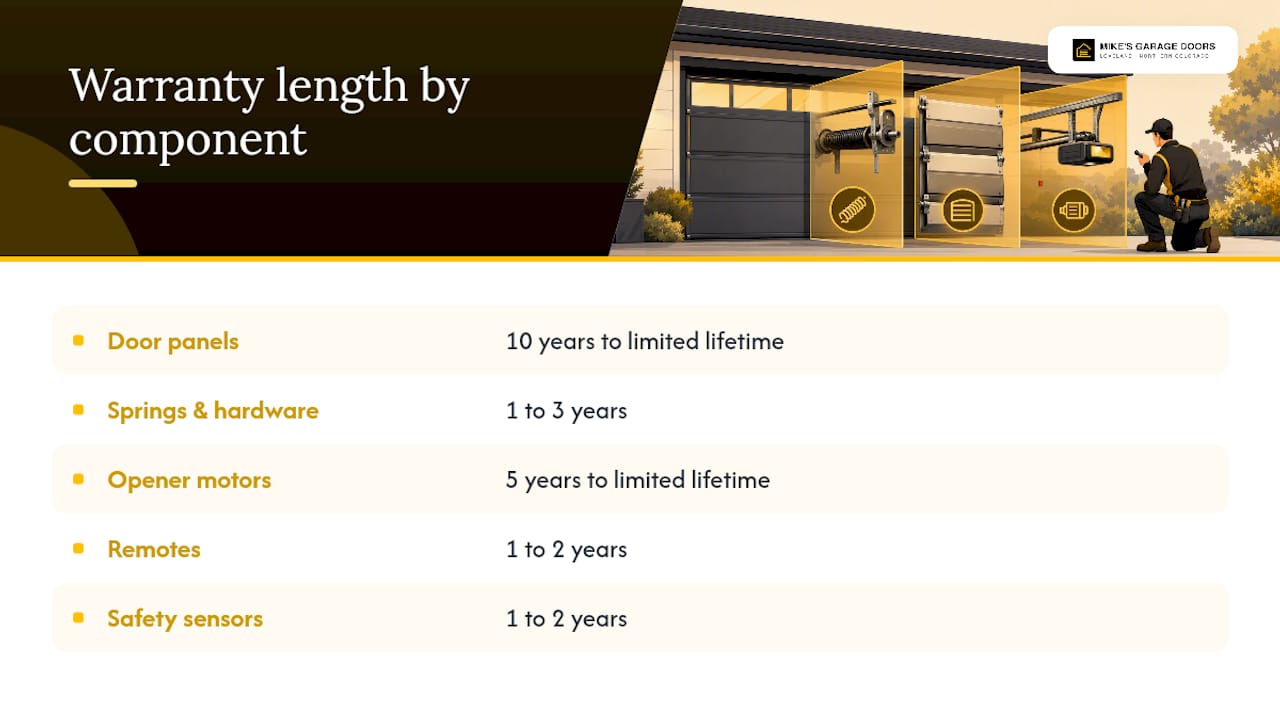
Door panels often carry 10-year to limited lifetime coverage. Torsion springs and hardware like tracks and rollers usually get just 1 to 3 years. Opener motors range from 5 years to limited lifetime, while remotes and safety sensors are typically covered for only 1 to 2 years.
The spring number surprises most people. A standard torsion spring is rated for around 10,000 open and close cycles. At an average of four cycles a day, that works out to roughly 7 years of life. So when a spring snaps at year six, that's mechanical wear hitting its rated limit, not a defect the manufacturer owes you a free replacement for.
"Limited lifetime" also comes with fine print. It usually applies only to the original purchaser, meaning it doesn't transfer if you buy a house with an existing door. Many manufacturer warranties are also prorated over time, and most cover parts only, leaving you to pay for the labor to install them.
What Voids a Garage Door Warranty Claim
Insurance-style exclusions apply here too. Warranties generally don't cover accidental damage (a car backing into the door), environmental wear (rust from coastal humidity, sun-faded paint), cosmetic dings, or the ordinary fatigue that comes from years of daily cycles.
Several homeowner actions void coverage outright:
- DIY spring or cable repairs. Torsion springs store enough force to cause serious injury, and most manufacturers void the warranty the moment an unlicensed person touches them.
- Hiring an unauthorized technician. Some manufacturers require certified installers for warranty work to remain valid.
- Skipping required maintenance. Warranty documents often list lubrication and cleaning as conditions of coverage, not suggestions.
- Installing aftermarket parts. Non-approved springs or openers can void coverage on the whole system.
- Repainting or modifying the door improperly. Wrong paint types can trap moisture and void panel warranties.
Pro Tip: Before you touch anything on a broken door, take photos first. A denied claim is often less about the damage itself and more about a homeowner "fixing" it before anyone could document the original failure.
How to File a Garage Door Repair Guarantee Claim
Filing a claim isn't complicated, but skipping a step is the fastest way to get denied.
- Gather your documents. Pull the model and serial numbers off the door and opener, your invoice or installation date, and clear photos of the damage.
- Confirm registration. Check whether the product was registered within the manufacturer's window, often 30 to 90 days after installation. Registering late can activate a longer warranty tier on some openers and premium doors.
- Contact the right party first. Get this wrong and you'll waste days waiting on the wrong callback.
- Installer: crooked panels, opener wiring issues, anything tied to the original install
- Manufacturer: a part that failed with no outside cause
- Home warranty provider: opener electrical or mechanical failure
- Insurance company: storm damage, vehicle impact, or vandalism
Does Home Warranty or Insurance Cover Your Garage Door?
This is where most confusion happens, because the two products cover almost opposite things.
Home warranty plans are built around mechanical failure. They commonly include the opener motor and its electrical components, but they routinely exclude the door panels, tracks, and springs. Think of it as coverage for the parts that plug in, not the parts that hold weight.
Homeowners insurance works the opposite way. It covers named-peril accidental damage: a hailstorm dents your panels, a delivery truck clips the door, someone smashes a window panel during a break-in. It does not cover normal wear, rust, or a manufacturer defect. If a spring snaps because it hit its rated cycle count, insurance won't touch it.
Simple Steps to Protect Your Warranty Coverage
Warranty coverage isn't passive. A few habits keep it active and make claims faster when you actually need one.
- Lubricate rollers, hinges, and springs annually, and run a basic balance test to catch spring wear early.
- Clean and inspect the finish yearly to catch rust or fading before it becomes a cosmetic exclusion.
- Use only manufacturer-authorized technicians for repairs covered under warranty.
- Register your door and opener promptly after installation.
- Keep your installer's written workmanship warranty and every service invoice in one folder.
Pro Tip: Ask your installer for the written workmanship warranty at final payment, not weeks later. It's easy to forget, and it's the document you'll need most if something goes wrong in year one.
How Mike's Garage Door Repair Helps With Warranty Problems
Most homeowners don't know whether their broken spring is a warranty issue or just an expected failure, and that's exactly where Mikes garage doors Loveland Colorado steps in.
Our technicians document the failure with photos and notes, tell you plainly whether the manufacturer, your installer, or your insurance should be the one paying, and perform repairs the right way so you don't accidentally void coverage on the rest of the door. We also offer a 10% discount for veterans. Before we leave, we'll remind you to hang onto your invoice and ask for a written workmanship warranty if you're getting new equipment installed.
What I'd Tell a Neighbor About Their Garage Door Warranty
The two mistakes I see most: skipping product registration, and reaching for a wrench on a broken spring instead of calling someone. Neither seems like a big deal until you're staring at a denied claim.
Here's the order that actually works: photograph your serials, invoice, and installation date first. If you're within a year of installation, call your installer before anyone else. Past that window, the manufacturer or a trusted local shop is your next call.
— Eddie
Get Warranty-Safe Repairs From a Local Team That Documents Everything
Mikes garage doors Loveland Colorado is the direct alternative to guessing whether your spring failure is a warranty issue or a bill you're stuck with. We inspect the door, document the failure with photos and notes, and tell you plainly whether your manufacturer, your installer, or your insurance owes you the fix, all before a technician starts work.

Every repair we perform is done the authorized way, so you don't accidentally void coverage on parts we didn't even touch. If a spring is nearing the end of its rated cycle life, we'll tell you honestly instead of just replacing it and hoping. Ready to get a straight answer on your door? Book a service call in Loveland and get a transparent estimate over the phone before we ever show up.
Where to Check Official Warranty Terms
Manufacturer documents are the final word on your specific coverage, and a few are worth bookmarking:
- Clopay's residential warranty information breaks down parts versus labor coverage by product line.
- Amarr's limited warranty document shows a full warranty table with per-component durations.
- American Home Shield's guide to opener coverage explains what home warranty plans include and exclude.
- C.H.I.'s warranty PDF lists required maintenance tasks tied directly to coverage.
Sources
- Garage Door Warranty: What's Covered & How Long It Lasts (2026)
- Garage Door Warranties: What's Actually Covered
- Does a Home Warranty Cover the Garage Door and Opener?
- AMARR limited warranty (warranty table example)
FAQ
How long is the warranty on a garage door?
It depends on the part. Panels often run 10 years to limited lifetime, springs and hardware typically get 1 to 3 years, and opener motors range from 5 years to limited lifetime.
How long should a garage door last?
A well-maintained door can last many years, but individual parts wear out much sooner. A standard torsion spring rated for 10,000 cycles typically fails around the 7-year mark under average daily use.
Are garage doors covered by a home warranty?
Usually only the opener and its electrical components are covered. Most home warranty plans exclude the door panels, tracks, and springs entirely.
Can I still claim warranty without a receipt?
It's harder but not always impossible. Manufacturers usually want proof of purchase or installation date, so check if the product was registered online, since that record can sometimes substitute for a lost receipt.