
Asking the right questions ask garage door technician style is the single most effective way to avoid bad repairs, surprise bills, and safety risks. A garage door is a 200-pound mechanical system under constant tension. The technician you hire needs verified credentials, real experience, and a commitment to transparent pricing. This guide gives you the exact inquiries to make before anyone touches your door, covering licensing, expertise, cost clarity, safety standards, and emergency response.
1. What credentials and qualifications should you verify?
Proof of liability insurance and contractor licensing is a non-negotiable safeguard, not a formality. Licensing and insurance protect you from financial liability if a technician gets hurt on your property or leaves the job in worse shape than they found it. Ask to see both documents before scheduling any work.
Beyond the basics, ask whether the technician holds manufacturer certifications or has completed specialized training on specific door brands or opener systems. Certified technicians understand the engineering behind the products they service, which means fewer callbacks and longer-lasting repairs.
One question most homeowners skip: are the technicians employees or subcontractors? Employment status directly affects accountability. A company that sends subcontractors may have little control over workmanship quality or how warranty claims get handled.
- Ask for the contractor license number and verify it with your state licensing board.
- Request a certificate of liability insurance, not just a verbal confirmation.
- Ask whether technicians carry manufacturer certifications for brands like LiftMaster or Clopay.
- Confirm whether the person arriving is a direct employee or a third-party subcontractor.
Pro Tip: Call your state contractor board's website and look up the license number directly. A legitimate company will hand over that number without hesitation.
2. How do you assess a technician's experience for your specific job?
Experience is not just years in the trade. It is familiarity with your specific door type, brand, and the exact problem you are dealing with. A technician who has spent a decade on commercial roll-up doors may have limited hands-on time with residential torsion spring systems. Ask directly about the types of doors they service most often.
"A true professional technician performs a comprehensive system safety check including door balance, sensor alignment, and opener force — not just replacing the broken part." This approach catches underlying issues before they turn into bigger failures.
Ask about their diagnostic process. A skilled technician will describe checking the door balance, testing the auto-reverse sensors, and measuring opener force settings before declaring a job complete. If the answer is "I'll just replace the spring," that is a red flag.
- Ask how many years they have worked on your door brand specifically.
- Request references or recent customer reviews for jobs similar to yours.
- Ask what their diagnostic process looks like from arrival to completion.
- Inquire whether they carry common replacement parts on the truck to avoid return visits.
Most standard spring and opener repairs are completed in under an hour once the technician is on-site. That efficiency only happens when the technician arrives prepared with the right parts and a clear diagnostic plan.
3. What questions clarify pricing and avoid hidden costs?
A written, itemized estimate is the single most important document you can request before work begins. A detailed written estimate separates labor, parts, and any emergency or after-hours fees so there are no billing disputes after the job is done. Never accept a verbal quote as your only pricing reference.
For new installations, a professional estimate takes about 30 minutes on-site for measurements and hardware review. That time investment reflects a thorough process, not a delay. Rushed estimates produce inaccurate quotes.
Ask these pricing questions before approving any work:
- Is the diagnostic or trip fee waived if I approve the repair?
- Does the estimate include labor, parts, and disposal of old components separately?
- Are there extra charges for emergency calls, weekend service, or after-hours work?
- What is the warranty on parts and labor, and is it documented in writing?
- Will the final bill match the estimate, or can it change without my approval?
| Question | What to watch for |
|---|---|
| Is the estimate itemized? | Lump-sum quotes hide inflated labor or parts costs |
| Are emergency fees disclosed upfront? | Surprise surcharges are a common billing tactic |
| Is the warranty in writing? | Verbal warranties are unenforceable |
| Is the trip fee waived on approval? | Reputable companies typically waive it |
Pro Tip: Check the hidden fee patterns that show up most often in garage door repair bills. Knowing them in advance gives you the right questions to ask before signing anything.
4. What safety and quality standards should a technician follow?
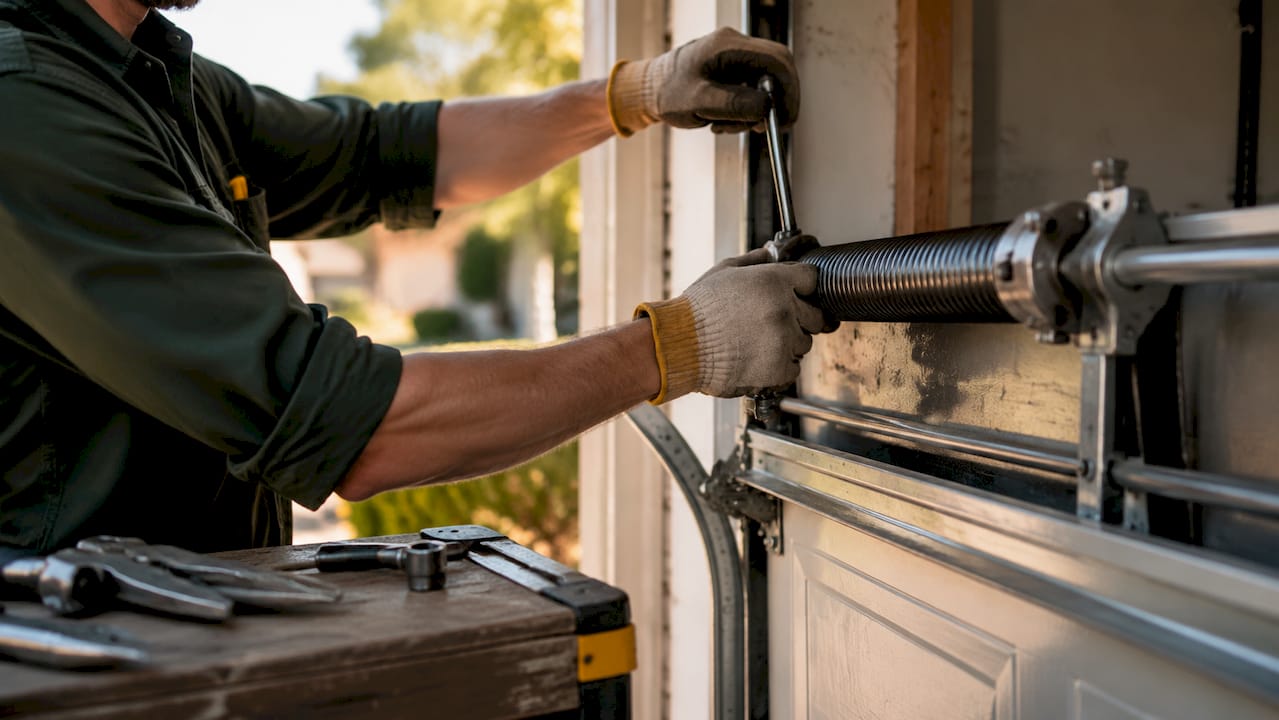
Garage door springs store enough energy to cause serious injury when mishandled. A qualified technician treats torsion spring replacement as a controlled, step-by-step process with proper winding bars and safety cables already in place. Ask directly how they handle high-tension components and what safety measures they use during the job.
A comprehensive system safety check covers door balance, sensor alignment, and opener force settings. These checks protect your family, not just the door. A technician who skips them is cutting corners that could cost you far more later.
Parts quality matters just as much as the repair itself. OEM parts outperform generic equivalents in safety and lifespan, especially for heavy-duty components like springs and tracks. Generic parts may fit, but they often fail faster and can void manufacturer warranties.
- Ask how they handle torsion spring replacement and what safety tools they use.
- Confirm they will test sensor alignment and auto-reverse function after any repair.
- Ask whether they use OEM parts or generic replacements, and why.
- Inquire how they clean up metal shards or debris after spring work.
Reviewing garage door safety codes before your appointment helps you recognize whether a technician's process meets local standards. A good technician will welcome those questions, not dodge them.
5. How do you evaluate reliability, communication, and emergency response?
Response time is a concrete measure of reliability. Reputable companies arrive within 1–3 hours for emergency calls, with most non-emergency appointments scheduled for the same or next day. Ask for a specific window, not a vague "we'll get there when we can."
Communication before and during the job matters too. Ask whether the technician will call or text before arriving, and whether you will receive a summary of work completed. A company that communicates well during scheduling tends to communicate well when problems come up mid-repair.
- Ask what the typical response time is for emergency calls in your area.
- Confirm whether weekend and after-hours service is available and what the extra fee is.
- Ask how the technician notifies you of arrival and any changes to the job scope.
- Request a written summary or invoice at job completion.
Technicians can often diagnose issues remotely if you share photos and describe symptoms before the visit. This prevents wrong parts orders and unnecessary service fees. Send a short video of the problem when you call. It gives the technician a head start and shows you the kind of service provider who prepares before showing up.
Check technician availability details before booking to understand how scheduling and response times work in practice. Knowing what to expect reduces frustration on both sides.
Key takeaways
Asking the right questions before hiring a garage door technician protects you from bad workmanship, hidden fees, and safety risks that a verbal promise will never cover.
| Point | Details |
|---|---|
| Verify credentials first | Request contractor license numbers and liability insurance certificates before booking. |
| Confirm employee vs. subcontractor | Employment status determines accountability and warranty reliability. |
| Demand a written itemized estimate | Separate labor, parts, and emergency fees in writing to prevent billing disputes. |
| Require OEM parts | Original Equipment Manufacturer parts outlast generic alternatives on springs and tracks. |
| Test communication before you commit | A technician who answers questions clearly before the job will handle problems better during it. |
What I've learned after years of watching homeowners get burned
The most common mistake I see is homeowners treating the hiring conversation as a formality. They call, get a price, and say yes. No license check. No written estimate. No question about whether the person arriving is even an employee of the company they called.
The second most common mistake is focusing only on price. A low quote that uses generic springs and skips the safety check costs more in the long run. A torsion spring failure sounds like a gunshot and turns your door into dead weight. That is not the moment to wish you had asked better questions.
Written documentation is not about distrust. It is about clarity. A good technician expects you to ask for a written estimate and a warranty in writing. They have nothing to hide. The ones who push back on documentation are telling you something important.
My honest advice: treat the phone call before the appointment as a short interview. Ask about licensing, ask about parts, ask about the warranty. The answers will tell you everything you need to know about whether that technician deserves to be in your driveway.
— Eddie
Garage door service in Loveland, CO, done right
Mikes garage doors Loveland serves homeowners and property managers across Northern Colorado with licensed technicians, upfront phone estimates, and same-day service on 90% of repairs.

Whether you need a broken spring replaced, a faulty opener fixed, or a full installation, Mikes garage doors Loveland gives you a clear price before anyone picks up a tool. Veterans receive a 10% discount, and every repair comes backed by a written warranty. Check out the full range of garage door services in Loveland and see what transparent, family-owned service looks like in practice.
FAQ
What credentials should I ask a garage door technician for?
Ask for a valid state contractor license number and a certificate of liability insurance. Both protect you from financial liability if something goes wrong during the repair.
How do I avoid hidden fees on a garage door repair bill?
Request a written, itemized estimate that separates labor, parts, and any emergency or after-hours fees before approving any work. Verbal quotes are unenforceable and often lead to billing disputes.
Should I ask if the technician uses OEM or generic parts?
Yes. OEM parts last longer and maintain safety standards, especially for high-tension components like torsion springs and tracks. Generic parts may fit but often fail faster and can void manufacturer warranties.
How fast should a garage door company respond to an emergency?
Reputable companies arrive within 1–3 hours for emergency calls. Ask for a specific response window when you call, not a general estimate.
Can a technician diagnose my garage door problem before arriving?
Often, yes. Sharing photos and a description of the symptoms before the visit helps the technician identify the issue, bring the right parts, and avoid unnecessary service fees.