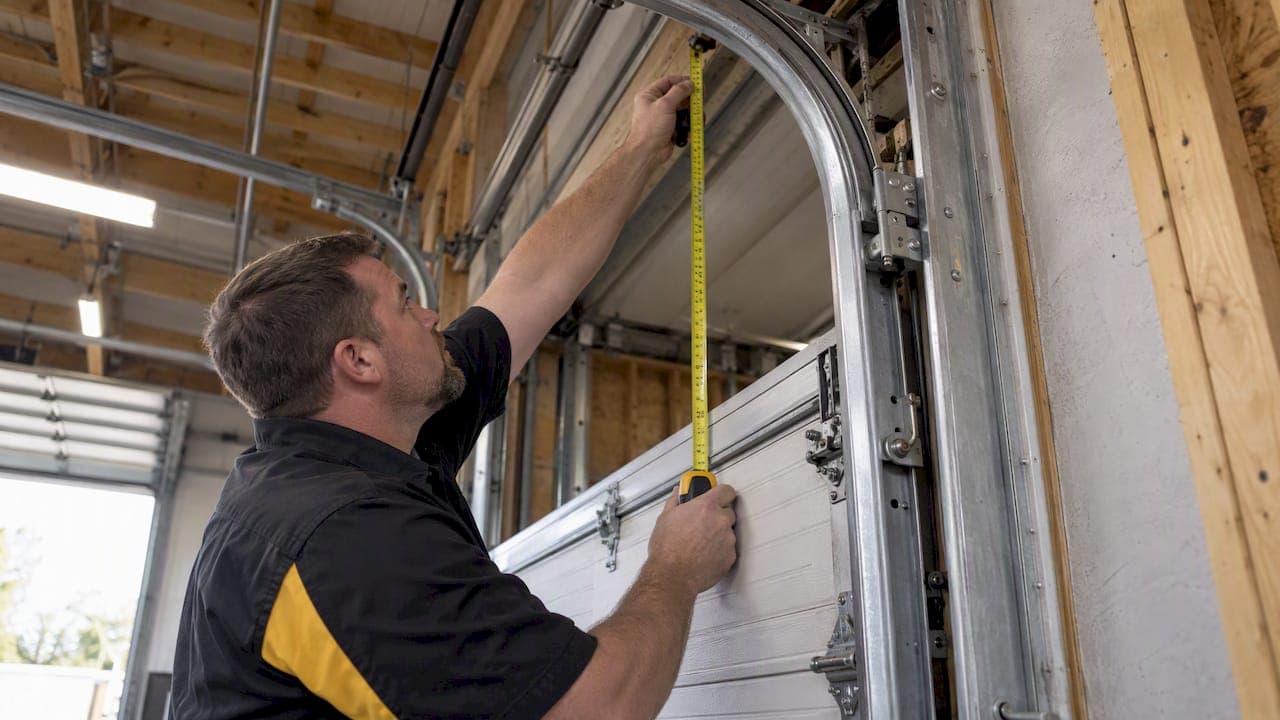
A high lift conversion is feasible in many garages, but it almost always means new vertical tracks, new torsion springs, and often a different opener entirely. The deciding factor is overhead clearance: most setups need 12 to 14 feet of headroom to work. Budget roughly $300 to $900 in parts alone, plus labor, and expect the job to run most of a day.
TL;DR:
- Measure headroom, backroom, and side clearance before ordering; most conversions need 12 to 14 feet, and low joists, ducts, or sprinklers can block the track.
- Extended tracks usually require new torsion springs, cables, and drums, while a wall mounted jackshaft opener is often safer than a ceiling trolley.
- Parts typically cost $300 to $900 before labor; straightforward jobs take 4 to 6 hours, while framing or door replacement can require multiple visits.
- Spring balancing and cable tension can make the door drop if mishandled, so installation must follow manufacturer instructions and applicable door and operator standards.
Table of Contents
- What Is a High Lift Conversion and When Does It Make Sense?
- What You Actually Gain From the Extra Clearance
- The Hardware and Measurements You Need to Plan For
- What a Conversion Costs and How Long It Takes
- How the Installation Works and Where Safety Matters Most
- What an In-Person Evaluation Looks Like
- Deciding if a Conversion Is Right for Your Garage
- Request a High Lift Conversion Quote From Mike's Garage Door Repair
- FAQ
- Sources
What Is a High Lift Conversion and When Does It Make Sense?
A standard lift system uses a short curved radius that brings the door almost flat against the ceiling a few inches above the header. A high lift system swaps that short curve for an extended vertical track section, pushing the horizontal track up near the ceiling joists instead. A vertical lift system goes further still, eliminating the curved track altogether so the door travels straight up. According to industry specifications, high lift setups typically need 12 to 14 feet of headroom, which is the main reason not every garage qualifies.
We see conversions make sense for a specific set of goals:
- Fitting a car lift or taller work vehicle that a standard track would clip
- Adding overhead storage racks or a mezzanine without losing drive-through height
- Opening up ceiling space for a workshop bay with hoists or ductwork
Before you go further, grab a tape measure. Check your actual headroom from the floor to the lowest ceiling obstruction, look over your door's condition (sections, hinges, rust), and note anything overhead like ductwork, sprinkler lines, or low joists that could block the extended track.
What You Actually Gain From the Extra Clearance
The jump from a standard curved track to a high lift setup typically frees up most of the ceiling area a standard track would otherwise occupy, which is the space homeowners actually use for storage, lifts, or taller equipment. That difference shows up fast once the door is converted.
A high lift conversion commonly adds parts in the $300 to $900 range, and industry data shows that figure covers extended tracks, springs, and hardware before labor. The real payoff is usability:
- A home mechanic bay with room for a two-post lift
- Overhead shelving or a storage mezzanine that doesn't interfere with the door
- RV or tall-van storage without scraping a roof vent on the way in
Replacing an aging door while you're at it can also add resale value, since buyers tend to notice a garage that works as more than just a parking spot.
The Hardware and Measurements You Need to Plan For
Before ordering parts, measure three things: headroom (floor to ceiling), backroom (depth from the header back into the garage), and sideroom (clearance on each side of the opening). Garage puts the target headroom at 12 to 14 feet for most high lift setups, with backroom needing enough depth to clear the extended vertical track.
Here's what typically needs to change:
- Tracks: Extended vertical sections replace the short curved radius, often requiring added struts for reinforcement.
- Springs and cables: Torsion springs get re-rated or replaced, and drums and cables usually change to match the new lift geometry.
- Opener: A jackshaft opener mounted to the wall is generally the safer, more reliable choice over a ceiling-mounted trolley unit, since DASMA technical guidance notes trolley units can struggle with the altered cable tension a high lift track creates.
- Reinforcement: Anti-fall brackets, cable keepers, and a reinforced top section help prevent a panel from dropping if a cable slips.
- Header mounting: The header needs solid backing to support the shifted load, per DASMA's connection guidelines.
Pro Tip: Measure twice before ordering tracks. An extended vertical section that's even an inch too long can bind against joists you didn't account for.
What a Conversion Costs and How Long It Takes
Parts alone for a high lift kit, including tracks, springs, and hardware, typically run $300 to $900, with labor added on top depending on how much of the system changes. Costs climb when the job involves more than hardware swaps.
- A straightforward track and spring conversion on a door in good condition sits at the lower end of that parts range.
- Adding a jackshaft opener, reinforcing the header, or replacing an aging door pushes the total higher.
- Structural header work or full door replacement can turn a single-day job into a multi-visit project.
Most trade-reported installs land in the 4 to 6 hour range, which usually means a same-day job when the door and header are in decent shape. Anything requiring new framing or a full door swap tends to stretch beyond that window.
How the Installation Works and Where Safety Matters Most
A conversion generally follows a predictable sequence, but a few steps carry real risk if skipped or rushed.
- Measure headroom, backroom, and sideroom to confirm the garage can support a high lift track.
- Order tracks, springs, cables, and an opener sized for the new geometry.
- Remove the old curved track and reposition or replace the torsion spring system.
- Install the extended vertical track, reinforce the header, and mount a jackshaft or compatible opener.
- Balance the door, set cable tension, and test entrapment protection before calling it done.
Jackshaft operators and other modifications must follow the door and operator manufacturer's instructions; failure to do so can cause cable slack, uncontrolled door movement, and severe injury. DASMA TDS1501
Spring balancing and cable tension are the two places where mistakes turn dangerous. A door that's out of balance or has slack cable can drop unexpectedly, and DASMA points to ANSI/DASMA 102 compliance as the baseline for matching door and operator specs safely. If you're weighing whether to tackle any part of this yourself, a partner resource on DIY door replacement pitfalls walks through how measurement errors turn into bigger problems down the line. Entrapment protection and code requirements are also worth a look before you start; our guide to garage door safety codes covers what inspectors check.
What an In-Person Evaluation Looks Like
When we walk into a garage for a high lift conversion, we check headroom, inspect every door section for rust or warping, look at header strength, and confirm the opener you have (or want) will work with the new geometry. That in-person look catches problems a phone estimate never will, like a low sprinkler line or a header that needs reinforcing before a jackshaft opener goes up.
When you get a written estimate for a conversion, ask what's covered under warranty and what maintenance keeps that coverage valid.
Deciding if a Conversion Is Right for Your Garage

If your garage clears 12 to 14 feet of headroom, your door is in solid shape, and you've got a clear use for the space (a lift, storage, a taller vehicle), you're a good candidate. If headroom falls short or your door needs major repair anyway, it may make more sense to handle that repair first and revisit the conversion later.
Ready to move forward? Schedule an in-person inspection and get a written quote before committing to parts.
— Eddie
Request a High Lift Conversion Quote From Mike's Garage Door Repair
We provide comprehensive service for high lift conversions, including inspection, track replacement, torsion spring service, opener installation, and tune-ups to keep the system running smoothly afterward.

- Honest phone estimates with no hidden costs once we're on site
- Same-day completion on many repairs
- Warranties on parts and labor, plus a discount for veterans
Browse our full lineup of services and schedule an in-person estimate to see what your garage needs for a safe, properly balanced high lift setup.
FAQ
How much does a high lift conversion cost?
Parts for a high lift conversion kit, including extended tracks, springs, and hardware, typically run $300 to $900, with labor added depending on complexity. Costs rise if the job requires a new opener, header reinforcement, or door replacement.
What are the pros and cons of a high lift garage door?
A high lift door frees up ceiling space for storage, taller vehicles, or a car lift, which a standard curved track can't accommodate. The tradeoff is that it requires at least 12 to 14 feet of headroom and usually means replacing tracks, springs, and often the opener, which adds cost compared to a standard system.
How much does it cost to increase the height of a garage door?
Increasing clearance through a high lift conversion runs roughly $300 to $900 in parts before labor, assuming your garage already has the headroom to support it. If structural changes to the header or ceiling are needed, costs climb well beyond that parts-only range.
Is it possible to raise the height of a garage door?
Raising a garage door's travel height is possible through a high lift conversion, which replaces the short curved track with an extended vertical section. It depends on having enough overhead clearance, generally 12 to 14 feet, and a door and opener that can be matched to the new track geometry.
Sources
- DASMA technical data sheet #1501
- DASMA TDS166 — Guidelines for connecting a drawbar operator to a sectional garage door
- Garage