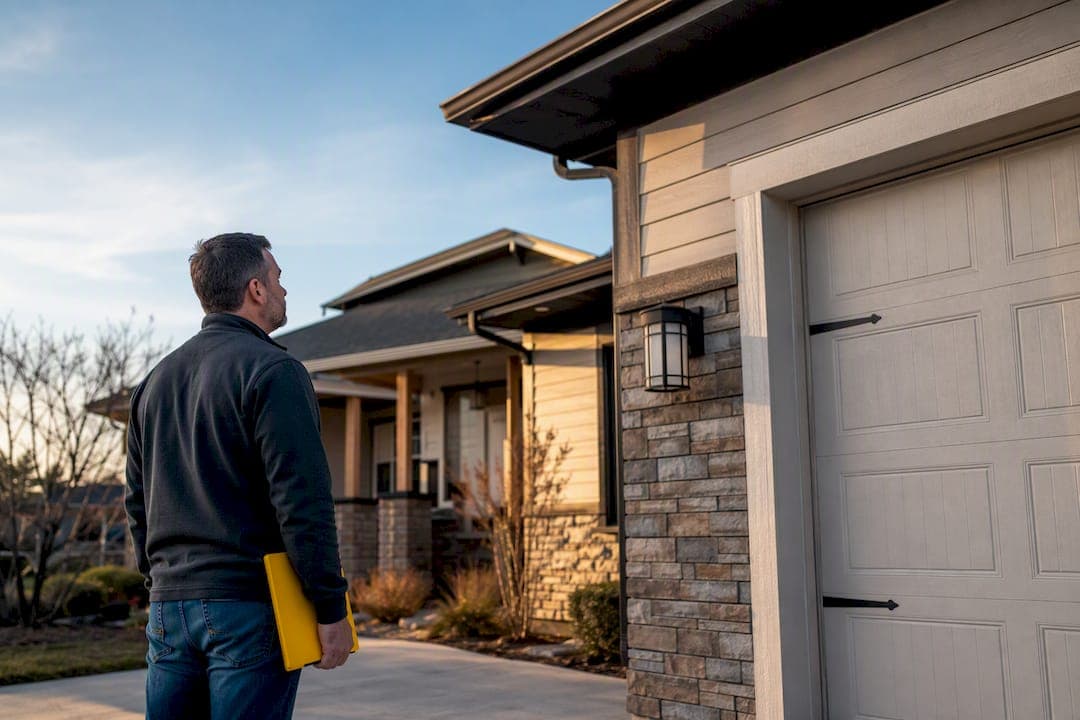
Yes, your HOA can almost certainly set rules for your garage door. Most U.S. homeowner associations regulate color, style, hardware, and even how often the door stays open through the CC&Rs or a separate Rules and Regulations document. Before you order anything, do two things: pull your CC&Rs and Architectural Review Committee (ARC) guidelines, and pause any purchase until you know what your board actually requires.
TL;DR:
- Most HOA rules regulating garage doors focus on appearance, use, parking, and maintenance, often requiring strict adherence before purchasing or installing a new door.
- Submit a comprehensive ARC approval packet with photos, specs, and neighborhood comparisons at least a month before installation to ensure timely approval.
- Common violations include color mismatches, unapproved window styles, leaving doors open overnight, and visible clutter, which can often be avoided with routine maintenance and careful planning.
- HOA authority is limited by state law, with protections in places like California that require proper notice, a right to cure, and legal limits on enforcement actions.
- Prioritize ARC approval as the ultimate decision point before ordering a garage door to avoid violation disputes and costly delays.
Table of Contents
- What Are Common HOA Garage Door Rules?
- How Does the ARC Approval Process Work?
- What Should You Do If You Get a Violation Notice?
- Which Garage Doors Pass ARC Review Most Often?
- How Mike's Garage Door Repair Supports HOA Compliance
- What Are Common HOA Garage Door Violations?
- How Do You Talk to Your HOA Board About Garage Door Issues?
- How Do You Request a Variance for Your Garage Door?
- What Legal Rights Do Homeowners Have Against HOA Garage Door Rules?
- The Real Problem Isn't the Rules. It's the Timing.
- Get ARC-Ready Help From Mikes Garage Doors Loveland Colorado
- Sources
- FAQ
What Are Common HOA Garage Door Rules?
HOA garage door rules almost always fall into four buckets: appearance, use, parking and storage, and maintenance. Community associations govern a large share of U.S. residential properties, and Statista's tracking of community associations shows just how common this kind of oversight has become. Garage doors sit right on the street-facing facade, so boards treat them like a curb-appeal issue as much as a functional one.
Appearance rules usually name an approved color palette, restrict door styles to a short list, and set limits on window placement and hardware finish. A door with black carriage-house hinges might be fine in one section of the neighborhood and rejected in another if it clashes with the approved catalog.
Use rules focus on the open door itself. Many boards allow doors open during active work like unloading groceries or yard projects, but they cap how long a door can stay open and often ban overnight open-door situations entirely.
Parking and storage rules typically require residents to park inside the garage rather than treating it as extra storage, and they can restrict visible clutter that shows through an open door. If you are converting a garage into an accessory dwelling unit, expect extra scrutiny since HOA garage door authority in California often intersects with local ADU rules.
Maintenance provisions round things out:
- Dents, peeling paint, or rust visible from the street can trigger a violation notice.
- Warped panels or a sagging track are treated as both a cosmetic and safety issue.
- Boards can require repairs on a set timeline once notified.
How Does the ARC Approval Process Work?
Your CC&Rs almost always outrank the Rules and Regulations document when the two conflict. According to Davis-Stirling's explanation of architectural procedures, CC&Rs are recorded with the county and carry the most legal weight, while bylaws govern how the board operates and rules fill in day-to-day detail. Know which document actually controls your garage door before you argue a point based on the wrong one.
A complete ARC submission packet typically includes:
- Manufacturer spec sheet showing dimensions, panel style, and material
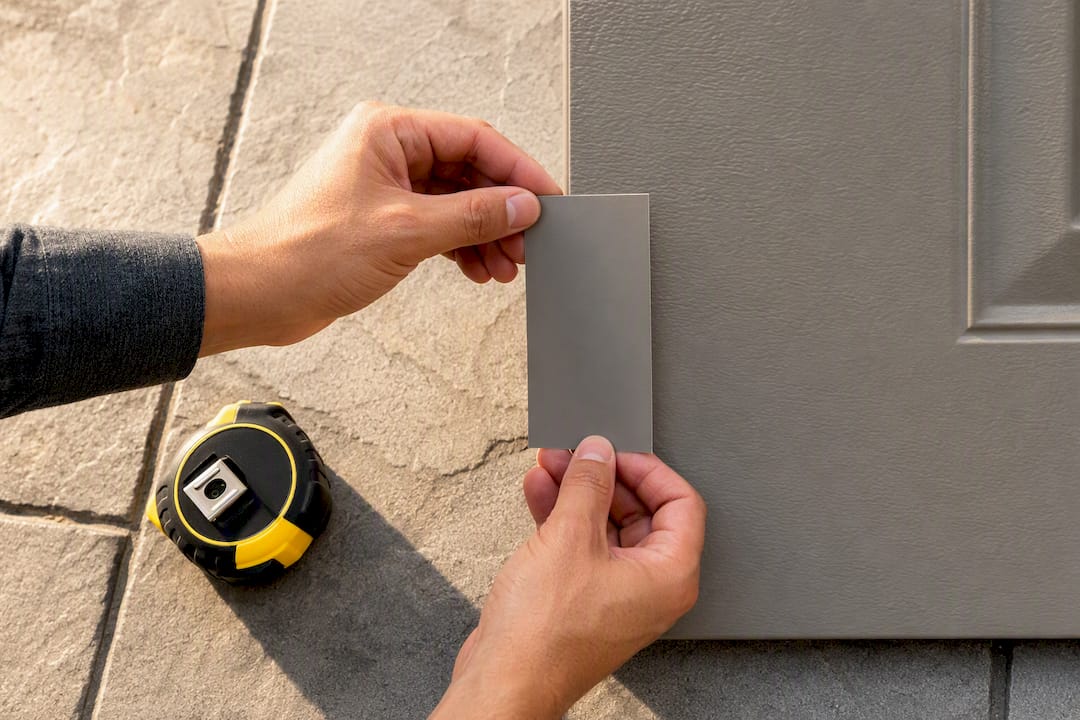
- Actual color chip or swatch, not just a paint name
- Photos of the proposed door and, ideally, a mockup on your home's facade
- Installer name and license information
- A brief written description of how the door matches the neighborhood palette
Pro Tip: Submit photos of two or three neighboring homes with similar doors already installed. It gives the ARC an instant comparison point and cuts down on follow-up questions.
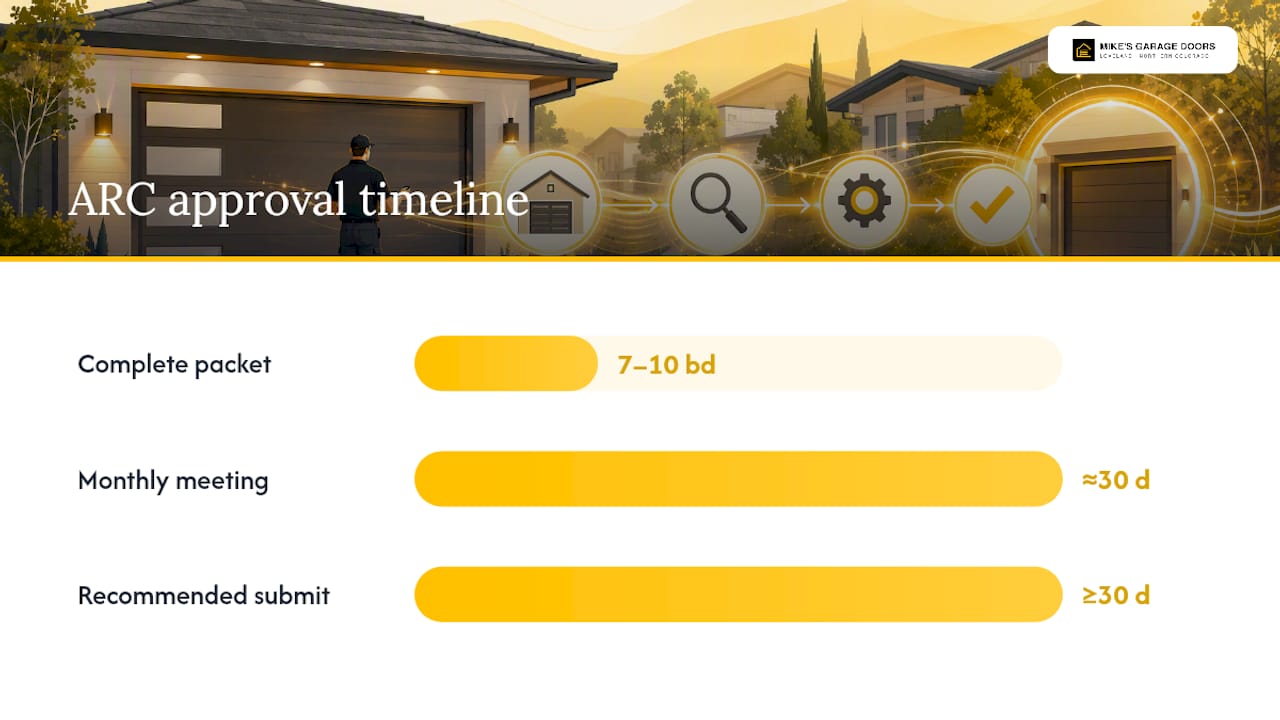
Many metro-area committees, including several tracked by Blue Sky Garage Doors in the Denver market, approve complete packets in roughly 7 to 10 business days. Boards that only meet monthly can stretch that timeline considerably, so submit at least a month before you need the door installed, not the week you plan to order it.
State law can also cap what an HOA is allowed to enforce. California's Civil Code, for example, carves out protections for things like EV charger installations that can override a conflicting HOA rule, according to LegalClarity's review of California HOA garage rules. Colorado homeowners should check their own state statutes and governing documents rather than assume California's protections apply.
What Should You Do If You Get a Violation Notice?
Start by asking the HOA to cite the exact provision you supposedly broke. A notice that just says "garage door violation" without a section number is a red flag, not a real citation.
- Request the specific CC&R or Rules section in writing.
- Check whether you got proper notice, a chance to cure, and (if fines are involved) a hearing before escalation.
- Look for selective enforcement: if three other homes have the same door style and no notice, say so.
- Photograph your door, the neighboring comparisons, and any prior ARC approval you received.
- Submit your cure evidence or corrected documentation before the deadline listed in the notice.
Due process matters more than people realize. LegalClarity's analysis of California HOA enforcement points to statutory cure periods that some states now require before a fine can even attach, and blanket rules forcing homeowners to keep garage doors open all day for inspection purposes have run into privacy and reasonableness challenges in certain jurisdictions, according to legal guidance on unreasonable open-door mandates.
Pro Tip: Keep every email and letter in one folder, dated and labeled. A clean paper trail is the single biggest advantage in a board appeal or mediation.
If the board still won't budge, escalate in order: formal board appeal, HOA mediation resources through your state, and only then a real estate attorney if money or your ability to sell the home is at stake.
Which Garage Doors Pass ARC Review Most Often?
Raised-panel steel doors and carriage-house look-alikes clear architectural review more consistently than almost any other style. Blue Sky Garage Doors' Denver-market research found that traditional panel styles with small top-row windows get approved far more often than modern flush or full-glass designs, simply because they match what most neighborhoods already expect.
Insulated steel and faux-wood composite doors are safe middle-ground picks. They give you a wood-look finish without the upkeep of real wood, and most ARCs already have them on an approved materials list.
Riskier styles aren't automatically dead ends. Frosted or obscure glass panels, darker frame colors, and contemporary flush designs can get approved if you submit a full-home mockup and photos showing the style already works elsewhere in the community. That extra documentation step is what OnTrac Garage Doors' guide to HOA-friendly design identifies as the difference between an easy approval and a rejected packet.
Before you submit anything, run through this checklist:
- Confirm your door's color against the HOA's official palette, not a similar-looking swatch.
- Attach the manufacturer spec sheet and installer credentials.
- Include a mockup photo on your actual home facade.
- Reference at least one comparable approved home in the neighborhood.
- Submit before you order the door, never after.
| Decision point | Lower-risk choice | Higher-risk choice |
|---|---|---|
| Panel style | Raised panel, carriage-house look-alike | Full flush modern panel |
| Windows | Small top-row panes | Full-view glass |
| Material | Insulated steel, faux-wood composite | Real wood, unfinished |
| Color | Matches published palette exactly | Close approximation, unverified |
How Mike's Garage Door Repair Supports HOA Compliance
A local garage door company has spent years fixing and installing garage doors across Northern Colorado, and HOA jobs come with their own headaches. A misjudged color chip or a missing spec sheet can bounce a whole ARC packet back to square one.
That's where a local, family-owned crew earns its keep. This company gives homeowners transparent, upfront estimates over the phone, so there's no guessing what an inspection or installation will cost before the ARC even sees your paperwork. Technicians handle everything from broken torsion springs to opener repairs, and veterans get a 10% discount on service. Jobs often come backed by warranty coverage, which matters when a board asks for proof the installation meets code.
What Are Common HOA Garage Door Violations?
Color mismatch tops the list of common violations, and it's almost always avoidable. Homeowners order a "close enough" shade without checking the HOA's actual approved swatch, and the board rejects it after the door is already installed. Always request the physical color chip, not just a paint name from a catalog.
Unapproved window styles come in second. A homeowner swaps a plain panel for a door with full-view glass inserts, assuming it looks upscale, only to find the ARC guidelines cap window size or ban glass entirely in that section of the community.
Open-door violations show up constantly in enforcement logs. Leaving a garage door open overnight, or for hours during the day with no active use, is one of the most cited infractions according to guidance on HOA garage door open-door fines. It's an easy habit to fall into and an easy one to fix.
Visible storage clutter and peeling paint round out the common list. Best practice is simple: check the palette before ordering, close the door when you're not actively using the garage, keep the interior tidy enough that an open door doesn't become a complaint magnet, and repair cosmetic damage before it becomes a maintenance citation. Routine upkeep like preventive garage door maintenance catches most of these issues before they ever reach the board's desk.
How Do You Talk to Your HOA Board About Garage Door Issues?
Put your request or dispute in writing, even if you already spoke with someone in person. A verbal conversation with a board member has no paper trail if the issue escalates later.
Reference the specific CC&R section or ARC guideline you're asking about, and keep your tone factual rather than frustrated. Boards respond better to "Section 4.3 doesn't specify window restrictions, so I'd like clarification before I submit" than to a complaint about unfairness.
Attend the board meeting if your request involves any judgment call, like a style that isn't explicitly listed in the guidelines. Showing up in person, with photos and a one-page summary, moves faster than email back-and-forth that can stretch across two or three monthly meetings.
If a rule seems inconsistently enforced, ask for clarification rather than making an accusation. "Can you tell me how the board evaluated the door at 214 Maple Street" gets a more useful answer than "you're not enforcing this fairly." Boards are usually volunteers managing dozens of cases, and specific, documented questions get faster resolutions than general complaints.
How Do You Request a Variance for Your Garage Door?
A variance request asks the board to approve something outside the standard guidelines, and it needs to stand on its own even without a rule change behind it. Start with a written request that names the exact provision you're asking to deviate from and explains why.
Strong variance requests usually include a hardship or context argument. Maybe your home's architecture doesn't match the standard palette well, or a discontinued door style means the exact approved color isn't available anymore. Attach photos, a mockup, and if possible, an example of another home in the community with a similar approved exception.
Most CC&Rs require variance requests to go through the same ARC submission channel as a standard request, just with an added explanation section. Expect the board to take the same 7 to 10 business day window, sometimes longer if it needs a full board vote rather than just committee sign-off.
If the board denies the variance, ask for the reasoning in writing. That record matters if you decide to appeal or if you want to revise the request and resubmit with stronger supporting evidence.
What Legal Rights Do Homeowners Have Against HOA Garage Door Rules?
HOAs don't have unlimited authority over your garage door. Their power comes from the CC&Rs you agreed to when you bought the home, and that authority has real limits written into state law.
Some states now require a formal cure period before a fine can attach to a violation, giving homeowners a real chance to fix the issue rather than get billed immediately. California's Civil Code, discussed in LegalClarity's breakdown of homeowner protections, also protects certain features like EV charging equipment from being blocked outright by garage-door style rules.
Homeowners generally have the right to see the exact provision they're accused of violating, to receive proper notice, and to a hearing before penalties escalate. Rules that are overly broad or inconsistently applied, like requiring every garage door to stay open all day for inspection, have faced real legal pushback in some jurisdictions over privacy concerns.
None of this means you can ignore a legitimate rule. It means the board has to follow its own documents and the law just as much as you do.
The Real Problem Isn't the Rules. It's the Timing.
Most garage door disputes with an HOA aren't really about taste. They're about sequence. Homeowners order the door they like, install it, and only then discover the ARC guidelines wanted something else. By that point, you're not asking for approval anymore. You're asking for forgiveness, and boards are far less flexible once a door is already hanging in the frame.
The conventional advice tells people to "check with your HOA first," which is true but useless without specifics. Checking means pulling the actual CC&Rs, not asking a neighbor what they remember from three years ago. It means requesting the real color swatch, not eyeballing a paint chip against a photo online. And it means submitting a full packet, mockup included, weeks before you plan to install anything.
If there's one thing worth prioritizing above all else, it's this: treat the ARC approval as the actual purchase decision, and treat ordering the door as the formality that comes after. Homeowners who flip that order almost never end up in a violation dispute.
— Eddie
Get ARC-Ready Help From Mikes Garage Doors Loveland Colorado
A local garage door company in Northern Colorado offers homeowners transparent, upfront estimates before commitment, so they know their ARC packet cost and repair cost before the board even sees their paperwork.

Call for a pre-approval inspection if you're not sure your current door will pass a future review, or if you need help pulling together spec sheets and installer credentials for an ARC submission. If a fix needs to happen fast, most repairs get completed the same day, so you're not stuck explaining a broken spring to the board while you wait on a part. Start with a look at the full range of garage door services in Loveland to see what fits your situation, then call for your estimate.
Sources
- HOA Garage Rules in California: Rights, Fines, and Limits - LegalClarity
- Architectural Procedures & Guidelines - Davis‑Stirling Resource
- Number of community associations in the United States - Statista
FAQ
Can an HOA Make You Keep Your Garage Door Closed?
Yes, most HOAs can require garage doors to stay closed except during active use, and many enforce fines for repeated open-door violations once proper notice is given.
What Are the Most Common HOA Garage Door Violations?
Color mismatches, unapproved window styles, leaving doors open overnight, and visible storage clutter top the list of frequent citations.
Is There a Building Code for Garage Doors, or Is It Just HOA Rules?
Local building codes set safety requirements like spring type and sensor placement, which is a separate issue from HOA appearance rules; a door can meet code and still violate your CC&Rs. Mikes Garage Doors Loveland Colorado can help you confirm both at once during an inspection.
Why Does My HOA Want Garage Doors Kept Open Sometimes?
Some HOAs allow or even encourage open doors briefly during active work like unloading or yard projects, but blanket rules demanding doors stay open all day for inspection have faced legal challenges over privacy concerns in some states.