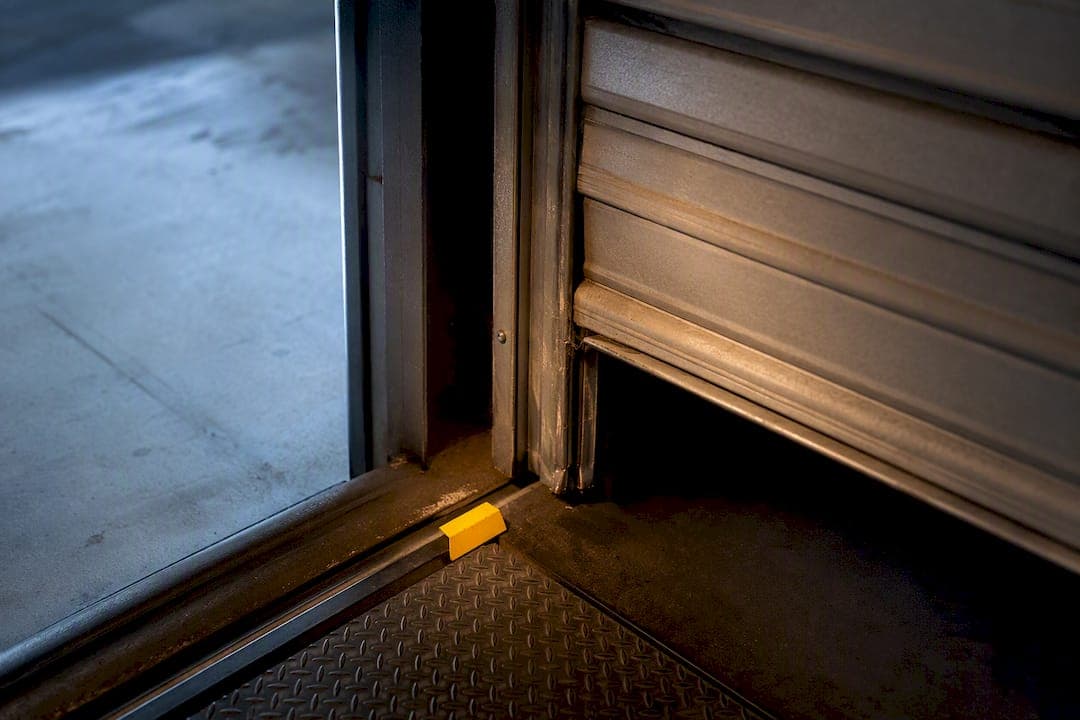
If your roll up door is jammed, stop trying to force it open or closed. Cut power at the breaker, keep people and vehicles clear of the opening, and do only a visual inspection from a safe distance. If you spot a broken spring, frayed cable, a detached bracket, or the door feels unusually heavy, stop entirely and call a professional. Pushing through a jam almost always turns a small fix into a big bill.
TL;DR:
- For safety, always cut power and inspect remotely from a distance before attempting any manual fixes.
- Troubleshoot electrical controls, sensor alignment, and track obstructions first; springs or cables should only be handled by professionals.
- Conduct a manual balance test by lifting the door to 3-4 feet; if it does not stay, the spring system is likely damaged.
- Stop immediately and call a technician if the door makes a loud bang, frays or snaps cables, or emits a burning smell, indicating a serious fault.
- Regular maintenance, including lubrication, sensor cleaning, and hardware tightening, helps prevent common jams and extends door lifespan.
Table of Contents
- What to Check Before You Touch Anything: A Safety Checklist
- How Do You Troubleshoot a Roll Up Door That Won't Open?
- How Do I Manually Open a Jammed Roll Up Door?
- Signs You Should Stop and Call a Professional Immediately
- Preventive Maintenance That Actually Prevents Jams
- What Happens When You Call a Professional for a Jammed Door
- Why the "Just Force It" Instinct Is the Wrong Move
- Get Your Roll Up Door Fixed the Same Day
- Sources
- FAQ
What to Check Before You Touch Anything: A Safety Checklist
A jammed roll up door can mean anything from a dead remote battery to a snapped torsion spring holding hundreds of pounds of stored tension. You cannot tell the difference by looking at the door from the driver's seat, so slow down and work through the basics safely.
- Clear the area. Keep people, pets, vehicles, and equipment away from the door's swing path.
- Cut power. Flip the breaker or use the opener's isolator switch, and check for a tripped emergency stop.
- Look, don't touch. Scan for a visible gap in the torsion spring coil, frayed or slack cables, bent tracks, or a burning smell near the motor.
- Write it down. Note the door's current position and any sounds you heard right before it jammed, like a bang, hum, or click.
This walkthrough takes about five minutes and it's the step most homeowners skip because they want the door open now. Repeatedly forcing a jammed door is one of the fastest ways to strip opener gears or bend panels that were otherwise fine.
Pro Tip: Take two or three photos of the door in its jammed position before you do anything else. If you end up calling a technician, those photos help them diagnose the fault before they even walk through the door.
How Do You Troubleshoot a Roll Up Door That Won't Open?
Once the area is secure and the power is off, you can run through a short list of low-risk checks. None of these require tools beyond a flashlight, and none of them involve springs, cables, or reaching into moving parts.
Start with power and controls. Check the breaker and any dedicated isolator switch for the opener. If the panel shows power but the opener does nothing, swap the remote batteries and try the wall-mounted control station instead. A motor that hums but doesn't move the door usually points to a stuck curtain or a failing capacitor, not a dead unit. No response at all, no light, no hum, usually means the problem is electrical rather than mechanical. If your opener has been acting up for weeks with intermittent starts, a quick opener diagnostic can narrow down whether it's the logic board, the gearbox, or something simpler.
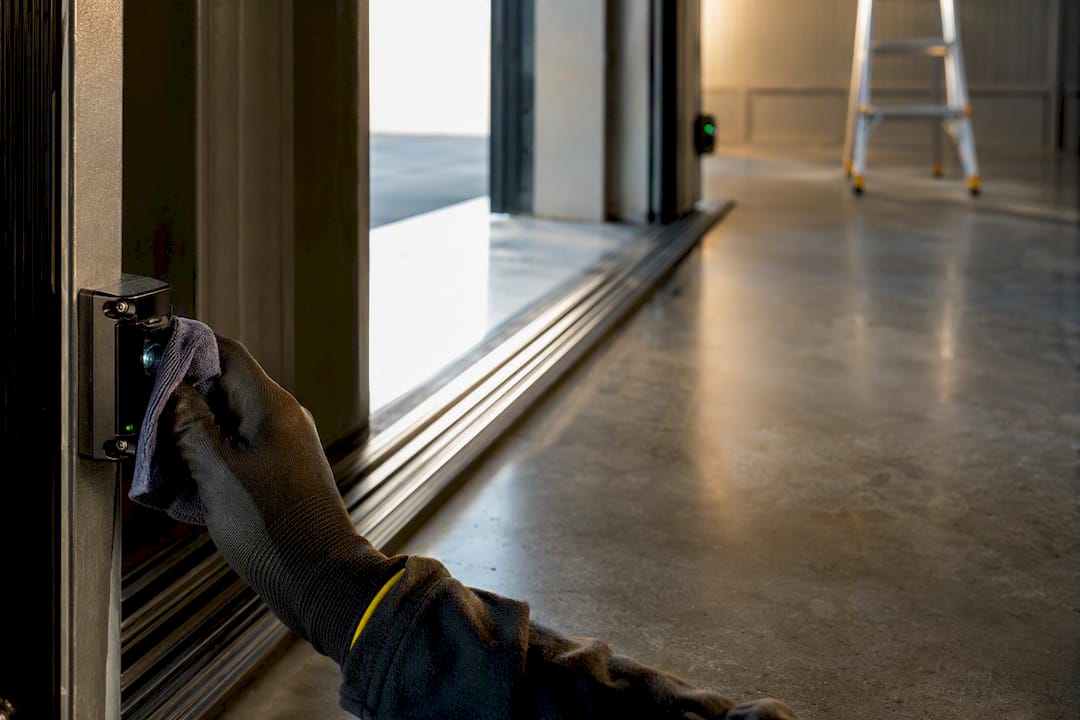
Check the safety sensors next. Photo-eye sensors sit a few inches off the ground on either side of the track and they will refuse to close, or reverse mid-cycle, if their line of sight is blocked or misaligned. Wipe the lenses with a soft cloth, make sure nothing (a broom, a box, a stray bungee cord) is sitting in the beam, and confirm both sensor lights are solid rather than blinking. Misalignment from a bumped ladder or a shifted storage rack is one of the more common reasons a door "jams" when nothing is mechanically wrong at all.
Inspect the tracks and rollers. Walk the length of the track with a flashlight and look for debris, ice, dents, or a spot where the track has pulled away from the wall. A single bent section can catch a roller every single cycle, which often reads to homeowners as "the door is jammed" when it's really one deformed rail. If you see a small obstruction, a rock, a leaf pile, a dropped tool, you can usually clear it without reaching into the track path. If the obstruction is wedged, jammed against a roller, or anywhere near a spring or cable, leave it for a technician.
Here's a useful benchmark for judging how far you should push your own troubleshooting: industry guides that walk through commercial roll up door faults consistently draw the line at power checks, sensor alignment, and debris removal. Springs, cables, tracks, and gearboxes belong to trained technicians in every version of that guidance, and for good reason.
- Breaker tripped or isolator switch off: check the panel first, always.
- Remote works but wall station doesn't (or vice versa): points to a wiring or control issue, not the motor.
- Door reverses immediately when closing: almost always a sensor alignment problem.
- Door catches at the same spot every cycle: look for a bent track or damaged roller at that exact height.
- Motor hums with no movement: could be a stuck curtain, failed capacitor, or worn gearbox.
Stop here if you notice counterbalance symptoms. A door that feels unusually heavy to lift, slams down instead of holding position, or has ever made a loud bang, is telling you the spring system is compromised. That's not a debris problem or a sensor problem. That's a stored-energy problem, and it's the one category of jam where troubleshooting further does more harm than good.
How Do I Manually Open a Jammed Roll Up Door?
Testing the door's balance by hand tells you more about the real cause of a jam than almost any other check, but it has to be done correctly.
- Find the manual release. Most residential openers have a red pull cord hanging from the trolley; commercial units often use a lever or chain hoist disconnect. Pull or engage it to disconnect the door from the opener's drive.
- Secure the opener. Confirm the carriage won't re-engage while you're testing, and keep hands clear of the track.
- Lift the door partway. Raise it to about 3 to 4 feet and let go. A properly balanced door should hold that position on its own.
- Watch what happens next. If it drops, slams, or shoots upward on its own, the counterbalance system, the springs or cables, is faulty.
This is the same 3 to 4 foot lift test technicians use on their first visit, and it's genuinely safe for a homeowner to run once the opener is disconnected.
Pro Tip: Never test this alone on a heavy commercial curtain door, and never prop it open with a scrap board or a random piece of lumber. If the door won't hold on its own, that's your answer. Let go and step back.
Signs You Should Stop and Call a Professional Immediately
Some symptoms are a clear signal that you've moved past troubleshooting and into repair territory, and continuing to experiment increases both the injury risk and the repair bill.
- A loud bang, followed by a visible gap in the torsion spring coil.
- Frayed, kinked, or snapped lift cables, or a bottom bracket that has pulled loose.
- Any burning smell, smoke, or visible heat damage at the motor or control box.
- The door drops suddenly instead of holding its position when released.
- The door is stuck halfway with a visibly bent track or damaged curtain panel.
A loud bang in the garage is almost always a snapped torsion or extension spring, and trying to operate the door afterward risks both motor damage and serious injury to anyone nearby.
Any one of these means the door goes on the "do not touch" list until a technician arrives. Spring systems store enough tension to cause severe injury if released incorrectly, and that tension doesn't care whether you've watched a repair video first.
Preventive Maintenance That Actually Prevents Jams
Most jams aren't sudden. They're the result of small things (dry rollers, dusty sensors, loose hardware) that finally caught up with the door. A few owner-manageable habits keep those small things from becoming a Saturday morning emergency.
- Lubricate rollers, hinges, and springs with a garage door specific lithium or silicone spray, never household oil or grease, which attracts grit.
- Wipe photo-eye sensor lenses clean and confirm nothing has shifted into their line of sight.
- Clear leaves, dirt, and small debris from the track before it compacts into a real obstruction.
- Tighten visible, accessible hardware like hinge bolts and bracket screws, but leave anything near the spring assembly alone.
- Never lubricate the tracks themselves, and never adjust spring tension or handle a cable under load.
For cadence, a monthly visual check catches most problems early. Residential doors do well with a light service twice a year, and high-cycle commercial doors deserve a professional inspection at least twice yearly to catch spring fatigue and cable wear before they cause a shutdown. Keep a simple log, dates, photos, anything that squeaked or stuck, so patterns show up before they become failures.
Pro Tip: If your door has started squeaking on the way down, that noise usually shows up weeks before a real jam. Handling it early is a lot cheaper than an emergency call.
What Happens When You Call a Professional for a Jammed Door
Most jams that reach the "call a pro" stage still get resolved the same day. Same-day turnaround is realistic for common faults like electrical issues, sensor problems, or a failed spring when the part is in stock, which is most of the time for standard residential and commercial sizes.
A technician arriving at your property will typically check:
- Spring tension and coil condition, and cable integrity along the full run.
- Track alignment and roller wear at every catch point.
- Motor, gearbox, and capacitor function on the opener.
- Safety sensor calibration and photo-eye alignment.
Before the visit, send a couple of photos of the door's position, note whether you heard a bang or a hum, and clear a path to the door for the technician. If the door is stuck open, block off the opening temporarily, don't leave it unattended overnight in a compromised position.
Why the "Just Force It" Instinct Is the Wrong Move
The biggest mistake I see in how people talk about a jammed door is treating it like a stubborn drawer instead of a machine holding real stored energy. The instinct to yank the cord a little harder or hit the remote three more times feels harmless, and that's exactly the problem. Cascading damage, a stripped gear here, a bent panel there, almost never comes from the original jam. It comes from what happens in the ten minutes after someone decides to push through it.
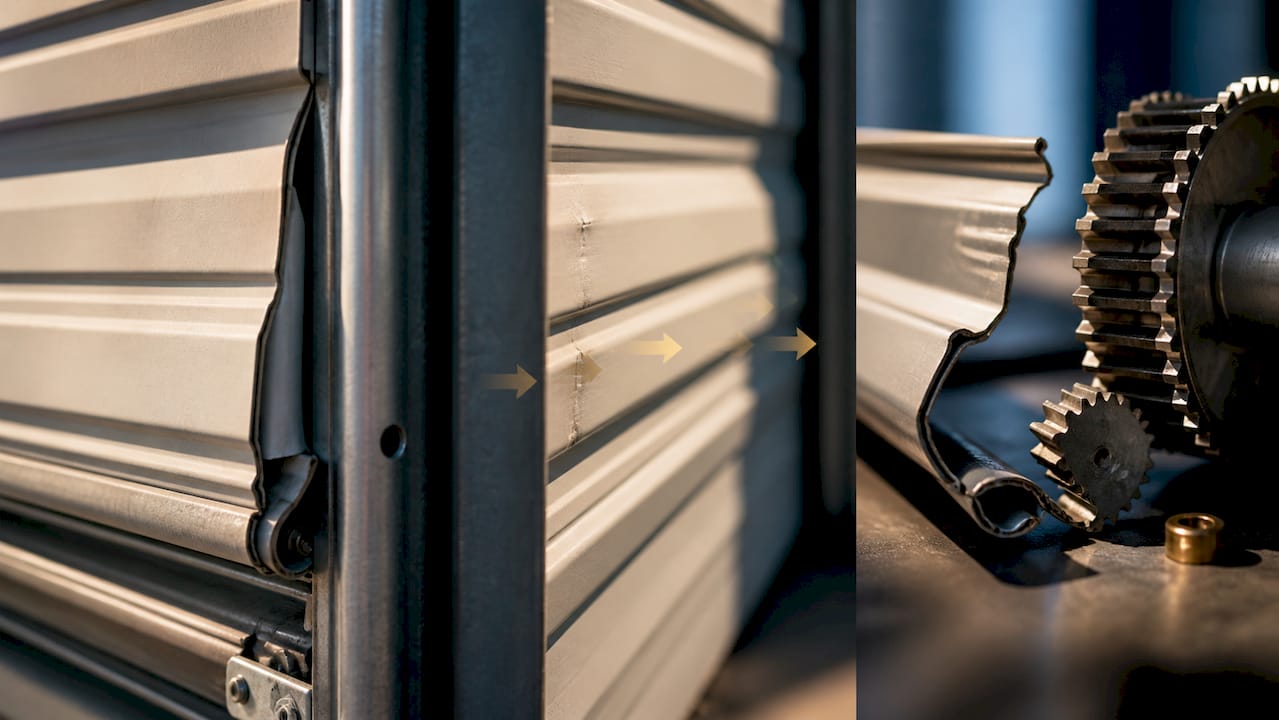
Conventional advice online tends to either scare readers into calling a technician for a dead remote battery, or reassure them that any jam is a five-minute fix. Neither is honest. The real skill is knowing which category you're in within the first two minutes, and that comes down to one question: does the door feel heavy, or does it feel stuck? Heavy means stop. Stuck means you probably have room to check sensors, power, and debris safely.
If you take one thing from this guide, prioritize the lift test over guessing. It's the fastest way to tell a spring problem from everything else, and it costs you nothing but sixty seconds and a helper.
— Eddie
Get Your Roll Up Door Fixed the Same Day
A local garage door service exists for the exact moment this guide just walked you through, when troubleshooting has told you what's wrong but the fix belongs to a trained technician, not a weekend project. Expect to receive estimates before the technician arrives, so there are no surprise charges once service begins.

We handle broken springs, cable replacement, opener repair, track alignment, and commercial roll up door service across Northern Colorado, and most repairs can often be completed the same day when parts are available. Veterans get a 10% discount as a standing thank-you for their service. Before you call, jot down the door's position, snap a couple of photos, and clear a path to the panel, it speeds up diagnosis and gets your door back in service faster. Ready to get it fixed? Head to our garage door services page to book a technician today.
Sources
FAQ
How Do I Unjam a Door That Won't Open?
Cut power, check the breaker and sensor alignment first, and clear any visible debris from the track. If the door feels heavy or you see a gap in the spring coil, stop and call a technician rather than forcing it.
Why Is My Roll Up Door Not Rolling Up?
The most common causes are a tripped breaker, misaligned photo-eye sensors, a bent track, or a failing opener motor or capacitor. A heavy or slamming door usually points to a spring or cable failure instead.
How Do I Manually Open a Roll Up Door?
Pull the opener's manual release cord or lever to disconnect it from the drive, then lift the door by hand. If it doesn't hold steady at 3 to 4 feet off the ground, the counterbalance system needs professional attention.
What Are the Most Common Causes of a Roll Up Door Jam?
Debris in the track, misaligned sensors, worn or dented rollers, and bent guides account for most jams that don't involve the spring system. Spring or cable failure is less common but far more serious when it happens.
When Should I Stop Troubleshooting and Call a Professional?
Call immediately if you hear a loud bang, see frayed cables or a detached bracket, smell burning near the motor, or the door drops suddenly instead of holding position. Same-day service is often available for most of these faults.