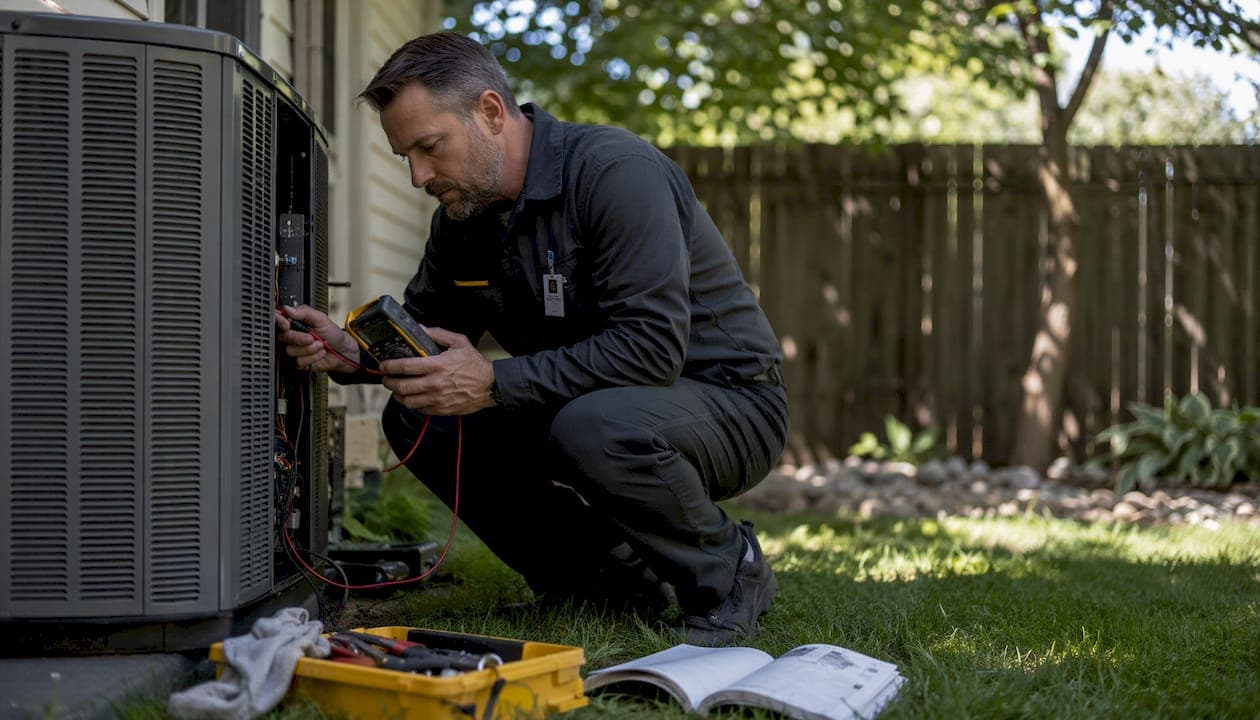
Technician certification is defined as a credential that verifies a technician has met specific knowledge and skill standards required to perform home repair work correctly and safely. The role of technician certification goes beyond a piece of paper. It connects directly to whether your repair gets done right the first time, whether your warranty stays intact, and whether the person working in your home is accountable to a recognized standard. Industry bodies like NATE (North American Technician Excellence) and federal programs like EPA Section 608 set the bar. Knowing what these credentials mean puts you in control when hiring.
What are the key benefits of technician certification for homeowners?
Certified technicians produce measurably better results. Certified HVAC technicians have 40% fewer callbacks than non-certified peers. That number tells you something real: fewer callbacks mean fewer disruptions, fewer repeat service fees, and less time waiting around for a fix that should have worked the first time.
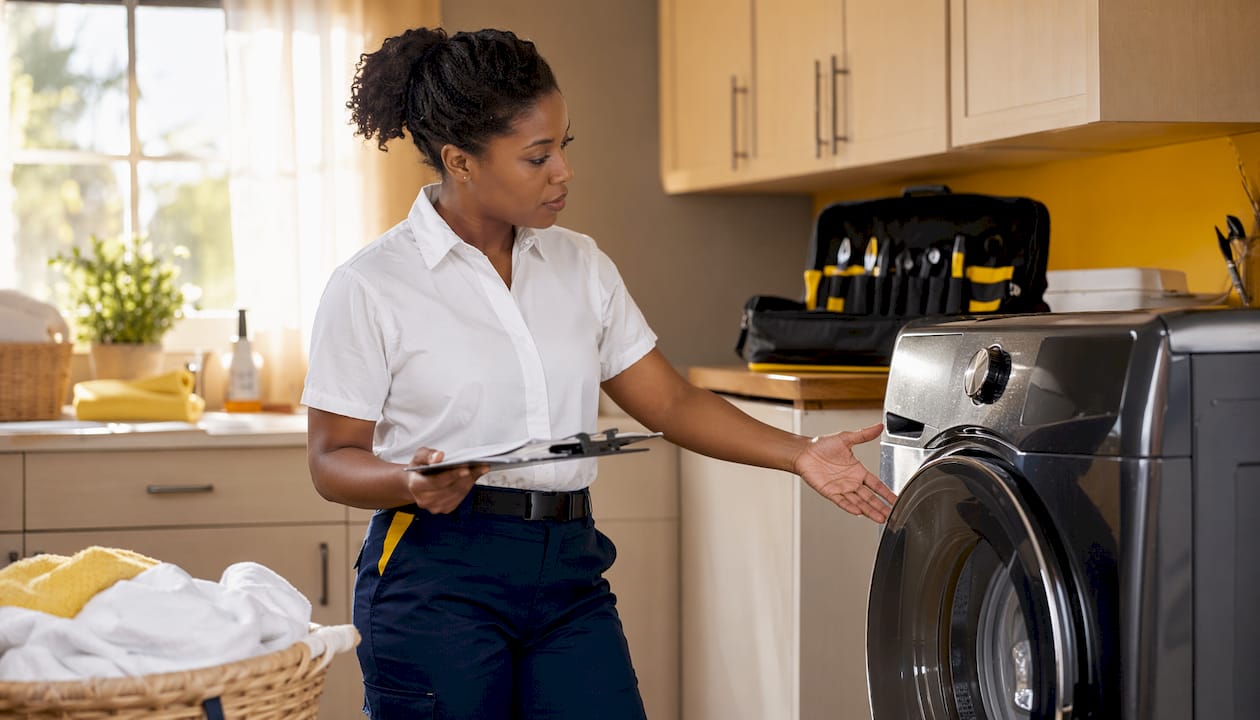
Certification also protects your wallet in ways you might not expect. Homeowners pay a 5% to 15% labor premium for certified technicians. That premium regularly prevents misdiagnoses like unnecessary compressor replacements, which can run $1,500 or more. Paying a little more upfront for the right diagnosis saves you from paying a lot more for the wrong one.
Warranties are another factor most homeowners overlook. Many manufacturers require NATE-certified procedures to keep warranties valid. If an uncertified technician works on your equipment and something fails, the manufacturer can deny your claim. Certification keeps that protection in place.
Here is what certification delivers in practical terms:
- Fewer diagnostic errors because certified technicians follow systematic testing protocols before recommending any repair
- Code compliance through training in current building codes and safety standards
- Warranty protection by using manufacturer-approved methods and parts
- Accountability through a third-party board that can revoke credentials for poor performance
- Safety assurance because proper certification correlates with better safety practices and code compliance
Pro Tip: Ask your technician to show their certification card before work begins. A legitimate credential has an expiration date and a certifying body name printed on it.
Certification also shifts due diligence from you to an independent board. You do not have to guess whether the technician knows what they are doing. A recognized body already verified it.
How do certification, licensing, and competence differ?
These three terms get mixed up constantly, and the confusion costs homeowners money.
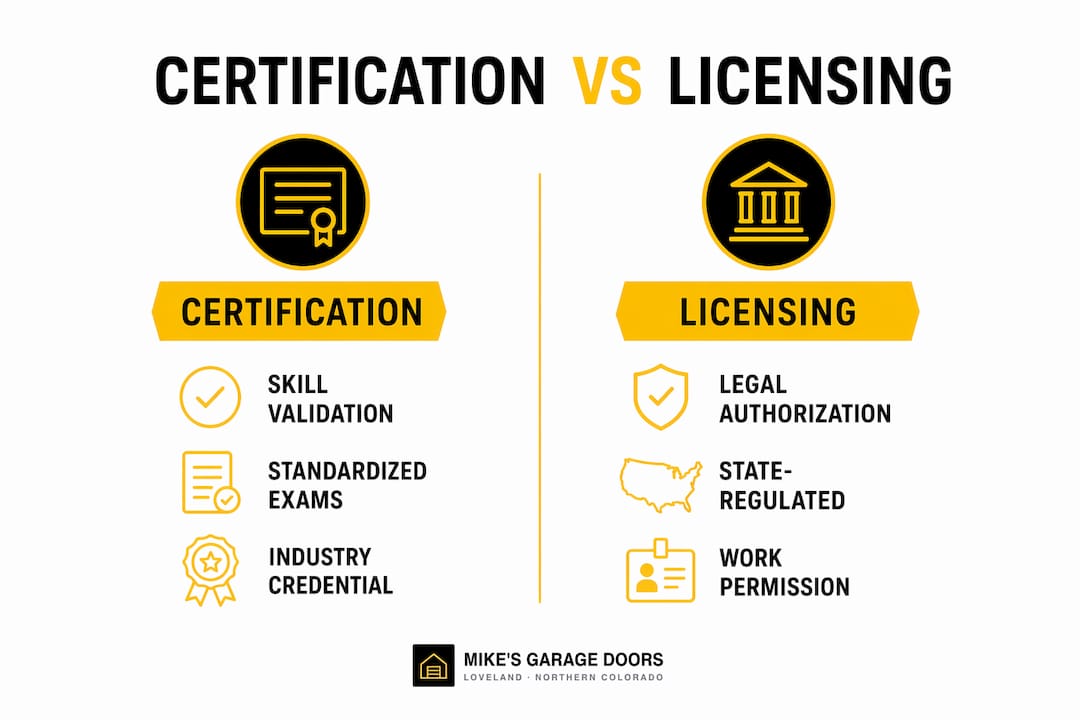
Licensing is legal authorization. A state license gives a technician the legal right to operate in that state. Without it, they cannot legally perform certain types of work. Licensing is about permission, not skill level.
Certification is skill validation. A credential like NATE confirms that a technician passed a standardized exam covering technical knowledge. EPA Section 608 certification is federally mandated for anyone handling refrigerants. NATE is voluntary but widely recognized as the industry benchmark for HVAC work. State licensing grants legal authority; voluntary certifications like NATE validate technical skills beyond what licensing requires. Confusing the two is a common hiring mistake.
Competence is real-world performance. A certificate proves course completion. It does not automatically prove that a technician can handle every situation on the job. The industry is moving toward requiring documented evidence of actual performance, not just proof of qualification. Traceable work records and documented procedures are becoming the new standard for quality assurance.
| Credential type | What it proves | Who issues it |
|---|---|---|
| State license | Legal right to work in a state | State government |
| Federal certification | Compliance with federal law (e.g., EPA 608) | Federal agency |
| Voluntary certification | Technical skill validated by exam | Industry body (e.g., NATE) |
| Documented competence | Verified on-the-job performance | Employer or third-party auditor |
Pro Tip: When hiring, ask for all three: a valid state license, a recognized certification, and references or documented work history. Each one covers a different gap.
A technician can hold a license and a certificate but still cut corners on the job. That is why traceable documentation of actual work quality matters. The best companies track this internally and can show you a service history.
What are common technician certification requirements and pathways?
Becoming a certified technician follows a clear path, though the specifics vary by trade and credential type.
-
Complete a training program. Most certification pathways start with a formal education program at a trade school, community college, or employer-sponsored apprenticeship. These programs cover the technical foundations required for the certification exam.
-
Pass a standardized exam. NATE exams, for example, test knowledge across specific specialty areas like air conditioning, heat pumps, or gas furnaces. EPA Section 608 exams cover refrigerant handling regulations and safety procedures. Passing scores confirm baseline competency.
-
Meet experience requirements. Some certifications require documented field hours before you can sit for the exam. This ensures candidates have real exposure to the work before earning the credential.
-
Maintain credentials through continuing education. Recertification typically requires continuing education every two years. This keeps technicians current with new technologies, updated building codes, and evolving regulations.
-
Adapt to new technology and regulations. Certification programs update their exams and requirements as the industry changes. A technician certified five years ago who has not recertified may be working from outdated knowledge.
The importance of technician certification extends across multiple home repair trades, from HVAC to appliance repair to garage door systems. Each trade has its own credential landscape, but the underlying structure is consistent: train, test, document, and renew.
How does certification affect your hiring decision?
Certification is one of the clearest quality signals you have as a homeowner. 60% of homeowners prefer licensed contractors, and that preference reflects a real instinct: credentials reduce risk. The challenge is knowing how to use that signal effectively.
Certification alone does not tell the whole story. A technician with strong credentials and two years of experience may be less reliable than one with ten years of field work and a solid track record. Balance the credential with experience and ask about the company's support structure. A well-trained technician backed by a strong team is better than a certified technician working alone without resources.
Here are the right questions to ask before you hire:
- What certifications do you hold, and are they current?
- Are you licensed in Colorado (or your state)?
- Can you show me documentation of past work or references?
- Does your company provide warranties on parts and labor?
- Will you give me a written estimate before starting work?
Certified technicians also use systematic diagnostic testing before recommending repairs. That matters because it removes guesswork from the equation. You get a diagnosis based on data, not a hunch. For complex repairs, that difference can save you hundreds of dollars.
For guidance on what to ask before someone works on your home, the questions to ask a repair technician resource covers the full list in detail. Pairing that with an understanding of diagnostic inspection practices gives you a complete picture of what quality service looks like.
When hiring for EPA certified technicians in appliance or HVAC work, the federal requirement is non-negotiable. Any technician handling refrigerants without EPA Section 608 certification is working illegally. That is a liability you do not want in your home.
Key Takeaways
Technician certification protects homeowners by validating skills, reducing errors, and ensuring compliance with industry standards and manufacturer requirements.
| Point | Details |
|---|---|
| Certification reduces callbacks | Certified technicians produce 40% fewer callbacks, saving homeowners time and repeat service costs. |
| Labor premium pays off | A 5–15% higher labor cost prevents costly misdiagnoses like unnecessary $1,500 compressor replacements. |
| Licensing and certification differ | A license grants legal permission; certification validates technical skill. Both matter when hiring. |
| Competence requires documentation | A certificate proves training completion; traceable work records prove real-world performance. |
| Ask before you hire | Request current credentials, a state license, and a written estimate before any work begins. |
Why I think certification matters more than the certificate itself
I have seen homeowners get burned by technicians who had impressive credentials on paper but showed up with no clear process, no written estimate, and no documentation of what they actually did. The certificate was real. The competence was not.
The shift happening right now in the trades is worth paying attention to. The industry is moving away from "show me your card" and toward "show me your work." Digital service records, documented diagnostics, and traceable repair histories are becoming the real proof of quality. A technician who can hand you a written record of every test they ran and every part they replaced is worth more than one who can only show you a laminated card.
That said, certification still matters. It sets a floor. It means the technician has been tested on the fundamentals and is accountable to a body that can pull their credential. For homeowners, that accountability is real protection.
My advice: do not skip the credential check, but do not stop there. Ask what the technician actually did on the last three jobs like yours. Ask for a written estimate before they touch anything. Ask whether the company backs their work with a warranty. Those answers tell you more than any certificate.
The best technicians I have worked with are proud of their certifications and their track record. They do not treat the credential as the finish line. They treat it as the starting point.
— Eddie
Certified garage door repair in Loveland, CO
Knowing what to look for in a certified technician is one thing. Finding one you can actually trust in Northern Colorado is another.

Mikes garage doors Loveland sends experienced technicians to every job, with 90% of repairs completed the same day. The team handles everything from broken torsion springs to faulty openers, and every job comes with transparent, upfront estimates over the phone so you know the cost before work starts. Veterans receive a 10% discount. All work is backed by extensive warranties. For homeowners who want certified, accountable service without the runaround, explore the full range of garage door repair services available in Loveland and across Northern Colorado.
FAQ
What is the role of technician certification in home repair?
Technician certification validates that a repair professional has met recognized knowledge and skill standards before working in your home. It reduces diagnostic errors, protects warranties, and ensures compliance with safety codes.
Is EPA Section 608 certification required for all technicians?
EPA Section 608 certification is federally required for any technician who handles refrigerants. It is not optional. Technicians working without it are operating outside federal law.
How does NATE certification differ from a state license?
A state license grants legal permission to work in that state. NATE certification validates technical skill through a standardized exam. Both are important, but they cover different things.
How often do certified technicians need to renew their credentials?
Most certification programs, including NATE, require continuing education and recertification every two years. This keeps technicians current with updated codes, technologies, and regulations.
Can a certified technician still do poor work?
Yes. A certificate proves training completion, not guaranteed performance. Homeowners should also ask for documented work history and written estimates to verify real-world competence beyond the credential.