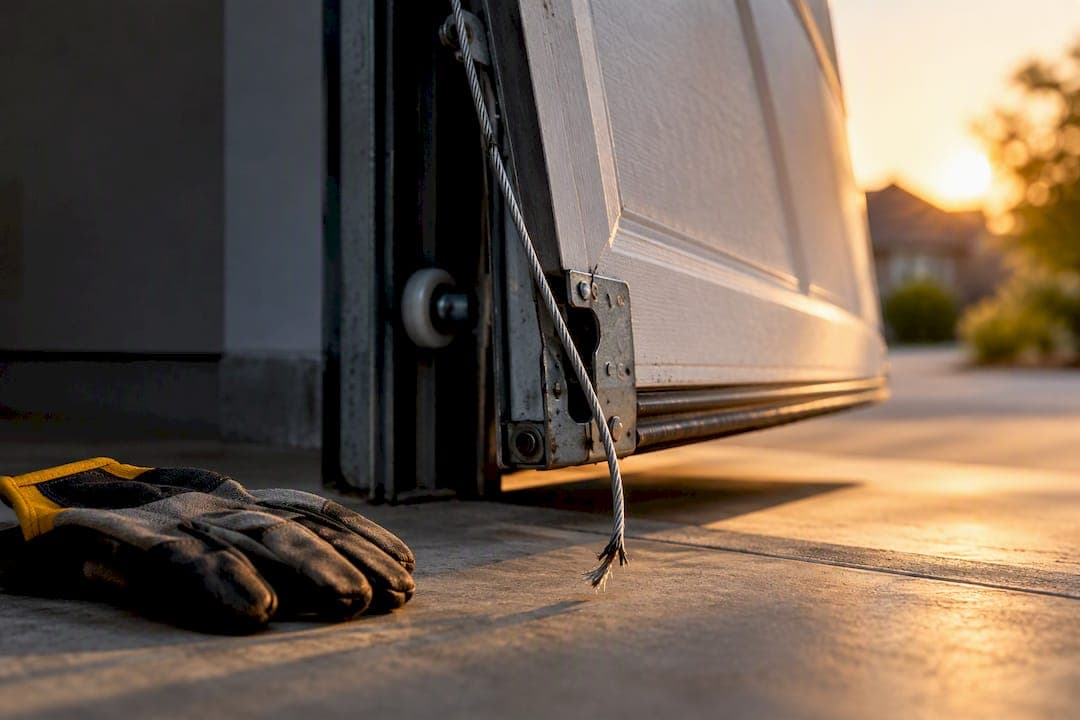
A snapped garage door cable is a high-tension safety hazard, not a weekend fix. Stop using the door immediately, disconnect the opener, and keep people and pets away from the area. This almost always calls for a professional repair, and most technicians replace both cables rather than just the broken one, since the second cable usually isn't far behind.
TL;DR:
- Replacing both garage door cables simultaneously prevents future failures, as they typically wear out at the same rate and are part of the same system.
- Operating a door with a snapped cable risks damaging the opener and can cause the door to tilt, drop suddenly, or become uneven, creating a severe safety hazard.
- A snapped cable often indicates the remaining cable is close to failure, especially if the door is uneven, making professional inspection and repair essential.
- Repair costs generally average around $225 and may increase if springs or other components require attention during the job.
- Preventative measures include regular visual checks for fraying or rust, annual professional tune-ups, and ensuring safety cables are installed on extension springs.
Table of Contents
- Why a snapped cable turns your door into a hazard
- What to do and what not to do right now
- Can you still get the door open in an emergency?
- What a technician actually does to fix it
- What cable repair costs and how long it takes
- Why cables snap, and how to keep it from happening again
- How we think about snapped cable calls
- Get your cable fixed the same day, done right
- Sources
- FAQ
Why a snapped cable turns your door into a hazard
Your garage door doesn't hang there by luck. Cables and springs work together to counterbalance the door's weight, with the springs storing the lifting force and the cables carrying it down to the bottom brackets. When one cable snaps, that balance disappears in an instant. The door can tilt hard to one side, drop suddenly, or jam at an angle that puts uneven strain on the tracks and rollers.
Running the opener with a snapped cable is where things get worse. The motor was built to lift a balanced door, not fight a lopsided one, so you risk burning out the opener or triggering a sudden collapse if the remaining cable can't hold the load alone. DASMA warns that garage door cables sit under extreme tension and are critical to counterbalancing the door's weight, and that operating a door with a broken cable is a severe safety risk that should be avoided.

The remaining cable rarely gets a reprieve. It was carrying half the load and now it's carrying nearly all of it, so it tends to wear out and fail soon after the first one goes, sometimes within days.
Warning signs to watch for before a snap:
- A door that hangs unevenly or looks tilted on one side.
- Grinding, popping, or scraping noises during operation.
- Visible fraying or rust on the cable itself.
- A door that suddenly needs much more effort to lift by hand.
One snapped cable often means the other is close behind: DASMA lists uneven hanging and unusual noises as classic warning signs of cable failure, which is exactly why a professional inspection covers both cables, not just the broken one.
What to do and what not to do right now
Once you spot a snapped cable, the sequence you follow matters as much as the actions themselves. Rushing a step, or skipping one, is how a bad situation becomes an expensive one.
- Stop operating the door. Don't press the opener button, and don't try to force the door up or down by hand.
- Disconnect the opener. Pull the emergency release cord so the motor isn't fighting an unbalanced door, and consider cutting power at the outlet for extra safety, similar to the precautions covered in general electrical safety guidance.
- Clear the area. Keep kids, pets, and vehicles away from directly under or in front of the door until it's secured.
- Call a professional. Cable and spring work involves stored mechanical energy that isn't safe for DIY handling, a point DASMA's broader safety guidance makes clear for garage door systems generally.
If the door happened to snap while fully closed and it's sitting flat and stable, you can add a temporary safeguard: wedge a length of 2x4 or a locking clamp along the track just above a roller on each side to stop the door from sliding down further. Place it low, close to the floor, and never reach toward the springs or drums to do this.
What you shouldn't touch: the springs, the cable drums, or the broken cable itself. Rewrapping a cable under tension or nudging a drum back into place can release stored energy fast enough to cause a serious injury.
Pro Tip: Take a few photos of the cable, the drum, and how the door is sitting before the technician arrives. It speeds up diagnosis and often shortens the visit.
While you wait, jot down what you noticed: any noise before the snap, how long the door had been acting off-balance, and whether one side dropped lower than the other. That short list saves the technician time on-site.
Can you still get the door open in an emergency?
Sometimes you need the car out or need to grab something from the garage before help arrives. Whether that's possible depends entirely on how the door is sitting.
- Check the position first. If the door is fully down, sitting flat, and not visibly twisted, manual release is generally safer to attempt.
- Pull the emergency release cord to disconnect the opener from the trolley, so the door isn't fighting the motor.
- Lift slowly and evenly, using both hands and standing to the side rather than directly underneath, and stop immediately if it feels heavier on one side.
- Stop if anything looks off. A door that's tilted, jammed, or noticeably heavier on one side means the remaining cable or a spring may be compromised, and manual lifting isn't safe.
If the door won't budge evenly or looks uneven at all, don't force it. Use a side entry door if your garage has one, or reach out to a technician for an emergency visit. In a genuine lockout situation with no side access, a locksmith or garage door technician can typically get you in without forcing the main door.
What a technician actually does to fix it
A proper repair follows a set sequence, and skipping steps is exactly how DIY attempts go wrong. According to Thegarage, technicians typically replace both lift cables even when only one is visibly broken, since both cables share the same wear history and replacing them as a pair restores balance while preventing a near-term failure of the second one.
The general workflow looks like this:
- Stabilize the door with clamps or a support bar and cut power to the opener.
- Release spring tension safely using winding bars and proper technique, never by hand.
- Replace both cables, and inspect the cable drums, pulleys, bottom brackets, rollers, and track alignment for wear or damage.
- Rewrap the new cables onto the drums with the correct number of turns, then retension the springs to match the door's weight.
- Test the opener's travel limits and safety sensors before calling the job finished.
That drum and bracket inspection isn't optional busywork. TheGarage.Guide notes that technicians often find the original cable failure was downstream of a misaligned drum or a rough bottom bracket, and fixing those root causes is what actually prevents the next snap. A cable failure can also strain the opener, so a good technician checks its performance after rebalancing the springs rather than assuming it survived unharmed.
Replacing cables as a set is inexpensive in parts but materially reduces repeat calls and rework labor, making it a cost-effective step a reputable technician will recommend.
Depending on what the inspection turns up, you may hear a recommendation for spring replacement, track realignment, or panel repair. That's not upselling. A broken spring left unaddressed tends to strain the opener the same way a bad cable does, so bundling the fixes now is usually cheaper than two separate visits later.
What cable repair costs and how long it takes
Nationally, cable repair typically runs $100 to $350, averaging around $225, with your final number shaped by your region, whether springs also need attention, and whether the call happens during regular hours or after them.
The average cable repair lands near $225, but the range swings based on what else the technician finds: the same source points to door type, spring condition, and emergency timing as the main cost drivers.
A few things worth knowing before you get a quote:
- Cable parts themselves are cheap. Labor, and any spring or drum work discovered during inspection, make up most of the bill.
- A cable-only repair is usually a same-day job if the technician carries standard cable sizes on the truck, a common practice noted by same-day service coverage.
- Spring replacement or track realignment adds time to the visit, since it requires more careful tensioning and testing before the door is signed off.
- Trying to operate the door after a snap can create secondary damage, like bent tracks or popped rollers, that adds real cost to the repair.
That last point is worth taking seriously. The same source notes that homeowners who keep operating a door after a cable snaps often turn a simple cable job into a much bigger repair bill.
Why cables snap, and how to keep it from happening again
Cables rarely fail out of nowhere. The most common culprits are corrosion at the bottom bracket, drums that have drifted out of alignment, strands that have been rubbing against a rough edge, and plain cycle fatigue after years of daily use. A failing spring or a corroded spring hook can also play a role: a technical failure analysis of garage door spring fractures found that fatigue cracks often build slowly at corroded or flawed spots before a sudden break, rather than happening from a single event.
That's why a quick tightening job usually isn't the fix people hope it is. Fixmygaragedoor points out that loose or frayed cables are almost always a symptom of a bigger issue, like misaligned drums, worn bottom brackets, or a failing spring, and that tightening the cable without addressing the root cause tends to lead to repeat failure.
A repair that actually holds addresses the cause, not just the symptom: realigning the drum, swapping a worn bracket or roller, and correcting spring tension so the new cable isn't fighting an imbalance from day one.
To lower your odds of a repeat snap:
- Do a visual check every few months for fraying, rust, or a door that hangs unevenly.
- Book an annual professional tune-up rather than waiting for something to break.
- Replace both cables together when one fails, since they wear at the same rate.
- Confirm your extension springs have safety cables installed, since DASMA recommends them specifically to contain a spring if it fails.
Pro Tip: If your door has felt heavier than usual for a few weeks, that's often the first sign of spring or cable wear, well before anything snaps. A simple balance test with the door lifted a few feet can confirm it while the door is still safe to touch.
How we think about snapped cable calls
A snapped cable call is never treated as a quick swap and done. A family-owned garage door repair business builds every visit around checking the drums, brackets, and springs that likely contributed to the failure, not just the cable itself. That approach reflects why 90% of repairs at Mike's Garage Door Repair get finished the same day: the technicians carry the parts and tools needed to fix the root cause on the first visit rather than scheduling a return trip.
The technicians who show up for a cable call handle broken springs, faulty openers, and everything between, across homes and businesses in the region. Mike's Garage Door Repair also backs its work with extensive warranties and offers veterans a 10% discount, which matters when you're trusting someone with a system that stores real mechanical force.
When you're getting a quote for a snapped cable, ask three things: how they'll contain the door safely while working, whether they plan to replace both cables or just the broken one, and whether the parts are already on the truck. The answers tell you a lot about how the rest of the job will go.
— Eddie
Get your cable fixed the same day, done right

You've got the safety basics down. The part that takes real tools and training is releasing spring tension, rewrapping cables correctly, and rebalancing the door so it doesn't snap again in a month. That service handles that, with honest phone estimates upfront and same-day repairs on many calls, so you're not left guessing what the final bill will look like or living with a disconnected door for a long time.
Before you call, have ready:
- Your door type and approximate age.
- Photos of the snapped cable and how the door is sitting.
- A short list of noises or issues you noticed beforehand.
- A few preferred appointment windows.
Check out our services for spring repair, cable replacement, and emergency response, and get a straight answer on what your fix will cost before anyone shows up.
Sources
- Garage Doors | DASMA
- Thegarage
- How Much Does Garage Door Cable Repair Cost? 2026 US Guide
- Loose garage door cable? Here’s what to do
FAQ
What happens if a garage door cable breaks?
The door loses its counterbalance on that side, which can cause it to tilt, jam, or drop suddenly depending on how it was positioned when the cable failed. Running the opener afterward risks motor damage or a sudden collapse, so DASMA advises against operating a door with a broken cable.
What causes a garage door cable to snap?
Cables typically fail from corrosion at the bottom bracket, drums that have drifted out of alignment, strands rubbing against a rough edge, or simple fatigue after years of use. A failing or corroded spring can contribute as well, since failure analysis of spring fractures shows cracks often build slowly at a flawed spot before a sudden break.
Is it safe to operate a garage door with a broken cable?
No. DASMA is clear that operating a door with a broken cable is a severe safety risk because the door has lost the counterbalance it needs to move evenly. Disconnect the opener and leave the repair to a trained technician.
How do you open a garage door when the cable has snapped?
If the door is fully down, sitting flat and not visibly tilted, you can pull the emergency release cord and lift slowly by hand from the side, not directly underneath. If the door looks uneven or jammed at all, stop and use a side entry door or call a technician instead, since forcing an unbalanced door is how secondary damage happens.