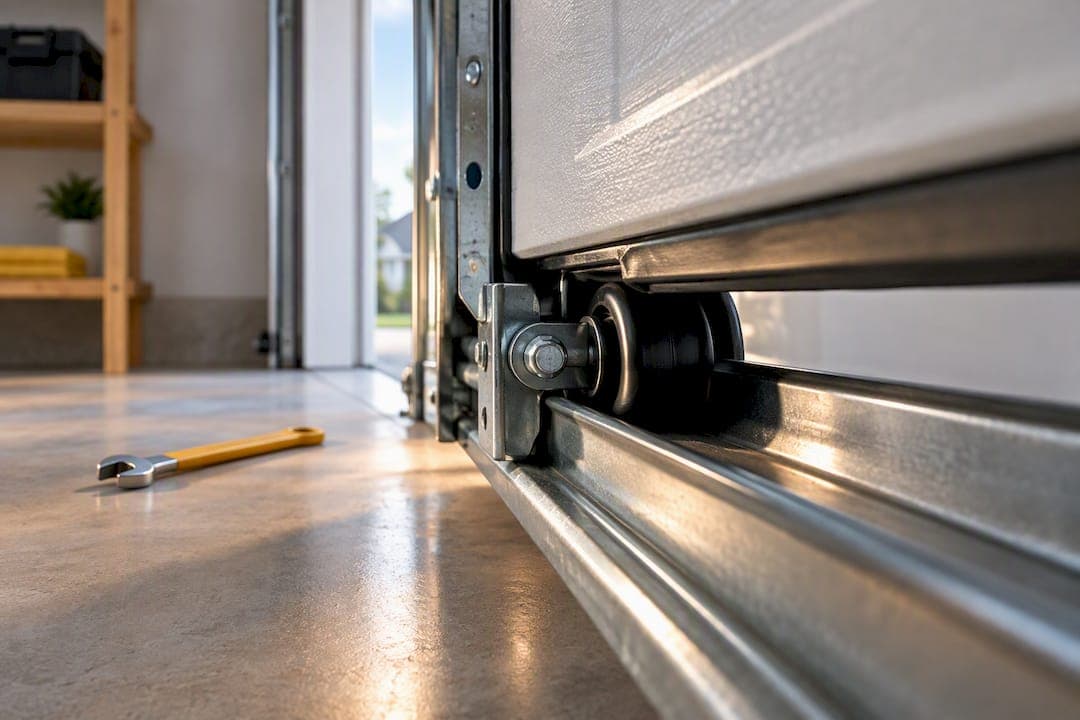
Most noisy garage doors get noticeably quieter after a 15 to 30 minute tune-up: lubricate the moving parts and tighten the hardware. For a bigger, longer-lasting fix, swap steel rollers for sealed nylon ones and add vibration isolation to the opener. Sealing and insulation help too, but only after the mechanical noise is handled. If you hear a loud bang or the door fails a balance test, stop and call a professional before you touch the springs.
TL;DR:
- Replacing steel rollers with sealed nylon rollers can reduce noise by up to 75 percent and improve the door's insulation and longevity.
- Tightening loose bolts and lubricating hinges, rollers, and springs with appropriate lubricant can resolve most noise issues within 15 to 30 minutes.
- Adding perimeter weatherstripping and sealing the bottom of the door addresses airborne noise more effectively than insulating panels alone.
- Upgrading to belt-drive or DC-motor openers significantly reduces operational noise compared to chain-drive or screw-drive models.
- Immediate professional attention is essential if the door bangs loudly, fails a balance test, or has frayed cables, due to the high tension and safety risks involved.
Table of Contents
- What Your Garage Door's Noise Is Actually Telling You
- The 15 to 30 Minute Tune-Up That Fixes Most Noise
- Should You Soundproof or Insulate the Door Itself?
- How to Quiet a Noisy Garage Door Opener
- When a Noisy Door Means Call a Pro, Not Grab a Wrench
- How Often You Should Tune Up a Garage Door
- Why Most Noise Complaints Are Simpler Than They Sound
- Where to Learn More About Quieting Your Door
- Get a Noisy Garage Door Fixed Right the First Time
- Sources
- FAQ
What Your Garage Door's Noise Is Actually Telling You
Every sound your door makes points to a specific problem, and matching the noise to the cause saves you from fixing the wrong thing.
- Squeaks or creaks usually mean dry hinges or rollers that need lubrication.
- Grinding points to worn roller bearings that are grating against the track.
- Rattling almost always traces back to loose bolts, brackets, or hinges.
- A loud bang is the classic sign of a broken torsion spring. Stop using the door.
- Humming or buzzing from the ceiling usually means opener vibration or a struggling motor.
There's also a difference between structure-borne vibration and airborne sound. Vibration travels through the door's framing and into your attached garage's walls and ceiling joists, which is why an opener can rattle a bedroom two floors up. Airborne sound moves through gaps around the panels and under the door itself. Before you inspect anything by hand, unplug the opener. A door that suddenly finds its spring tension while your fingers are near the hinges is not a risk worth taking.
The 15 to 30 Minute Tune-Up That Fixes Most Noise
Close the door and unplug the opener before you start. Most noise complaints trace back to dry metal and loose bolts, and this sequence handles both in one pass.
- Tighten every bolt on the hinges, tracks, and roller brackets with a socket wrench. Vibration loosens hardware over months, and loose metal against metal is a major noise source.
- Wipe down the tracks with a dry rag to clear dust and debris. Leave them dry; grease on the track tread makes rollers slide instead of roll and speeds up wear.
- Lubricate the hinges, roller stems, and springs with white lithium grease or a silicone-based garage door lubricant.
- Skip WD-40 and heavy motor oil. WD-40 is a solvent, not a lubricant, so it evaporates fast and can actually attract grit into the mechanism, according to The Garage Guide.
- Check each roller for wobble or flat spots. If a roller rocks side to side or has a visibly worn edge, replace it rather than lubricate around the problem.
- Cycle the door two or three times and listen for changes at each hinge point.
Pro Tip: Grip the door at the bottom and lift it about a foot with the opener disconnected. If it doesn't stay put on its own, the springs are out of balance, and no amount of lubrication will quiet that. That's a job for a professional, not a grease gun.
Rollers make a bigger difference than most homeowners expect. Swapping worn steel rollers for sealed nylon rollers with bearings typically cuts noise by 50 to 75 percent and the sealed bearings last far longer than open steel ones exposed to grit and moisture.
Should You Soundproof or Insulate the Door Itself?
Once the mechanical noise is under control, gaps and thin panels become the next source of sound, and they call for a different fix.
Start with the edges, not the panels. Airborne noise gets in and out through the perimeter, so weatherstripping along the sides and top, plus a fresh bottom seal, typically does more for airborne noise than adding mass to the door itself, according to soundproofing guides.
- Polystyrene insulation kits are cheap and easy to install but offer limited acoustic damping on their own.
- Polyurethane-bonded panels cost more but improve both resonance control and energy efficiency, since the foam bonds directly to the steel instead of just filling a cavity.
- Mass-loaded vinyl (MLV) blocks airborne sound effectively and is worth adding if you have a finished room above or beside the garage.
- Removable interior curtains or acoustic panels work as a lower-commitment option if you're not ready to modify the door itself.
Here's the catch: any added weight changes how the door balances on its springs. Insulation panels, MLV, or heavier interior curtains all add mass, and a door engineered for its original weight can start sagging, straining the opener, or drifting out of balance once you've bolted material to every panel. Plan on a professional spring rebalance any time you add meaningful mass to a working door.
How to Quiet a Noisy Garage Door Opener
The opener is often the loudest single component in the system, and the fix depends on which type you have.
- Chain-drive openers are the loudest, since a metal chain drags across a sprocket with every cycle.
- Screw-drive openers hum less than chains but still transmit vibration directly into the ceiling mount.
- Belt-drive and DC-motor openers run dramatically quieter because a rubber belt replaces the metal chain, and Raynor lists them as the most effective long-term upgrade for attached garages.
- Wall-mount openers eliminate the overhead rail entirely, which removes most of the vibration path into the ceiling.
If you're not ready to replace the whole unit, isolation pads are the cheapest fix that actually works. Neoprene or rubber anti-vibration pads between the opener bracket and the ceiling joist decouple the motor's vibration from your framing, and they typically run $8 to $15, according to The Garage Guide. Tighten every mounting bolt while you're up there, since a loose bracket rattles just as loud as a bad motor.
When a Noisy Door Means Call a Pro, Not Grab a Wrench
Some noises are your door warning you before something fails completely, and a few repairs are dangerous enough that DIY isn't worth the risk.
- A single loud bang almost always means a broken torsion spring. The Garage Guide flags this as an immediate stop-and-call situation.
- A door that fails the manual balance test is fighting its opener every time it moves, which wears out gears fast.
- Frayed or fraying cables can snap under tension and whip with real force.
- Visibly rusted, stretched, or cracked springs are close to failing.
Torsion springs hold enormous tension, and winding or rebalancing them requires specific winding bars and exact spring specs. This is not a project for a Saturday afternoon toolbox. A technician will typically check spring condition, cable wear, track alignment, and opener gear wear in one visit, and a straightforward inspection costs far less than waiting for a spring to fail and take a cable or panel with it.
How Often You Should Tune Up a Garage Door
A little routine maintenance keeps noise from creeping back in.
- Every 3 to 6 months, wipe the tracks, clean the sensors, tighten hardware, and re-lubricate hinges, rollers, and springs.
- Once a year, run a full balance test, inspect springs and cables closely, and have the opener's calibration and safety reversal checked.
- In dry or coastal climates, lubricate more often. Dust dries out grease faster, and salt air corrodes hardware quicker than most homeowners expect.
Why Most Noise Complaints Are Simpler Than They Sound
Homeowners tend to assume a noisy door means an expensive problem, but the truth is more forgiving. The overwhelming majority of noise complaints trace back to dry metal and loose bolts, not failing springs or a dying opener. A tune-up that costs almost nothing and takes half an hour solves most of it.
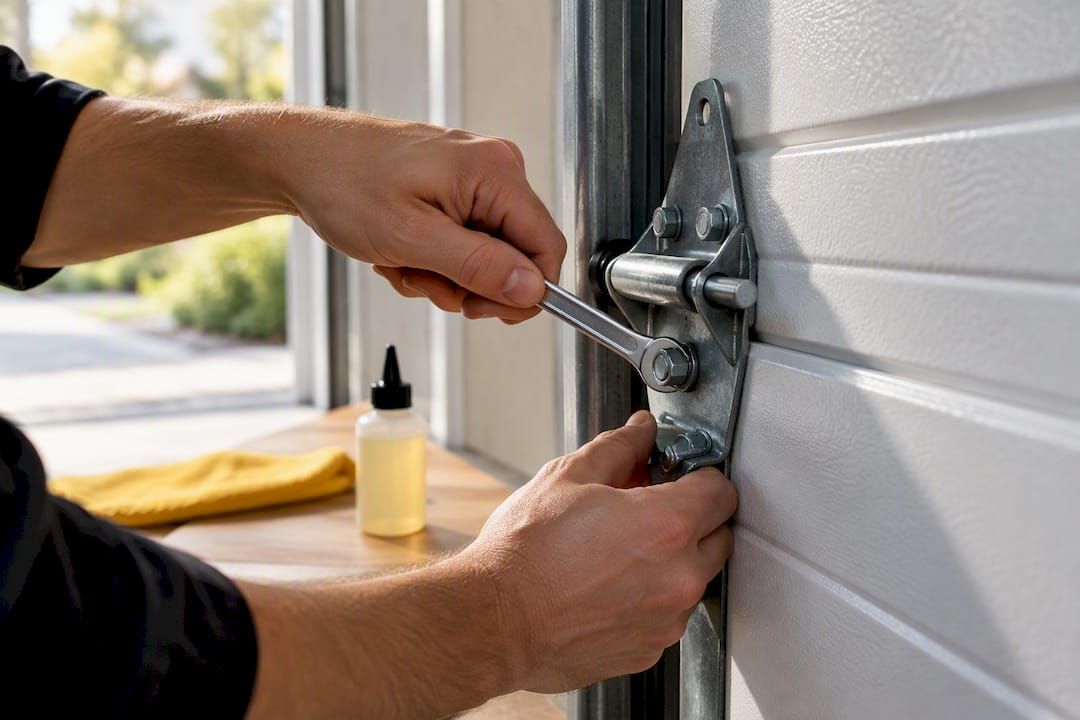
Where the real upgrade money should go is rollers and opener isolation, not insulation. Homeowners chase soundproofing kits before they've replaced a $30 set of nylon rollers or spent $10 on isolation pads, and end up disappointed when a thicker door panel doesn't quiet a grinding bearing. Fix the mechanical noise first. Address the airborne noise second. That order matters more than which product you buy.
The safety boundary is where this playbook gets strict on purpose. Springs and balance issues aren't a gray area, and no noise reduction is worth a trip to the emergency room. If your door fails the lift test or you hear that bang, the tune-up stops and the phone call starts.
— Eddie
Where to Learn More About Quieting Your Door
For deeper reading, The Garage Guide covers sound diagnosis in detail, Raynor breaks down opener types, and Mr. Spring Garage Doors explains when professional-level repair makes sense.
Get a Noisy Garage Door Fixed Right the First Time
A local professional service is the alternative to guessing your way through spring tension or opener replacement.

If your tune-up turned up a bad spring, a failed balance test, or an opener that's beyond isolation pads, that's exactly the work Mikes Garage Doors Loveland Colorado handles daily across Loveland and Northern Colorado, from spring repair to opener installation. If your door failed the manual balance test in this guide, consider requesting an estimate to address the issue before a spring failure causes more extensive damage.
Sources
- Garage Door Making Noise? Diagnose the Sound and Fix It | The Garage Guide
- Garage Door Makes Noise — The Garage Guide
- How to Soundproof a Garage Door (2026)
- Tips to reduce noise from your garage door | Raynor
FAQ
How Can I Make My Garage Door Quiet?
Start with the free fix: lubricate hinges, rollers, and springs with white lithium grease or a silicone-based spray, then tighten every loose bolt. If that doesn't fully solve it, replace worn steel rollers with sealed nylon rollers and add anti-vibration pads under the opener.
Can You Soundproof a Garage Door?
Yes, but seal the perimeter gaps and add a bottom seal before you add insulation or mass-loaded vinyl, since gaps typically drive more airborne noise than thin panels do. Any insulation or MLV you add increases the door's weight, so plan on a professional spring rebalance afterward.
What Is a Garage Door Silencer?
The term usually refers to anti-vibration pads or neoprene isolators installed between the opener motor and its ceiling mounting bracket. They cost roughly $8 to $15 and cut the structure-borne vibration that travels into ceiling framing and adjacent rooms.
Is There Such a Thing as a Quiet Garage Door Opener?
Belt-drive and DC-motor openers run significantly quieter than chain-drive or screw-drive models because a rubber belt replaces the metal chain, according to Raynor. Wall-mount openers go a step further by removing the overhead rail that transmits vibration into the ceiling.
When Should I Stop DIY Fixes and Call a Professional?
Call a professional immediately if you hear a single loud bang, notice frayed cables, or the door fails the manual balance test described above. Torsion springs hold serious tension, and Mikes garage doors Loveland colorado can inspect and repair springs, cables, and opener gears with transparent, upfront pricing over the phone.