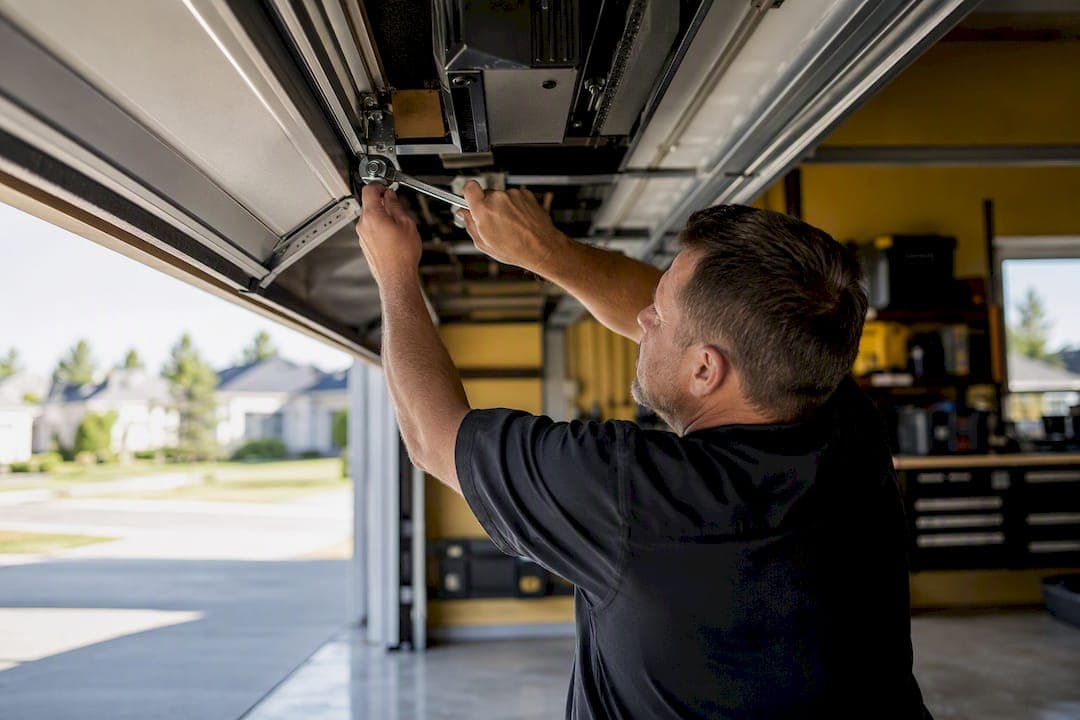
Grinding usually means one of three things: worn rollers, a stripped opener drive gear, or a misaligned track. If you hear a bang, see the door sagging, or spot a frayed cable, stop using the door and call a professional. Otherwise, disconnect the opener and move the door by hand to narrow down the source before you touch anything.
TL;DR:
- Most grinding issues stem from worn rollers or stripped drive gears, with specific patterns indicating whether the problem is in the tracks, rollers, or opener.
- Diagnosing involves disconnecting the door, listening during manual operation, inspecting rollers and tracks, and testing the opener separately; no special tools are needed.
- Lubrication with the correct products, tightening hardware, and replacing damaged rollers can often resolve grinding without professional help, but drive gear replacement requires specialist service.
- Grinding from the motor indicates a stripped drive gear or system failure, which typically costs $15 to $40 for DIY parts or $50 to $150 for professional repair.
- Serious issues like broken springs, frayed cables, or misaligned door segments require immediate professional attention due to safety risks and cannot be safely DIY-fixed.
Table of Contents
- Garage Door Grinding Noise: What the Sound Pattern Tells You
- How to Diagnose a Grinding Garage Door in Four Steps
- DIY Fixes That Actually Stop the Grinding
- When the Opener Itself Is Grinding
- Red Flags: When to Stop and Call a Professional
- Preventing Grinding Before It Starts
- What Years of Service Calls Taught Us About Grinding Doors
- Get It Fixed Right the First Time
- Sources
- FAQ
Garage Door Grinding Noise: What the Sound Pattern Tells You
Where and when you hear the grinding matters more than how loud it is. Most garage door noise problems trace back to five components: rollers, hinges, springs, the opener drive system, or loose hardware. Grinding specifically tends to point at just two of those, rollers or the opener drive, and the pattern tells you which.
- Grinding through the entire travel: usually worn roller bearings or flat spots that have developed from age or lack of lubrication.
- Grinding only when the opener engages: almost always a worn drive gear inside the opener, or a chain/screw drive that's lost tension.
- Grinding at one fixed point every cycle: points to a bent or misaligned track, since the door drags across the same damaged spot each time.
- A single loud bang followed by silence or a door that won't budge: this is a torsion spring or cable failure, not a grinding issue at all, and it needs immediate attention.
If the sound follows the door up and down the track, look at the rollers first. If it's coming from the ceiling and only happens at startup, the opener is the more likely culprit.
How to Diagnose a Grinding Garage Door in Four Steps
You don't need special tools to figure out whether the door or the opener is grinding. You need about ten minutes and a second set of ears.
- Pull the emergency release. The red cord hanging from the trolley disconnects the door from the opener, letting you move the door by hand without the motor fighting you or masking the sound.
- Run a two-person listening test. Have one person lift the door slowly while the other stands near the tracks and rollers, listening for where the grind gets louder.
- Inspect visually. Check rollers for flat spots or wobble, tracks for dents or gaps, hinges for rust, and cables for fraying. Metal shavings near a roller or hinge are a strong sign that part is failing.
- Test the opener alone. With the trolley still disconnected, run the opener without the door attached. If the motor runs and you still hear grinding, the drive gear inside the opener is likely stripped, even though the motor sounds fine.
Pro Tip: Spin each roller by hand while the door is disconnected. A roller that feels rough, catches, or wobbles as it turns won't be fixed with grease. That's a replacement, not a lubrication job.
DIY Fixes That Actually Stop the Grinding
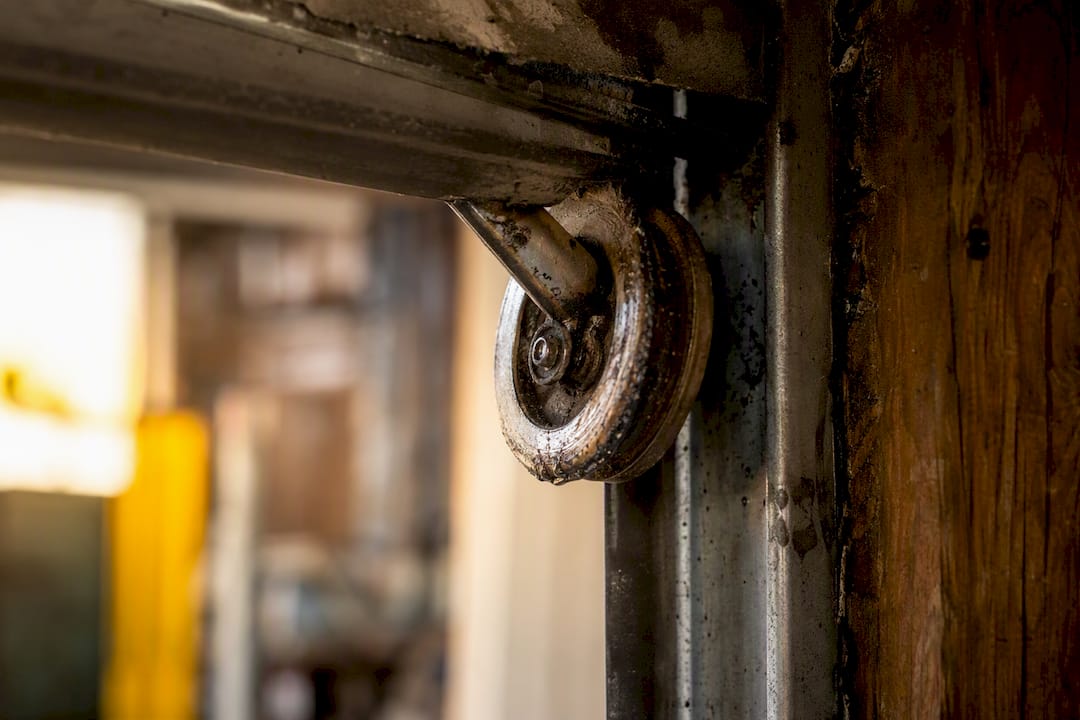
Once you've localized the noise, most roller and hardware problems are well within reach for a homeowner with a ladder and an afternoon.
Lubrication is the fix people get wrong most often. Use white lithium grease or a silicone-based garage door lubricant on rollers, hinges, and springs. Skip WD-40. It's a solvent, not a lubricant, and it strips the factory grease off moving parts while attracting dirt into the mechanism. WD-40 use on garage door hardware can cut roller lifespan roughly in half, turning a 15-year roller into a 7-year roller.
- Tighten hardware with a socket wrench, snugging bolts on hinges and the track brackets, but stop once resistance sets in. Overtightening warps hinge plates.
- Clean tracks with a rag and mild cleaner to remove debris, but never grease the track surface itself. Track grease turns into a paste that attracts dust and causes rollers to seize rather than roll smoothly.
- Replace rollers showing flat spots or wobble. A set of nylon rollers with sealed bearings runs $25 to $60 and is a manageable weekend job if the door is disconnected and properly secured.
- Tension a loose chain or screw drive per the opener's manual, and grease the rail sparingly where the manufacturer specifies.
Replacing an opener's internal drive gear is a different animal. It involves opening the motor housing and working around spring-loaded components, and that's where DIY confidence should end and a call to a technician should begin. For a deeper walk-through on rollers specifically, our guide on what garage door rollers actually do covers wear patterns in more detail.
When the Opener Itself Is Grinding
If the noise is coming from the motor unit rather than the door, you're likely dealing with a stripped drive gear or a drive system problem, not a roller issue.
- Motor runs, door doesn't move (or moves erratically): classic sign of a stripped internal drive gear. The plastic gear inside most openers wears down over years of cycles and eventually can't grip the drive properly.
- Cost to fix: a DIY drive gear kit runs $15 to $40, while professional parts and labor typically run $50 to $150.
- When to replace the whole opener instead: if the unit is 8 to 10 years old or older, repeated gear failures usually mean the rest of the motor is close behind. Replacing the opener outright often costs less over time than repairing it piece by piece.
- Chain and screw drives need periodic tension checks and light grease at the manufacturer's specified points, separate from the drive gear itself.
One thing to fix before you touch the opener at all: door balance. An opener working against an unbalanced door, one that's heavier on one side or dragging on a bent track, will burn through gears faster no matter how new the unit is.
Red Flags: When to Stop and Call a Professional
Some grinding noises are a maintenance issue. Others are a safety issue. Know the difference before you grab a wrench.
- A single loud bang from the garage, especially followed by the door refusing to move, is almost always a broken torsion spring.
- Visible fraying on any cable, or a cable that's come loose from its drum.
- The door sags on one side or travels unevenly through the track.
- Sparks, smoke, or a burning smell from the opener motor.
Springs and cables hold enormous tension. A torsion spring under load can snap with enough force to break bones or cause serious injury, so this isn't a place to save money on a service call. When you contact a technician, have the door's approximate age, the exact sound and when it happens, and any visible damage ready to describe. That gets the right parts on the truck the first time.
Preventing Grinding Before It Starts
A little routine maintenance prevents most of the grinding calls we get.
- Lubricate twice a year for average use, or quarterly if you're cycling the door multiple times a day. Stick with white lithium grease or a silicone-based lubricant on rollers, hinges, and springs.
- Upgrade to sealed nylon rollers if you're still running steel ones. Nylon rollers with sealed bearings last roughly 10 to 15 years against 5 to 7 years for open steel rollers, and they run noticeably quieter.
- Do a visual walk-around every few months, checking for loose bolts, rust on hinges, and wear on rollers.
- Schedule an annual tune-up to catch spring wear and track drift before they turn into grinding or a bigger failure.
Pro Tip: Write the install date on a sticker inside the garage when you replace rollers or an opener. Knowing exact age takes the guesswork out of deciding whether to repair or replace next time something grinds. For scheduling guidance on commercial properties or multi-door setups, see our commercial maintenance scheduling guide. Homeowners running gate systems alongside a garage door might also find value in this gate maintenance guide from a partner site, since a lot of the roller and track logic carries over.
What Years of Service Calls Taught Us About Grinding Doors
Most grinding calls we run in Loveland break down the same way: worn rollers about half the time, opener drive gears a good chunk of the rest, and a smaller share that turns out to be a bent track someone tried to "adjust" with a rubber mallet. The DIY fixes above solve a real portion of those calls before they ever need a truck. But the ones involving springs or frayed cables never should have been DIY in the first place, and we still see homeowners who tried anyway.
Mikes garage doors Loveland colorado completes about 90% of repairs the same day, with upfront phone estimates so there's no surprise invoice waiting at the end. Every repair carries a warranty, and veterans get 10% off. If you've worked through the diagnostic steps here and landed on "this needs a spring" or "the opener's shot," that's exactly the point to call rather than push further. For more on what to do when a door won't travel straight, our guide on off-track doors covers the next steps in detail.
— Eddie
Get It Fixed Right the First Time
A grinding noise you diagnose yourself still needs a spring specialist or a steady hand on gear replacement when the DIY road runs out. Mikes garage doors Loveland colorado is built for exactly that handoff: transparent phone estimates before anyone shows up, technicians who handle everything from a stripped drive gear to a snapped torsion spring, and same-day completion on roughly 90% of jobs across Loveland and Northern Colorado.

That speed matters when a grinding door has turned into a door that won't move at all, and you've got a car trapped inside or a business that can't open its bay. Every repair comes backed by a warranty, and veterans receive a 10% discount as a thank-you for their service. If you've worked through the checks above and identified a spring, cable, or opener issue beyond safe DIY territory, browse garage door services in Loveland or call for a free estimate through Mike's Garage Door Repair and get a technician out the same day.
Sources
- Why you should never use WD-40 on a garage door
- Garage door makes noise? Diagnose the sound and fix it
- Garage door lubrication
FAQ
Why is my garage door making a grinding noise?
Grinding almost always comes from worn roller bearings, a stripped opener drive gear, or a misaligned track. Listen for whether the sound follows the door's travel (rollers or track) or only happens at opener engagement (drive gear).
Why is my garage door so noisy when it opens and closes?
Noise generally comes from five sources: rollers, hinges, springs, the opener drive, or loose hardware, and grinding specifically points to worn rollers or opener drive problems. A quick lubrication and hardware check resolves most cases that aren't caused by a bent track or failing spring.
My garage door is grinding and won't open. What could be causing this and how can I fix it?
If the motor runs but the door doesn't move, the opener's internal drive gear has likely stripped. Disconnect the trolley and test the opener alone. If it still grinds without the door attached, the gear needs replacement, either a DIY kit for $15 to $40 or professional service for $50 to $150.
Can I use WD-40 to lubricate a garage door?
No. WD-40 is a solvent that strips factory grease and attracts dirt, which can cut roller lifespan roughly in half. Use white lithium grease or a silicone-based garage door lubricant instead, applied to rollers, hinges, and springs, never the track surface.