
A garage door service contract is a scheduled maintenance agreement between a homeowner and a professional technician that covers regular inspections, lubrication, hardware adjustments, and safety checks. Setting up a garage door service contract is the most reliable way to prevent emergency breakdowns, protect your manufacturer warranty, and keep repair costs predictable. Mikes garage doors Loveland works with homeowners across Northern Colorado to build plans that match real usage patterns, not generic checklists. The industry standard term for this arrangement is a "preventive maintenance agreement," and you will see both terms used interchangeably throughout this guide.
What are the key benefits of a garage door service contract?
The single biggest financial argument for a maintenance agreement is cost control. A typical tune-up costs between $100 and $240 per visit, while the average emergency repair runs $263, with some calls reaching $377. Paying for planned maintenance is almost always cheaper than paying after something breaks.
Beyond the dollar comparison, a maintenance contract transfers financial risk from unpredictable emergencies to a known annual budget line. A technician who catches a worn torsion spring early saves you from a $500-plus opener motor replacement caused by the door running out of balance. That is the difference between a $150 adjustment and a major repair bill.
Warranty protection is another concrete benefit. Many manufacturers require documented annual professional maintenance to keep warranties valid on motors and torsion springs. Without that paper trail, a warranty claim can be denied outright.
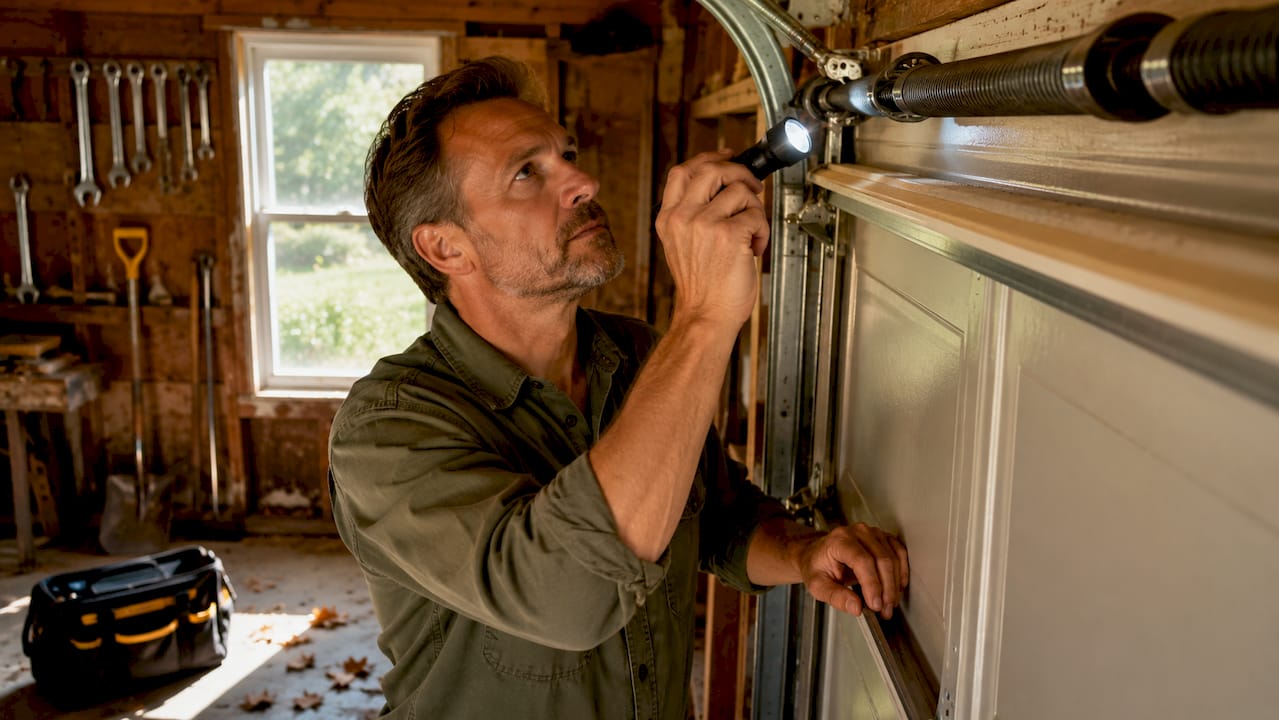
Safety is the benefit that gets overlooked most often. Professional inspections catch cable strand fraying inside the drums and metal fatigue in torsion springs. These are invisible to the naked eye during a DIY check, but they are the exact failure points that cause a 200-pound door to drop without warning.
Pro Tip: Ask your provider to include a written inspection report with every visit. That document is your warranty evidence and your service history in one place.
What factors should you consider before setting up a contract?
Your door's usage pattern is the starting point for any garage door maintenance agreement. Average daily use requires service once per year, while high-use or older doors need attention every 6–9 months. Doors in extreme climates benefit from bi-annual visits. That means a single-car residential door in a mild climate and a four-car garage in a Colorado winter are not on the same schedule.
Local climate matters more than most homeowners realize. Northern Colorado winters put real stress on metal springs and rubber seals. Mikes garage doors Loveland technicians regularly see doors that passed a summer inspection but developed spring fatigue by february because the cold was never factored into the service interval.
Plan tiers vary widely across the industry. Here is a straightforward breakdown of what each level typically covers:
| Plan tier | What is typically included | What is typically excluded |
|---|---|---|
| Basic | Annual inspection, lubrication, visual safety check | Parts, labor for repairs, opener diagnostics |
| Standard | Inspection, lubrication, hardware tightening, sensor test, force adjustment | Parts replacement, major repairs |
| Premium | Full 29-point inspection, opener diagnostics, balance test, documentation, priority scheduling | Parts above a set dollar threshold |
Understanding what is excluded matters as much as knowing what is included. Most contracts cover labor for adjustments but not the cost of replacement parts. Read that section of the contract carefully before signing.
Pro Tip: Schedule your first service visit in spring or fall. Moderate temperatures improve the accuracy of balance and force calibration because extreme heat or cold causes metal components to expand or contract, skewing the readings.
How to choose the right garage door service contract for your property
Choosing the right plan starts with an honest assessment of your door. Note the door type (sectional, roll-up, or carriage), its age, and how many times it opens and closes per day. A door that cycles four or more times daily ages faster than one used twice. That usage rate should push you toward a standard or premium tier.
Once you know your door's profile, match it to a plan using these criteria:
- Service visit frequency. Confirm whether the contract includes one or two visits per year, and whether additional visits are available at a discounted rate.
- Coverage specifics. Get a written list of every task performed at each visit. A comprehensive inspection covers balance testing, safety sensor checks, hardware lubrication, track alignment, and opener diagnostics.
- Priority scheduling. Verify that contract holders receive faster response times for non-emergency service calls. This matters most for property managers running multiple units.
- Repair discounts. Many plans offer member discounts of 10–25% on parts and labor for repairs outside the contract scope. Calculate whether that discount offsets the annual fee.
- Documentation. Require written reports after every visit. These protect your warranty and give you a clear record if you sell the property.
Ask the provider directly: "What happens if a problem is found during the inspection?" The answer tells you whether the contract is a true maintenance plan or just a sales visit. A trustworthy provider, like Mikes garage doors Loveland, will give you a written repair recommendation with a transparent estimate before any additional work begins.
For property managers, commercial maintenance schedules differ from residential ones. Higher daily cycles and liability exposure make premium-tier coverage the practical choice for multi-unit properties.
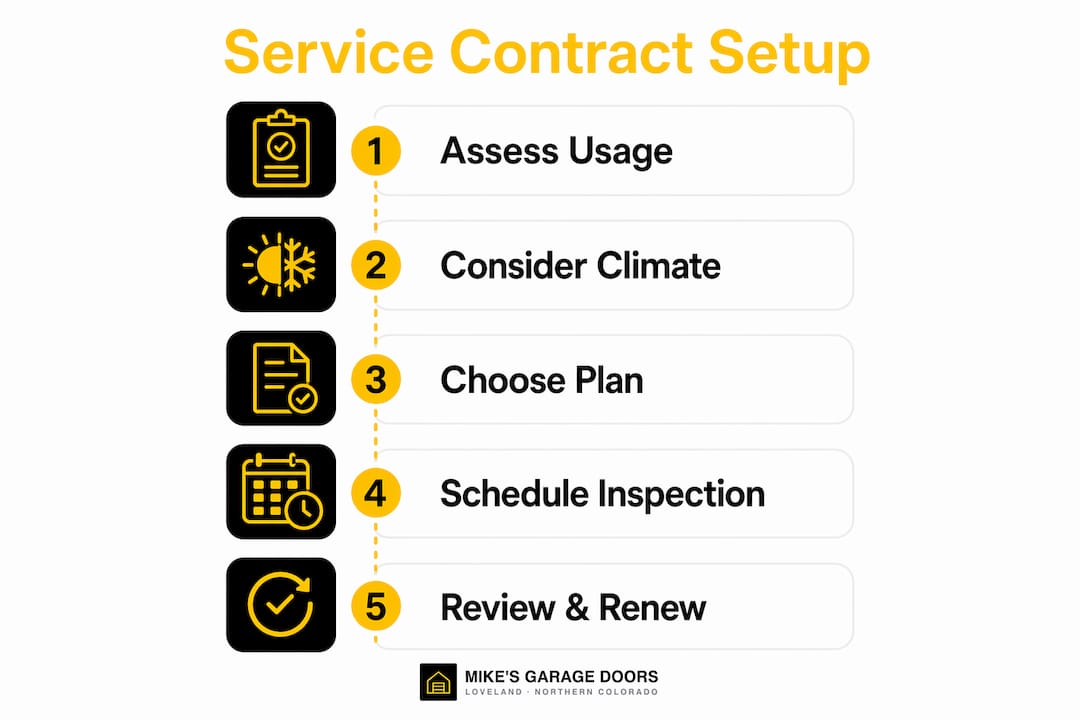
How to set up a garage door service contract: step-by-step
The process is straightforward when you know what to gather before you call.
- Document your door. Write down the brand, model number, age, and approximate daily cycle count. Check the opener's label for the motor horsepower and installation date.
- Request quotes from at least two providers. Ask each one for a written breakdown of what each plan tier includes and excludes. Verbal summaries are not enough.
- Review the contract document line by line. Pay attention to the cancellation policy, what triggers an additional charge, and whether parts are covered or billed separately.
- Schedule the initial inspection. This visit establishes your door's baseline condition and flags any existing issues before the contract officially begins.
- Set calendar reminders for future visits. Do not rely on the provider to remind you. Put the service interval in your phone or property management system.
- File all inspection reports. Store them with your appliance warranties. If you ever need to make a warranty claim, that documentation is your proof of compliance.
A few things to watch for during the process:
- Providers who quote a price without asking about your door type or usage are guessing.
- Contracts that do not specify the tasks performed at each visit leave room for shortcuts.
- Plans with automatic renewal clauses require a written cancellation notice, sometimes 30–60 days in advance.
Pro Tip: Request a diagnostic inspection report after the initial visit. A detailed report shows exactly what was checked, what was adjusted, and what may need attention in the next 6–12 months.
What common mistakes to avoid when creating a garage door maintenance agreement?
The most expensive mistake homeowners make is assuming all repairs are covered by the annual fee. Most contracts cover the labor for routine adjustments, not the cost of replacement parts. A broken spring or a burned-out motor will still be billed separately. Knowing this upfront prevents sticker shock.
Here are the other mistakes that cost homeowners money and peace of mind:
- Ignoring warranty requirements. Skipping a documented annual visit can void your manufacturer warranty on the opener motor or torsion spring system. The warranty validity requirement is not a suggestion. It is a contract condition.
- Scheduling at the wrong time. Booking service in the middle of a Colorado winter or during a summer heat wave reduces the accuracy of balance and force tests. Spring and fall visits produce better calibration results.
- Letting service intervals slip. A door that goes 18 months between visits instead of 12 accumulates wear that a single inspection cannot fully reverse. Stick to the agreed schedule.
- Not asking about emergency service. Some contracts include priority emergency response. Others do not. Know which one you have before you need it at 9:00 PM on a Sunday.
- Failing to keep records. Losing your inspection reports means losing your warranty evidence. Keep digital copies in addition to paper ones.
Pro Tip: Review your contract terms once a year, ideally at renewal time. If your usage has changed, such as adding a second vehicle or converting a garage to a workspace, renegotiate the service frequency to match.
Pairing your contract with basic preventive maintenance practices between professional visits extends the value of every service call. Wiping down tracks and checking for visible rust takes five minutes and catches problems early.
Key Takeaways
A garage door service contract protects your investment, preserves your warranty, and replaces unpredictable repair bills with a known annual cost.
| Point | Details |
|---|---|
| Cost control is the core benefit | Planned tune-ups at $100–$240 are consistently cheaper than emergency repairs averaging $263. |
| Warranty protection requires documentation | Manufacturers often require annual professional maintenance records to honor warranty claims. |
| Plan tier must match usage | High-use or older doors need service every 6–9 months, not just once per year. |
| Read the exclusions carefully | Most contracts cover labor for adjustments but bill parts separately. |
| Spring and fall are the best service windows | Moderate temperatures improve calibration accuracy for balance and force adjustments. |
Why I think most homeowners wait too long to set one up
Most homeowners call about a service contract after something has already broken. I get it. It is hard to spend money on maintenance when the door is working fine. But the doors I see fail most dramatically are the ones that were never on a schedule. A torsion spring that snaps sounds like a gunshot inside a garage. It is jarring, it is dangerous, and it almost always happens because the spring was never checked.
The financial math is straightforward. One emergency call often costs more than two years of a standard maintenance agreement. But the real argument for a contract is not the money. It is the fact that a professional can see things you cannot. Cable fraying inside a drum, a hairline crack in a spring coil, a sensor that is drifting out of alignment. None of those show up until they fail, unless someone trained to find them is looking.
My honest recommendation: start with a standard-tier plan, get the initial inspection done in spring, and read the contract before you sign it. If a provider cannot tell you exactly what they will check at each visit, find one who can. Mikes garage doors Loveland gives you a written estimate before any work begins and a full inspection report after every visit. That transparency is what a good maintenance agreement looks like.
— Eddie
Garage door service plans for Loveland homeowners
Mikes garage doors Loveland offers garage door service options built for Northern Colorado conditions, from single-car residential doors to commercial multi-unit properties. Plans include priority scheduling, transparent upfront pricing, and detailed inspection reports after every visit. Veterans receive a 10% discount on all services.
Mikes garage doors Loveland completes 90% of repairs the same day, so if an inspection turns up an issue, you are not waiting a week for a follow-up. Call to request a phone estimate, ask about current plan tiers, and schedule your first inspection. You can also review maintenance tune-up options to understand what a thorough service visit covers before you commit to a plan.
FAQ
What does a garage door service contract typically include?
A standard contract covers annual inspections, hardware lubrication, track alignment, safety sensor tests, balance checks, and opener diagnostics. Comprehensive plans also include written documentation and repair recommendations after each visit.
How often should I schedule garage door maintenance under a contract?
Most residential doors need service once per year. High-use or older doors require service every 6–9 months, and doors in extreme climates benefit from bi-annual visits.
Does a service contract cover the cost of replacement parts?
Most contracts cover the labor for routine adjustments but bill replacement parts separately. Always confirm this in writing before signing, since some plans exclude repairs entirely and offer discounts on parts instead.
When is the best time of year to schedule a garage door inspection?
Spring and fall are the best windows. Moderate temperatures produce more accurate balance and force calibration results than visits scheduled during extreme heat or cold.
Can a service contract protect my garage door warranty?
Yes. Many manufacturers require documented annual professional maintenance to keep warranties valid on motors and torsion springs. A service contract with written inspection reports is the most reliable way to meet that requirement.