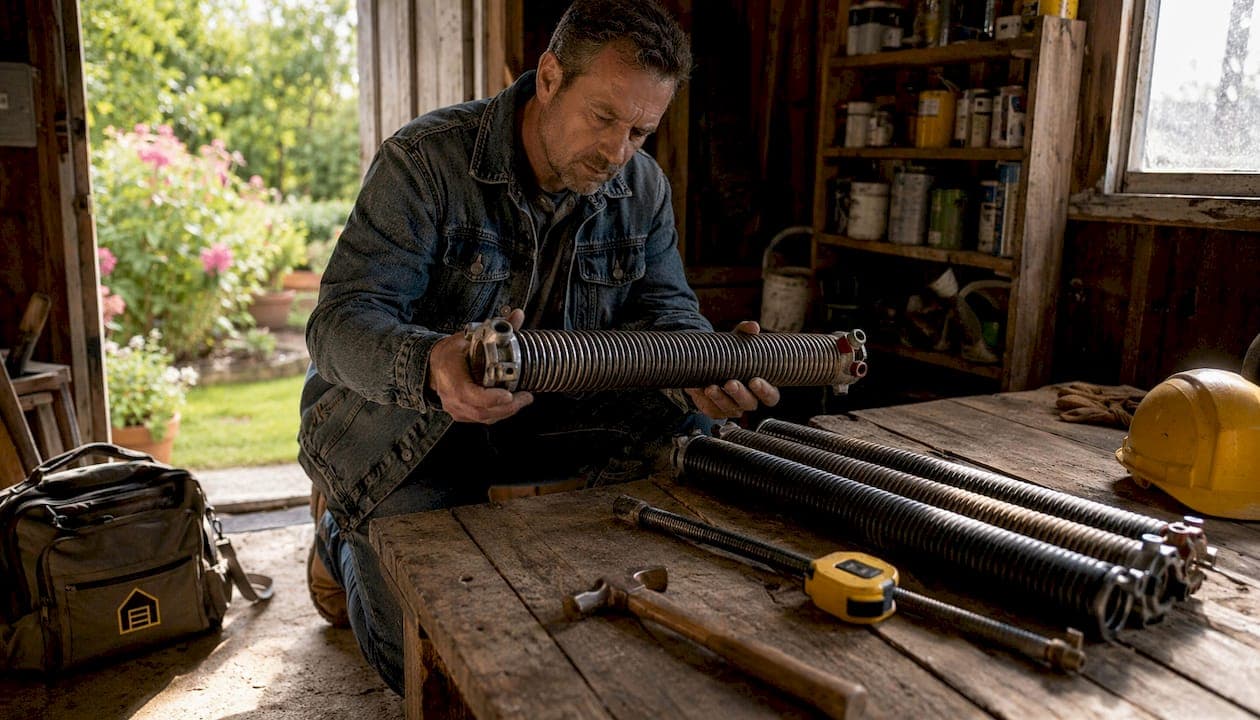
Garage door springs are defined as the mechanical components that counterbalance your door's weight, making it possible to lift a 150 to 200-pound panel with one hand or a small motor. The two primary types of garage door springs are torsion springs and extension springs, and knowing which one you have determines everything from repair cost to safety risk. Mikes garage doors Loveland sees both types daily across Northern Colorado homes, and the wrong approach to either one can put you in the hospital. This guide walks you through every spring type, subtype, and the decisions that actually matter when something breaks.
1. What are the types of garage door springs?
Garage door spring types fall into two main categories: torsion springs and extension springs. Torsion springs mount horizontally above the door opening, while extension springs run along the horizontal tracks on each side of the door. Your door's design, weight, and age determine which system it uses. Most modern sectional doors use torsion springs; older or lighter doors often use extension springs.
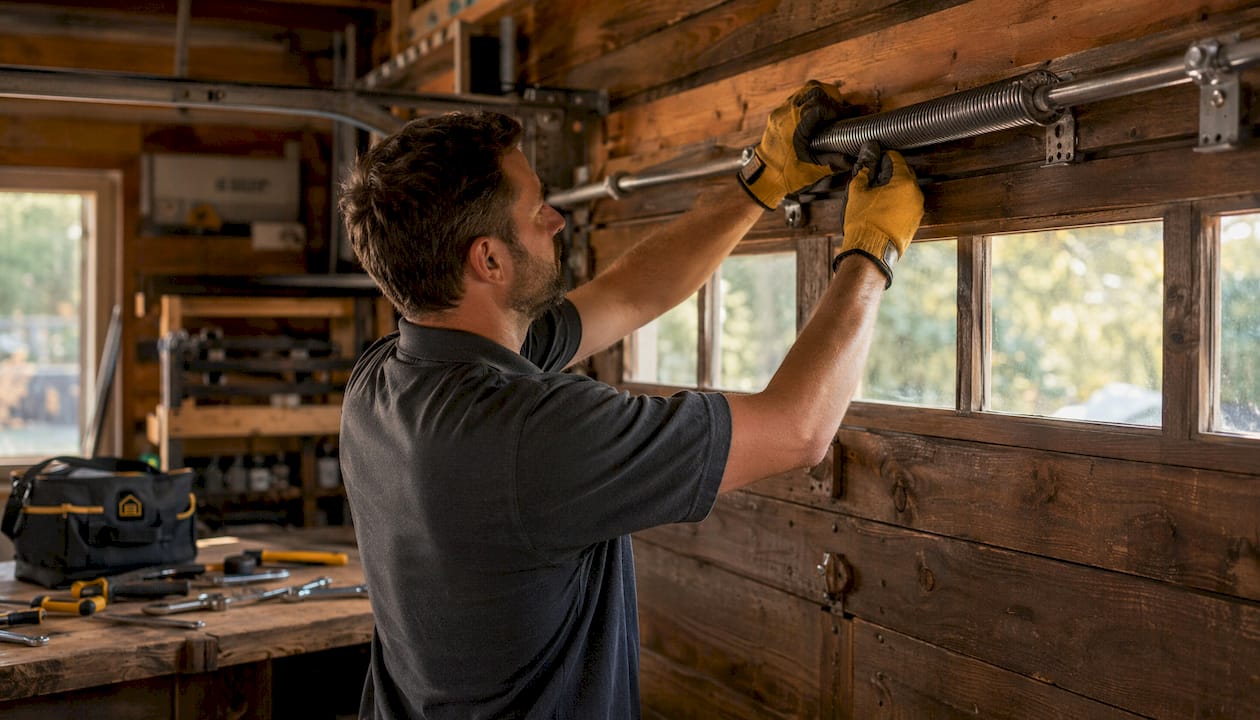
2. Torsion springs: how they work and why they dominate
Torsion springs store energy by twisting along a steel shaft mounted above the door. When the door closes, the spring winds tighter. When it opens, the stored torque unwinds and does the heavy lifting. This twisting action delivers a smooth, controlled lift that extension springs cannot match.
Torsion springs are the industry standard for sectional doors because they operate more quietly and last significantly longer than extension springs. They also keep the door balanced across its full width, which reduces wear on rollers, tracks, and the opener motor.
Key facts about torsion springs:
- They mount on a steel shaft above the door center
- Most residential doors use one spring; heavier doors use two
- They require calibrated steel winding bars to safely adjust tension
- Standard springs last about 10,000 cycles, roughly 7 years at 4 cycles per day
- High-cycle upgrades rated for 25,000 to 50,000 cycles extend life to 15 or more years
Pro Tip: Count your daily door cycles honestly. A family of four with two cars can easily hit 8 to 10 cycles per day, cutting a standard spring's life to 3 or 4 years. A high-cycle spring pays for itself fast.
The biggest downside of torsion springs is the danger they carry. A fully wound spring holds thousands of pounds of stored force. When one breaks, it releases that energy instantly and sounds like a gunshot. That is not a metaphor. It is a genuine safety event.
3. Extension springs: what sets them apart
Extension springs stretch and contract along the side tracks as the door moves. When the door closes, the springs stretch and store energy. When it opens, they contract and pull the door up. Two springs work together, one on each side, to share the load.
Extension springs run along side tracks and typically cost $150 to $300 per pair, making them the lower-cost option upfront. That price advantage comes with trade-offs. They are noisier, they wear faster, and they require safety containment cables to prevent a broken spring from becoming a projectile.
What you need to know about extension springs:
- Two springs per door, mounted along the horizontal tracks
- Easier to spot visually: look for long coiled springs running parallel to the ceiling
- Shorter lifespan, generally 5,000 to 15,000 cycles
- Safety cables must thread through the center of each spring
- Common on older doors, one-car garages, and lighter door panels
Extension springs still store significant energy and can cause serious injury if a containment cable fails. The cable is not optional. If yours are missing or frayed, that is an urgent fix.
4. Subtypes of torsion and extension springs
Types of torsion springs
Standard torsion springs are the most common residential option. Beyond the standard version, high-cycle torsion springs use heavier wire gauge and tighter coil tolerances to hit 25,000 to 50,000 cycle ratings. Winding direction also matters: right-wound springs have the wire end pointing right; left-wound springs point left. Most doors use one of each when two springs are installed, which keeps the load balanced.
Types of extension springs
Extension springs come in three primary styles: looped-end, open-loop, and clipped-end. Looped-end springs have a full loop at each end and work on lighter doors. Open-loop springs use an open hook design that is easier to install but wears faster at the hook point. Clipped-end springs attach with a metal clip rather than a hook or loop, which distributes stress more evenly and delivers the most durability of the three.
Spring style is driven by your door's design, not personal preference. A technician matches the subtype to the hardware already on your door. Swapping styles without checking compatibility causes premature failure and can void your warranty.
5. How to identify your spring type at home
Visual identification takes about 30 seconds. Stand inside your garage and look up.
- Torsion spring: One or two thick coiled springs sitting on a metal shaft directly above the door, running horizontally across the full width
- Extension springs: Two thinner springs running along the ceiling tracks on the left and right sides of the door
If you see a shaft with a drum at each end, you have a torsion system. If you see springs that stretch when the door closes, you have extension springs.
Pro Tip: Check for safety cables on extension springs while you are up there. A cable should run through the center of each spring. No cable means a serious hazard that needs attention before the next time you use the door.
Warning signs that a spring is failing:
- Door feels unusually heavy when lifted manually
- Door opens unevenly or tilts to one side
- Visible gaps or separation in the spring coils
- Loud bang from the garage (a classic broken spring sound)
- Opener strains or stops mid-cycle
Continuing to run your opener after a spring breaks strips gears and burns out the motor. Disconnect the opener immediately and call a professional. You can find the early warning signs of spring failure before a full break happens, which saves you from an emergency call.
6. Which spring system is right for your home?
The best garage door spring system for most homeowners is a torsion spring setup with a high-cycle rating. It lasts longer, operates more quietly, and protects your opener motor from the unbalanced loads that extension springs can create. That said, your door's existing hardware often makes the decision for you.
Use this framework to match your situation:
- Older one-car garage with light door: Extension springs are likely already installed and are cost-effective to replace in kind
- Modern two-car or insulated door: Torsion springs are the right fit and worth the higher upfront cost
- High-use household (4+ cycles per day): Upgrade to high-cycle torsion springs rated for 25,000 cycles or more
- Budget-constrained replacement: Extension springs at $150 to $300 per pair cost less initially, but factor in their shorter lifespan
Professionals recommend replacing both springs at the same time when one breaks. The surviving spring has logged the same number of cycles and will fail soon. Replacing both prevents a second service call within weeks and keeps the door balanced.
For professional spring replacement, Johnny Garage Door Service offers a useful reference point on what a quality spring replacement service should include.
| Consideration | Torsion springs | Extension springs |
|---|---|---|
| Lifespan | 10,000–50,000 cycles | 5,000–15,000 cycles |
| Noise level | Quiet | Noisier |
| Safety profile | High tension, professional only | Requires safety cables |
| Typical cost | Higher upfront | $150–$300 per pair |
| Best for | Modern, heavy, insulated doors | Older, lighter, single-car doors |
Spring selection is driven by door design, not homeowner preference. A technician measures your door's weight, height, and track configuration before recommending a spring. Guessing wrong means the door will not balance correctly, and an unbalanced door destroys openers fast.
Key takeaways
Torsion springs are the best garage door spring system for most modern homes because they last longer, operate more quietly, and protect your opener from unbalanced loads.
| Point | Details |
|---|---|
| Two main spring types | Torsion springs mount above the door; extension springs run along side tracks. |
| Lifespan varies widely | Standard springs last about 10,000 cycles; high-cycle versions reach 50,000. |
| Replace both at once | When one spring breaks, replace both to maintain balance and avoid a second failure. |
| Safety cables are required | Extension springs must have containment cables installed and in good condition. |
| Door design decides spring type | Spring selection is determined by door weight and hardware, not homeowner preference. |
What I've learned after years of spring replacements
I have replaced hundreds of garage door springs across Loveland and the surrounding area, and the pattern I see most often is the same every time. A homeowner hears that loud bang, looks up a video, and decides they can handle it themselves. I understand the instinct. Springs look like simple hardware.
They are not simple. A torsion spring under full tension holds more stored force than most people can picture. Using the wrong tools on a torsion spring does not just risk a bad outcome. It turns a winding bar into a projectile. I have seen the aftermath of that, and it is not something you want to experience firsthand.
The other mistake I see constantly is running the opener after a spring breaks. People hear the bang, assume it was something else, and keep pressing the button. Every cycle after that point damages the opener gears and motor. What started as a $200 spring replacement becomes a $600 repair because the opener is now shot too.
My honest advice: learn to identify your spring type, know the warning signs, and call a professional the moment something feels off. Proactive replacement on a schedule based on your actual cycle count is far cheaper than an emergency call. Tracking your spring's cycle life is the single most underused maintenance habit I know of. Set a reminder. Count your cycles. Replace before it breaks.
— Eddie
Spring repair and replacement from Mikes garage doors Loveland
When a spring breaks, you need it fixed fast and fixed right. Mikes garage doors Loveland handles torsion and extension spring replacements across Northern Colorado, with 90% of repairs completed the same day you call.

Every job comes with upfront phone estimates so you know the cost before a technician arrives. No surprise charges. The team uses calibrated tools and replaces both springs simultaneously to protect your opener and keep your door balanced long-term. Veterans receive a 10% discount on all services. For a full look at what Mikes garage doors Loveland offers, visit the garage door services page and schedule your repair today.
FAQ
What are the two main types of garage door springs?
The two main types are torsion springs, which mount horizontally above the door, and extension springs, which run along the side tracks. Torsion springs are the industry standard for modern sectional doors.
How long do garage door springs last?
Standard springs last about 10,000 cycles, roughly 7 years at 4 cycles per day. High-cycle torsion springs rated for 25,000 to 50,000 cycles can last 15 or more years.
Can I replace garage door springs myself?
DIY spring replacement is strongly discouraged. Professionals complete the job safely in under an hour using calibrated tools, and the work comes with warranty coverage that DIY repairs cannot provide.
How many springs does a garage door need?
Most single doors use one torsion spring or two extension springs. Heavier or wider doors often use two torsion springs to distribute the load evenly across the shaft.
What happens if I keep using my opener after a spring breaks?
Running the opener after spring failure strips the gears and can burn out the motor. Disconnect the opener immediately and call a professional before using the door again.