A wind rated garage door is one that has been physically tested and labeled with specific positive and negative design pressure ratings, tied to an exact size and installation method. It reduces the odds of the door blowing in or out during a storm, which is often what triggers roof and wall damage. If you own one or are shopping for one, your first move should be reading the label and installation drawing, or scheduling a professional inspection to confirm the door on your house is rated for where you live.
TL;DR:
- The wind pressure ratings for garage doors are specific to each size and installation method, requiring exact label details and matching installation instructions.
- These ratings include positive and negative PSF values tested against ICC standards, and labels lacking this info cannot confirm actual wind resistance.
- Proper installation with reinforced framing and anchors is critical, as weak connections can cause failure even on rated doors.
- Impact resistance is separate from pressure ratings, so regions prone to debris-driven winds need doors tested against both criteria.
- Costs vary significantly based on size, impact requirements, and regional codes, but professional assessment and verified labeling ensure effective storm protection.
Table of Contents
- What Does "Wind Rated" Actually Mean for a Garage Door?
- How Wind Rated Doors Protect Your Home, and What They Can't Do
- What Standards and Codes Should You Check?
- How to Read the Label and Installation Drawing
- Installation Matters as Much as the Door Itself
- Choosing a Wind Rated Door and What to Ask For
- What Does a Wind Rated Garage Door Cost?
- Why Professional Installation Assessment Matters
- The Label Is the Truth. Everything Else Is Marketing.
- Get Your Garage Door Wind Rated the Right Way
- Sources
- FAQ
What Does "Wind Rated" Actually Mean for a Garage Door?
Every wind rated door carries a design pressure number measured in pounds per square foot, or PSF. That number comes in two flavors: positive pressure, which is wind pushing straight against the closed door, and negative pressure, which is suction pulling the door outward as wind wraps around the corners of the house. Both matter. A door that resists positive pressure fine but fails under negative pressure can still blow off its tracks.
Here's the part homeowners miss most often: those PSF ratings aren't a property of the door model in general. They belong to a specific width and height, tested and certified together. Widen a 9-foot door design to 16 feet and the rating doesn't carry over automatically. The ICC's guidance on garage door provisions in the International Residential Code confirms labels need to show the manufacturer, model or series number, positive and negative PSF ratings, a reference to the installation drawing, and the test standard used. If any of that is missing from your door's label, you don't actually know what you have.
Insulated and non-insulated doors get tested separately too, and doors marketed with vague terms like "storm ready" or "hurricane strength" without listing actual PSF numbers should raise a flag. Marketing language is not a substitute for a tested rating.
How Wind Rated Doors Protect Your Home, and What They Can't Do
A garage door that fails in high wind doesn't just leave a hole. Once wind gets inside the garage, it pressurizes the entire structure from the inside, pushing up on the roof deck and outward on walls that were never designed to handle that kind of load. NIST's research on windstorm resilience points to this exact failure chain as one of the more preventable causes of severe storm damage to houses. Keeping the door intact keeps that pressure outside where it belongs.
That protection comes with real limits, though. A pressure rating tells you the door can resist wind load. It says nothing about resisting flying debris, which is a separate testing category entirely. In regions where wind-borne debris is a known risk, you need impact resistance too, not just pressure resistance.
It's also worth knowing that panels rarely fail first. Frames, anchors, and tracks are common weak points, and a perfectly rated door hung on a poorly anchored frame can still fail. Homeowners in genuinely severe wind zones sometimes choose doors rated well above the local code minimum, simply because the margin buys peace of mind.
What Standards and Codes Should You Check?
The testing world for garage doors runs on a handful of standards, and knowing their names helps you tell a real approval from a marketing claim. ANSI/DASMA 108 and 115 cover wind load and impact performance for garage and rolling doors specifically. ASTM E1886 and E1996 handle cyclic wind pressure and missile impact testing, though ASTM E1996 explicitly excludes exterior garage and rolling doors from its scope. According to Massachusetts's wind-borne-debris guidance, garage doors are typically governed by the DASMA and ANSI documents rather than ASTM E1996 directly, which is a distinction a lot of sales literature glosses over. ASTM E330 covers structural performance under static air pressure difference, often referenced alongside DASMA 108 for door testing.
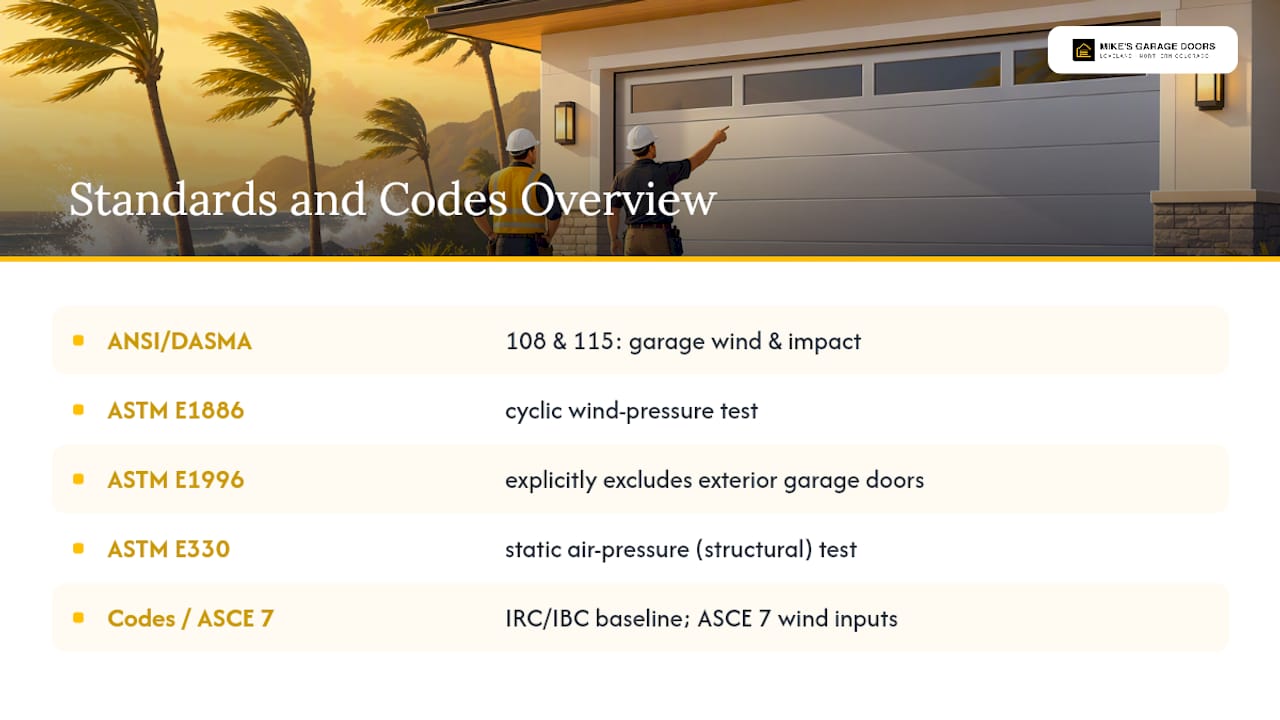
On the code side, the IRC and IBC set baseline requirements, and ASCE 7 supplies the wind speed maps and exposure categories that feed into your local design pressure requirement. States and counties can layer on their own rules. Florida's building code, for example, uses its own testing protocol (TAS) alongside Miami-Dade and Broward County product approvals, which are among the strictest in the country. Reference tables in Florida's building code course materials show how nominal PSF requirements shift with door size, building height, and exposure category.
"Listed and labeled" isn't a formality. It means an independent testing body verified the door meets its stated rating, and that approval paperwork is often required for permits and can affect your insurance underwriting.
How to Read the Label and Installation Drawing
Before you trust any garage door's storm performance, find the label. It's usually on the back of one of the top panels or on the end stile. Confirm it lists:
- Manufacturer name and model or series number
- Positive and negative PSF ratings
- The exact width and height those ratings apply to
- A reference number pointing to the specific installation drawing
- The test standard used (DASMA 108, ASTM E330, or similar)
Then match those numbers against your actual situation. Your door's width and height need to fall within the tested size, and your local required design pressure, adjusted for building height and exposure category, needs to be at or below the door's rating. According to PNNL's guidance on pressure-rated garage doors, the installation drawing matters just as much as the label, since it specifies the anchor type, size, and spacing the rating depends on. A door with the right PSF number but the wrong anchors installed is not actually performing to spec.
Red flags include a label with no PSF numbers at all, an installation drawing that doesn't match your wall construction, or a contractor who can't produce either document on request.
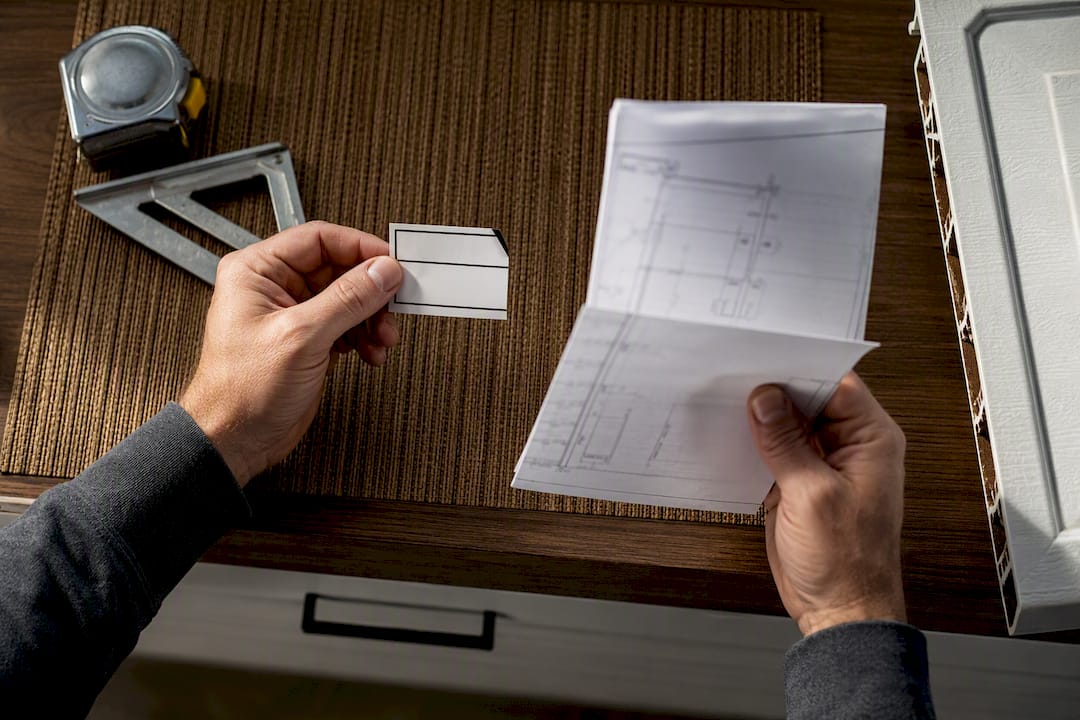
Pro Tip: Keep a copy of the product approval and installation drawing with your home's insurance and permit records. If a claims adjuster or inspector ever asks for proof of a rated door, you want that paperwork on hand, not buried in an old email from the installer.
Installation Matters as Much as the Door Itself
A wind rated door is only as good as what it's bolted to. FEMA's design guidance points out that frame-to-wall connection failures are among the most common causes of garage door blowouts, often more common than the panels themselves failing. Fastener type, size, spacing, and how close they sit to the edge of the framing all matter, and all of them are part of the tested system, not an afterthought for the installer to improvise.
A capable installer checks anchor type and spacing against the installation drawing, confirms the header above the opening is reinforced enough to carry the load, and verifies the tracks are anchored to solid framing rather than trim or drywall. Skipping any of these turns a properly rated door into an unrated assembly, regardless of what the label says.
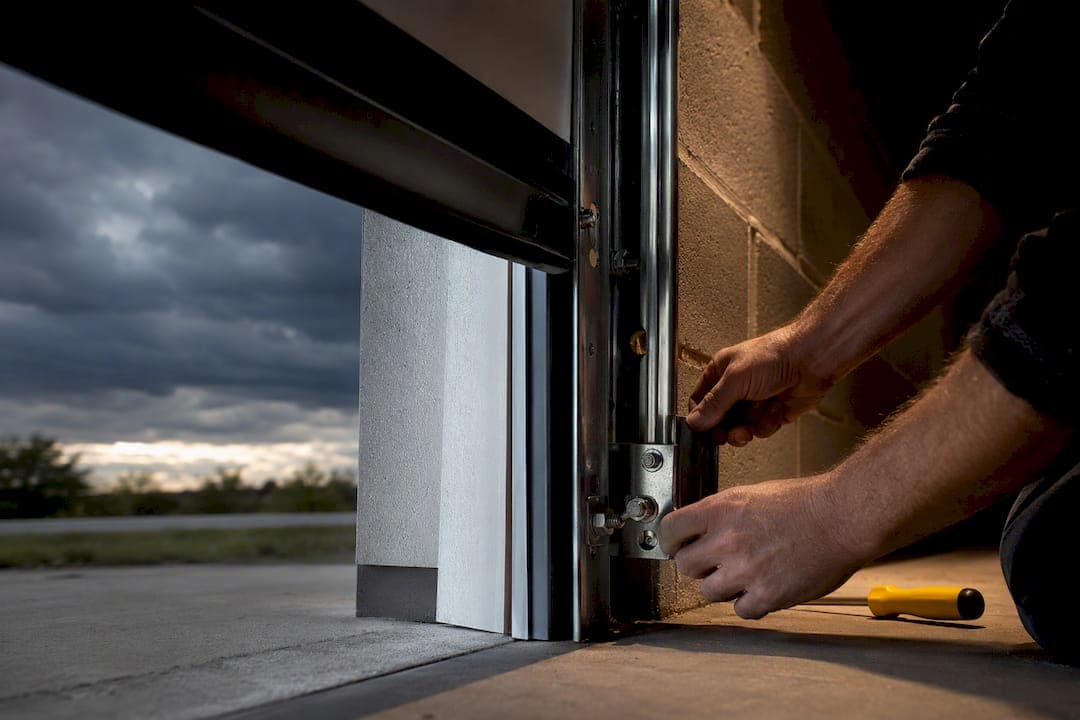
For homeowners not ready for a full replacement, retrofit options exist. Center post braces, horizontal girts, and upgraded anchor hardware can raise an existing door's wind resistance for meaningfully less cost than a full swap. Each comes with trade-offs in labor, some require manual deployment before a storm, and none of them turn an unrated door into a fully tested system. A professional assessment of your framing condition before any of this work starts is the difference between a real upgrade and a false sense of security.
Choosing a Wind Rated Door and What to Ask For
Before you request quotes, gather your exact opening width and height, your property's building height, the local wind speed or design pressure requirement for your area, your building's exposure category, and whether you're in a wind-borne-debris region. That information determines which doors even qualify.
When you talk to installers, ask for:
- The product's approval or listing documentation, not just a spec sheet
- Positive and negative PSF ratings that specifically cover your door's width and height
- A copy of the installation drawing referenced on the label
- Impact rating documentation, if your area requires debris protection
- The exact anchor requirements and how they match your wall type
- What the warranty covers on both the door and the installation itself
Be skeptical of any quote that promises "hurricane rated" performance without handing you paperwork to back it up. And if your local code minimum feels thin for your exposure, it's reasonable to ask for a door rated above that minimum. The cost difference is usually smaller than people expect.
What Does a Wind Rated Garage Door Cost?
Costs break down into a few pieces: the door unit itself, any reinforcement hardware, anchors matched to your wall type, labor, permit fees where required, and occasionally framing repairs if your header or jambs need upgrading first. Impact-rated glazing, if your area requires debris protection, adds to the door cost specifically.
Pricing varies a good deal by door size, region, and whether impact resistance is required on top of pressure resistance, so there's no single number that applies everywhere. The general sequence looks like this: a site inspection to confirm opening size and framing condition, a permit application if your jurisdiction requires one, ordering the door (which can take several weeks depending on size and rating), installation, and a final inspection to close out the permit.
If a full replacement isn't in the budget right now, a retrofit brace can serve as a reasonable interim step while you plan for the larger project.
Why Professional Installation Assessment Matters
A wind rated door's paper rating means little if the framing behind it is weak or the anchors don't match the installation drawing. Mikes garage doors Loveland colorado is family-owned and built its reputation on straightforward, upfront estimates over the phone, with about 90% of repairs finished the same day. When you're weighing a wind-rated upgrade, a retrofit brace, or a full permitted replacement, that's the point to call in a professional set of eyes before you commit to anything.
The Label Is the Truth. Everything Else Is Marketing.
The single biggest mistake homeowners make is assuming a door marketed as storm-ready must be tested and rated for their exact opening. It usually isn't, at least not automatically. If you take one thing from this article, take this: find the label, find the installation drawing, and confirm both match your door's actual size and your home's wind exposure before you assume you're covered.
— Eddie
Get Your Garage Door Wind Rated the Right Way
Some garage door companies offer phone estimates before any work begins, so you can get a rough idea of a wind-rated upgrade cost before committing to a service visit.

Whether you need a straight inspection to confirm your current door's rating, a retrofit brace for extra wind resistance, anchor upgrades to bring an older installation up to spec, or full replacement with a properly labeled door, the team handles it with the same transparent pricing on every job. Before you call, have your opening dimensions ready, along with any approval paperwork you can find and details on your framing and local exposure. If your garage door hasn't been checked against your area's wind requirements, request a quote or schedule an inspection and get a straight answer on what your door can actually handle. For general upkeep between storms, routine door maintenance steps also help keep anchors and hardware in good working condition.
Sources
- Garage door provisions in the International Residential Code (ICC building-safety journal)
- Improving windstorm and tornado resilience: recommendations for residential structures (NIST)
- FEMA design guidance and wind retrofit recommendations (FEMA)
- Massachusetts wind-borne-debris FAQs
- Course material on FBC Section 1609 (reference tables and exposure adjustments)
FAQ
What is the best garage door for high winds?
There's no single "best" model since ratings are size and installation specific, but the strongest choice is a door tested under ANSI/DASMA 108 with PSF ratings that exceed your local code minimum for your exact opening size. Pair it with reinforced anchors and a header confirmed by a professional inspection, since the installation is part of the tested performance.
Do garage doors have a wind rating?
Yes, but only doors specifically tested and labeled for wind load carry one. The label should list positive and negative PSF values along with a reference to the installation drawing, as outlined in ICC's IRC garage door guidance; a door without that information hasn't been rated, regardless of what the marketing says.
What is the wind code rating for a garage door?
The required rating isn't a fixed number nationwide. It comes from your local building code, typically derived from ASCE 7 wind speed maps and adjusted for your building's height and exposure category, as shown in reference tables built on Florida's building code. Your local building department can confirm the exact PSF requirement for your address.
How much are hurricane rated garage doors?
Pricing depends heavily on door size, region, and whether impact-resistant glazing is required on top of pressure resistance, so costs vary widely from one home to the next. Some garage door service providers offer upfront phone estimates before any work begins, allowing you to get a specific cost estimate for your opening rather than guessing from a general range.