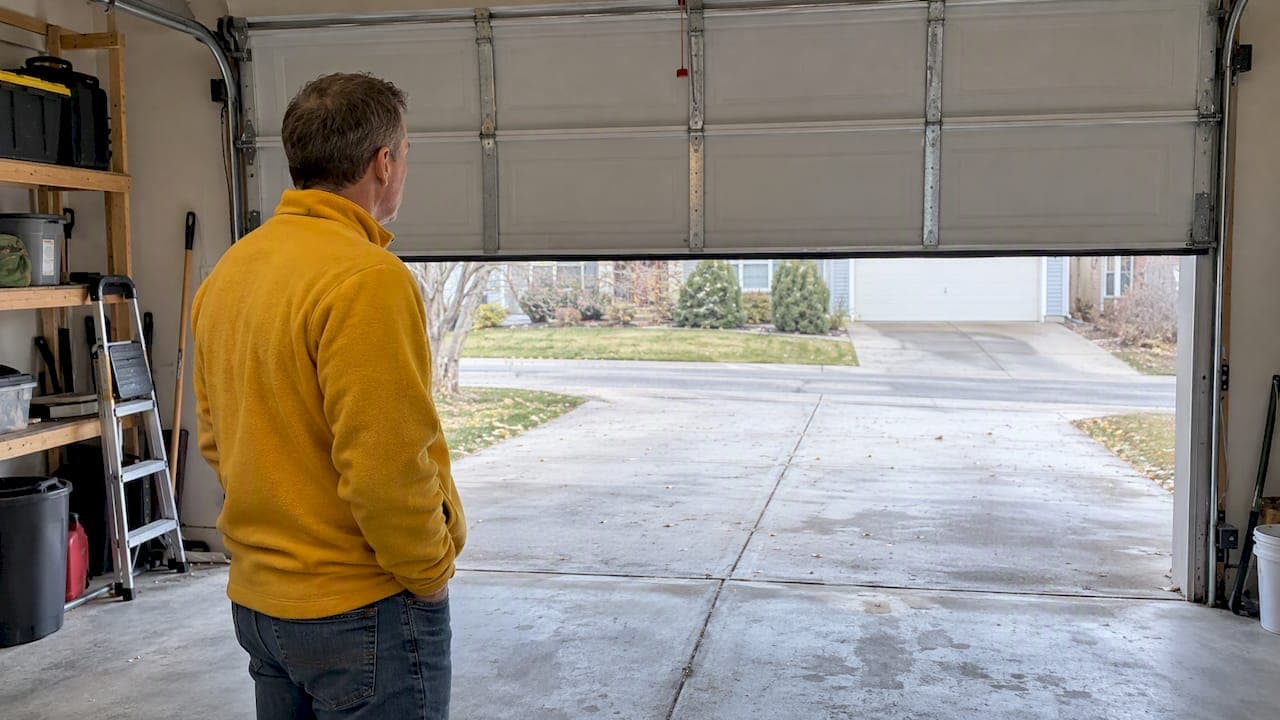
Stop using the opener right away and keep people and pets clear of the door. Unplug the opener, and pull the red emergency release cord only if the door is stable and can be held safely. If the door hangs crooked, a spring or cable looks broken, or it won't move smoothly, treat it as an emergency and call a pro. Usual suspects: sensors, obstructions, opener settings, springs, cables, tracks or rollers.
TL;DR:
- Unplug the opener or switch off its breaker before touching the door; pull the red release only when the door is stable and safely supported.
- Broken springs or cables, crooked or off track doors, sudden drops, and heavy or uneven movement require stopping and calling a professional.
- If the opener hums or clicks, check power and sensor lights first; clear debris or ice before investigating worn rollers, tracks, or opener settings.
- Clean and align sensors, clear the threshold, and lubricate rollers, hinges, and bearings with silicone spray; test that the door reverses on a flat 2x4.
Table of Contents
- Immediate safety checklist: what to do in the first minutes
- Common causes a garage door stops halfway and quick checks to narrow them down
- Step-by-step safe troubleshooting to try first
- When this is an emergency and why you should call a professional now
- Prevention and low-cost upkeep to avoid repeat stuck-door incidents
- An experienced view on stuck garage doors
- Need help now? Here's how to reach us
- FAQ
- Sources
Immediate safety checklist: what to do in the first minutes
A door stuck halfway is a heavy weight hanging on hardware that may have just failed. What you do in the first few minutes matters more than any fix that follows. Work through this list in order:
- Put the remote down and stay off the wall switch. Keep everyone out of the door's path, including under it.
- Unplug the opener or flip its circuit breaker before you touch the door. A live opener can restart mid-repair.
- Find the emergency release cord, the red rope hanging from the trolley. Pull it only if the door is steady and you can hold or prop it in place.
- Leave springs, cables and bottom brackets alone. They carry extreme tension, and "just a quick adjustment" is how people get hurt.
- If the door hangs at an angle or you see a snapped spring or cable, do not try to lift it. Call for emergency repair.
Pro Tip: Take a quick phone photo of the door's position and any visible damage before you touch anything. It helps a technician diagnose the problem faster, and it shows you what changed if something shifts.
One more thing: a door that stops halfway isn't always broken. Federal rules require openers to reverse or stop when they meet resistance, so the door may be doing exactly what the CPSC safety standard requires. That's why the next step is figuring out what it sensed.
Common causes a garage door stops halfway and quick checks to narrow them down
Most half-open doors trace back to one of six problems. You can spot several of them from the floor with nothing but your eyes.
- Safety sensors: Dirty lenses, a bumped bracket or a blocked beam can trip the reversal system. Look at the small indicator lights on each sensor near the floor. A dark or blinking light usually means misalignment or something in the way.
- Obstructions: Toys, a stray tool, packed snow or a chunk of ice on the track or threshold can stop the door cold. Scan the full path before you suspect anything bigger.
- Opener problems: Check for lost power, a dead backup battery, a tripped breaker, or limit and force settings that have drifted. A failing motor often hums or clicks without moving the door.
- Springs and cables: A visible gap in a torsion spring, a frayed or snapped cable, or a loud bang in the garage are classic signs. Those are professional-only repairs. Our post on why garage spring replacement is urgent shows what a broken spring looks like.
- Rollers and tracks: Worn or seized rollers, dented tracks and caked-on grime add friction, and the opener quits when the load gets too heavy. Track alignment checks can reveal a bend before it becomes a jam.
- Weather: Ice can glue the bottom seal to the slab or freeze the rollers in the track. That's common in a Colorado cold snap.
Balance matters too. A door with weakened springs feels far heavier than it should, so the opener strains, hesitates and stops partway. If the door is hard to lift by hand once it's disconnected, balance is the likely culprit, and that points to springs.
Floor condition can also play a role. A cracked or heaved threshold can catch the bottom seal, and this guide on cracked garage floor repair explains what to ask a contractor about the surface.

Step-by-step safe troubleshooting to try first
Run these steps in order. Each one is low-risk, and each rules something out before you move on.
- Confirm power. Make sure the opener is plugged in, the outlet works, and the remote batteries are fresh. Reset the breaker if it tripped. Manufacturer guidance from Clopay says to rule out a power problem first before assuming something mechanical failed.
- Stop and observe. Unplug the opener, pull the emergency release to disconnect the trolley, then try lifting the door an inch or two. Judge the weight and smoothness. If it's heavy, lopsided or grinding, stop here.
- Check the sensors. Wipe each lens gently with a soft cloth. Adjust the brackets until both indicator lights glow steadily. Then test reversal: lay a 2x4 flat on the floor in the door's path and close the door. It should reverse on contact. Our walkthrough on passing the reversal test covers the details.
- Clear the path. Remove debris from the tracks and threshold. If ice or snow is the problem, clear it by hand or with de-icer. Never force the door through it.
- Inspect rollers and tracks. Look for obvious bends, gaps or rollers that won't spin. Spray silicone-based lubricant on the rollers, hinges and bearings. Skip heavy oil on nylon rollers, since it attracts dirt.
- Reset the opener carefully. Your opener manual explains limit and force adjustments. Try them only if you understand each step, and never crank up the force to make up for a weak or broken spring.
- Know when to quit. A visible broken spring or cable, a door off its tracks, a crooked hang or any door that won't move smoothly means stop and call.
Pro Tip: Change one thing at a time and test after each change. If you adjust the sensors, the limits and the force all at once, you won't know what fixed it, or what made things worse.
When this is an emergency and why you should call a professional now
Some conditions aren't worth a second guess. Treat the situation as an emergency if you see any of these:
- A broken or gapped spring, or a frayed or snapped cable
- The door hanging at an angle, or panels pulled out of the track
- Sudden, uncontrolled movement or a door that drops when released
- A door that can't be moved smoothly by hand
Springs and cables hold enormous stored energy. When that energy releases the wrong way, the results can be severe, and the accident records show it. One OSHA accident report documents how adjusting a spring without proper procedures led to a sudden release of tension and serious injury to a repair worker. Even trained people get hurt when they cut corners.
Safety takeaway: A door stuck in an unstable position poses a real risk of sudden collapse, property damage and personal injury, which is why Clopay's emergency service guidance calls it an emergency.
A technician secures the door first, relieves the spring tension safely, replaces broken springs or cables, realigns the tracks, and then tests the opener and its reversal system before leaving. That sequence takes tools, training and the right winding bars. It isn't a driveway job, and our explainer on why spring repair needs a professional goes deeper on the risks.
Prevention and low-cost upkeep to avoid repeat stuck-door incidents
A few small habits head off most half-open doors. None take long.
- Spray silicone lubricant on rollers, hinges and bearings periodically.
- Keep the tracks and threshold clear of debris, snow and ice. Use de-icer if you need it, and never an open flame.
- Check sensor alignment regularly and wipe the lenses so the beam stays clean.
- Book a professional tune-up periodically, or sooner if the door gets noisy or runs unevenly.
- Note odd behavior as it happens: take photos and record the sounds. It saves time on a service call.
| Task | When |
|---|---|
| Lubricate rollers, hinges and bearings | Periodically |
| Check sensor alignment and clean lenses | Regularly |
| Professional tune-up | Periodically |
Small problems announce themselves before they strand your door. A new squeal, a slower close or a door that sags on one side deserves a look, not a shrug.
An experienced view on stuck garage doors

Most homeowners underestimate how much a stuck door is telling them. A door that stops halfway usually isn't random. Something is stressed, worn or blocked, and the opener is reacting to it. The costly mistake is overriding that signal, whether by pushing the force setting higher or yanking the door up by hand. Treat the stop as information, check the cheap stuff first, and leave the high-tension parts to people with the right tools.
The advice here mirrors what our technicians tell customers. We handle spring replacement, opener repair, emergency response and tune-ups, and we do it with upfront phone estimates, written warranties and a veteran discount. Our repairs are often completed promptly.
— Eddie
Need help now? Here's how to reach us
If your door is stuck and the checks above point to something bigger, we're ready to help. Our services cover the situations in this guide:
- Emergency repair for doors that are unstable, off track or hanging crooked
- Spring replacement and opener repair or installation
- Garage door tune-ups to head off the next breakdown
Before you call, have a short description of the symptoms, any damage you can see, and photos if it's safe to take them. Book emergency service or a tune-up and we'll give you a clear estimate over the phone.

FAQ
Why is my garage door stuck halfway open?
The most common reasons are blocked or misaligned safety sensors, an obstruction on the track, opener settings that have drifted, or a worn spring or cable. Clopay's guide to stuck doors lists these along with damaged rollers and tracks and weather freezing. Start with the sensors and the track, then check the springs.
How do I open a garage door that is half open?
Unplug the opener first, then pull the emergency release cord only if the door is stable and you can hold it. Lift slowly and stop if it feels heavy or uneven. A heavy or crooked door usually means a spring or cable problem, so call a professional.
How do I release a jammed garage door?
Disconnect the opener from power, then pull the red emergency release to detach the door from the trolley. Look for a visible cause such as debris, ice or a bent track before you move anything. Don't force it if the door is off track or a spring looks broken.
How do I stop a garage door from stopping halfway?
Keep the sensors clean and aligned, clear the tracks, and lubricate the moving parts periodically with silicone spray. Test the reversal system regularly with a 2x4, as the CPSC recommends. A yearly professional tune-up catches worn springs and rollers before they stall the door.